
Monthly Report on Human Rights Violations in the Republic of Mari El and Mari people
February 2026
Prepared by: Liza (the name is pseudonymized for safety reasons)
Executive Summary
The human rights situation in the Republic of Mari El in February 2026 reflects ongoing systemic shortcomings in public administration, particularly in the areas of municipal service delivery, environmental governance, and oversight of public institutions. Reported incidents indicate continued failure of local authorities to ensure basic infrastructure, including road accessibility, forcing residents to rely on self-organization to address essential needs. At the same time, allegations of environmentally hazardous practices, such as snow disposal near water bodies, raise concerns about compliance with environmental regulations and protection of public health.
In parallel, a confirmed case of fraud within a public cultural institution highlights persistent risks of corruption and misuse of the budget. Across all documented cases, common patterns include lack of transparency, weak accountability mechanisms, and limited responsiveness to public concerns. These trends contribute to declining public trust in institutions and reinforce structural barriers to effective civic participation and protection of social and economic rights.
Methodology
The findings presented in this report are based on open-source monitoring of regional media, social media publications, and statements from local residents. Where possible, multiple sources and contextual legal frameworks are used to assess potential human rights implications. The report does not claim to be exhaustive and focuses on three incidents illustrating broader systemic patterns of administrative overreach, environmental and land-use violations, and municipal service failure.
Findings
Case 1: Criminal Prosecution of Civic Activist for Alleged Involvement with “Navalny Headquarters”
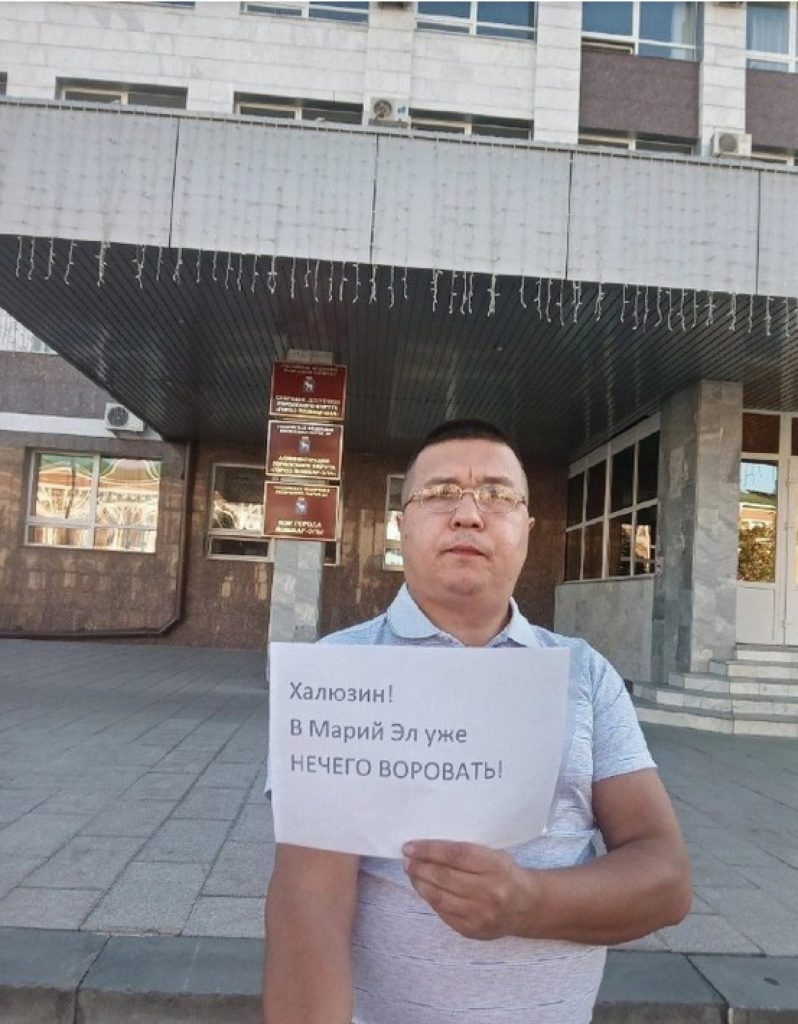
In February 2026, the Yoshkar-Ola City Court sentenced civic activist Sergey Mamaev to two years and eight months of imprisonment in a penal colony under Article 282.2 of the Criminal Code (alleged involvement in an extremist organization)4. The case was reported by journalist Alexey Seregin. Criminal proceedings against Mamaev were initiated in summer 2025. Since late July 2025, the activist has been held in pre-trial detention.
The charges were based primarily on Mamaev’s social media posts related to political actions initiated by the Anti-Corruption Foundation (FBK). Additionally, law enforcement authorities cited his mention in the Telegram channel “Navalny Team” and private correspondence with opposition figures as evidence of involvement in an extremist organization.
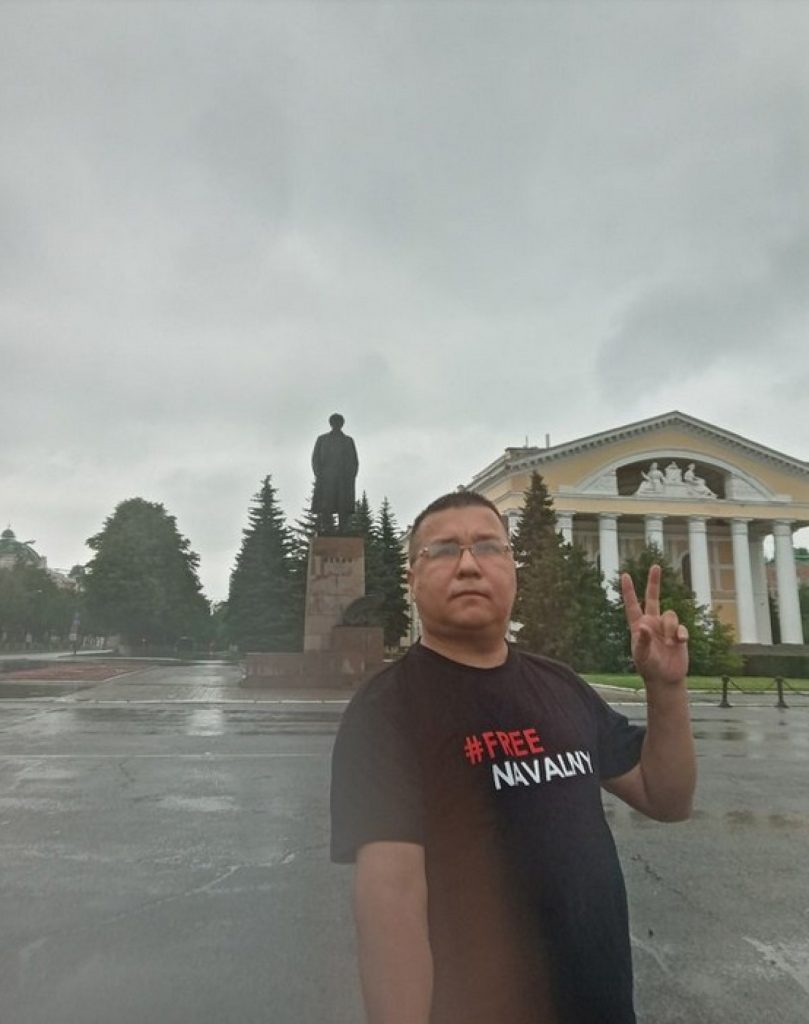
Mamaev had previously been subjected to administrative penalties, including for participation in pro Navalny activities. In June 2023, he was fined 1,000 RUB for wearing a “Free Navalny” T-shirt in a public place, which was classified as displaying extremist symbols.
In February 2024, following reports of the death of opposition politician Alexey Navalny in custody, Mamaev was detained while laying flowers at a memorial for victims of political repression.
https://zona.media/news/2026/02/16/mamayev
Human Rights Concerns:
– Criminalization of peaceful political expression and civic engagement.
– Broad and potentially arbitrary application of extremism legislation.
– Use of social media activity and indirect associations as grounds for prosecution. – Disproportionate restriction of freedom of expression and association.
– Pattern of escalating pressure on individuals previously targeted with administrative sanctions.
Relevant Legal and International Standards:
– Article 19 ICCPR — Freedom of expression.
– Article 21 ICCPR — Right of peaceful assembly.
– Article 22 ICCPR — Freedom of association.
– Article 29 Constitution of the Russian Federation — Freedom of thought and speech.
– OSCE commitments on political pluralism and civic participation.
Case 2: Failure of Municipal Road Maintenance and Lack of Transparency in Local Governance (Dubovsky settlement)
On 8 February 2026, local reports indicated that residents and land users in the settlement of Dubovsky (Kilemarsky district, Republic of Mari El) faced prolonged inaccessibility due to the absence of winter road clearing.
Despite regular payments for land аренду (reported total approximately 4.5 million RUB annually), access roads remained uncleared throughout the winter period. While in the central regions such an attitude of state companies towards people would seem unthinkable, complete indifference has been shown towards the fate of the so-called “backwoods” (in comparison with Moscow) – the Republic of Mari El. Residents reported repeated обращения to local authorities without effective response.
As a result, individuals were unable to access their properties to prevent structural damage caused by snow accumulation, posing risks to housing and property safety.
In response to administrative inaction, residents initiated self-organization and fundraising efforts to finance snow removal independently. However, conflicting information emerged regarding the allocation of public funds and the purpose of additional fundraising (including alleged discrepancies related to tractor transportation costs). Reports also indicate suppression of discussion and exclusion of individuals raising accountability concerns.
Human Rights and Governance Concerns:
– Failure of municipal authorities to provide essential infrastructure services.
– Lack of transparency and accountability in local decision-making and resource allocation.
– Potential misuse or misrepresentation of collected funds.
– Barriers to civic participation and suppression of public questioning.
– Risks to property and safety due to inaction.
Relevant Legal and International Standards
– Article 11 ICESCR — Right to adequate housing (including safe access).
– Article 19 ICCPR — Freedom of expression (including raising concerns).
– UN Convention Against Corruption — Transparency and accountability in public resource use.
– Article 2 Constitution of the Russian Federation — State obligation to protect citizens’ rights.
Case 3. Lack of Accountability Corruption and Misuse of Public Funds in Cultural Education Institution
A former director of a children’s school of arts was found guilty by a court of fraud and official forgery for actions committed between 2018 and 20243.1
According to the findings, the director falsified employee timesheets and unlawfully начислял bonuses, which were subsequently returned to him by staff. Despite denial of guilt, the court imposed a fine and ordered compensation of damages to the public budget.
Additional public allegations suggest broader concerns regarding the allocation of substantial бюджетные средства (including previously allocated 100 million RUB for repairs and planned 600 million RUB for construction), raising questions about oversight and potential networked control over financial flows within cultural institutions.
https://t.me/marireporter/4705
Human Rights Concerns:
– Misuse of public funds allocated for education and culture.
– Abuse of authority and coercive financial practices involving employees.
– Potential systemic corruption risks in cultural sector governance.
Relevant Legal and International Standards
– UN Convention Against Corruption — Prevention of abuse of public office.
– Article 25 ICCPR — Right to participate in public affairs(including fair governance).
– 13 ICESCR — Right to education (affected by misuse of resources).
Recommendations
Based on the documented developments in February 2026, the following measures are recommended:
1. Ensure Accountability in Municipal Service Delivery:
Establish clear responsibility and monitoring mechanisms for road maintenance and other essential services, particularly in rural areas, and ensure that public payments correspond to actual service provision.
2. Increase Transparency in Local Resource Allocation:
Introduce publicly accessible reporting on the use of бюджетных средств, including funds allocated for infrastructure and emergency services, and ensure independent oversight of local spending and fundraising practices.
3. Combat Corruption in Public Institutions:
Enhance financial oversight and auditing procedures in cultural and educational institutions, ensure accountability for misuse of funds, and prevent conflicts of interest in the allocation of large бюджетных проектов.
4. Protect Civic Participation and Expression:
Guarantee that residents can raise concerns, request clarifications, and participate in local decision making without fear of exclusion or retaliation, including in informal community structures.