
Monthly Report on Human Rights Violations in the Republic of Mari El and Mari people, Russian Federation
December 2025
Prepared by: Liza (the name is pseudonymized for safety reasons)
Executive Summary
The human rights situation in the Republic of Mari El in December 2025 is characterized by a stark contradiction between the excessive allocation of budgetary funds for redundant urban infrastructure and the systemic underfunding of vital public services. While the regional administration continues to invest hundreds of millions into repetitive construction projects, simultaneously liquidating protected recreational lands for commercial gain, rural emergency services remain critically ill-equipped to protect citizens’ lives and property. This mismanagement of resources is compounded by new discriminatory labor decrees targeting foreign citizens and a pervasive climate of administrative pressure that forces residents to retract public criticism of state failures. Together, these developments illustrate a governance model that prioritizes commercial interests and censorship over constitutional protections and public safety.
Methodology
The findings presented in this report are based on open-source information including research conducted by independent experts and activists. Where possible, the report cross-references multiple sources to verify accuracy. Photos, documentation shared by local activists. The report does not claim to be exhaustive. It focuses specifically on three sets of incidents in December 2025 which illustrate systemic patterns of repression, neglect, and disregard for international standards.
Findings
Case 1: Financial Negligence and Procurement Failures: The Chernyakov Boulevard Case
While claiming a lack of funds to preserve historical green zones, the regional administration has funneled massive budgets into redundant projects with failed oversight.
The Incident: A new tender of 400.6 million rubles was announced for the “second stage” of Chernyakov Boulevard. This follows a failed 2025 contract with “Regional Construction Company” (OOO RSK), which abandoned the site after being allocated 398 million rubles1.
The “Double Funding” Pattern: The authorities have now committed over 800 million rubles to a single site, while simultaneously selling 20+ hectares of the city’s historic “Dubovaya” meadows to commercial developers, claiming they could not find 500 million rubles for necessary bank reinforcement.
https://vk.com/wall-226769572_851
Laws Violated:
– Article 293 of the Criminal Code of the RF (Negligence): Failure to supervise high-value state contracts.
– Article 42 of the Constitution of the RF: Right to a favorable environment and access to public recreational resources.
– Federal Law No. 44-FZ: Ineffective and wasteful use of the state budget.
Case 2: Institutionalized Discrimination: Ban on Foreign Labor in Key Sectors
In December 2025, the Head of the Republic of Mari El signed a decree banning foreign citizens (patent holders) from working in several key economic sectors for 2026, including pharmacies, alcohol retail, and marketplace trade2.
The decree bars foreigners from selling medicine, alcohol, and operating in markets or food stalls. This measure, described by human rights defenders as “populist and xenophobic,” deprives thousands of their livelihoods during a period of documented labor shortages in the region.
Legal Implications: This move creates a “gray zone” of employment, increasing the risk of police extortion and systemic corruption.
https://yoshkarola.bezformata.com/listnews/mariy-el-inostrannim/154226003/
International Norms Violated:
– ILO Convention No. 111: Discrimination in respect of employment and occupation based on national origin.
– Article 26 of the ICCPR: Right to equality before the law and protection against discrimination.
– Article 6 of the ICESCR: The right to work and the opportunity to gain a living by work which is freely chosen.
Case 3. Failure of Emergency Services (Vizimyary Fire)
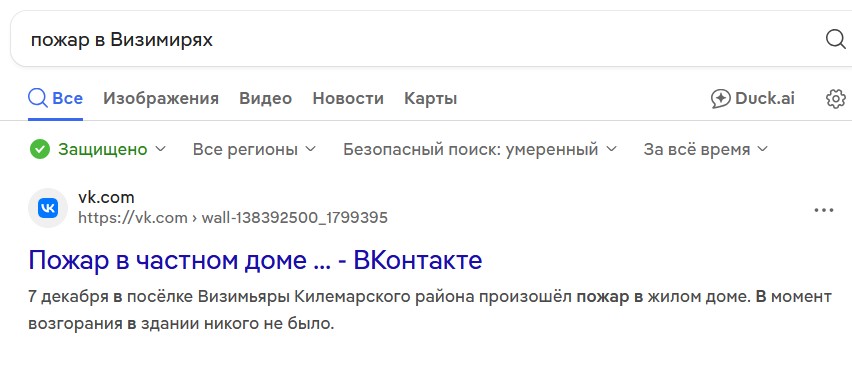
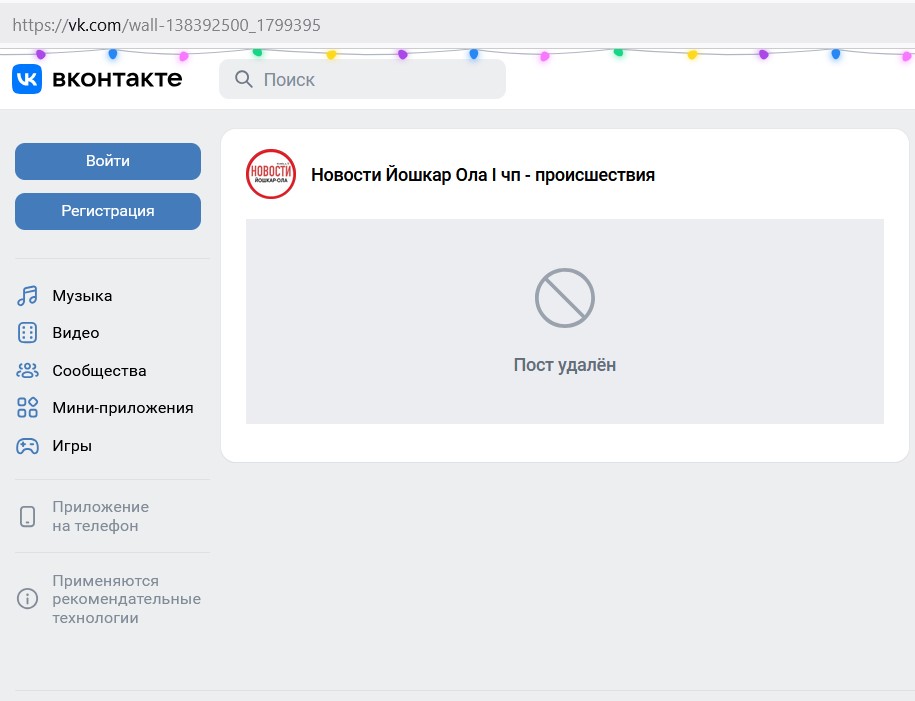
In December 2025, a residential house in the village of Vizimyary was destroyed by fire. The victim publicly stated on social media that the home could have been saved, but the local fire department lacked essential equipment and sufficient physically capable personnel.
Censorship: The victim deleted the post a few days later, following a pattern of self-censorship and administrative pressure on residents who criticize state services in the Republic of Mari El.
Laws Violated:
– Article 2 of the Constitution of the RF: Failure of the state to protect life and property.
– Federal Law No. 69-FZ “On Fire Safety”: Systematic underfunding and under-equipping of rural fire departments.
– Article 19 of the ICCPR: Violation of the right to freedom of expression due to the coercive environment that leads to the removal of public complaints.
• Evidence: Cited post from the “Made in Mari El” Telegram channel and local social media monitoring.
https://t.me/asd1978aa/1997
Recommendations
Based on the systemic violations documented in December 2025, the following actions are recommended to the authorities of the Russian Federation and the Republic of Mari El:
1. Prioritize Emergency and Social Infrastructure: Reallocate budgetary priorities from redundant and high-cost urban beautification projects, such as Chernyakov Boulevard, to the urgent modernization of rural emergency services (fire and medical) to prevent further loss of life and property.
2. Repeal Discriminatory Labor Decree: Rescind the executive order banning foreign citizens from key economic sectors to ensure compliance with ILO Convention No. 111 and prevent the growth of shadow economies and police extortion.
3. Halt the Liquidation of Public Lands: Establish a moratorium on the re-zoning of recreational territories (Categories R-3 and R-4) for commercial real estate, ensuring that historical and environmental preservation is not sacrificed for short-term commercial interests.
4. Protect Freedom of Speech and Accountability: Cease the practice of administrative pressure on residents who expose state failures in public services, ensuring that citizens can report infrastructure and safety defects without fear of retaliation or forced retraction.