
Report on Human Rights Violations in the Republic of Adygea
by Marianna Sheru
Human Rights Defender
October 2025
ABSTRACT
The documented incidents in October 2025 reveal a pattern of alleged human rights violations concerning criminal justice, freedom of expression, historical and cultural rights, and the right to lawful public activity in the Republic of Adygea. These recorded incidents expose a systematic pattern of transgression against human rights activists and the widespread suppression of dissent.
Persecution of Minors and Criminalization for Political Activity
Kevin Lik, a dual Russian and German citizen, was arrested in 2023 while still at school and became the youngest person in modern Russian history to have been convicted of treason. He was 16 years old at the time of the alleged crimes. It was not until he turned 18 that the sentence was passed. According to security officials, the young man had acted criminally through his various actions against Russia’s political direction and the operation of the Russian Armed Forces’ Central Military District in Ukraine.
Kevin Lik was born on May 10, 2005, in Montabaur, Germany. He attended public school from the age of six and finally received his Russian citizenship in 2015 when he turned 10 years old. At 12, along with his mother, Victoria, they would often vacation in Adygea (where his mother still has deep family ties). In 2017, they would return to Adygea permanently. Kevin was a successful student at a Russian school in Maykop, earning 14 diplomas from various Olympiads.
In February 2023, Lik was detained in Sochi. He and his mother may have been prepared to flee from the international airport there. Kevin was 17 years old at the time of his arrest.
According to the Federal Security Service, from December 23, 2021, to February 8, 2023, Kevin “conducted visual surveillance” and photographed the “locations” of a Russian military unit in Maykop. He sent the photographs to the email address of a “representative of a foreign country.” He claimed to have taken the pictures for personal use, but the FSB officers wrote in his testimony that he intended to hand them over to German intelligence agencies. Kevin Lik believes the case against him was opened to replenish the exchange fund. In December 2023, the Supreme Court of Adygea sentenced him to four years in prison – a term shorter than the minimum stipulated under the article for treason. The defendant’s age and chronic illnesses were considered as the mitigating circumstances. On August 1, 2024, a political prisoner exchange took place between Russia and the West. Russia released 16 individuals, including Kevin Lik.
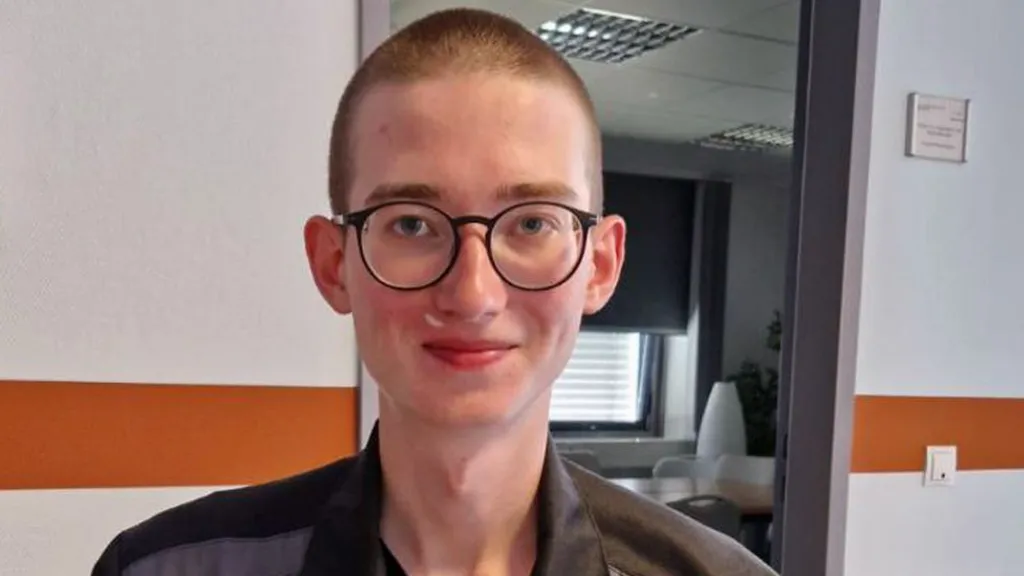
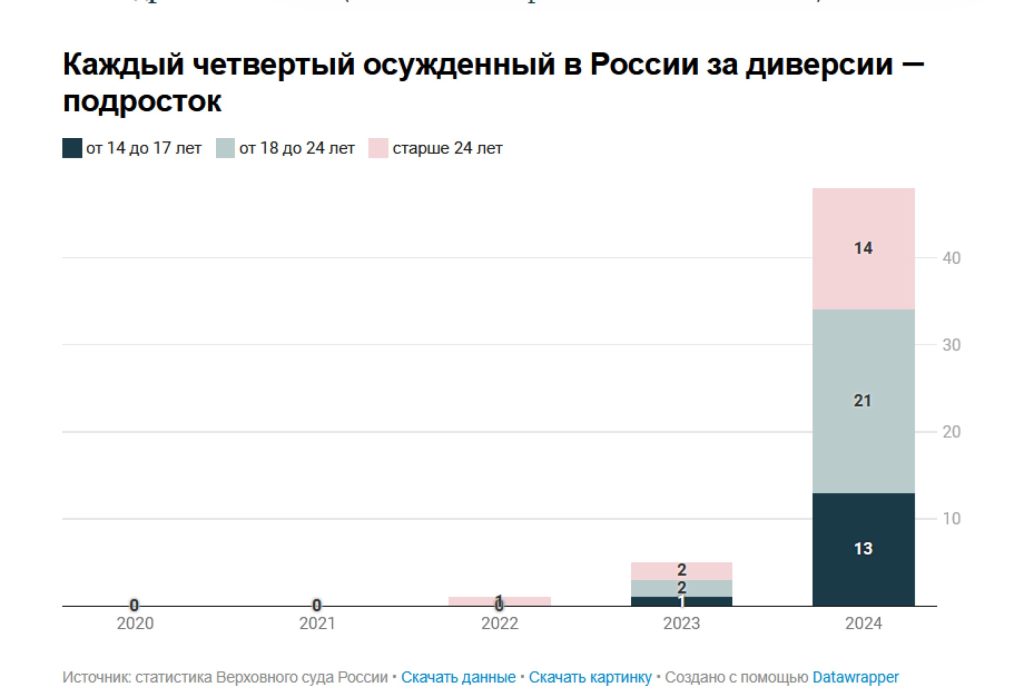
In October 2025, Kevin Lik announced that he had sent an official request on his social media to Kaja Kallas, the Vice-President of the European Commission, requesting that Marina Akhmedova be added to the EU’s personal sanctions list for complicity in the persecution of civil society activists and artists.
The basis for this petition stemmed from Marina Akhmedova’s public condemnation of 18-year-old student and street musician Diana Loginova (aka Naoko), who has fueled the ongoing repression of dissent in Russia after she performed various “extremist” songs by “foreign agent” Noize MC (as designated by the Russian tribunal). The letter emphasizes that the censure by para-government figures opens up the punitive machinery, increasing intimidation, and suppressing the freedom of expression.
(Naoko today: The initial 13-day jail sentence has been extended with back-to-back rearrests under the same charge, as well as new counts of hooliganism. “What is happening is what we call carousel arrests,” Dmitrii Anisimov, a human rights activist and spokesperson for the OVD-Info protest monitoring group. “Theoretically, it can continue forever. In practice, it could mean months in detention, and there is legal precedent for this.”)
https://www.severreal.org/a/kak-v-rossii-sudyat-detey-za-diversii-terakty-i-gosizmenu/33485875.html
https://www.instagram.com/p/DP6Cf-zCJEb/?hl=hu
Denial of Freedom of Opinion and Expression
The third international forum, “Dialogue on Fakes 3.0,” was held in Moscow in October. It was noted that “no new fakes have been detected in the Republic of Adygea, and positive trends in information security have been noted.” It is claimed that “Adygea is demonstrating a steady decline in disinformation, which confirms the effectiveness of the regional system for engaging with society in the digital space.”
Indeed, the number of criminal cases related to prosecution for freely expressing citizens’ opinions and corresponding publications on social media has significantly decreased compared to the first years after the invasion of Ukraine.
However, this is not the result of successful engagement with society. On the contrary, it is a direct indicator of pressure on the population and a de facto categorical ban on free speech. What was called “positive trends in information security” is, in fact, nothing more than total control and intimidation. Under the grip of an authoritarian regime and witnessing firsthand how any activity related to expressing a subjective civic position ends in brutal pressure and real prison sentences, people are afraid to voice their thoughts out loud. This can hardly be considered an achievement if Russia claims to be a democratic state governed by the rule of law.
Russia’s Full-Scale Invasion of Ukraine Deepens Restrictions on the Freedom of Speech in Russia and the North Caucasus Republics.
In March 2022, new repressive articles were added to the Criminal and Administrative Codes of Russia:
– a ban on “Public Actions Aimed at Discrediting the Use of the Russian Armed Forces” (discrediting the Russian army; Article 20.3.3 of the Code of Administrative Offenses and repeated discrediting of the Russian army; Article 280.3 of the Criminal Code)
– a ban on “Public Dissemination of Knowingly False Information Concerning the Use of the Russian Armed Forces” (dissemination of fake news about the Russian army; Article 207.3 of the Criminal Code)
In effect, the dissemination of any information critical of Russia’s war against Ukraine was banned. What constitutes “knowingly false,” who determines it, and by what criteria, remains unclear. Those found guilty of disseminating such information face up to ten years in prison.
In the first month since the new article’s introduction, the Investigative Committee of Russia has opened more than ten cases under it, with at least four suspects – residents of the South and North Caucasus. Currently, the number of cases of this type in the region is approaching 300.
https://gazeta-edinstvo.ru/news/obshchestvo/adygeya-demonstriruet-snizhenie-chisla-feykov1
Denial of Historical Memory
In addition to exerting restrictions on freedom of speech, the suppression of objective history and the colonization of regional cultures continue.
In the mid-19th century, due to the Russian expansion into the Caucasus, only 10% of the two million Circassian population remained in their historical homeland. Once the Russian Empire took the Circassian foothills, the survivors were forced into three reservations in the Caucasus Mountains.
These people were artificially divided and named by the colonizers into three groups.
The small group in the central Kuban region was called “Adyghe,” which has a consonant that semantically aligned to the Circassian self-designation.
In the Western Caucasus, they were called the “Circassians.”
In the Central Caucasus, the “Kabardians” were named to conform to the territory in which they were concentrated.
To prevent communication between the reservations, they were deprived of common borders, separating them with Cossack settlements.
It was against this aggressive demarcation, aimed at destructuring a unified people and severing their social, cultural, and societal ties, that the invaders’ political strategists created these republics from the three Circassian reservations where they now live: Adygea, Karachay-Cherkessia, and Kabardino-Balkaria.
Relying on their dual identities to successfully assimilate and to consolidate the loss of their indigenous identities, two of these republics were formalized. In 1922, the Circassian (Adyghe) Autonomous Oblast was established.
On October 5, 1990, the oblast was transformed into the Adyghe ASSR. Today, it is celebrated as the Republic Day. On March 24, 1992, the Republic of Adygea was proclaimed a part of the Russian Federation. On October 5, 2025, the people of the Republic of Adygea were once again forced to celebrate the anniversary of what became a historical humiliation—the externally imposed division of a near-extinct people who were driven beyond the borders of their homeland. This tragedy not only normalizes the crimes of colonization that had taken place but also replaces the true meaning of these events with the commemoration of pseudo-patriotism.
Telegram and WhatsApp Messaging Apps Restricted by Mandatory MAX Installation
Since the end of October, messaging apps Telegram and WhatsApp have been randomly made inaccessible for users in southern Russia. Complaints about messaging app outages have been received from Krasnodar Krai, Adygea, Volgograd, Astrakhan Oblasts, as well as Kabardino-Balkaria, North Ossetia, and Stavropol Krai. Information security experts suggest that authorities are testing methods for blocking and filtering calls via messaging apps.
Roskomnadzor is partially restricting the use of foreign messaging apps Telegram and WhatsApp, causing access issues in southern Russia, TASS reported on October 22.
The federally operated communication monitoring agency also responded to a state news agency’s inquiry about the causes of messaging app outages in the country’s southern regions, specifically Rostov-on-Don, Sochi, and Adygea.
Roskomnadzor’s response confirmed that the problems with Telegram and WhatsApp are due to government interference. The agency explained that the messaging apps are being restricted “to combat criminals” who use Telegram and WhatsApp to extort money and lure Russians “into sabotage and terrorist activities.” “Repeated demands for countermeasures by messaging app owners have been ignored,” Interfax quotes Roskomnadzor as saying.
All of this effort is happening against the backdrop of a required pre-installed Russian state-backed messenger called MAX. The mandatory app was introduced on June 4, 2025, under the Federal Law “On the Creation of a Multifunctional Information Exchange Service and Amendments to Certain Legislative Acts of the Russian Federation.”
In other words, the app was created from the top down, not from the bottom up, as is usually the case when consumers demand new ways and means of communication. MAX can thus be described as a controlled messenger, aiming to become the only communication platform, as competitors, including Telegram, refuse to hand over access to users’ messages to Russian law enforcement agencies.
https://www.kavkaz-uzel.eu/articles/416569
Denial of Lawful Public Activity
Activists who signed a petition to defend Larisa Tuptsokova (*) are facing harassment. Signatories began receiving phone calls from individuals claiming to be from the Ministry of Internal Affairs (MVD), persistently inviting them to appear at the department to “explain” their position on the petition. Some were not given specific reasons for the summons and were instead told to appear “as soon as possible.” Many refused to appear unless it was an official summons. According to the information received, during the interviews, MVD officers asked about their acquaintance with Larisa Tuptsokova, their knowledge of her activities in an extremist organization, their reasons for signing the petition, and the identity of those who had suggested it. They also sought the contact numbers of other signatories.
Human rights activists view the actions by security forces as “yet another attempt to obstruct legitimate public activity and exert psychological pressure,” despite the fact that “in accordance with Article 33 of the Constitution of the Russian Federation, citizens of the Russian Federation have the right to personally appeal, as well as to send individual and collective appeals, to state bodies and local government bodies,” and that “in accordance with Article 6 of Federal Law No. 59-FZ of May 2, 2006, ‘On the Procedure for Considering Appeals from Citizens of the Russian Federation'” a number of guarantees for the safety of citizens in connection with their appeals are established, including the “prohibition of persecution of citizens in connection with their appeal to a state body, local government body, or official criticizing the activities of the said bodies or officials, or for the purpose of restoring or protecting their rights, freedoms, and legitimate interests, or the rights, freedoms, and legitimate interests of others.”
(*Larisa Tuptsokova is a journalist, philologist, and translator from the Republic of Adygea who was groundlessly charged with participation in an extremist organization)
https://www.kavkaz-uzel.eu/articles/417036
Representatives of Georgia’s creative and academic intelligentsia also issued an open letter in support of Circassian activist Larisa Tuptsokova (lived and worked in the country for over 13 years), calling for an end to her persecution in Russia. Meanwhile, Rosfinmonitoring has added her name to its register of extremists and terrorists. The letter’s authors noted that her translation work of Georgian authors is humanitarian in nature and focused on preserving and developing the cultures of the peoples of the Caucasus. The letter was signed by renowned Georgian philologists, poets, historians, translators, and public figures.
https://www.kavkaz-uzel.eu/articles/417135
Recommendations
As the independent ombudsman for the Republic of Adygea, I advocate that government authorities and law enforcement agencies to comply with the Russian Federation’s international obligations under the International Covenant on Civil and Political Rights (ICCPR), the International Covenant on Economic, Social and Cultural Rights (ICESCR), the Universal Declaration of Human Rights (UDHR), and other international agencies.