
Monthly Report on Human Rights Violations in Ingermanlandia
Editor: Olavi Lappalainen
September 2025
INTRODUCTION
In September 2025, criminal and administrative prosecutions of citizens for online statements, public criticism of the government, and participation in local initiatives continued in St. Petersburg and the Leningrad Region. Trials and arrests demonstrate a consistent trend: law enforcement agencies use anti-terrorism and anti-extremism laws as a tool to crack down on dissent. At the same time, the courts maintain a prosecutorial bias.
Cases involving individuals without political clout—such as workers, school security guards, cleaners, and residents of small towns—require special attention. This highlights the expansion of persecution far beyond activist communities.
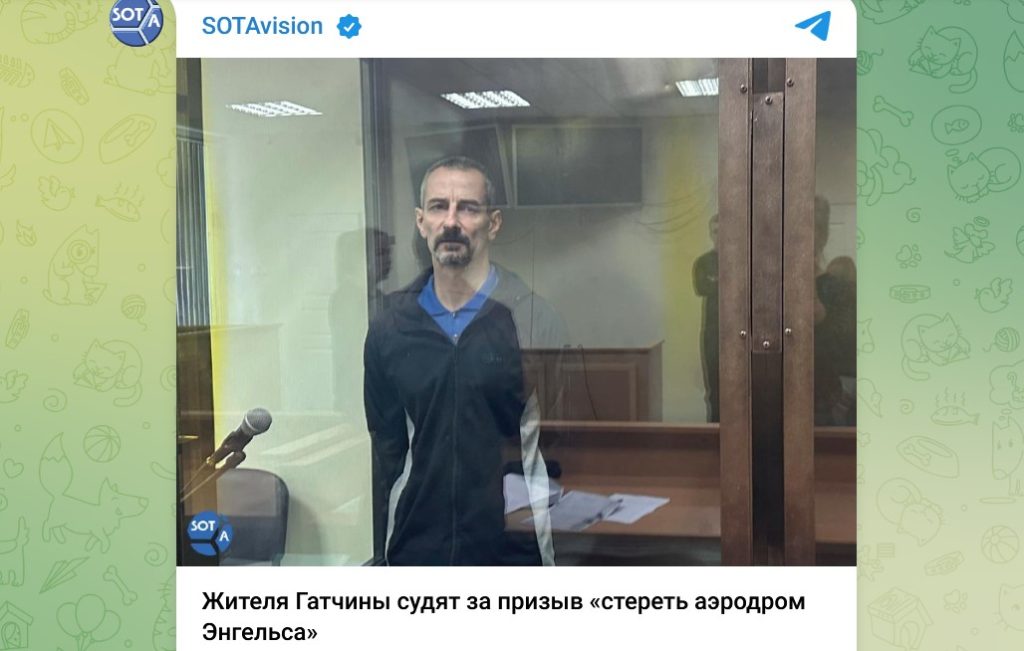
Zaretsky’s Case: A Fine Under Terrorism Law for Emotional Comments
The criminal case against Anton Zaretsky, a resident of the Leningrad Region, is compelling. The reason for its initiation was essentially a routine circumstance characteristic of authoritarian and totalitarian regimes—comments left online. It would seem that the Constitution of the Russian Federation guarantees the right to free expression, regardless of the form in which it is expressed—be it a kitchen conversation, a lecture on a university campus, or a comment on a social media site.
However, the long-standing practice of prosecuting such statements shows that Russian courts often rely not on the Constitution, but on laws adopted after the start of the so-called “special military operation” against Ukraine, laws that clearly contradict constitutional guarantees. According to critics, their goal is to intimidate, silence, and suppress dissent.
Anton Zaretsky was found guilty under Part 2 of Article 205.2 of the Russian Criminal Code and sentenced by the Western District Military Court to a fine of 500,000 rubles (later reduced to 400,000 rubles, taking into account the time spent in pretrial detention).
He spent six months in custody for two comments left under news stories about the bombing of a GRU officer’s car and the crash of a Ukrainian drone into a residential building in Engels.
This sentence reflects a trend in which courts place disproportionate weight on the context of online statements, ignoring the emotional nature of the reaction, the absence of malicious intent, and the absence of any actual harm.
https://t.me/sotavisionmedia/49924
https://zona.media/news/2025/09/02/zaretskii
Kurylyov’s Trial: Five Comments Counted as “Justification of Terrorism”
Another case initiated by Russian security forces against online expression was opened in St. Petersburg against Andrei Kurylyov, charged under Part 2 of Article 205.2 of the Russian Criminal Code.
The 1st Western District Military Court heard his case. Andrei openly expressed disagreement with the policies of the current Russian government and with the state’s actions aimed at destroying Ukrainian national identity. He also criticized figures and events related to the war, including Vladlen Tatarsky and the construction of the Crimean Bridge, which was carried out in violation of international law in occupied Crimea.
Essentially, he expressed his position and his own perspective on the situation. In this situation, two sides are apparent: the perpetrator and the victim; and today, the victim is Ukraine and its people, who are experiencing daily artillery shelling, drone attacks, and energy collapse. However, it appears the Russian authorities are ignoring this reality, remaining locked in their own ideological world dominated by revanchism, historical resentment, and the desire to restore influence within the borders of the lost USSR. The consequence of this stance is the suppression of any dissent and repression of ordinary citizens who, in the state’s view, could influence public sentiment.
Kurylyov was arrested on December 17, 2024, and sentenced to five years in a general regime penal colony.
The defendant, 39, worked as a radio equipment assembler. This case is yet another example of how internet comments lacking any signs of organization or genuine public danger are classified as terrorist offenses. This practice effectively blurs the boundaries of criminal prosecution, extending them to any harsh or emotional statements
https://zona.media/news/2025/09/10/kurylev
Five Years in Prison for a School Security Guard: A Post on Bucha as “Fake News about the Russian Army”
The Russian repressive system has sentenced another person, Alexander Glushkin, who worked as a security guard at the school. He was repressed to prison for a post dedicated to a topic that has long been extremely sensitive for the Russian authorities – the tragedy in Bucha, where, according to international human rights organizations, Russian military personnel committed mass crimes against civilians. Russian officials continue to deny responsibility, claiming that the killings were allegedly committed by “Nazis” – a term often used in Russian discourse to describe any Ukrainian military personnel.
A report by the international human rights organization Human Rights Watch, titled “Russian Forces’ Trail of Death in Bucha,” states that Russian military personnel are involved in “extrajudicial executions, unlawful killings, enforced disappearances, and torture” in the city.
The convicted individual merely recounted information already published by international organizations, but the issue remains extremely sensitive for the Russian authorities. Hence, the harsh sentence: five years in prison for a social media post.
Despite the man having two minor children, a diagnosed cardiovascular condition, and the need for constant medication, he was placed in pretrial detention. According to the defendant, vital medications were not provided regularly. The court ignored the defense’s arguments about his serious health and family circumstances.
Glushkin’s case demonstrates how the “fake news” article is being transformed into a tool for punitive pressure on ordinary citizens, not just public critics of the government.
Detention of a “Zarosli” Activist: Pressure on Urban Environmental Defenders
Being a police officer in modern Russia often means wielding de facto powers that go beyond the equality before the law enshrined in the Constitution of the Russian Federation. In practice, however, citizens’ rights are often secondary to the position of a government official.
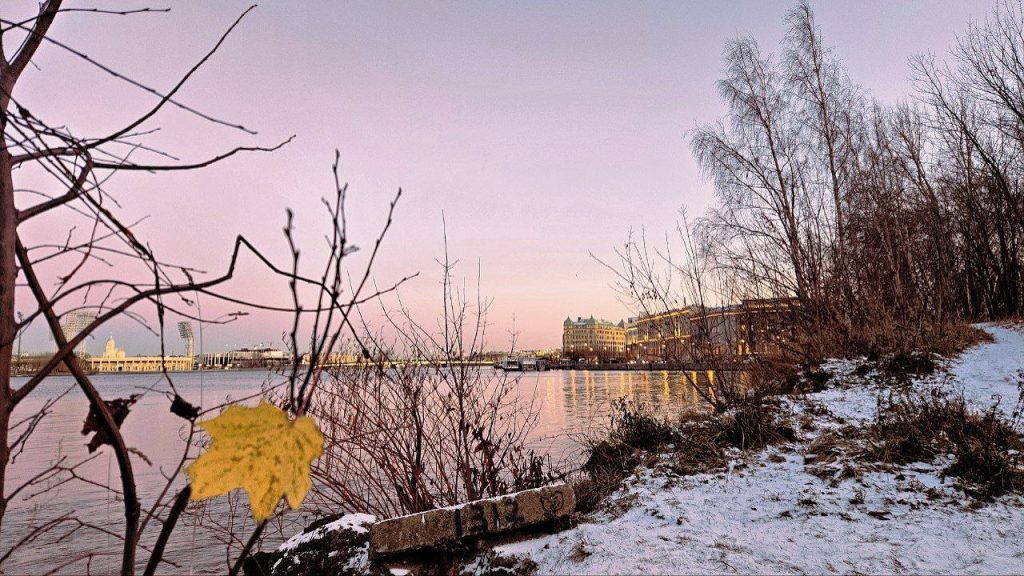
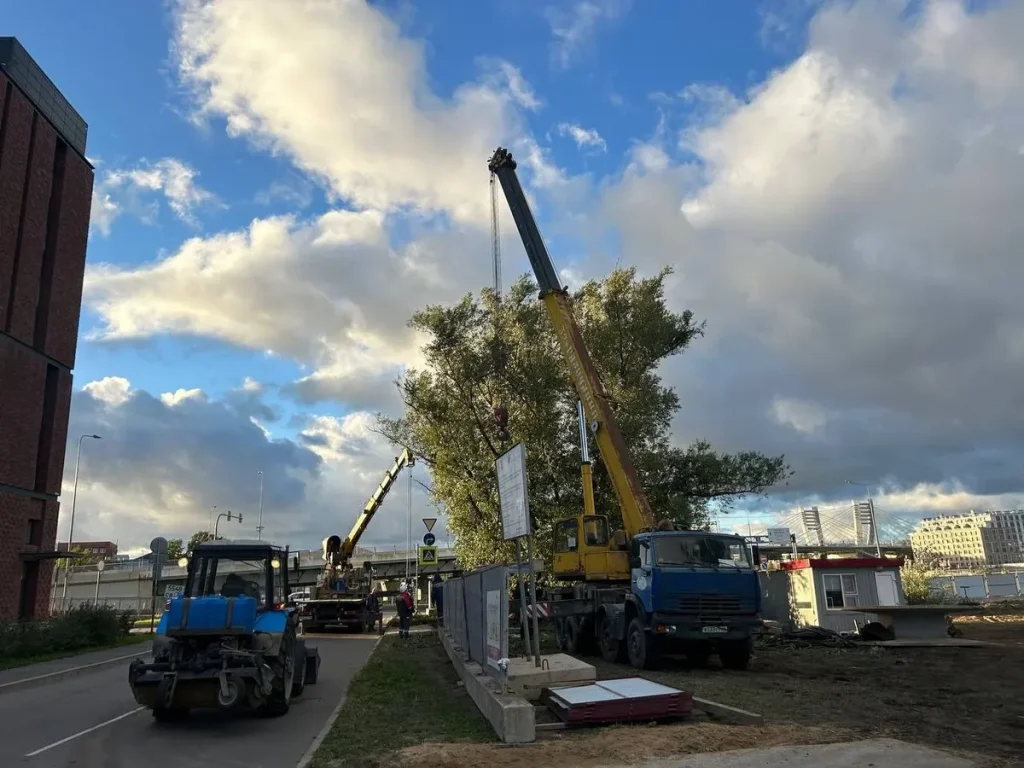
At the end of September, an activist protesting against the development of Zarosli Park was detained in St. Petersburg. She was taken to Police Station No. 30, where she spent the night. She was charged under Articles 20.1 and 19.3 of the Code of Administrative Offenses of the Russian Federation.
The conflict began when the activist, exercising her legal right, asked the police officer who arrived at the scene to identify himself and show his service identification. However, the officer reacted hostilely to this demand, leading to her arrest and transfer to the police station.
The situation unfolded amid a conflict over the park’s status: on September 25, the park received protected status, prohibiting construction work until the necessary assessments were completed. Despite this, construction continued intermittently, prompting protests from residents.
This episode demonstrates that pressure from the authorities is felt not only by political activists but also by participants in local civic initiatives seeking to protect the urban environment and existing legal norms.
https://ovd.info/express-news/2025/09/25/v-peterburge-zaderzhali-zaschitnicu-parka-zarosli

Gazprom Cleaner Elena Chebotareva: Criminal Case for Comments About the Russian Volunteer Corps
Along with the Bucha issue, the issue of volunteer units composed of Russian citizens fighting on the Ukrainian side remains extremely sensitive for the Russian authorities. Members of such units in Russia face lengthy prison terms, including life imprisonment, for treason and defection. However, the repression affects not only those directly involved in the fighting but also ordinary citizens who express sympathy for these units.
For example, the 1st Western District Military Court has begun hearing the case of 47-year-old Elena Chebotareva, a cleaner at a Gazprom branch in Ukhta. She is charged under Part 2 of Article 205.2 of the Russian Criminal Code for comments published on the social network Odnoklassniki in March 2024.
In her posts, Chebotareva expressed support for the Russian House of Culture (RDK) and the Freedom of Russia Legion. During the investigation, colleagues testified against her, stating that she had criticized the war and the current authorities.
This situation evokes associations with late Soviet-era and past repressive practices, when denunciations were used as a tool of pressure and self-defense in a climate of fear and mistrust.
Chebotareva pleaded guilty; in May 2025, her name was added to the Rosfinmonitoring Service’s list of “extremists and terrorists.” She is the sole provider for her daughter, a student with a nervous system disorder; her monthly income is approximately 30,000 rubles.
Despite her social vulnerability and the absence of any public danger, the investigative authorities classified her comments as “justification of terrorism.” This case clearly demonstrates that criminal prosecutions extend to people from the most socially vulnerable groups, for whom such charges have particularly devastating consequences.
https://zona.media/news/2025/09/22/chebotareva
CONCLUSION
The events of September demonstrate a further tightening of repressive measures against citizens whose statements or actions conflict with the state’s official position. A notable feature of the month is the significant number of cases against people without political status: technical workers, residents of small towns, and activists of local initiatives.
Articles 205.2 and 207.3 continue to be applied with the broadest possible scope, becoming a universal tool for controlling public space. Disproportionate preventive measures, disregard for the medical indications and social status of defendants, and prolonged pretrial detention in “non-obvious” cases are signs of a systemic human rights violation.
These processes require the attention of human rights structures and documentation, as they affect the fundamental rights to freedom of expression and a fair trial.