Monthly Report on Human Rights Violations in Ingria
Editor: Olavi Lappalainen
October 2025
INTRODUCTION
In October 2025, a new wave of cases related to restrictions on freedom of assembly, expression, and dissemination of information was recorded in St. Petersburg. A consistent trend is observed: repressive measures are being applied to both politically active citizens and those not involved in organized activities, including amateur musicians, young people, and low-wage workers. The October cases demonstrate that law enforcement agencies continue to expand their influence in the public space, interpreting any public activity as a potential threat. Against a backdrop of tightening legislation, pressure is intensifying, and courts are increasingly reluctant to consider health, social status, and the circumstances of cases. Below are the most characteristic cases, reflecting the month’s overall law enforcement context.
Mass Arrests of Members of the Street Music Group “Stoptime”
October brought a new round of pressure to street musicians in St. Petersburg’s public spaces, namely a group called Stoptime, who played a pop song by exiled Russian rapper Noize MC, a vocal Kremlin critic.
Russian independent artists Monetochka and Noize MC, both of whom are designated foreign agents in Russia. Their street performances were regularly posted on social media. More notably, the songwriters themselves were nominated for the Nobel Peace Prize on December 9, 2024, by a group of professors at Oslo Metropolitan University for their creativity and anti-war stance.
Noize MC publicly condemned Russia’s invasion of Ukraine in February 2022. In a joint statement with Monetochka, the artists emphasized their opposition to the “monstrous and dishonest war unleashed by the Russian authorities against Ukraine”. They considered it their duty “not only to openly express our disagreement, but also to help those whose lives have been destroyed by the war.”
In the spring of 2022, they held a charity European tour, “Voices of Peace,” the proceeds of which—340,000 euros—were donated to the Polish foundation Siepomaga to provide medical, food, human rights, and other humanitarian aid to Ukrainian refugees. Later, on February 24, 2023, the 11th concert of the tour took place in Istanbul, raising another 80,000 euros.
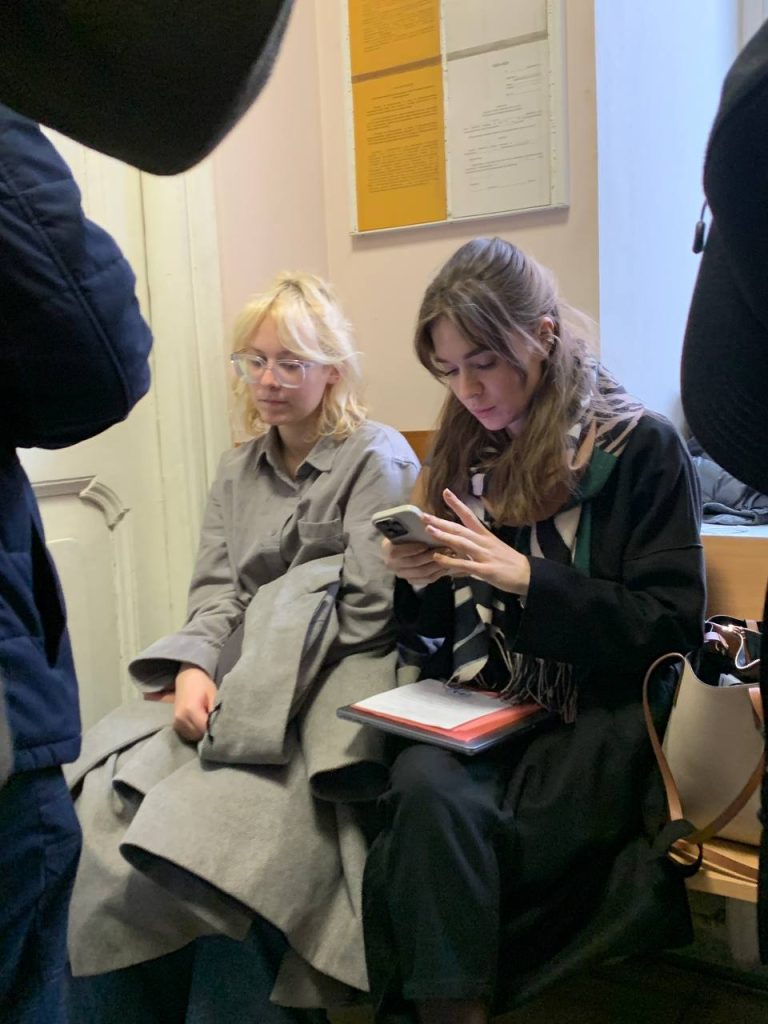
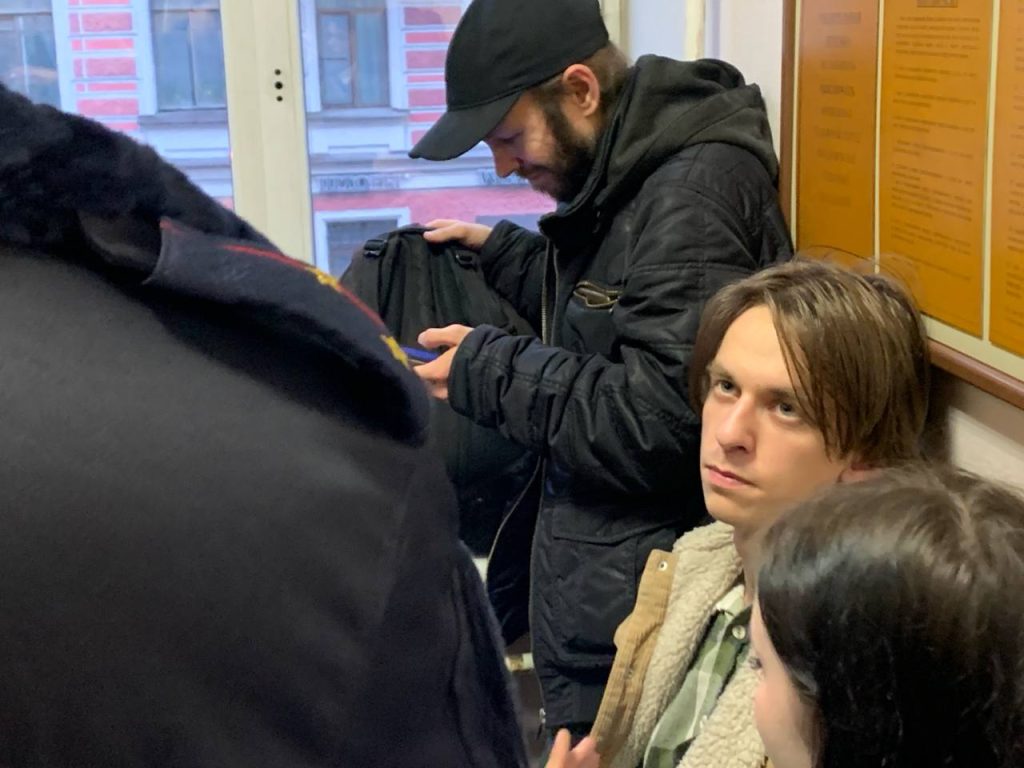
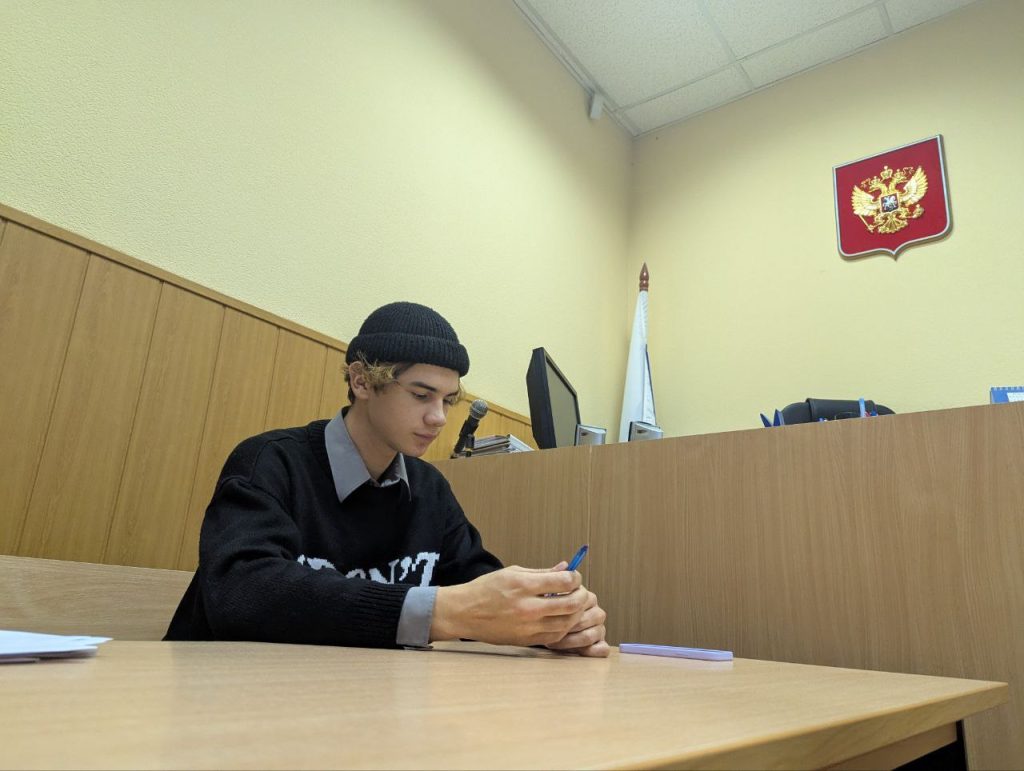
On October 15, 2025, 18-year-old vocalist of the band “Stoptime,” Diana Loginova (Naoko), was arrested for playing Noize MC’s popular song “Swan Lake Cooperative.” The following day, the Dzerzhinsky District Court sentenced her to 13 days of administrative arrest under Article 20.2.2 of the Code of Administrative Offenses (organizing the simultaneous presence of citizens).
Another charge was additionally filed against her under Article 20.3.3 of the Code of Administrative Offenses (discrediting the army), which was still pending at the time of the hearing.
The other members of the band were also simultaneously detained: Guitarist Alexander Orlov, 12 days under Article 20.2.2 of the Code of Administrative Offenses; Drummer Vladislav Leontyev, 13 days under the same article.
The courts classified their street performance as “organizing” an event, finding that the gathering of approximately 70 spectators “disrupted public traffic.” The administrative charges were brought following a denunciation from 28-year-old passerby Mikhail Nikolaev, who happened to see the concert.
After having served cycling court dates and “carousel arrests”, two members of Stoptime have since left Russia.
This episode highlights the growing pressure on the street cultural scene, from unauthorized concerts to solo performances, which are increasingly being interpreted as a violation of public order, even in the complete absence of a political context.
https://zona.media/news/2025/10/16/naoko-arest
https://ovd.info/express-news/2025/10/16/18-letnyuyu-vokalistku-gruppy-stoptaym-dianu-loginovu-arestovali-na-13
https://zona.media/news/2025/10/16/naoko-arest
https://t.me/sotavisionmedia/51751?single
Two Years in a Penal Colony for a Video of a Passport Being Burned
The Russian state is particularly sensitive to its own symbols and does not hesitate to ruin the lives of anyone it deems to be infringing on them, thereby demonstrating its readiness to continue to deal with those who express political opinions or disagree with the government’s actions with the same severity.
In October, a court convicted 24-year-old Alexandra Maroti, finding her guilty under two articles of the Russian Criminal Code: — Article 329: desecration of the national emblem; — Article 213, Part 1, Subparagraph “b”: hooliganism motivated by hatred.
The conviction was based on a video published in June, in which Maroti burns her Russian passport and accompanies the action with comments, attributing it to fatigue from everyday and work-related problems. After her arrest on June 16, she was placed in pretrial detention, and the court subsequently sentenced her to two years in a penal colony.
This case became yet another example of the harshest interpretation of symbolic gestures, which the courts had previously more often perceived as petty hooliganism or a form of personal protest.
https://ovd.info/express-news/2025/10/27/peterburzhenka-poluchila-dva-goda-kolonii-poseleniya-iz-za-video
Court Denies the Release of Stricken Teenager Yegor Balazeikin
The case of 19-year-old Yegor Balazeikin has become yet another telling example of cases where medical grounds are ignored to preserve punitive logic.
A court in St. Petersburg denied Balazeikin’s request for release on health grounds, despite his serious diagnoses—autoimmune hepatitis and primary sclerosing cholangitis—which have already led to liver fibrosis and the risk of developing cirrhosis. The defense insisted on an up-to-date examination, but Judge Marina Rudenko relied on outdated reports from 2 and 3 years ago, refusing to order new medical tests. Balazeikin’s mother emphasized that without modern diagnostics, it is impossible to assess the progression of the disease objectively, but the court ignored these arguments.
Balazeikin was sentenced in 2023 to six years in prison for attempting to set fire to a military registration and enlistment office—an act he committed in protest against Russia’s invasion of Ukraine. Despite his grave health, the court denied him release, demonstrating a trend that is increasingly evident in politically sensitive cases.
This case demonstrates a precise formalism in the approach to medical grounds: the use of outdated documents rather than up-to-date diagnostics reflects a reluctance to consider the individual’s actual condition. In such cases, medical examinations effectively become a tool for confirming a pre-determined decision rather than a means of objectively assessing health.
The political context is clearly putting pressure on the judicial system: defendants in protest cases are consistently denied mitigating measures even when they have life-threatening illnesses. This creates a dangerous precedent of ignoring serious diagnoses that, in other circumstances, would have justified a humane decision.
As a result, judicial practice demonstrates the priority of punitive logic over medical ethics—the right to life and health for those accused of sensitive offenses turns out to be secondary to the interests of repressive state policy.
https://t.me/paperpaper_ru/62830
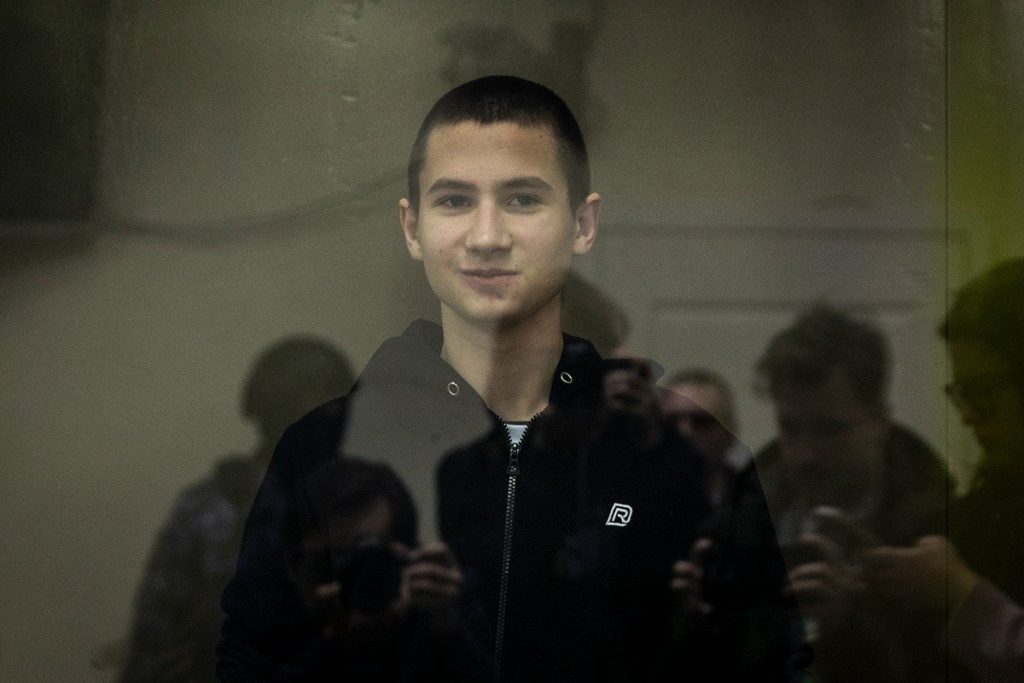
Five and A Half Years in Prison for Messages Supporting the Russian Volunteer Corps
Another case involving volunteer battalions in which Russian citizens are fighting on the Ukrainian side. In October, 48-year-old St. Petersburg resident Alexei Bykov was sentenced to 5.5 years in prison under Article 205.2 of the Russian Criminal Code (justification of terrorism).
The charges stemmed from messages in the “Russia Will Be Free” chat, where Bykov discussed the RDC’s activities and encouraged people to join. According to his relatives, FSB officers beat and pressured him during his arrest: Bykov reported severe injuries, temporary hearing loss, and deteriorating vision. He was forced to record a statement on camera and sign blank sheets. He believed the security forces were merely going through the motions and expected to be fined.
According to Bykov, the case was initiated following a conflict with the administration of the “East-West” Telegram chat over discussions of the war. He also received a message from an unknown user who attempted to engage him in “photographing objects,” but he declined, which may indicate provocative actions by third parties.
This case is part of a growing series of cases in which discussions in closed or semi-open chats are being treated as direct calls for terrorism, and the severity of the penalties imposed is constantly increasing.
https://t.me/endoflaw/1609
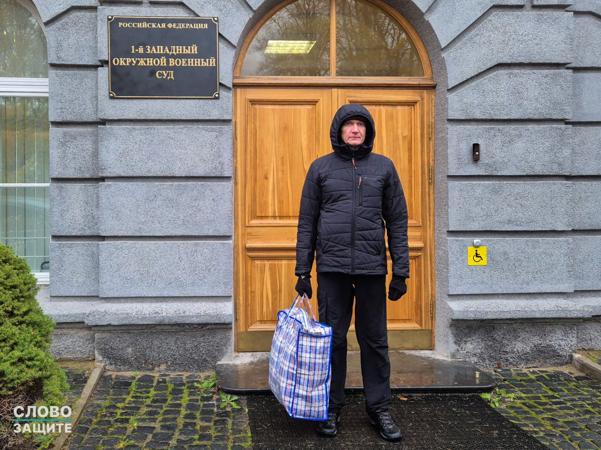
Eight Years in Prison for a Loader from St. Petersburg for Posts on a Blocked Page
The sentence handed down to 56-year-old Dmitry Sorokin on three counts—public calls for extremism, dissemination of “fake news” about the Russian army, and justification of terrorism—is indicative of a growing pattern of repressive practices against ordinary citizens previously unconnected to political activism.
Even though Sorokin’s posts on VKontakte were blocked at the prosecutor’s office’s request and are inaccessible without a VPN, the court deemed them a dissemination of materials “to an indefinite number of people.” The use of a free VPN by security forces to view the page underscores a formal, uncompromising approach to evidence, in which technical details serve as grounds for criminal prosecution.
In court, Sorokin explained that he viewed the blocked page as a personal archive for later rereading. The sentence stands out for its severity: a long prison term was imposed on an older man with no ties to activist groups, highlighting the growing repression of ordinary citizens.
Taken together, Sorokin’s case demonstrates that modern criminal prosecution practices in Russia are shifting toward punishing symbolic and remote online actions, turning even the personal storage of information into grounds for long-term imprisonment.
https://zona.media/news/2025/10/17/srkn
CONCLUSION
In October 2025, St. Petersburg and the Leningrad Region further confirmed that criminal and administrative law are being used as tools to control the expression of opinions and the public presence of citizens.
Characteristics:
- – expansion of repression to cultural communities (the Stoptime case)
- – harsh sentences for symbolic actions (passport burning)
- – refusal to consider the defendants’ health (the Balazeikin case)
- – application of anti-terrorism statutes to private correspondence (the Bykov case)
- – criminal sentences for posts on blocked pages (the Sorokin case)
These accounts demonstrate a deeper narrowing of the space for peaceful expression and increasing pressure on socially vulnerable groups—teenagers, artists, low-wage workers, and people with chronic illnesses. Law enforcement is increasingly focused not on the circumstances and proportionality of punishment, but on a show of force and intimidation.
These dynamics require ongoing monitoring and independent assessment, as they directly affect the fundamental rights of citizens and the quality of the legal environment in the region.