
Monthly Report on Human Rights Violations in the Republic of Karelia (Russian Federation)
Reporting Period: November 2025
Prepared by: Jana (last name removed for safety reasons)
Executive Summary
This report addresses recent developments in the Republic of Karelia, Russian Federation, in the month of November 2025. It highlights six incidents of human rights violations: cultural appropriation of an important cultural Karelian figure, teaching stuff salary reduction without prior notice, water supply interruption to a settlement with vulnerable groups, neglect of critical infrastructure for Riekkalansaari island and endangering the local population, two cases of possible arbitrary arrests.
The documented incidents reveal a consistent pattern of violations of cultural, social, and civil rights, including the failure to provide effective remedies, disregard for the protection of indigenous heritage, insufficient access to basic necessities, breaches of fundamental principles of fair trial and protection against arbitrary detention, violation of the rights on freedom of expression and association. Such practices may be incompatible with the Russian Federation’s obligations under the International Covenant on Civil and Political Rights (ICCPR), International Covenant on Economic, Social and Cultural Rights (ICESCR), and the ILO Convention Nο.95: Protection of Wages Convention, and may be in violation of the United Nation’s Declaration on the Rights of Indigenous Peoples (UNDRIP)
Total number of violations: 19
Methodology
The findings presented in this report are based on open-source information including official communications by Russian authorities, regional and federal legislation, credible media reporting, and research conducted by independent experts. Where possible, the report cross-references multiple sources to verify accuracy.
The report does not claim to be exhaustive. It focuses specifically on six sets of incidents in November 2025 which illustrate systemic patterns of international law violations and disregard for international standards.
Findings
I. Cultural Violations
A. Cultural appropriation of a Karelian national poet
On 4th November 2025, authorities of the Republic of Karelia inaugurated a public monument in Petrozavodsk dedicated to the 19th– century folklorist Irina Adreyevna Fedosova. According to the official announcement, Fedosova was described as a major contributor to Russian Folklore, and the inscription on the monument reads “Russian oral storyteller.” However, Fedosova was a distinguished bearer of Karelian oral poetry, and her repertoire is rooted in the distinct Karelian cultural-linguistic traditions.
By publicly commemorating this tradition-bearer under the rubric of “Russian folklore,” the monument effectively reassigns a body of intangible cultural heritage originating in the Karelian cultural group to the national dominant culture. In an interview with a representative of local Karelian civil society, who shall remain anonymous for safety reasons, the individual expressed concern that “through such methods of neutralizing distinctiveness, a systemic process of eroding the ethno-cultural identity of the Finno-Ugric peoples in the Russian Federation is underway.”
This act may be characterized as cultural appropriation or cultural assimilation in the sense of institutional reclassification and absorption. As a state-endorsed and enduring symbol, the monument conveys normative authority regarding the ownership of cultural heritage, potentially overshadowing the identity and heritage of the native community. Through such reclassification, the specific regional and ethnic context of Karelian oral traditions may be obscured, diminishing the visibility of local cultural identity and undermining the capacity of the affected community to claim and preserve its distinct heritage.
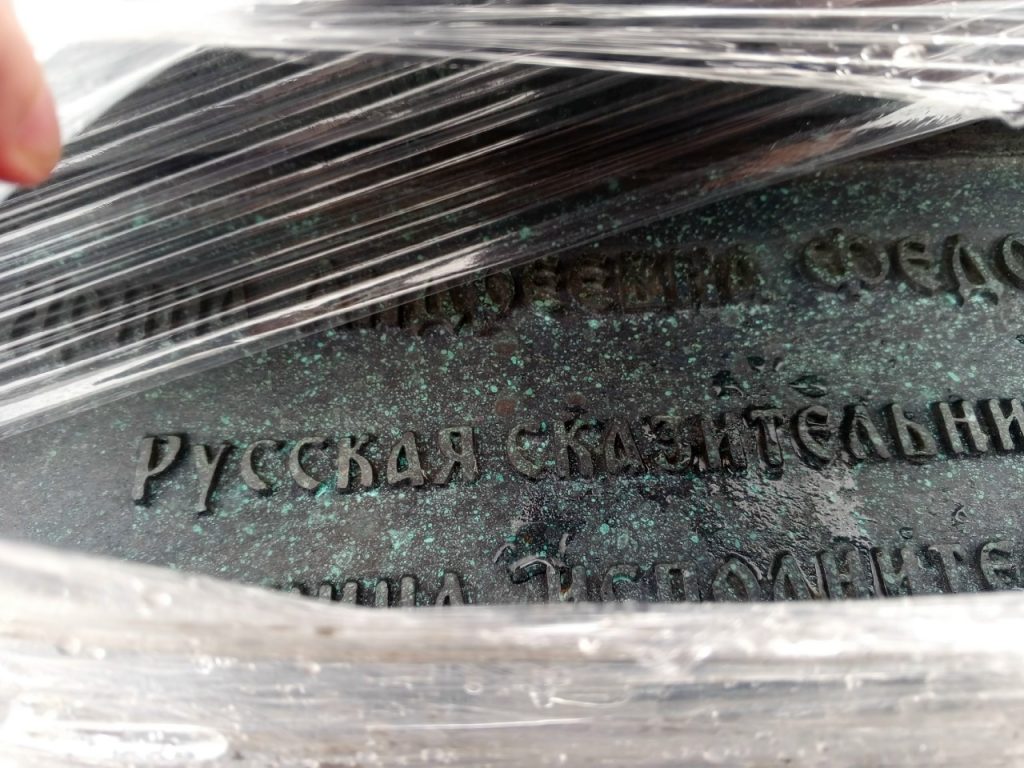
The misrepresentation of Irina Adreyevna Fedosova as part of Russian folklore may raise concerns under the following international human rights standards:
- Article 27 of the ICCPR: The reclassification may interfere with the Karelian community’s ability to maintain and publicly express its cultural identity.
- Article 15 of the ICESCR: The misrepresentation may affect efforts to preserve and develop Karelian cultural heritage.
Although the Russian Federation is not legally bound by UNDRIP and the Karelian people are not universally recognized as Indigenous, it should be noted that the misrepresentation of Irina Andreyevna Fedosova may also raise concerns under:
- Article 8 of UNDRIP: The state-endorsed appropriation of a Karelian oral storyteller into Russian culture may constitute an act of assimilation.
- Article 31 of UNDRIP: Misattributing Fedosova’s Karelian oral tradition to “Russian folklore” may interfere with the Karelian community’s ability to control its cultural heritage.
1. https://tass.ru/obschestvo/25534525
2. https://t.me/Karjalan_Kansallinen_Liike/236
II. Socioeconomic rights violation
A. Unexpected salary reduction of teaching stuff
In November 2025, multiple independent news outlets reported that teachers in the Loukhsky districts of the Republic of Karelia experienced unexpected salary reductions, applied retroactively from September 2025, without prior consultation or formal notice. According to publicly available information, the 2025 regional budget of Karelia legally allocated funds for public-sector wages, including those for teachers, and included planned salary increases and indexations. However, no municipal-level budget execution reports for 2025 are publicly accessible for the Loukhsky district, preventing verification that the allocated funds were fully distributed to teachers.
This situation suggests a potential violation of teachers’ rights under the labor law of the Russian Federation, including the right to timely and full payment of wages. It may also raise concerns under international labor standards, including Article 7 of the ICESCR and ILO convention No. 95. More broadly, it highlights issues of transparency and accountability in municipal public finance as it relates to funding for the education sector.
3. https://t.me/dailykarelia/20046
4. https://ptzgovorit.ru/news/uchitelyam-karelskoy-shkoly-otmenili-vse-doplaty?page=13
5. https://louhiadm.ru/finansi/bjudzhet-louhskogo-municipal-nogo-rajona/
B. Water Supply Interruptions in settlements
In November 2025, residents of Pyaozerky settlement in Loukhsky District experienced a complete interruption of water supply for at least three days during severe winter conditions. This affected vulnerable populations, including families with small children. According to a report from a local resident, seasonal preparation and maintenance of water infrastructure, which should have been completed by August 2025, were neglected. The lack of access to water prevented residents from performing essential daily activities, such as hygiene and sanitation, exposing them to serious health risks.
Comparable incidents of water supply interruptions and infrastructure failures were reported across other settlements in the Republic during the same month:
- Sortavala: Planned and emergency water interruptions occurred due to reconstruction of aging pipelines.
- Petrozavodsk: Temporary water outages were reported following emergency repairs to municipal networks.
- Segezha: Maintenance works caused temporary suspension of hot water and heating services.
Taken together, these examples illustrate systemic deficiencies in the maintenance and operation of water and utility infrastructure, particularly in remote and northern settlements, where harsh climatic conditions increase residents’ vulnerability. The incidents indicate a failure by municipal and regional authorities appointed by Moscow to implement preventative measures necessary for the protection of citizens during extreme winter conditions and reflect a broader pattern of neglect in water infrastructure management, which risks realization of basic socioeconomic rights.
These incidents may constitute violations of the Russian Federation’s obligations under international human rights law, including:
- Article 2(1) of the ICCPR: States are required to take steps for the realization of rights without discrimination, particularly protecting vulnerable populations.
- Article 11(1) of the ICESCR: Guarantees the rights to an adequate standard of living, including access to safe water and sanitation; preventable interruptions violate this rights
- Article 12(1-2) of the ICESCR: Protects the highers attainable standard of physical and mental health; denial of water in extreme cold directly endangers health, particularly for children, the elderly, and persons with disabilities.
- Article 24 of the CRC: Recognizes the right of children to health and access to adequate water and sanitation.
- Article 27 of the CRC: Affirms the right to an adequate standard of living necessary for development and well-being.
6. https://gubdaily.ru/news/v-karelskom-poselke-uzhe-tri-dnya-net-vody-na-ulice-moroz-do-17/
7.https://karel.aif.ru/society/zhitelyam-sortavaly-rasskazali-skolko-budut-prodolzhatsya-otklyucheniya-vody
8. https://petrozavodsk.bezformata.com/listnews/otklyuchili-vodu/153724381/
9.https://karel.mk.ru/incident/2025/11/06/zhiteli-segezhi-segodnya-na-poldnya-ostalis-bez-tepla-i-goryachey-vody.html
C. Riekkalansaari bridge neglect
In November 2025, residents of the settlement of Rantue on Riekkalansaari island, located in Sortavala District, reported the critical deterioration of the island’s only bridge connecting it to the mainland. According to official reports, residents documented that the pontoon bridge had become dangerously unstable, with the pedestrian section visibly leaning to one side and shifting during use. Regional authorities acknowledged the problem, noting earlier temporary repairs and indicating that the complete replacement of the bridge was planned for 2028. However, no immediate safety measures were reported to be in place.
The reliance of the Riekkalansaari’s permanent and seasonal residents on a single structurally compromised bridge exposes them to foreseeable risks of physical harm and potential isolation. Should the bridge fail, the community would be entirely cut off from the mainland, rendering basic services and emergency medical care inaccessible. The lack of an alternative access route, combined with the acknowledged deterioration of the existing structure, raises concerns regarding the adequacy of measures taken to ensure residents’ ability to exercise their basic economic and social rights under predictable and preventable conditions.
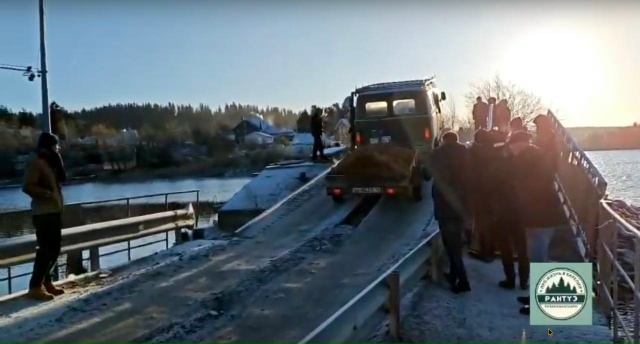
This situation may raise concerns under the Russian Federation’s obligations under international human rights agreements, including:
- Article 6 of the ICCPR: States are required to take reasonable measures to prevent foreseeable threats to personal safety.
- Article 11 of the ICESCR: States are required to guarantee an adequate standard of living, including safe and reliable access to essential goods and services.
- Article 12 of the ICESCR: States are required to ensure access to health care and to avoid exposing populations to environmental or infrastructural hazards.
10. https://vk.com/wall-225693329_774
11. https://dzen.ru/a/aRygiT-j-1bTft0U
III. Civil rights violations
A. Vera Ignatenko Arrest
On 11th November 2025, it became known of the arrest of Vera Ignatenko under Article 275 (State Treason) of the Criminal Code of the Russian Federation on allegations of allegedly contacting the Security Service of Ukraine, sharing the ideology of an alleged and unspecified terrorist organization, transmitting classified information, and attempting to recruit other citizens for terrorist activities through a social media page. No official FSB statements or court details regarding her arrest are publicly available. She was sentenced to 14 years in prison.
The arrest of Vera Ignatenko follows the pattern of arrests previously reported for October 2025 in the Republic of Karelia, characterized by lack of transparency in cases under Article 275, absence of official court records, alleged communications with external Ukrainian actors, and accusations related to acts of terrorism that were not executed.
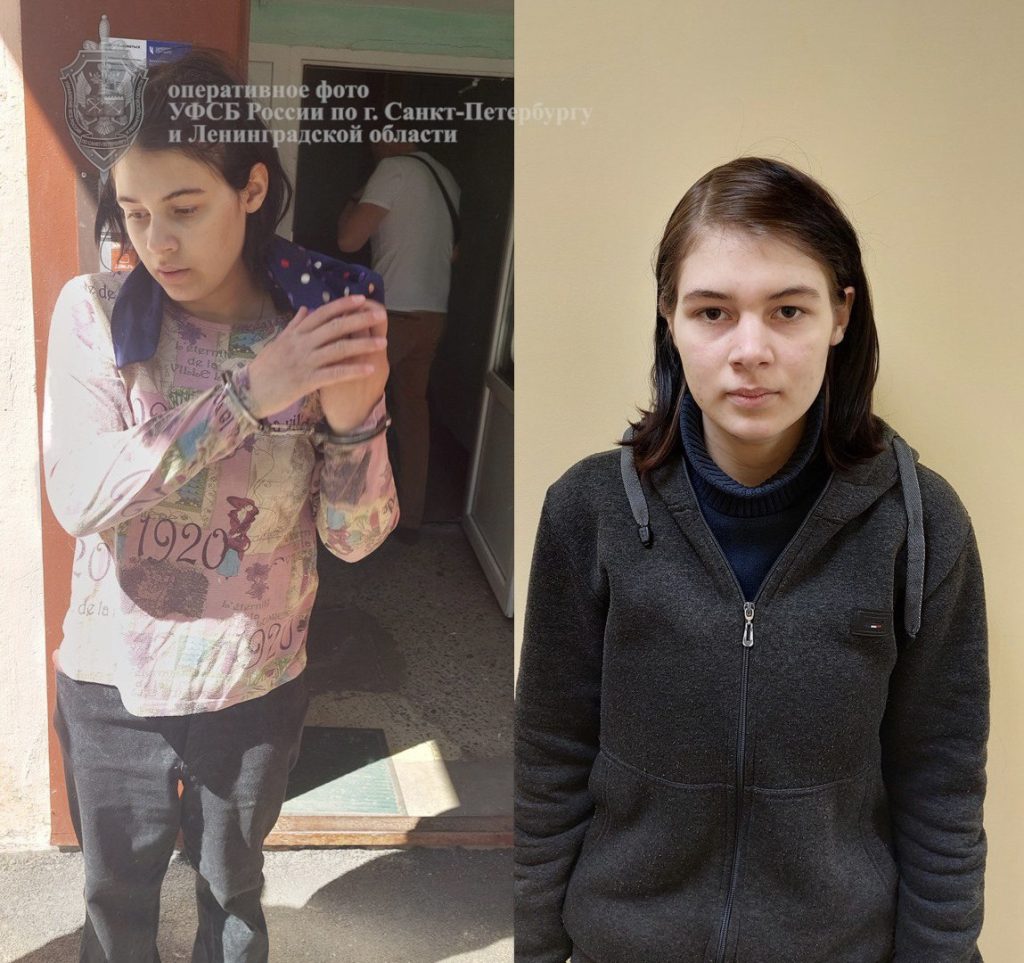
This case may raise concerns under the following provisions of the ICCPR:
- Article 9: Detention must be lawful, based on evidence, and proportionate. Conviction for acts that were not executed may violate this principle.
- Article 14(1): Everyone shall be entitled to a fair and public hearing.
Furthermore, using the allegation that Ms. Ignatenko “shared the ideology of a terrorist organization” as a basis for inferring contact with Ukrainian special services conflates ideological belief with criminal conduct. Reliance of ideological orientation in this context may be incompatible with Article 18 of the ICCPR, which protects freedom of thought and prohibits imposing criminal liability based solely on beliefs.
12.https://lenta.ru/news/2025/11/11/molodaya-rossiyanka-raskryla-gostaynu-inostrantsu-i-poluchila-prigovor
13. https://ombudsman.media/report-october-2025-karelia/
B. Rafael Mamedov Arrest
On 24th November 2025, it became known that Rafael Mamedov had been held in custody for six months. He was arrested under Article 205.5 (organization of activities of a terrorist organization and participation in such activities) of the Criminal Code of the Russian Federation for managing a Telegram page titled “Independent Lapland”, which was included in the registry of terrorist organizations of the Russian Federation.
The Telegram page in question was dedicated to memes, photographs, and historical facts about the Murmansk region and did not contain content that could justify its inclusion in the registry of terrorist organizations. Furthermore, the designation of the “Independent Lapland” page in the registry occurred without due process and without proper evidence, consistent with the treatment of other organizations added to the list at the same time.
The arrest of Rafael Mamedov may raise concerns under the following provisions of the ICCPR:
- Article 9: Placing a person in custody solely based on their role as the administrator of a non-violent page may constitute arbitrary detention.
- Article 14: Lack of due process and proper evidence for the designation of the Telegram channel as a “terrorist organization” may violate the right to a fair trial.
- Article 19: Criminalizing a Telegram page containing non-violent content and arresting its administrator may violate the right to freedom of expression.
- Article 22: Placing a person in custody solely for their role as administrator of a non-violent page may violate the right to freedom of association.
Recommendations
It is recommended that the United Nations call upon the Russian Federation to bring its cultural, administrative, and public policy practices into full conformity with its obligations under the ICCPR and ICESCR, with specific regard to the Republic of Karelia.
- The State should ensure accurate recognition and preservation of Karelian cultural heritage. Monuments, public commemorations, and cultural initiatives must respect distinct identity of Karelian communities and avoid misattribution to broader Russian culture.
- The State should implement consultation mechanisms with local Karelian civil society and cultural experts prior to any state-endorsed cultural projects to ensure inclusivity and accuracy.
- The State should ensure that municipal and regional authorities should guarantee timely and full payment of wages to public-sector employees in compliance with national labor law and international standards.
- The State should ensure transparency in municipal budget execution, including public access to budget reports and documentation of salary distributions.
- Authorities should ensure continuous access to essential services, including water, sanitation, heating, and safe transport infrastructure, particularly in remote and northern settlements.
- The State should implement preventative maintenance plans and emergency response protocols to avoid service disruptions during extreme climatic conditions.
- The State should prioritize repairs and safety upgrades to critical infrastructure, including bridges and water systems, and ensure alternative access routes where possible.
- Trials should be concluded transparently, with public access to documents, except where genuine security concerns justify limited access.
- Independent oversight mechanisms should be established to monitor allegations of arbitrary detention, coerced confessions, intimidation and other forms of mistreatment, and violations of due process, and remedies should be provided to victims.
- The State should avoid conflating ideological belief or cultural expression with criminal conduct in the application of counter-terrorism laws.
To ensure the effective implementation of the these recommendations, it is further recommended that the United Nations:
- Request the Russian Federation to include detailed information in its next periodic reports to the Human Rights Committee, the Committee on Economic, Social and Cultural rights
- Establish periodic monitoring and reporting mechanisms, including engagement with relevant Special Rapporteurs, to independently assess developments in the Republic of Karelia
- Establish independent investigation into the arrest of the presented cases, with a mandate to examine allegations of arbitrary detention, coercion, and violations of international human rights law, including Article 9 and 14 of the ICCPR.