
Report on human rights violations in the Kabardino-Balkarian Republic
Human rights activist Khava Beshtoeva
December 2025
An analysis of media data, online resources and statements from individuals for December 2025 indicates an ongoing trend towards violations of human rights and freedoms by the authorities and security forces of the Kabardino-Balkarian Republic, which are primarily associated with politically motivated infringement of the rights of indigenous peoples, the criminalization of activism, prosecution of citizens for political and human rights activities, repression and judicial falsification, as well as an encroachment on the right to a fair trial. Documented incidents determine the relevance of further efforts to protect human rights in the republic
A man accused of terrorism in Kabardino-Balkaria has been deported from the UAE to Russia
According to Irina Volk, spokesperson for the Russian Ministry of Internal Affairs, citizen Anzor Khalilov, who was wanted by Interpol, was deported from the United Arab Emirates to Russia. He is accused in the Kabardino-Balkarian Republic of involvement in terrorist activity and of illegally soliciting funds from citizens, which is a violation of Russian Federation law on shared-equity construction. The suspect was detained and transferred to Russian law enforcement at Dubai Airport.
As a reminder, the charges against Anzor Khalilov, one of the republic’s largest developers, were brought against him on a trumped-up charge: during a school event, his wife failed to stand during the playing of the Russian national anthem, which became a tool for pressure. After the administrative punishment, the pressure and coercion began. Law enforcement agencies demanded 80 million rubles from Khalilov to cease prosecution, but he refused. In response, a criminal case was opened for sponsoring terrorism, based on his transfer of 15,000 rubles to the card of a resident of the republic with cancer, as part of a fundraising campaign announced several years earlier under the pretext that the woman’s son was listed as a terrorist and extremist.
The prosecution also based its case on the testimony of a “secret witness” who allegedly saw Khalilov transfer money to someone undesirable in Saudi Arabia during the Hajj. Khalilov denies this, and the accusation is not supported by any photographic or video evidence.
Today, forced to reside outside the country, Khalilov is completing his projects remotely, despite obstacles, demonstrating professionalism and responsibility to shareholders. In September 2025, Khalilov began posting videos and audio messages on social media, describing his situation in the first person, thus breaking the one-sided narrative.
https://nalchik.bezformata.com/listnews/deportirovali/155159433
A resident of Kabardino-Balkaria is suspected of justifying terrorism
Investigators in Kabardino-Balkaria have reported opening a case for justifying terrorism. According to investigators, a local 19-year-old woman posted text and a video on social media containing statements justifying the ideology of terrorism.
According to investigators, in November 2023, the suspect posted text and a video on her social media account containing statements justifying the ideology of terrorism. The suspect’s actions were identified by officers of the Federal Security Service of Russia for the Kabardino-Balkarian Republic, the regional Investigative Committee reported today on its Telegram channel. However, the authorities do not point the specific words or materials for which the girl is accused. This secrecy could indicate either exaggeration or fabrication of the charges, or, for example, support for Ukraine, which, as is known from many other court cases, Russian law enforcement agencies have cited as a justification of terrorism.
The suspect has been placed under house arrest. Investigators are gathering evidence, the agency clarified.
https://kbr.sledcom.ru/news/item/2044469
The wife of a Kabardino-Balkarian resident has complained about his six-month solitary confinement
After being arrested for alleged involvement in an extremist organization, Kabardino-Balkarian resident Rustam Kurmanov is being held in solitary confinement. His wife believes this is a means of extracting a confession from him.
Kabardino-Balkarian resident Rustam Kurmanov, accused of involvement in the At-Takfir wal-Hijra movement, has been held in solitary confinement in Nalchik’s Pretrial Detention Center No. 1 since early July, his wife, Asiyat Gaboeva, told OVD-Info. “Since the day of his arrest, my husband has been held in solitary confinement under harsh conditions. This could seriously impact his physical and mental health. The reasons for this harsh measure have not been explained to us,” she said. Gaboeva suspects that the solitary confinement was part of a pressure campaign to extract the desired testimony from her husband.
Kurmanov was detained on July 10 in the village of Novaya Balkaria. He was accused of participating in an extremist organization (Part 2 of Article 282.2 of the Criminal Code). Gaboeva calls the charges against her husband unfounded. She maintains his innocence.
He has a nine-month-old child. Kurmanov previously worked in Moscow as a sole proprietor, but in the summer of 2022, he returned to Novaya Balkaria to care for his elderly parents and took up farming, raising and selling cattle and sheep, and harvesting hay.
It is noteworthy that the abstract group “At Takfir wal-Hijra” has not claimed responsibility for terrorist attacks in Russia, representing solely a theological concept aimed at a certain intra-confessional gradation, thus posing no danger to either society or the state. Moreover, there are no religious studies or, especially, legal markers that clearly indicate a person’s affiliation with this movement. Researchers of extremist movements generally express doubts about the actual existence of this organization. For example, as OVD-info cites, human rights activist Vitaly Ponomarev asserts that there is no evidence confirming the existence of At-Takfir wal-Hijra in Russia or internationally: “There are no hidden audio or video recordings in known criminal cases in Russia that mention this name. Nowhere is it indicated that the organization has membership, a membership procedure, a clear hierarchy, or a leader.” According to the researcher, the organization’s name was invented by Egyptian media, where it was first mentioned.
https://ovd.info/express-news/2025/12/25/obvinyaemogo-v-prichastnosti-k-takfir-val-khidzhra-s-iyulya-derzhat-v
Human rights activists have called on Kokov to disclose data on the teaching of native languages to schoolchildren
The Ministry of Education of Kabardino-Balkaria refused to provide data on the number of schoolchildren of Kabardian and Balkar ethnicity who chose Russian as their native language. Students and their parents could face pressure to abandon the study of their national languages, human rights activists stated in an appeal to the head of the republic. As early as October 2021, representatives of public organizations reported a shortage of native language textbooks in schools in Kabardino-Balkaria. The publisher of the textbooks explained at the time that it was decided to replace the old-style native language textbooks with new ones. On July 24, 2018, the State Duma adopted amendments to the Law “On Education,” requiring the study of the state languages of the Russian republics “on a voluntary basis.” The bill outraged residents of the ethnic regions, who saw it as a threat to the existence of the languages and cultures of their peoples. An appeal to the head of Kabardino-Balkaria, Kazbek Kokov, was published on December 27 on the website of the Kabardino-Balkarian Regional Human Rights Center. The author of the appeal, the organization’s chairman, Valery Khatazhukov, noted that the human rights center twice this year (July 28 and October 13) contacted the republic’s Minister of Education and Science “with a request to provide statistical data on the number of students in secondary educational institutions of Kabardian and Balkar ethnicity who have chosen Russian as their native language” following the adoption of amendments to the Law on Education in 2018. However, the responses received did not contain the requested data. “Specifically, how many students of Kabardian and Balkar ethnicity have chosen Russian as their native language from 2018 to the present? And the failure to provide this data should be interpreted as further confirmation of the concerns of members of the public in Kabardino-Balkaria regarding the deterioration of the situation with education in native languages in the republic in recent years,” the appeal states. There is a possibility of “pressure on children and their parents” of Kabardian and Balkar descent to force them to choose Russian as their native language, the document states. “A similar incident already occurred in a school in the city of Nalchik. In December 2017, a survey of students was conducted at one of the republic’s gymnasiums, after which 209 children were pressured into abandoning the study of their native languages in high school. Their illegal intentions were not realized at the time, facing a negative public reaction,” Khatazhukov noted. The Human Rights Center called on Kokov “to oblige the Ministry of Education of the Kabardino-Balkarian Republic to provide us with specific information on the number of students of Kabardian and Balkar descent who have chosen Russian as their native language from 2018 to the present.” As a reminder, on March 11, 2020, the State Duma adopted amendments to the Russian Constitution, including the concept of the Russian language as the “language of the state-forming people,” which sparked discontent among historians and ethnographers in Kabardino-Balkaria, Dagestan, and Adygea. The provision regarding the “state-forming people” would deprive all other peoples of state protection, suggested staff at the Kabardino-Balkarian Institute for Humanitarian Research. “We affirm that all peoples of the Russian Federation, without exception, are state-forming peoples,” the KBIHR staff stated.
https://zapravakbr.ru/zapros-o-yazykovom-vybore-shkolnikov-ostaetsya-bez-otveta-obrashchenie-k-glave-kbr/
https://t.me/zapravakbr/3721
The management of a private sanatorium escaped punishment for infecting patients with hepatitis and HIV
A court in Nalchik sentenced a nurse at a private sanatorium to four years in prison, finding her guilty of mass-infecting patients with dangerous diseases. The sanatorium’s general director and doctor escaped punishment.
Previously, the medical staff and management of a private sanatorium in Nalchik were accused of infecting five people with HIV and 71 patients with hepatitis C. The sanatorium’s license was revoked. The case was brought to court in March. Charges of violating sanitary regulations (Part 1 of Article 236 of the Russian Criminal Code) were brought against Ruslan Ozrokov, the general director of Medis Sanatorium LLC, Mukhadin Uzdenov, the head of the neurology department, and Marianna Aloyeva, a nurse. The latter was also charged with transmitting HIV (Part 4 of Article 122 of the Russian Criminal Code). Among those infected with hepatitis C were even the sanatorium’s cook, masseuse, and administrator, to whom the nurse had given several injections, according to patients.
“By court decision, the nurse received a sentence of four years’ imprisonment in a general regime penal colony,” Interfax-Yug quoted an employee of the United Press Service of the Republic’s Courts as saying today. He clarified that the court had dropped the criminal prosecution of the sanatorium’s general director and doctor due to the expiration of the statute of limitations. According to the case file on the Nalchik City Court website, the last hearing in the case took place on December 8, after which the court retired to the deliberation room to deliver the verdict. The date of the verdict, as of 5:22 p.m. Moscow time, is not indicated in the file. The details of two defendants—Ozrokov and Uzdenov—are listed, but the nurse’s details are concealed.
However, victims of HIV and hepatitis in Kabardino-Balkaria considered the verdict unfair and announced they would file lawsuits for moral and material damages. They also intend to file a civil suit against the sanatorium’s management for moral and material damages.
The persecuted journalist Zalina Marshenkulova spoke about the motives of the security forces
Journalist from Kabardino-Balkaria Zalina Marshenkulova, now living in Germany, was put on the federal wanted list again at the end of November 2025.
Before this, on April 17, 2024, she was put on the wanted list in Russia for the first time, and a month later, on May 17, she was put on the international wanted list – according to TASS, she is accused of publicly justifying the terrorist attack in which blogger Vladlen Tatarsky was killed.
Moreover, according to the investigation, Marshenkulova posted publications justifying terrorism on Telegram no later than March 3, 2023, that is, a month before Tatarsky’s death. An investigation has been launched under Part 2 of Article 205.2 of the Criminal Code of the Russian Federation (justification of terrorism using the Internet).
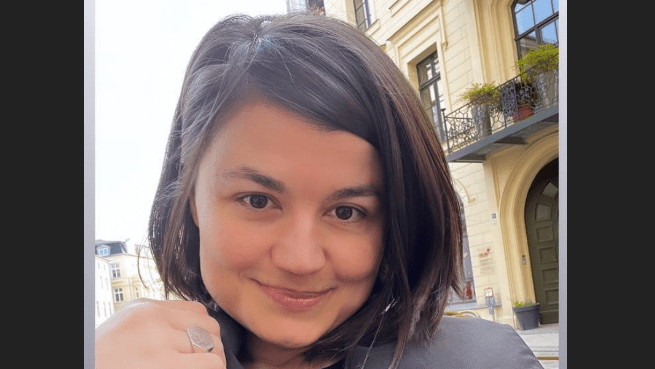
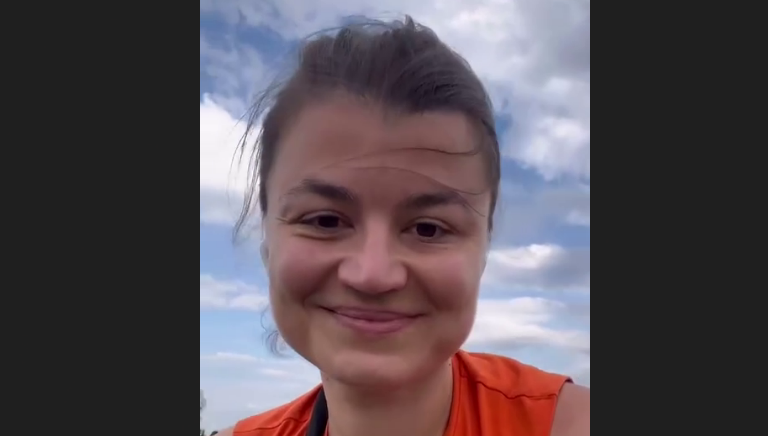
In December, Zalina Marchenkulova made a statement according to which she associated the repeated declaration of the wanted list, as well as the criminal prosecution itself, with an attempt to prevent her publications and the upcoming release of her book by the Vidim publishing house, which specializes in publishing authors who have difficulties getting published in Russia. “Vidim is an independent publishing house and platform for the distribution of books in Russian in Europe, Central Asia and North America. The basis of Vidim books’ publishing portfolio is books by authors who are persecuted in Russia for political reasons and whose works can no longer be published in their homeland,” says the publishing house’s website.
Marshenkulova called the charges absurd and linked the persecution with her political position. “I have been fighting against Putin’s “traditional values” for 20 years, since I was 19 years old. The article under which I am being persecuted is absolutely repressive and insane: the beautiful Evgenia Berkovich is imprisoned under it. This is an article designed to silence all decent people who have the courage and conscience to oppose the military operation in Ukraine,” Marshenkulova told the Caucasian Knot resource.
https://www.kavkaz-uzel.eu/articles/417759
Representatives of the Caucasian diaspora in Turkey spoke out in defense of Tuptsokova
Representatives of the Caucasian diaspora in Turkey came out in defense of Larisa Tuptsokova, following activists from Georgia and the North Caucasus republics, including Kabardino-Balkaria. Larisa Tuptsokova – journalist, philologist, teacher of the Circassian language.
At the end of September, Tuptsokova, who lives in Georgia, learned that a criminal case had been opened against her in Russia under an article on extremism. About a month before this, a fake website of the Circassian Cultural Center in Tbilisi, recognized as extremist, appeared on the Internet, where publications were posted on behalf of Larisa Tuptsokova. Participants in the appeal to the authorities of Adygea demanded an immediate end to the criminal prosecution of Circassian activist Larisa Tuptsokova and pressure on those who speak out in her support. Despite the fact that the case is under investigation, Tuptsokova is included in the Rosfinmonitoring register of extremists and terrorists.
Journalist and Circassian activist Larisa Tuptsokova reported in October 2025 that security forces conducted searches in her parent’s house in Adygea and interrogated her relatives in a case of extremism.
About 30 human rights defenders and activists from Adygea, Kabardino-Balkaria, Karachay-Cherkessia and the Krasnodar Territory, in an appeal to the head of the Republic of Adygea Murat Kumpilov, demanded that the criminal prosecution of Larisa Tuptsokova be stopped due to the absence of a crime. The signatories of the appeal in her defense noted Tuptsokova’s significant contribution to the preservation of her native language and indicated that the case against her could become a precedent for the prosecution of other people who have ever collaborated with the Circassian cultural center in Tbilisi (recognized as an extremist organization).
The security forces are calling the signatories of the appeal to the head of Adygea in defense of Tuptsokova living in Kabardino-Balkaria, demanding to appear to give explanations. Human rights activists called such actions illegal.
The appeal of representatives of the North Caucasian diaspora of Turkey to the head of Adygea Murat Kumpilov, the chairman of the government of the republic Anzaur Kerashev, the Commissioner for Human Rights in Adygea Mikhail Shchebanets, senators from the republic Murat Khapsirov, Alexander Narolin and State Duma deputies Vladislav Reznik and Murat Khasanov was published on December 7 2025 on its website, the Human Rights Center of Kabardino-Balkaria. The authors of the appeal condemned the “illegal, arbitrary and politically motivated persecution launched against the philologist, teacher of the native language, poet and cultural figure” Larisa Tuptsokova. They pointed out that Tuptsokova is a recognized and respected scholar, language specialist and intellectual who has dedicated her life to the preservation of Circassian culture both in the Caucasus and in the diaspora. “The criminal case brought against her has no legal basis and is an openly political action,” they pointed out, recalling that Tuptsova’s work at the Tbilisi Circassian Cultural Center was completely stopped in the fall of 2023 – long before the Supreme Court of Russia recognized the center as an “extremist organization” in the summer of 2024.
The authors of the appeal added that the search and psychological pressure on members of Tuptsokova’s family living in Russia and attempts to intimidate activists who signed appeals in her defense “represent an attempt to restrict freedom of expression, cultural heritage and constitutional rights of the entire Circassian people.” “The criminal case fabricated against Larisa Tuptsokova must be stopped immediately. Any form of pressure, threats and intimidation against her and her family must stop immediately. Police pressure on public leaders speaking in her defense must be stopped, and legal procedures must be initiated against the officials who carried out these actions,” the authors of the appeal demanded.
They emphasized that the criminalization of people seeking to preserve their culture, language and identity is another manifestation of repressive practices in which the law is used without restrictions and against its true purpose. “We, as a diaspora that has maintained connections with our homeland for generations through historical and cultural solidarity and common memory, cannot accept the fact that people who serve the Circassian culture become targets of persecution,” says the appeal, which was signed by 26 organizations.
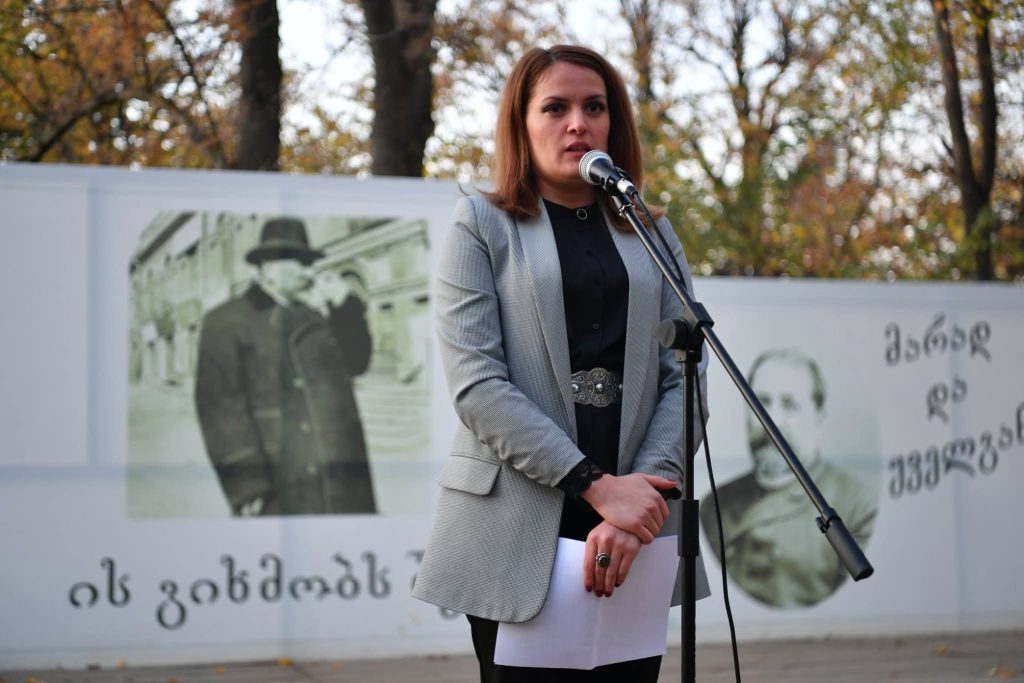
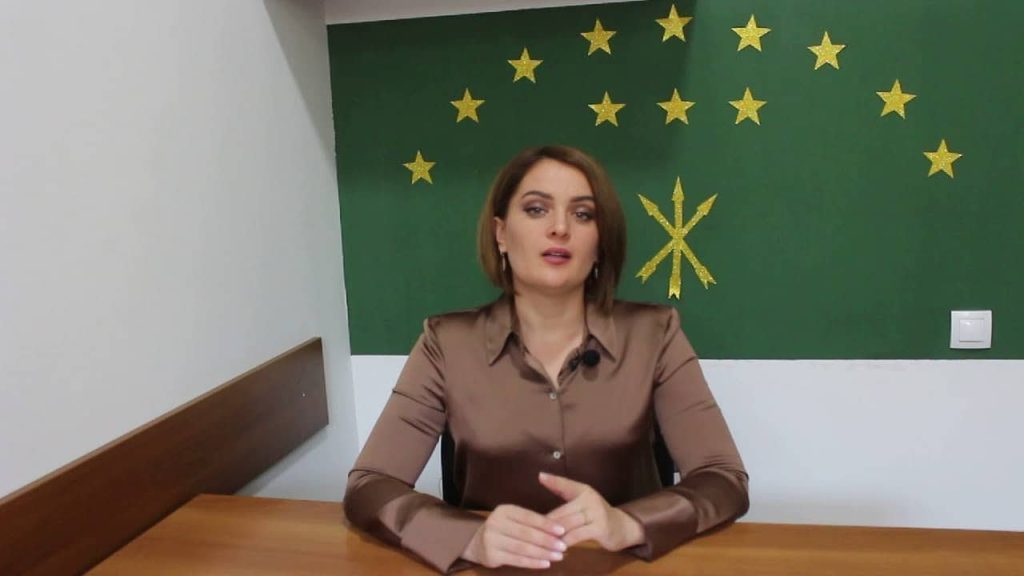
The Kabardino-Balkaria Human Rights Center previously reported that activists from Kabardino-Balkaria who signed an appeal to Adygea Head Murat Kumpilov in defense of Larisa Tuptsokova faced pressure.
The Kabardino-Balkaria Prosecutor’s Office explained its refusal to take action. Human rights activists called this response a formality. The Kabardino-Balkaria Prosecutor’s Office has received a response to a collective complaint sent on November 12 “in connection with the pressure exerted on the signatories of the collective appeal” in defense of Larisa Tuptsokova, the Kabardino-Balkaria Human Rights Center reported on its Telegram channel. The response arrived by email on December 10th to the human rights center; it is signed by the head of the department for oversight of compliance with laws on federal security, interethnic relations, and countering extremism and terrorism. “These kinds of formal responses are evidence of the republic’s oversight bodie’s ineffectiveness in ensuring citizen’s rights and freedoms, or their lack of intention to protect violated citizen’s rights,” human rights activists in Kabardino-Balkaria believe.
To secure an investigation into the pressure on the signatories of the petition in defense of Larisa Tupczokova, legal action and public activism are needed, human rights activists and lawyers point out. At the same time, they believe informal pressure, particularly the dismissal of public sector employees, may continue. Svetlana Gannushkina, head of the Civic Assistance Committee, believes that “human rights activists have assumed the role of driving force in this matter, and they are the ones primarily under attack.”
The prosecutor’s office has requested a third trial of lawyer Tsipinova
The prosecutor’s office has challenged the second acquittal of Kabardino-Balkaria lawyer Diana Tsipinova, demanding that the case be remanded for a new trial. Tsipinova’s defense team criticized the prosecutor’s position.
On July 7, 2023, the Urvan District Court found no criminal offense in the actions of lawyer Diana Tsipinova, accused of assaulting a security officer, and acquitted her. The Supreme Court of Kabardino-Balkaria upheld the verdict, but the cassation court in Pyatigorsk upheld the prosecutor’s request and remanded the case for a new trial. The cassation ruling in Tsipinova’s case is clearly accusatory; the court exceeded its authority in evaluating the evidence and its credibility, Tsipinova’s defense team stated. The prosecutor’s office challenged Diana Tsipinova’s second acquittal by filing an appeal on December 12, the Advokatskaya Gazeta newspaper reported today on its website. In its appeal, the prosecutor’s office stated that the court again relied on the presumption of illegality in the police officers’ actions, “replacing an analysis of regulations and testimony from law enforcement officers with references to subjective assessments of the Law on Advocacy.”
According to the appeal, police officers used physical force only after Diana Tsipinova and other lawyers, despite repeated warnings, continued to attempt to enter the police station. The lawyers—Diana Tsipinova, Natalia Magova, and Lyudmila Kochesokova—were forcibly ejected from the building by police. According to Magova, Lyudmila Kochesokova “fell onto a concrete slab” during the incident.
The prosecutor’s office insists that police officer Timur Nagoyev was in uniform and indicated the possibility of using physical force if his lawful orders were not complied with. “The court, however, upheld D.M. Tsipinova’s legitimate physical defense against T.V. Nagoyev’s lawful actions to prevent her attempts to enter the department building while he was performing his official duties to maintain public order.” “The court effectively replaced the legal assessment of a police officer’s performance with the subjective perception of the conflict by one of the parties and their emotional state, which is unacceptable,” the publication quoted from the document. The prosecutor’s office requested that the Urvan District Court’s verdict be overturned and remanded for a new trial in the same court.
As a reminder, in May 2020, Diana Tsipinova was among three lawyers who volunteered to provide legal assistance to her colleague Ratmir Zhilokov after his arrest in Nartkala. They arrived at the police station and were unable to get access to Zhilokov for 40 minutes. The security forces didn`t like the lawyers filming and forcibly removed them from the building. According to investigators, Tsipinova struck the police officers while attempting to reach the detained Zhilokov. The situation involving the use of force against lawyers in Kabardino-Balkaria and their subsequent criminal prosecution is considered extraordinary by the professional community, although this is not an isolated incident. Violations of the right to legal representation shows a potential threat to every citizen, say Tsipinova’s colleagues.
https://t.me/The_Circassian_Times/14177
A new threat of eviction has alarmed residents of a dormitory in the Elbrus region
According to the “Caucasian Knot,” the Federal Agency for State Property Management has initiated the eviction of residents from a former departmental dormitory in the village of Neutrino. Residents who acquired ownership of this property many years ago and have already won a similar lawsuit risk ending up homeless.
Back in January 2020, 18 families in the village of Neutrino received lawsuits demanding eviction from the Baksan Neutrino Observatory (BNO) dormitory without being provided alternative housing. By that time, the defendants, including pensioners and families with children, had lived in the dormitory for 20-30 years.
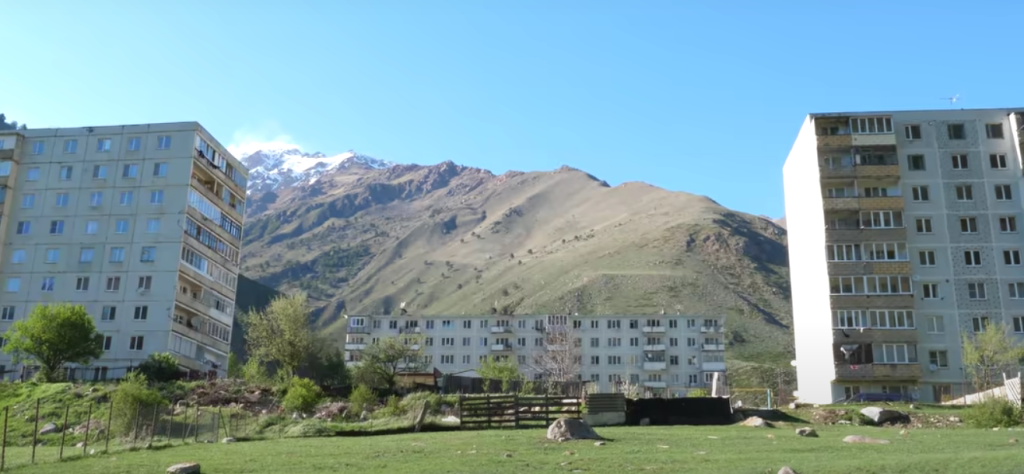
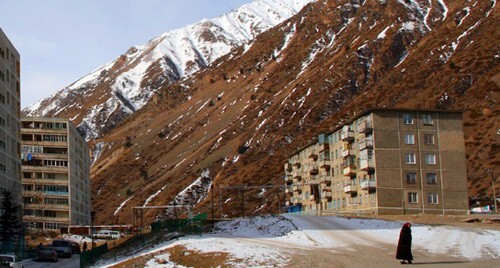
The dormitory belongs to the observatory and is designated as specialized (service) housing. Evicting people who have lived in the dormitory for such a long time is impossible without providing them with alternative housing, as statutes of limitations must be taken into account, according to lawyer Mukhadin Kardanov. The Kabardino-Balkarian Federal Property Management Agency’s territorial office filed 76 lawsuits with the Elbrus District Court seeking eviction of residents of privatized apartments in the village of Neutrino, arguing that the village’s housing stock is federal property and that privatization without the owner’s consent is illegal.
Most of the people facing eviction had lived in their apartments for 20 years or more. They all once worked at BNO as technical staff. When BNO collapsed, they were left without jobs but continued to live in service apartments. Therefore, ordinary citizens must bear responsibility for the collapse of BNO, the bankruptcy of the housing and utilities sector, and the consequences.
https://www.kavkaz-uzel.eu/articles/419339
In December, the Nalchik Garrison Military Court sentenced four individuals to prison terms for leaving their unit without authorization during mobilization
In particular:
- The Nalchik Military Court sentenced Soslan Abanokov to six years in prison, finding him guilty of leaving his unit without authorization during mobilization.
Soldier Abanokov was found guilty under Part 3.1 and Part 5 of Article 337 of the Russian Criminal Code, the Nalchik Garrison Military Court announced on its VKontakte page. According to the court, Abanokov committed unauthorized absence from his military unit on May 19 and July 8, 2025, both during mobilization, without valid excuse.
In the first instance, he failed to report for duty at the appointed time at his military unit, and in the second instance, he left his duty station without authorization. In the first case, Abanokov was discovered by a military commandant’s office officer in Nalchik on June 4, and in the second, on August 13, he voluntarily reported to the military investigative department.
However, from May 19 to June 4 and from July 8 to August 13, he spent time at his own discretion at home, the court found. The court sentenced Abanokov to six years’ imprisonment in a maximum-security penal colony and a fine of 150,000 rubles. He was also disqualified from driving for 11 months and seven days. Soslan Abanokov’s case was filed in court on December 2, and the verdict was handed down on December 15.
- A military court in Nalchik sentenced Rustam Misostov to five years in prison, finding him guilty of leaving his unit without leave during mobilization
A serviceman named Misostov was found guilty on December 15 under Part 5 of Article 337 of the Russian Criminal Code, the Nalchik Garrison Military Court announced on its VKontakte page. According to the court, Misostov “left his military unit without leave on December 14, 2024, during mobilization.” “On October 6, 2025, Misostov was discovered in the Kabardino-Balkarian Republic by a police officer. From December 14, 2024, to September 6, 2025, Misostov spent his time at his own discretion at his place of residence,” the publication stated.
In court, Misostov fully admitted his guilt “and expressed regret for his actions,” but the court took into account “the nature and degree of public danger posed by the defendant’s actions, which constituted a serious crime against military service.” “The defendant was sentenced to five years’ imprisonment in a general regime penal colony.
The convicted person was taken into custody in the courtroom and placed in a pretrial detention facility,” the statement noted. The case was submitted to the court on December 9, and a verdict was rendered at the first hearing.
- Mukhadin Sokhrokov, a native of Kabardino-Balkaria, received a five-year prison sentence for evading military service during mobilization
Mukhadin Sokhrokov, a serviceman from Kabardino-Balkaria, was found guilty of evading military service during mobilization, Gazeta Yuga reported on December 17, citing the press service of the Nalchik Garrison Military Court. According to the prosecution, the defendant failed to report to his military unit stationed in Krasnodar Krai on March 5.
On July 23, a police officer found him at his residence in Kabardino-Balkaria. During the hearing, Sokhrokov pleaded guilty, which was taken into account in his sentence to five years in a general regime penal colony, the court’s press service reported on its VKontakte page.
“The convicted man was taken into custody in the courtroom and placed in a pretrial detention facility. The verdict has not yet entered into legal force and may be appealed by both parties,” the statement reads.
- A military court in Kabardino-Balkaria sentenced Zamir Begiyev to five years in prison, finding him guilty of leaving his unit for several months during mobilization
A serviceman named Begiyev was found guilty under Part 5 of Article 337 of the Russian Criminal Code, the Nalchik Garrison Military Court announced on its VKontakte page. According to the court, Begiyev failed to report for duty at his military unit “on June 19, 2024, during mobilization,” without a valid reason. “On February 3, 2025, Begiyev voluntarily reported to the military investigative department stationed in Nalchik, and from June 19, 2024, to February 3, 2025, Begiyev spent his time at his own discretion at his place of residence,” the publication stated. Begiyev was sentenced to five years in a general regime penal colony. “The convicted man was taken into custody in the courtroom and placed in a pretrial detention facility,” the statement noted. The case was filed in court on December 17, and the verdict was handed down at the first hearing, on December 25.
In total, in December 2025 alone, four individuals in Kabardino-Balkaria were sentenced to prison terms for unauthorized abandonment of their unit during mobilization*.
On September 21, 2022, Vladimir Putin announced a partial mobilization, and on October 28 of that year, the Minister of Defense reported to the president on its completion, but no corresponding decree followed. Legal experts concluded that a presidential decree is not required to end the partial mobilization, Putin’s press secretary explained.
Importantly, all of the above incidents occurred much later than October 28, 2022, that is, after the partial mobilization had concluded. On September 24, 2022, Parts 2.1, 3.1, and 5 of Article 337 were added to the Russian Criminal Code, covering unauthorized abandonment of a unit or place of service during mobilization. The amendments provide for imprisonment for up to 10 years. Tighter laws after the announcement of mobilization led to harsher sentences for absence from military units. Moreover, since the beginning of the military operation in Ukraine, according to authorities and security forces, at least 4,051 soldiers from the North Caucasus Federal District and 4,049 from the Southern Federal District have been killed.
Since the beginning of the Russian operation in Ukraine, authorities have publicly acknowledged that at least 359 soldiers from Kabardino-Balkaria have been killed there.
Thus, in December 2025 alone, it was reported that 26 residents of the republic would not return from the Special Military Operation:
- Azamat Bichekuev from the Elbrus District of Kabardino-Balkaria;
- Aslan Tengizov, Amur Mashitlov, Ratmir Apshev, Murat Malukhov, Rustam Dugulubgov, Aslan Karatsukov, Azamat Kochesokov, and Eduard Zhilyasov from the Baksan District of Kabardino-Balkaria.
- Hasan Dzhesh, Safarbi Beslaneev, and Isuf Kumyshev from Baksan.
- Zalim Tutukov from the Leskensky District.
- Artur Khashkhozhev, Ruslan Apikov, Martin Baragunov, Renat Gedmishkhov, Beslan Shaov, and Dzhabrail Kulturbaev from the Zolsky District of Kabardino-Balkaria.
- Alexander Kozoderov from Prokhladny.
- Khazhmurat Alachev, Kantemir Balkarov, Amur Dyshokov, Khamzet Dyshokov, Vyacheslav Kazmakhov, and Asker Timizhev from the Tersky District of Kabardino-Balkaria.
Security forces reported the elimination of a saboteur in Nalchik
A Nalchik resident who was preparing to blow up a section of the gas distribution system was killed during an attempted arrest, security forces stated. According to security forces, “an act of sabotage organized by Ukrainian special services has been thwarted” in Kabardino-Balkaria. As a result of the measures taken, the Nalchik resident, who was planning to blow up a section of the gas distribution system on instructions from his supervisor, was identified.
“The man underwent training at a camp of the Ukrainian Armed Forces’ special operations forces, after which he returned to Russia via third countries,” RIA Novosti reported today, citing security forces. “During the attempted arrest, the saboteur offered armed resistance and was killed by return fire. He was carrying an improvised explosive device with a yield of up to 5 kilograms of TNT, a Ukrainian-made Fort assault rifle, and ammunition,” the FSB stated.
An FSIN employee in Kabardino-Balkaria is suspected of disclosing state secrets
A criminal case has been opened in Kabardino-Balkaria against an employee of the regional office of the Federal Penitentiary Service (FSIN) of Russia, suspected of disclosing state secrets, the republic’s FSB reports.
“The official disclosed information constituting a state secret, which became known to him in connection with the performance of his official duties,” Interfax reports, citing the agency’s press service. The case is being investigated under the article on disclosure of state secrets (Part 1 of Article 283 of the Russian Criminal Code), and the suspect faces up to four years in prison.
https://www.kommersant.ru/doc/8267969
Conclusion
The events covered in the December 2025 report in Kabardino-Balkaria illustrate a persistent trend toward consistent, prolonged violations of basic human rights. Indigenous peoples are particularly vulnerable, subjected to selective persecution and discrimination, as well as systematic assimilation and forced Russification through actions aimed at destroying national identity, particularly with the aim of burying their native languages. Particular attention is paid to the number of cases involving charges of abandoning their units during mobilization—direct evidence that residents of the Kabardino-Balkarian Republic, despite the threat of prosecution, made every effort to avoid being drawn into the war against Ukraine. Contract soldiers from the republic were among the first in Russia to refuse to go to the front en masse; public gatherings against the declared military mobilization were actively held in the republic’s capital. Human rights activists in the republic demanded an end to the conscription of residents for war, as this effectively leads to the “extermination of the gene pool.” Pavel Chikov, head of the human rights group Agora, spoke about soldiers who had approached them, pressured to leave for Ukraine. These were security forces from 17 cities, including Krasnodar, Vladikavkaz, Nalchik, Cherkessk, and Stavropol. The extensive death toll in the Northern Military District only reinforces this trend. Those disillusioned with the possibility of escaping the war against Ukraine sometimes choose to aid the opposing side. War requires funds, and the confiscated property of former regime stooges is used to finance it. Kabardino-Balkaria is a republic where a systemic and growing trend toward ignoring generally accepted standards for the protection of citizens’ rights and freedoms demands the close attention of the international community.