
Human Rights Violations Report Republic of Karelia
February 2026
Written by: Jana Tiihonen (Bystrova)
February 2026 in the Republic of Karelia is characterized by a plethora of human rights violations, across the entire human rights spectrum: civil rights, socio-economic rights, political rights, cultural rights, and environmental rights. The most pressing issues of February were the continuously deteriorating state of the Republic’s education and healthcare systems, people being deprived of basic necessities due to state-level neglect of basic infrastructure, and the alarming increase in military-oriented training and education for children.
Deteriorating Standards of Living
According to the International Covenant on Economic, Social, and Cultural Rights, Article 11(1), the State parties to the Covenant, which the Russian Federation and subsequently the Republic of Karelia are, are obliged to provide everyone with an adequate standard of living, including housing, and should strive for the continuous improvement of the living conditions of the population. Based on publicly available reports, however, the living conditions of many people in Karelia are not aligned with the article’s provisions.
Multiple reports emerged describing residents, including the elderly and children, continuing to be forced to live in dilapidated houses, without proper heating and running water. Despite multiple public appeals, these issues are either not resolved, or are met with empty promises about remedies delivered by the authorities.
The most worrying cases, however, come from small towns and villages that are significant for Karelian cultural and historical continuity. One such example is a house in Hiidenselga Village, in the Pitkaranta District, where people are left to survive in a falling apart residential house. The residents state that they live in constant fear of the heating pipes collapsing due to strong winds, while the roof is constantly leaking and the slate is crumbling. Moreover, the house does not have running water, forcing the residents to obtain water from a nearby well, which often does not even have water in the summer months. The residents are not being provided with alternative houses, but instead are being forced to wait for renovation, which does not include the installation of a proper water system, meaning that they will have to continue relying on the nearby wells for their daily water needs.
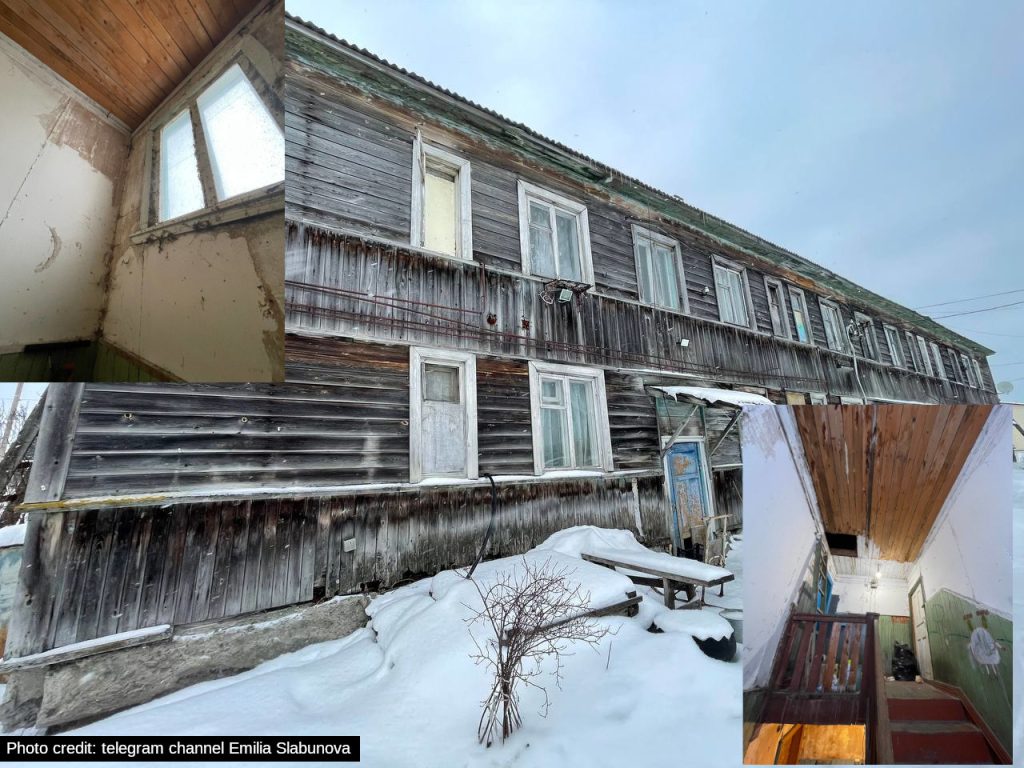
The case of the house in Hiidenselga revealed another underlying issue. According to official statements, even if the residents of small, rural villages are provided with alternative housing, it is most often far away from their native villages, as the state is not developing programs to build new houses in such areas. This not only disconnects native peoples from their familiar locations, but also endangers the survival of small villages that are historically and often culturally significant to Karelia.
Poor Water Quality
An additional worrying inconsistency with Article 11(1) of the ICESCR and Article 12 of the ICESCR is the quality of water for many residents across Karelia. Multiple reports, both from individuals and media, have shared their concerns that the running water in their homes is of terrible quality and often causes discomfort and health concerns. Specifically, in Petroskoi (Petrozavodsk), the capital of the Republic of Karelia, reports emerged of people complaining about the water having a strong odour and causing skin irritation after bathing. Residents further expressed concerns about possible chemical contaminants and the potential health implications of prolonged exposure. When addressing this issue with the regional water supplier, the concerns were dismissed on the grounds that the water not being used for consumption.
A similar issue has been reported in Pudozh, the administrative center of the Pudozhsky District, where inspections revealed repeated violations of sanitary legislation. These included the absence of a sanitary-epidemiological conclusion for the water intake facility, deficiencies in the maintenance of the sanitary protection zone of the water source, and non-compliance of drinking water quality before entering the distribution network. Reported concerns included water quality indicators such as color, organic pollution, and the presence of certain chemical substances, including iron and trichloromethane, which are associated with potential health risks.
The issue with water quality in Pudozh has been under scrutiny for several years. Since 2023, testing reportedly identified chloroform levels in the municipal water supply exceeding permissible limits by more than five times. A January 2024 inspection confirmed violations of sanitary regulations and issued an order requiring corrective measures. The issues were not properly addressed, and throughout 2025 local representatives had to submit multiple appeals to the regional authorities and oversight bodies, requesting enforcement of sanitary standards and measures to ensure access to safe drinking water. The sequence of inspections and appeals suggests that systemic issues in the local water supply remain unresolved, and concerns regarding water quality persist.
Per the UN General Comment No. 15, the human right to water entitles everyone to safe water for consumption, cooking, and personal and domestic hygiene requirements. The prolonged and recurring failure to provide clean and sanitary water to the residents of the Republic of Karelia raises concerns regarding the Russian Federation’s obligations under Articles 11 and 12 of the ICESCR.
https://gubdaily.ru/news/zhiteli-petrozavodska-zhaluyutsya-na-vodu-ot-kotoroj-vse-cheshetsya/
https://t.me/Slabunova/5293
Healthcare
While no remedies are provided to improve the living conditions for the residents of Karelia, which may affect their health, healthcare in Karelia is also being significantly neglected. Multiple healthcare workers have released statements regarding unfavourable working conditions and a decrease in remuneration, which negatively affect the quality of services provided. Additionally, many hospitals are underfunded and lack the necessary medical equipment for the provision of quality healthcare services.
The underfunding of the hospitals led to the death of 2-year-old girl, who was hospitalized in the city of Kostomuksha with breathing difficulties on the evening of February 13th and passed away on the morning of February 14th. Even though her passing was mostly attributed to medical malpractice, it should be noted that the lack of necessary medical equipment and insufficient personnel also contributed to the tragedy. The father’s description of the events highlighted the systemic shortcomings within the facility, including insufficient medical personnel during the night shift and the absence of critical medical equipment required for paediatric emergencies.
Earlier reports from the residents of Kostomuksha described multiple incidents of the poor operation of the hospital. According to the locals, the state-owned hospital has been having organizational, infrastructural, managerial, and financial difficulties for several years, and does not have proper medical equipment. Despite the problems that the hospital continues to present, the Ministry of Health, as well as the governor of Karelia, Artur Parfenchikov, made public statements in late December 2025 and early January 2026 asserting that the hospital is operating properly.
The reported shortage of medical personnel and lack of essential emergency equipment may indicate systemic deficiencies in the availability and quality of healthcare services, as defined by the UN Committee on Economic, Social, and Cultural rights in General Comment No. 14., which, taken together with the misleading information published by the state authorities regarding the Kostomuksha hospital, raise serious concerns regarding Russian Federation’s non-compliance with the right to life and the right to health. In addition to a potential violation of Article 12 of the ICESCR, given that the victim of the prolonged neglect was a minor, the case further engages obligations under Articles 6 and 24 of the Convention of the Rights of the Child (CRC), which require states to ensure adequate healthcare services and appropriate medical facilities to children.
Finally, the reorganization of the Republican Infectious Diseases Hospital in Petroskoi also generated criticism from medical professionals. Maria Akulova, the former chief nurse of the hospital, warned that dissolving the institution into a multidisciplinary hospital could weaken the region’s epidemic preparedness. She argued that the hospital had previously maintained specialized laboratories, infectious disease physicians, and an established response system for outbreaks.
Taken together, these developments illustrate deeper structural deficiencies in the organization of healthcare services in the Republic of Karelia. The persistent shortages of medical personnel and inadequate equipment, as well as the restructuring of specialized institutions, occur within a broader national framework that has increasingly centralized healthcare governance and resources in larger federal medical centers. While such policies are often presented as efficiency-driven reforms, their practical effect in geographically remote regions such as Karelia has been the gradual weakening of local healthcare capacity and growing dependence on distant medical facilities. This dynamic risks creating unequal access to healthcare services for the residents of Karelia when compared to those living in major urban imperial centers of the Russian Federation. In the absence of targeted measures addressing these disparities, the continued centralization of healthcare administration and resources will contribute to systemic discrimination against residents of Karelia and further undermine the availability and quality of medical care in the republic.
https://gubdaily.ru/news/ya-krichala-o-pomoshhi-mama-dvuxletnej-devochki-kotoraya-umerla-v-bolnice-rasskazala-strashnye-podrobnosti-tragedii/
https://t.me/dailykarelia/21519#
Education
The systemic problems regarding teachers’ compensation in the Republic of Karelia, including reduced wages, delays in payments, and the non-payment of additional and incentive-based remuneration, have not yet been solved as of February.
Teachers in the Muezersky District complain that for the fourth consecutive month they are only receiving the statutory minimum wage. According to testimonies, their salaries are being brought up to the minimum level by relocating funds from incentive payments that they have previously earned through additional work. In the Louhi settlement, Loukhsky District, teachers state that they also have not received any additional compensation for extra duties. This situation has been going on since September 2025, and even though it has been brought to the attention of the authorities, no remedy has been provided.
In addition to teachers not receiving their entire compensation, multiple kindergarten teachers have expressed concerns about the extension of kindergarten working hours and how it will affect the workload of the staff and their salaries. The working conditions, especially in kindergartens of smaller towns and settlements, have already been experiencing staff shortages, which lead to the remaining teachers being forced to take a larger workload, while remuneration remains the same. Considering the existing conditions, as well as the additional hours, which many worry will be underpaid or even unpaid, there is a well-established fear that many kindergarten teachers will be forced to leave their positions, creating an even bigger staff shortage in the sector.
This may lead to even bigger consequences, such as kindergartens in rural areas being closed completely, forcing families to send their children to distant facilities or even to relocate completely to more central areas. In turn, the gradual depopulation of rural towns and settlements may lead to reduced funding allocations, thereby undermining their socio-economic development, resulting in such towns and settlements slowly dying out. This is especially detrimental to Karelia’s cultural continuity, as it is usually rural towns and settlements that still maintain traditional Karelian elements, keeping the Finnic ethnocultural identity of Karelia alive.
The overall situation with the education sector in the Republic of Karelia raises concerns regarding the Russian Federation’s obligations under the ICESCR and the CRC. The failure to provide teachers in Karelia with fair and adequate wages may be inconsistent with Article 7(a)(i) of the ICESCR, which guarantees the right to fair remuneration, while the extension of working hours in kindergartens may be inconsistent with Article 7(d) concerning the reasonable limitation of working hours.
In addition, the unfair treatment of teaching staff may have direct consequences for children and may undermine the effective realization of their right to education. In this regard, the situation raises concerns under Articles 28 and 29 of the CRC, as deteriorating working conditions, staff shortages, and the potential closure of educational institutions in rural areas risk limiting both access to and the quality of education.
Child Indoctrination
In February, military-oriented events in the educational environment were held in the Republic of Karelia. According to a post from the governor of the Republic of Karelia, Artur Parfenchikov, on 17 February the Petroskoi school No. 2 and in the Derzhavinsky Lyceum were visited by soldiers who had participated in the Russian Federation’s invasion of Ukraine to conduct “Bravery lessons”. During those lessons the former soldiers, Aleksandr Tikka and Aleksey Grishin, described life on the battlefield, encouraging children to support those who are being sent to the front. On 25 February, a similar session was held at the Presidential Academy in Karelia by two former soldiers who had participated in the invasion, Aleksandr Tikka and Aleksandr Pozharskiy. At the Presidential Academy the soldiers again depicted the war front in a positive light.
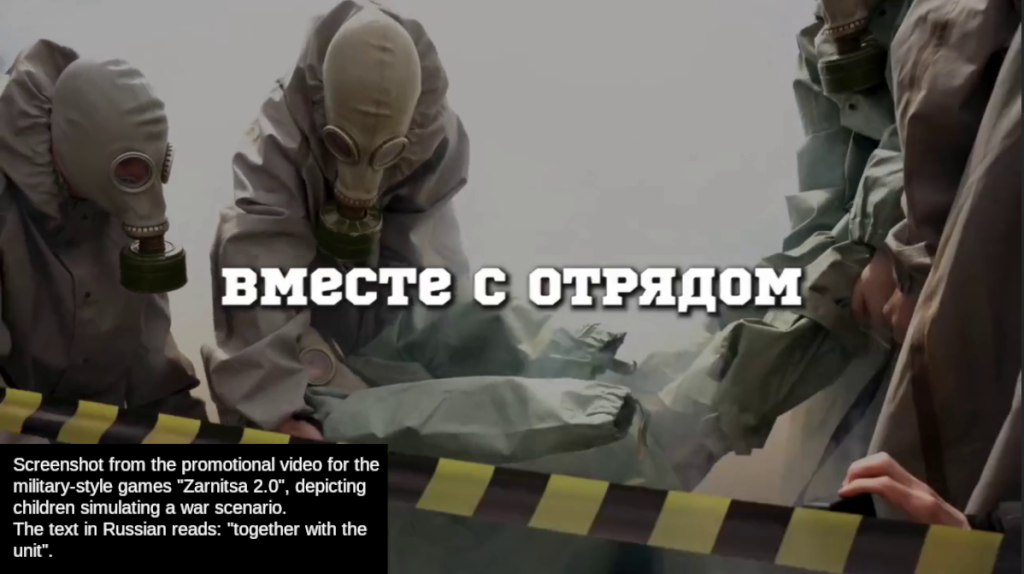
Additionally, on February 23, military-patriotic games, “Zarnitsa 2.0”, were held in Karelia, where children participated in military-style games. The event was organised by the “Unarmia” (Youth Army), a state-sponsored organization providing children aged 11 to 17 with basic military training and promoting imperia-centred ideology, as well as the “Movement of the First”, which is another state-sponsored organization that promotes ideology closely related to official state propaganda to children aged 6 to 18.
Finally, in early February, it became known that during the “Days of the Republic of Karelia” that lasted from January 26 till February 1, the governor of the Republic and the chief of the Main Staff of “Yunarmia”, Vladislav Golovkin, signed a cooperation document to strengthen the implementation of military-patriotic education programmes in Karelia.
The increasing promotion of military-oriented events and training for children raises serious concerns regarding the proper cognitive and psychological development of children in Karelia. Such education programmes risk the normalisation of military practices and the internalisation of violence, and repeated exposure to simulated conflict can desensitise children emotionally and reinforce “us-versus-them” thinking, weakening empathy towards others. In addition, children that are placed in environments where excessive obedience to authority is mandatory may have limited development of independent thinking and critical judgement. These programmes may also simplify complex moral questions into rigid binaries, limiting children’s ability to navigate ambiguity and ethical nuance in real-world situations. The implications of militarised events and education programmes contravene the principles set by the Convention on the Rights of the Child (CRC) and, by extension, broader United Nations principles concerning peaceful coexistence and the promotion of peace.
These concerns become more concrete when examined in relation to specific provisions of the CRC. To the extent that militarised educational practices may constrain the development of critical thinking, they may also affect the meaningful exercise of children’s rights under Articles 13(1) and 14(1) of the CRC. By promoting a singular, state-aligned framework of values and perspectives, such programmes risk limiting children’s ability to freely seek, receive, and impart information and ideas, as well as their capacity to develop independent thought and conscience. In addition, considering that these programmes are based on the promotion of a imperia-centred Russian identity, this may also be at odds with Article 8(1) and Article 29(1)(c), which protect the child’s right to preserve their identity and require education to respect their own cultural identity and values.
https://t.me/rviork/570#
https://t.me/AParfenchikov/8726#
https://yunarmy.ru/archives/85114
Assimilation policy
On February 2, the governor of the Republic of Karelia signed a regional national policy directive, which introduced a framework formally aimed at strengthening national unity and cohesion. Despite its inclusive language, the directive establishes a hierarchy of identity in which imperia-centred Russian identity functions as the primary reference point for civic participation, while Karelian and Veps identities are positioned in more limited roles. This distinction shapes how belonging is recognised in practice, creating conditions where alignment with the dominant identity becomes the most viable pathway to participation in public and institutional life.
This hierarchy is reflected in both language and cultural policy. The directive expands the role of the Russian language as the central medium of education and communication, even though it already dominates in Karelia, while Karelian and Veps language continue to lack sufficient institutional support. At the same time, Russian culture is actively promoted and embedded as a “state-forming” element of civic identity, whereas native Finno-ugric cultural expressions are largely confined in heritage and tourism frameworks. While such initiatives may increase visibility, they risk redefining indigenous cultures as symbolic rather than lived, reducing their role in everyday life.
The effects extend into education and early socialisation. The directive promotes imperia-centred identity formation through structured programmes, including elements associated with militarised environments and hierarchical discipline. These conditions shape identity formation at stages where it is most likely to be internalised, potentially limiting independent development and reducing the capacity of individuals, particularly children, to meaningfully engage with alternative ethnocultural identities. Over time, this contributes to the weakening of intergenerational transmission and the reduction of the presence of Karelian and Veps identities in daily life.
Taken together, the directive does not rely on explicit prohibition but creates conditions in which assimilation emerges through the cumulative effect of policy. By shaping language use, cultural expression, and identity formation, it contributes to the gradual erosion of Karelian and Veps cultural continuity, narrowing the space in which these identities can be maintained as living and self-sustaining systems.
These dynamics raise concerns regarding the Russian Federation’s obligations under international human rights law. The structural prioritisation of a single identity, combined with the absence of effective support for native Finnic languages and cultures, may be inconsistent with Article 27 of the International Covenant on Civil and Political Rights (ICCPR) and Article 15 of the ICESCR, which protect the rights of minorities to enjoy their culture and participate in cultural life. The impact on children’s identity formation further engages Articles 29 and 30 of the CRC, while the integration of imperia-centred and militarised elements within education raises broader concerns regarding the child’s right to development under Article 6 of the CRC.
Government of the Republic of Karelia. Order No. 58р-П, February 2, 2026. Petrozavodsk, 2026.