
Report about the Human Rights violations in Tatarstan
by Ilshat Sharafyllin, Tatar Rights Defender
August 2025
The overall view
In the Republic of Tatarstan, numerous human rights violations of the indigenous Tatar population perpetrated by the Russian authorities are being observed and recorded. The most pressing issues are the attacks on the national language and education, as well as the attacks on representatives of the clergy and the national revival movement.
Cultural and linguistic genocide of the Tatar people
A Systematic Campaign to Eliminate the Native Tatar Language in the Ethnic Tatarstan Schools.
On September 1st, the Russian Ministry of Education’s decision will take effect:
The subjects “Native Language” and “Literary Reading in the Native Language” will be taught for only one hour a week, rather than two.
In non-Russian language schools, the allowed teaching time will be two hours instead of three, as is formally explained by the “sanitary requirements.”
In practice, the policy is simply a creeping step toward a complete assimilation and the vanquish of the Tatar language among the young people of Tatar. Children are growing up in an atmosphere where Tatar is considered unnecessary, secondary, and “a career hindrance.” The same is true for the other peoples in Russia—the Bashkorts, Chechens, Ingush, Dagestanis, Buryat, Saha, Chuvash, Udmurt, Karel, and others.
Today, it can be confidently stated that the Russian government is deliberately and systematically pursuing a policy of cultural genocide against the Tatars. The Russian Ministry of Education justified the reduction of hours studying native languages in elementary grades through the introduction of the “sanitary” standards:
https://www.idelreal.org/a/sokraschenie-kolichestva-chasov/33494197.html
Tatarstan may approve a unified methodology for government bodies on preserving and strengthening “traditional spiritual and moral values,” while among the priority areas of State policy for “preserving and strengthening traditional values” is “the protection and support of the Russian language as the language of the constituent people.”
https://www.idelreal.org/a/v-tatarstane-mogut-utverdit-edinuyu-metodichku-dlya-organov-vlasti/33503029.html
Exploitation of Teenagers in Hazardous Military Education
In Tatarstan, shameful campaigns to recruit teenagers from Central Asia to work in the military-industrial complex continue to thrive. Under the guise of “education” and “career advancement,” young men and women are lured to the Alabuga special economic zone, where they effectively become cheap labor for the production of combat drones, which the Kremlin, in turn, uses to kill civilians in Ukraine.
The Russian occupier has long used Tatarstan as a “showcase” and a bridge for dialogue with the Islamic world. However, in stark reality, the republic has become a staging ground for war.
Under the guise of economic development, the Tatarstan authorities are selling not only the region’s reputation but also the lives of children living there. They are proving to the Kremlin that they are willing to perform any dirty task to advance their careers and the continuation of plundering the Tatar people. The facts speak for themselves: representatives of “Alabuga” are freely visiting schools in Kyrgyzstan, distributing advertising brochures with the slogan “Fall in line with the best!” and conducting selection processes through ridiculous online games. All in an attempt to lure teenagers to Russia and introduce them to its war
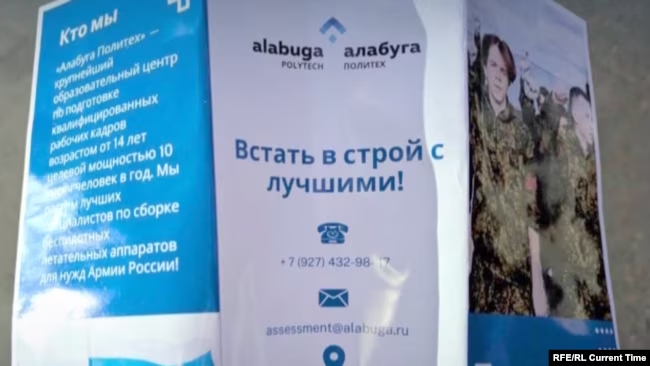
Parents are promised mountains of gold and rewards through offers of scholarships, salaries of up to 70,000 rubles, and various career prospects. In truth, however, the children will face the insidious exploitation by the Russian war machine. No less are the Tatarstan authorities who are drawing the republic into direct complicity with Moscow’s war crimes. By turning Kazan and Alabuga into weapons production facilities, they are endangering the entire population of Tatarstan. Any Russian military installation, after all, would automatically become a target.
Moscow, meanwhile, continues to cynically use the region as a bargaining chip in geopolitics, exposing the Tatars to attack for the sake of a “great power.”
https://rus.azattyq.org/a/molodezh-iz-tsentralnoy-azii-zamanivayut-v-rossiyu-na-sborku-boevyh-dronov/33499345.html
Violation of digital rights
In August, the Moscow occupation authorities launched a test program to shut down the last islands of freedom in Russia through popular and unregulated messaging apps such as WhatsApp and Telegram, as Roskomnadzor later confirmed.
The “partial call restriction” on foreign messaging apps is allegedly being implemented to “counter criminals,” according to Radio Liberty’s Russian Service.
Reports of disruptions in voice communication on these messaging apps have been coming in since early August. Just a day before the block, publication “Beware, Media” reported the decision to impede was politically motivated and that it was made “at the very top.”
It was also noted that Russian mobile operators, concerned about declining call revenue, may be lobbying for the blockade. WhatsApp’s monthly audience in Russia reaches 97.5 million, according to Verstka, while Telegram has 90.5 million users. Both statistics clearly represent the majority of the country’s population.
The authorities are considering closing all external apps in the country. The idea is that once the vacuum is created, the market can be leveraged forward to the state-backed messenger Max, as the publication also revealed.
https://meduza.io/feature/2025/08/14/blokirovka-zvonkov-v-whatsapp-i-telegram-razozlila-vseh-ot-obychnyh-polzovateley-do-z-bloggerov
Repressions
Court for laying flowers, Zulfiya Sitdikova Case
On August 5, the Sixth Cassation Court in Samara reopened the Kazan activist Zulfiya Sitdikova’s case for a new trial on charges of violating the rules for holding an event (Part 2, Article 20.2 of the Code of Administrative Offenses).
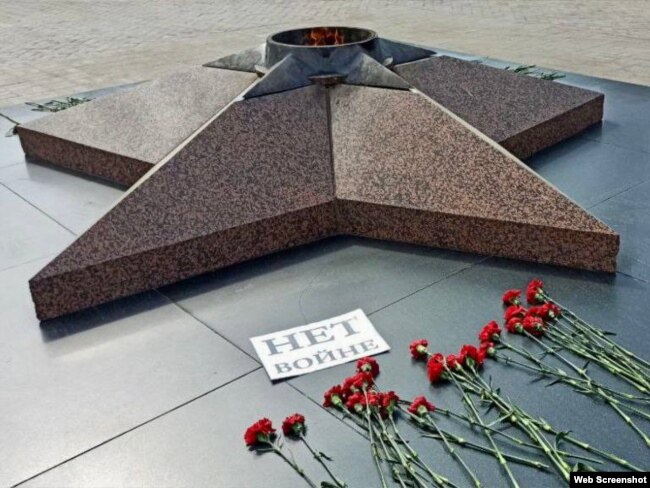
Back in May 2024, Sithdikova was sentenced to two years’ probation with a four-year probationary period for repeatedly discrediting the army (Part 1, Article 280.3 of the Criminal Code) and the reclamation of Nazism (Part 3, Article 354.1 of the Criminal Code) with the inscribed posters “No to War” and “9 waя.”
In February 2025, Zulfiya Sitdikova was arrested for 10 days for laying flowers at the grave of murdered politician Boris Nemtsov. She stood formally accused of “violating the rules for holding an event.” A short time later, they decided to punish her again—with a fine of 80,000 rubles under Article 20.3.3, Part 2, for… taking photographs. Meanwhile, the Federal Penitentiary Service is demanding that Zulfiya’s suspended sentence be replaced with a real one for these absurd charges.
https://t.me/resptatar/3248
Fine for the messege to a wrong person for Marat Galiakberov
A Kazan court fined IT specialist Marat Galiakberov 5,000 rubles for Twitter correspondence. According to the court’s ruling, law enforcement and the court deemed the Kazan resident’s private messages to exiled activist Mikhail Pletnev to constitute participation in the activities of the “undesirable” organization Free Russia (Article 20.33 of the Code of Administrative Offenses). However, no criminal messages or intent were found in the correspondence. “I think a year and a half ago, I wrote a private message to Pletnev about the harassment of an opposition-minded woman and attached a screenshot of her account. That’s why I was fined,” Galiakberov told Mediazona.
https://zona.media/news/2025/08/25/frf