
Report on Human Rights Violations in the Chechen Republic
Period: March 2026
Introduction and Methodology of the Report
This report is dedicated to the analysis of the human rights situation in the Chechen Republic (Russian Federation). The document records a sharp escalation of repressive practices, expressed in the systematic violation of fundamental freedoms guaranteed both by the Constitution of the Russian Federation and by Russia’s international obligations under the UN Charter and applicable conventions.
The presented materials testify to a profound erosion of the legal field and the transformation of the region into a zone of “legal exception,” where administrative tasks and personal instructions of the leadership prevail over procedures established by law.
Case of Nikita Zhuravel: Institutionalization of Lawlessness
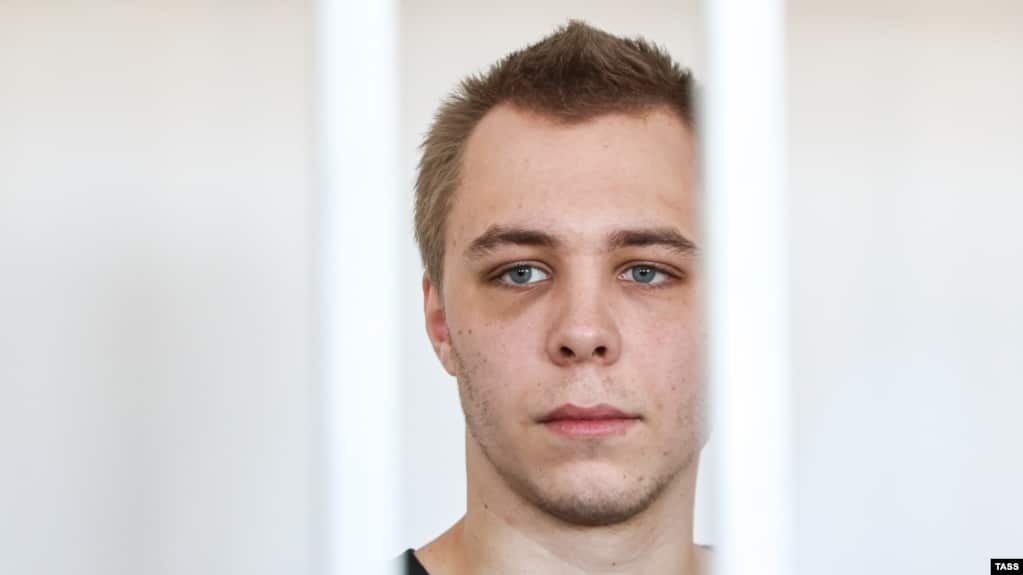
Nikita Zhuravel, recognized as a political prisoner, disappeared during his transfer at the end of December 2025.
The case of Nikita Zhuravel is an unprecedented example of the dismantling of the legal system of the Russian Federation and manual control over justice. His case combines territorial arbitrariness, physical violence, and subsequent “disappearance.”
https://www.svoboda.org/a/nikita-zhuravelj-kotorogo-izbival-syn-kadyrova-propal-na-etape/33716907.html
https://t.me/pzk_memorial/3062
1. Violation of Territorial Jurisdiction
The transfer of Zhuravel’s case (detained in Volgograd for burning the Quran in May 2023) to the Chechen Republic is a gross violation of Article 31 of the Criminal Procedure Code of the Russian Federation.
- Legal absurdity: according to the law, a criminal case must be considered at the place where the crime was committed. The transfer of the case to Grozny was a political decision, officially justified by “numerous appeals from residents of the Chechen Republic,” which has no legal force within the framework of criminal proceedings.
- Consequences: this decision effectively deprived the defendant of the right to an impartial court, handing him over to the jurisdiction of a region whose leadership publicly called for reprisals against him.
2. Physical Violence and Impunity
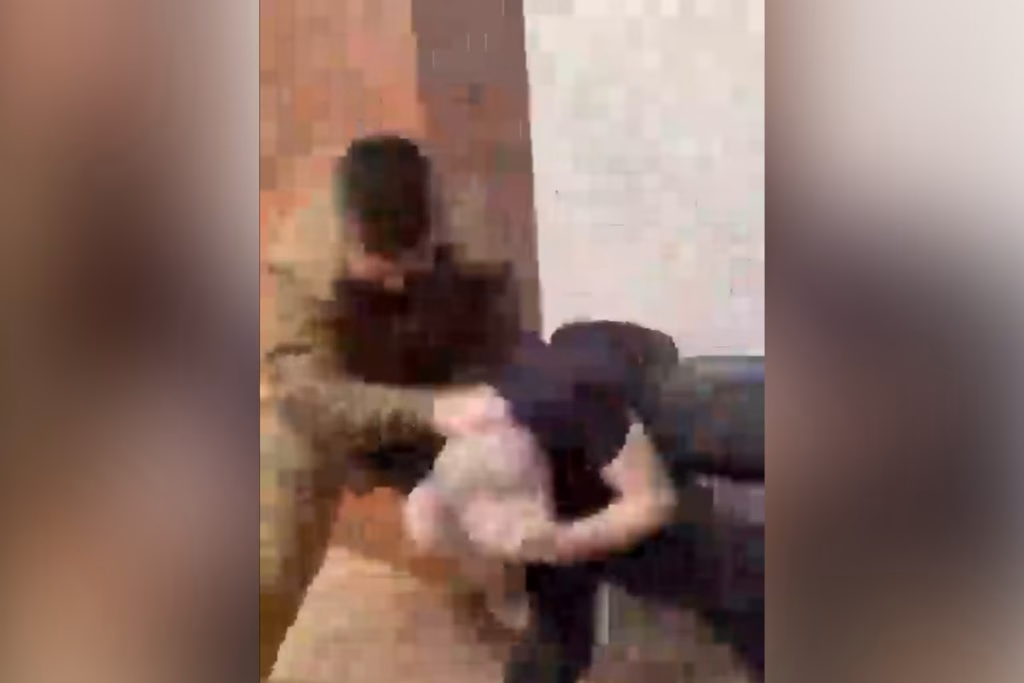
In September 2023, in the Grozny pre-trial detention center, Nikita Zhuravel was beaten by the son of the head of the Chechen Republic, Adam Kadyrov. https://oc-media.org/kadyrov-posts-video-of-son-beating-man-accused-of-burning-quran/
- Status of the fact: the violence was officially acknowledged, and the video of the beating was published by Ramzan Kadyrov.
- Reaction of the system: a criminal case for the beating was refused to be initiated. Moreover, Adam Kadyrov subsequently received numerous state awards, which human rights defenders regard as state approval of torture. https://www.kavkazr.com/a/izbienie-zaderzhannogo-za-sozhzhenie-korana-proveryat-chechenskie-siloviki/32622288.html
https://www.svoboda.org/a/izbivshiy-arestanta-syn-kadyrova-poluchil-desyatuyu-nagradu/33092828.html
3. Escalation of Charges (Treason Case)
In November 2024, while already in custody, Zhuravel was sentenced to 14 years of imprisonment. To the charge of “insulting the feelings of believers,” Article 275 of the Criminal Code of the Russian Federation (High Treason) was added. The trial was held behind closed doors, which is typical for political cases of 2025–2026. https://oc-media.org/quran-burner-beaten-by-adam-kadyrov-charged-with-treason/
4. Disappearance and Current Status
The situation around Zhuravel in 2026 became critical due to the loss of contact with him:
- Period of “unknown whereabouts”: for three months (from the end of December 2025 to March 2026), the convicted person’s location remained a secret. Relatives and lawyers received no news from him, and the Federal Penitentiary Service gave extremely vague answers.
- Current data: at the end of March 2026, human rights activist Eva Merkacheva reported that Zhuravel had “been found” in one of the correctional colonies in the Ulyanovsk region. He was able to send a letter to his mother (dated March 26), in which he reported that he was “alive and healthy.”
Zhuravel’s location is now formally established; however, the period of his “disappearance during transfer” and the lack of communication for several months indicate the practice of psychological pressure and a violation of the prisoner’s right to contact with the outside world and a lawyer.
Case of Zarema Musaeva
The case of Zarema Musaeva is the longest and most documented example of the application of the practice of collective responsibility of relatives in the Chechen Republic, as well as the use of the justice system as a tool of political persecution, hostage-taking, and torture.
The abduction of the wife of a federal judge from another region of the Russian Federation (Nizhny Novgorod) and her conviction on dubious charges in Grozny demonstrates the extraterritorial nature of the power of Chechen security forces.
The detention in custody of a woman with a severe form of diabetes in the presence of medical indications for release is qualified by human rights institutions as a form of inhuman treatment and torture (Article 3 of the ECHR).
The refusal of the courts of the Chechen Republic in 2025–2026 to apply the norms of law on the release of seriously ill persons confirms that Musaeva remains a “political hostage” held for the purpose of neutralizing the opposition activities of her relatives.
Despite the fact that her first term was coming to an end, in August 2025 she was given a new sentence.
- Status as of 2026: In February 2026, the Supreme Court of the Chechen Republic overturned the second sentence (3 years and 11 months for “assaulting a Federal Penitentiary Service employee”) and sent the case for review.
- Context: Human rights defenders (“Committee Against Torture”) consider this case to be revenge for the activities of her sons:
Abubakar Yangulbaev – a lawyer and human rights defender who previously worked at the “Committee Against Torture”. He was the first in the family to begin publicly covering the persecution of the Yangulbaevs. Abubakar is outside the Russian Federation. In January 2023, he took an unprecedented step – he publicly offered Ramzan Kadyrov to exchange himself for his mother so that she could receive medical care as a free person. There was no reaction to this proposal from the authorities of the Chechen Republic.
Ibragim Yangulbaev – is considered the main object of discontent of the Chechen authorities. He is one of the founders and leaders of the “1ADAT” movement (recognized as an extremist organization in Russia), which harshly criticizes the leadership of the Chechen Republic and publishes information about human rights violations in the republic. Ibragim is on the federal wanted list. Previously, he had already been subjected to detentions and stated that he had been tortured in Chechen secret prisons in the mid-2010s. Now he lives abroad and continues to engage in opposition activities.
Baysangur Yangulbaev – the youngest son in the family. He also participates in the activities of the “1ADAT” movement. A criminal case has been opened against him in Russia; he has been included in the register of terrorists and extremists of Rosfinmonitoring and declared wanted. Like the rest of the brothers, he is in emigration.
In 2026, Zarema Musaeva remains a living reminder that even the status of the family of a federal judge does not guarantee safety if the authorities decide to use a person as a lever of pressure.
https://www.kavkaz-uzel.eu/articles/384445
https://ovd.info/persons/musaeva-zarema-abuyazitovna
In 2026, criminal prosecution in the Chechen Republic became even more targeted and technological. If earlier the main target was direct political opponents, now those who are simply interested in “wrong” history or have connections with foreign activists fall under attack.
As of the beginning of March 2026, several such cases can be identified:
Persecution for Searching Information (Case of Isa Magamadov)
This is a new and dangerous precedent of 2026. In the Russian Federation, including the Chechen Republic, people have begun to be tried not for publication, but for the very fact of searching for “extremist materials” on Google.
- Essence: 29-year-old resident of the village of Alpatovo, Isa Magamadov, became a defendant in a case (so far administrative, but with the risk of transitioning to a criminal one) for “deliberate search for extremist materials on the Internet” (what exactly, unfortunately, is unknown).
- Why it is important: this means that security services have gained access to the search history of residents of the region and are using it for pressure. Any interest in the history of Ichkeria or decolonization automatically makes a person a target. https://www.kavkazr.com/a/zhitelya-chechni-oshtrafovali-za-poisk-ekstremistskih-materialov-v-internete/33698777.html
Declaration of the “Chechen Republic of Ichkeria” as a Terrorist Organization
This is a key legal event of the spring of 2026, which gives security forces a free hand.
- Decision: On March 12, 2026, the Sheikh-Mansur Court of Grozny recognized the structures of Ichkeria in exile (including the government of Akhmed Zakaev) as a terrorist organization.
- Consequences: now any mention of Ichkeria in a positive way, storage of its symbols, or connection with decolonization activists is qualified under “terrorism” articles (up to life imprisonment). The list of “branches” includes 29 organizations in 14 countries of Europe. https://www.dw.com/ru/sud-v-groznom-priznal-cecenskuu-respubliku-ickeria-terroristiceskoj-organizaciej/a-76685618
Violations of Socio-Economic and Environmental Rights
1. Socio-Economic Rights and Labor
- Forced “donations”: The long-standing practice of deductions from the salaries of public sector employees (doctors, teachers, and employees of departments) to the Akhmat Kadyrov Foundation continues. In 2025–2026, this was supplemented by tacit collections for the “needs of the SVO.” https://pointmedia.io/story/69b16c5de657f59b666dceda https://youtu.be/9xR2rMGMwFs?si=jjYep4rGLNOBpst5
- Low level of real income: Despite federal subsidies, independent economists note that salary increases for public sector employees (for example, the 308 million rubles allocated in December 2025) are eaten up by inflation and forced deductions. This forces qualified personnel (doctors and teachers) to leave the republic or seek additional employment.
- Labor mobilization: Cases of pressure on the unemployed or traffic violators with the aim of signing a military contract as a way of “correction” or obtaining income have become more frequent.
2. Right to Education
- Ideologization and censorship: In 2025–2026, control over educational programs intensified. Minister of Education Khozh-Baudi Daayev regularly conducts “inspections,” after which private schools are closed (for example, the high-profile closure of a gymnasium in Grozny in 2025 after criticism of the minister).
- Violation of teachers’ rights: Teachers are obliged to participate in all mass pro-government rallies and actions. Refusal may lead to dismissal or pressure on relatives.
3. Right to Medical Care
- Disparity in treatment: On paper, funding is increasing (for example, 3.1 billion rubles for oncology in 2025). However, in practice, quality care is mainly available in Grozny, while rural areas suffer from a shortage of medicines and narrow-profile doctors.
- Priority to military personnel: Part of the medical capacities of civilian hospitals in 2025–2026 has been reoriented toward the rehabilitation of combatants, which increases queues for ordinary citizens.
4. Environmental Rights
- Contradictory statistics: Officially, Grozny and the Republic as a whole consistently rank in the top-10 “environmentally clean” regions of the Russian Federation (according to the “Green Patrol” ratings for 2026). This is explained by the absence of heavy industry.
- Hidden threats:
- Oil product pollution: The problem of illegal taps into pipelines and artisanal oil refining in remote areas persists, leading to soil and groundwater contamination.
- Chaotic development: In Grozny and Argun, activists point to the destruction of green zones for the construction of new elite residential complexes (“Quartet,” skyscrapers), which violates residents’ right to a comfortable urban environment.
- Infrastructure wear: The level of wear of water supply systems in some districts reaches 75%, leading to regular interruptions in the supply of clean water.
Official Grozny in 2026 positions itself as “the cleanest and safest city.” At the same time, the real right to work is violated through “voluntary-compulsory” collections, and the right to education is violated through the minister’s personal inspections, which close educational institutions for the slightest non-compliance with the “course of the empire.”