
Monthly Report on Human Rights Violations in the Republic of Karelia, Russian Federation
May 2026
Jana Tiihonen (Bystrova)
Developments in the Republic of Karelia during May 2026 continued to raise concerns regarding the implementation of civil, political, economic, social, and environmental rights. Reported developments during the month pointed to the continued use of legal and administrative mechanisms against opposition political representatives, independent cultural and political activists, and journalists. At the same time, the cases documented during the reporting period reflected persistent failures to address socio-economic vulnerability, environmental risks, labour rights violations, and the needs of residents in rural and industrial settlements. Taken together, these developments suggest that the situation in Karelia reflects not only isolated administrative shortcomings, but also a broader pattern of structural neglect and restrictive governance affecting the equal enjoyment of human rights in the region.
Political persecution of a Karelian activist in exile
In late May 2026, it became known that the Karelian activist publicly known as Artur Ankkalainen had been included in Rosfinmonitoring’s list of extremists and terrorists (“the list”). In the absence of publicly available official reasons for his inclusion, and given the surrounding pattern of measures against Finno-Ugric cultural and political organisations, there are serious grounds to suspect that the designation is linked to Ankkalainen’s activism.
Artur Ankkalainen has been actively involved in popularising Karelian and Finno-Ugric ethnocultural elements for over a decade, thus protecting Finno-Ugric ethnocultural identities from being completely assimilated into the state-centered identity. He is closely affiliated with the Finno-Ugric initiative “Vapaa Kotimaa”, which is dedicated to promoting cultural and historical information about the Finno-Ugric peoples, and whose VKontakte page was blocked by the Prosecutor General’s Office of the Russian Federation in 2023. He is also closely affiliated with the “Karelian National Movement”, which promotes Karelian culture and history, and advocates for the rights of Karelia and the Karelian people, as well as with “Suur-Suomen Sotilaat”, an ideological pan-Finno-Ugric civil society organisation uniting various Finno-Ugric activist organisations. All of the aforementioned organisations were included in the list in late 2024, reportedly because they oppose the discriminatory and assimilatory policies of the state.
Through those organisations and his own personal efforts, Artur Ankkalainen has contributed significantly to the maintenance and broad dissemination of information on Karelian and Finno-Ugric culture and history. His work has helped members of the Finno-Ugric nations remain connected to their ethnocultural identity and has contributed to the survival, and in some cases the revival, of indigenous peoples on the territory of the Russian Federation. His inclusion on the list not only stigmatises his work, but also places his life and freedom at risk and may severely restrict his ability to continue contributing to the revival of Finno-Ugric nations.

In addition, such stigmatisation of cultural ethno-activists, may have broader consequences for the peoples they represent and seek to support. Inclusion on the list can damage an activist’s credibility, discourage public engagement with the information they share, and create distrust toward the organisations and movements with which they are associated. This, in turn, suppresses the dissemination of knowledge that may be vital for peoples facing forced assimilation, including information about their ethnocultural identities, histories, and languages.
Over the long term, treating cultural activism as extremism or terrorism may contribute to the erosion of individual Finno-Ugric communities by restricting access to the very forms of knowledge that sustain collective identity. In this sense, the designation does not merely affect Artur Ankkalainen as an individual, but may also amount to an interference with the collective cultural rights of the peoples whose heritage he works to preserve and promote.
The inclusion of Artur Ankkalainen on the list, reportedly on the basis of his cultural and political activism relating to the rights, identities, and self-determination of the Finno-Ugric peoples, may not align with several provisions of the International Covenant on Civil and Political Rights (ICCPR).
The right to hold and express opinions is protected by Article 19 of the ICCPR, including the right to impart information of all kinds regardless of frontiers. It could be argued that, by intentionally creating conditions under which information or opinions might be delegitimised and excluded from public discourse through institutional stigmatisation, the state may be acting in a manner inconsistent with Article 19 of the ICCPR.
In addition, the failure of the Russian Federation’s authorities to clearly define what constitutes extremist or terrorist activity allows domestic counter-extremism and counter-terrorism laws to be interpreted broadly and applied inconsistently. In this context, Artur Ankkalainen’s inclusion on the list raises serious concerns that loosely defined legal terminology is being used to target political and cultural activism, rather than conduct involving violence or genuine threats to public security. This may further amount to an unjustified interference with his rights under Article 19 of the ICCPR.
Furthermore, Ankkalainen’s inclusion in the registry may also raise concerns under Article 26 of the ICCPR, which guarantees equality before the law. If political and cultural advocacy concerning Russian identity is not only tolerated, but also encouraged and praised, while similar advocacy concerning Finno-Ugric identities is treated as extremist and terrorist activity, this indicates a discriminatory application of the law. Such unequal treatment suggests that the measure is not based on the nature of the expression itself, but on the ethnic, cultural, or political identity of Ankkalainen and the peoples whose rights are being defended.
Finally, the designation may raise concerns under Article 27 of the ICCPR, which protects the rights of minorities to enjoy their culture in community with others. In light of the broader effects previously described, the stigmatisation of Ankkalainen’s cultural activism as extremism or terrorism may interfere with the ability of Finno-Ugric communities to preserve, transmit, and enjoy their collective cultural identity. It may therefore amount not only to an individual restriction on Ankkalainen, but also to an interference with the minority rights protected by Article 27 of the ICCPR.
Sources:
- https://ovd.info/express-news/2023/01/31/vkontakte-po-trebovaniyu-genprokuratury-zablokiroval-gruppu-svobodnaya
- https://www.fedsfm.ru/documents/terrorists-catalog-portal-act?
- https://sovanews.tv/2025/07/24/pochemu-finlyandiya-otkazyvaet-v-politubezhishhe-rossiyanam-dve-istorii/
Suppression of Political self-determination
On 25 May 2026, Dmitry Rybakov, a member of Petroskoi’s (Petrozabodsk) City Council Standing Commission on Healthcare, Ecology and Social Development, was detained. He was forced to spend the night in a temporary detention facility, before being brought to the Petroskoi City Court on 26 May, where he was found guilty under Article 20.3 of the Code of Administrative Offences of the Russian Federation, the administrative article on the“demonstration of extremist symbols”. He received a 1,000-rouble fine and lost his right to participate in elections for a year.
Rybakov’s detention and fine came after complaints were filled by members of the Russkaya Obshchina, a far-right Russian nationalist organisation, Ivan Poteryaev and Viktor Ivankin, concerning alleged display of “extremist symbolism” on his VKontakte page in three posts from 2020. The case was handled by Judge Natalia Degot.
The case of Rybakov follows the same pattern as Emilia Slabunova’s case. Both were detained after a complaint filled by Ivan Poteryaev for alleged display of extremist symbols on the public social media pages on posts from 2020; both cases were handled by Judge Natalia Degot; and both were fined 1,000 roubles and lost their right to participate in elections for a year. In both cases, the alleged posts were not present on their social media pages and proper evidence was not presented during the trial. Both deputies are members of Karelia’s Yabloko faction and are members of the political opposition in the Republic of Karelia.
In addition, it should be noted that Rybakov’s case falls into the broader pattern of attempts to restrict political opposition in the Republic of Karelia from participating in elections. Dmitry Rybakov is not a merely party functionary but a long-standing environmental advocate, scientist, and municipal deputy in Karelia. His public record includes opposition to environmentally harmful projects, advocacy for protected natural territories, criticism of weak state environmental regulation, presentations of scientific evidence on pollution risks in Petroskoi, and support for residents’ environmental and housing-related interests. In his role as head of the Yabloko faction in Petroskoi’s City Council and member of the commission on healthcare, ecology, and social development, he has used formal municipal mechanisms, including legislative initiatives, deputy inquiries, and public reporting, to challenge decisions by local and regional authorities affecting resident’s health, environment, and quality of life. This context supports the conclusion that administrative proceedings against him should be assessed not in isolation, but against the broader pattern of pressure on opposition politicians engaged in public-interest advocacy.
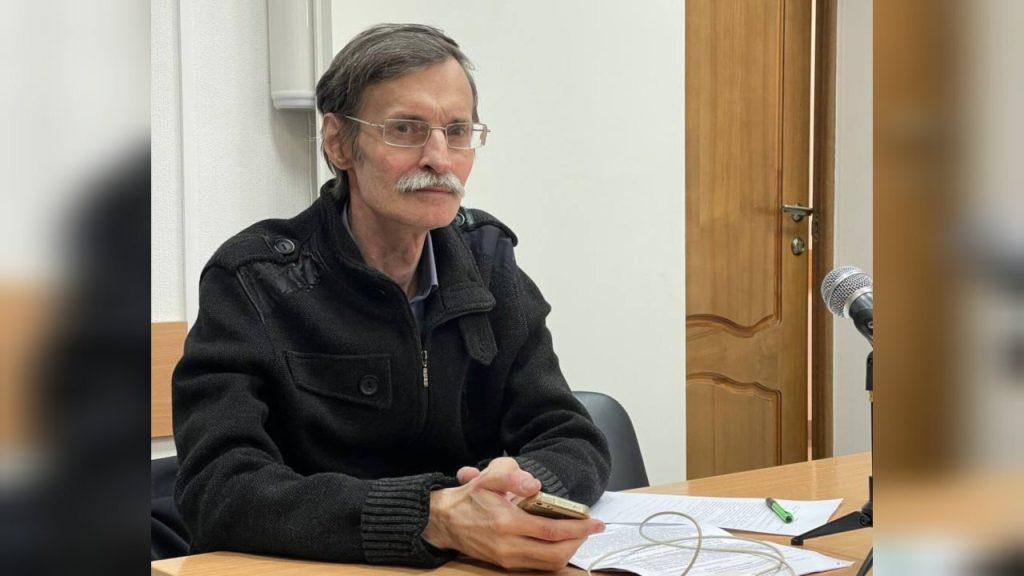
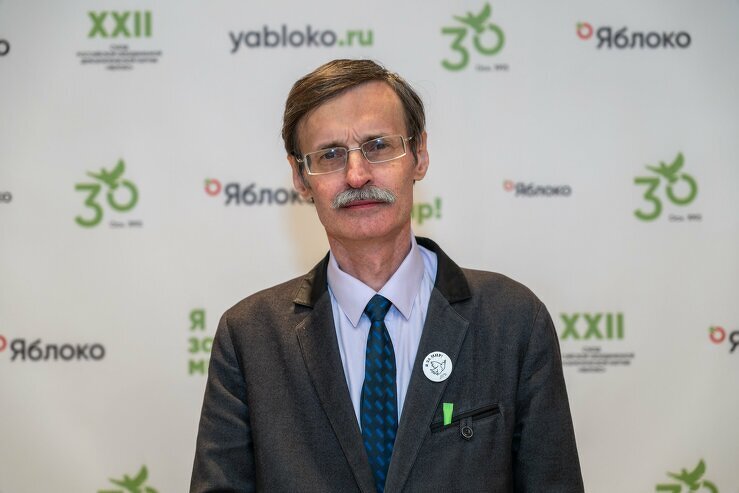
The case Rybakov raises concerns under several provisions of the International Covenant on Civil and Political Rights (ICCPR). The reported reliance on non-existent or fabricated evidence, given that the alleged posts were reportedly absent from his VKontakte page and that no proper evidence was presented in court, raises serious concerns under Article 14 regarding the right to a fair hearing. His overnight detention in a temporary detention facility also appears disproportionate to the nature of the alleged administrative offence, especially considering that the final sanction was a minor fine of 1,000 roubles, raising concerns under Article 9 regarding arbitrary detention.
The case also raises concerns under Article 15(1), as the alleged posts dated from 2020 and reportedly concerned Alexei Navalny, whose image had not been designated as extremist symbolism at the time, nor had Navalny’s personal likeness itself been clearly designated as such. Punishing Rybakov in 2026 for alleged historical posts may therefore amount to an unforeseeable and retroactive application of administrative law. Finally, the resulting one-year restriction on his ability to stand for election raises concerns under Article 25, particularly in light of the broader pattern of administrative proceedings against opposition deputies in Karelia. The case may interfere not only with Rybakov’s right to participate in public affairs and stand for election, but also with voter’s right to freely choose their political representatives.
Sources:
- https://www.yabloko.ru/regnews/Karelia/2026/05/25
- https://www.yabloko.ru/regnews/Karelia/2026/05/26
- https://t.me/Slabunova/5714
- https://ombudsman.media/report-september-2025-karelia/
- https://ombudsman.media/report-december-2025-karelia/
- https://ombudsman.media/report-april-2026-karelia/
- https://ru.thebarentsobserver.com/novosti/deputataekologa-ostrafovali-za-fotografii-navalnogo-ctoby-snat-s-predstoasih-vyborov/451363
Humanitarian activist Andrei Agapov declared a foreign agent
On 8 May 2026, Andrei Agapov, a former journalist from the Republic of Karelia currently living in Finland, was declared a foreign agent by the Ministry of Justice of the Russian Federation. According to the Ministry of Justice’s official publication, the declaration was based on, but not limited to, his alleged comparison of the Russian Federation to a terrorist organisation, his affiliation with persons and organisations that have been deemed undesirable on the territory of the Russian Federation, his opposition the invasion of Ukraine, and his alleged dissemination of false information about decisions and policies of the Russian Federation authorities. On 21 May 2025, Agapov was added to Rosfinmonitoring’s list of extremists and terrorists.
Agapov is a known anti-war activist involved in supporting Ukrainians affected by the Russian Federation’s full-scale invasion. His activities have reportedly included assisting Ukrainian refugees in Finland, collecting and coordinating humanitarian aid, supporting Ukrainian community initiatives, documenting residents of Karelia killed or missing in the invasion, and publicly opposing the Russian Federation’s war against Ukraine.
Punitive measures imposed on Agapov in response to his public criticism of the Russian Federation’s invasion of Ukraine raise concerns under Article 19 of the ICCPR, as they interfere with his right to freedom of expression. To the extent that such measures also target his underlying moral or conscientious opposition to the war, they may additionally implicate Article 18 of the ICCPR, which protects freedom of thought and conscience. Finally, declaring him a foreign agent on the basis of association with persons and organisations deemed undesirable on the territory of the Russian Federation, may violate Article 22 of the ICCPR.
Sources:
- https://minjust.gov.ru/ru/events/51253/
- https://ovd.info/express-news/2025/05/27/byvshego-karelskogo-zhurnalista-vnesli-v-spisok-terroristov-i-ekstremistov
- https://ru.thebarentsobserver.com/rossijskie-vlasti-vnesli-aktivista-andrea-agapova-v-spisok-ekstremistov-i-terroristov/430588
Administrative prosecution for peaceful antiwar expression
On 10 May 2020, Natalya Kuklina was fined 20,000 roubles under Part 2, Article 20.2 of the Code of Administrative Offences of the Russian Federation, for the “organisation or holding a public event without filling the required notification”, after she was detained while holding a cardboard sign during a solo antiwar picket. The text of the cardboard sign was removed by the authorities.
Natalya Kuklina is a well-known Karelian antiwar activist. She has repeatedly faced administrative and criminal proceedings in connection with her antiwar expression since the start of the Russian Federation’s invasion of Ukraine.
In 2022, the authorities of the Russian Federation brought multiple administrative cases against Kuklina under Article 20.3.3 of the Code of Administrative Offences of the Russian Federation, the provision used to punish alleged “discrediting” the armed forces of the Russian Federation. The accusations related to antiwar expression, including posts on VKontakte, leaflets, inscriptions, and stickers. Reports indicate that seven administrative protocols were drawn up against her; four cases were dismissed, while three resulted in fined totalling 90,000 roubles.
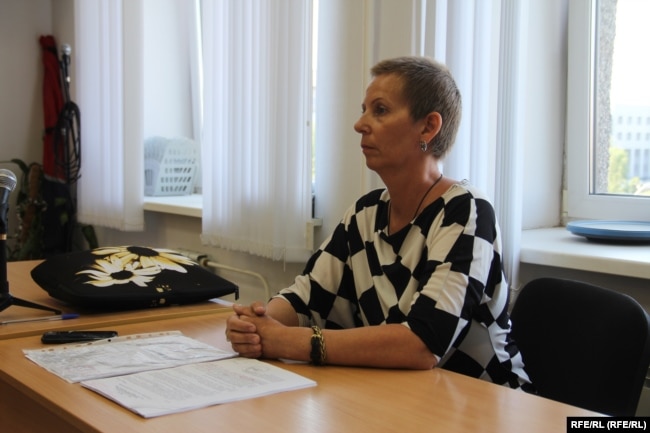
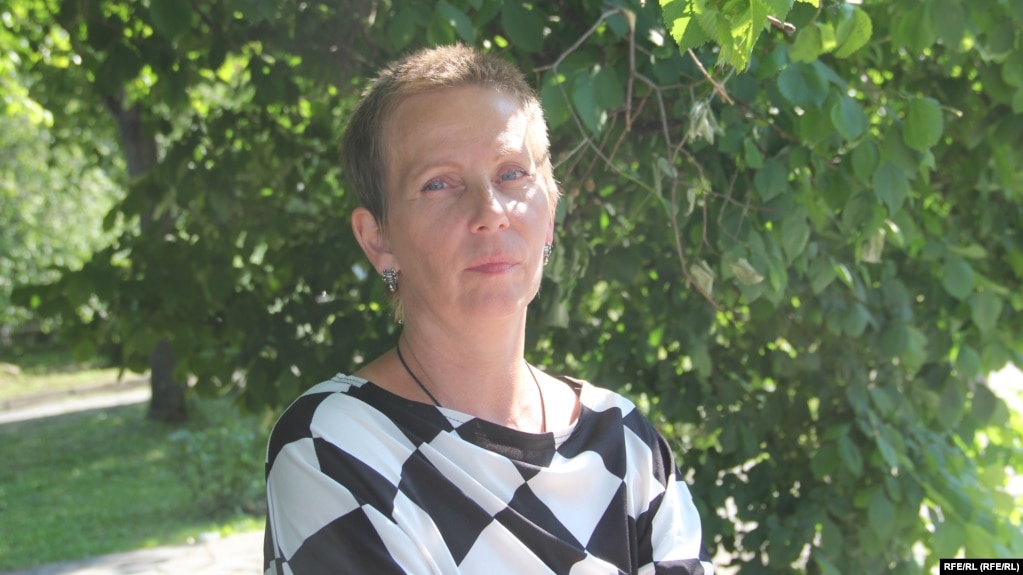
Following the administrative prosecutions, Kuklina was also subjected to a criminal case under Article 280.3 of the Criminal Code of the Russian Federation, concerning repeated “discrediting” of the armed forces of the Russian Federation. This case was connected to her prior administrative prosecution and was reportedly based on antiwar social media content. In December 2024, the Petroskoi City Court discontinued the criminal proceedings because the statute of limitations had expired.
Taken together, the cases against Kuklina show a pattern of state pressure against peaceful antiwar expression. Her prosecutions can be characterised as restrictions on freedom of expression and peaceful assembly, implicating Articles 19 and 21 of the ICCPR.
Sources:
- https://semnasem.org/news/2026/05/17/karelskaya-antivoennaya-aktivistka-poluchila-shtraf-za-piket-s-molbertom
- https://petrozavodsky–kar.sudrf.ru/modules.php?name=sud_delo&srv_num=1&name_op=case&case_id=197293961&case_uid=bfeaea80-2ca8-4ee9-b47c-436aec476817&delo_id=1500001
- https://ovd.info/express-news/2024/12/18/delo-o-povtornoy-diskreditacii-rossiyskoy-armii-protiv-petrozavodchanki
- https://ovd.info/express-news/2024/04/10/v-sud-peredali-delo-o-diskreditacii-armii-v-otnoshenii-zhitelnicy
- https://www.svoboda.org/a/sem-protokolov-za-diskreditatsiyu-armii/31931248.html
Failure to address dust and noise pollution affecting residents near “Eurogranit” LLC
Towards the end of May 2026, it was reported that, following the residents’ complaints about dust and noise, Rospotrebnadzor had found no violations of sanitary and epidemiological requirements in the operation of the crushed stone plant “Eurogranit” LLC. According to Karelia’s Ministry of Industry and Trade, citing Rospotrebnadzor, samples were collected near the plant and in nearby residential areas. The authorities reported that no exceedance of atmospheric air pollution standards was identified, and the mass concentration of dust, or suspended particulate matter, did not exceed the established limit. However, monitoring data on the actual dust concentration, sampling conditions, and applicable limit values were not publicly disclosed. In addition, the available reports do not disclose the underlying noise measurement data.
The official statements contradict the statements of local residents, who have complained for many years about dust and noise pollution coming from the plant. On 13 April 2026, a local resident documented the plant’s operations on video. The video was taken at 21:28, showing not only a dust cloud forming over the plant, but also the noise levels of the plant’s operations. According to the resident, no visible dust suppression measures were observed at the plant. It should be noted that the plant is located near residential buildings, which are affected by noise and dust pollution.
A similar situation was reported in February 2026. According to media reports, local residents stated that the problem had been ongoing for an extended period of time and had worsened as early as the spring of 2023. Residents claim that dust from the crushed stone plant has affected air quality to such an extent that it has become impossible to even ventilate their apartments. In addition to airborne dust from the plant, residents also complained of constant industrial noise, as well as of heavy trucks transporting the crashed stone, which contribute to dust pollution.
Company representatives state that in 2025 the factory implemented dust suppression measures, yet this has not changed the situation for the residents living near the plant.
Notably, “Eurogranit” LLC was fined in 2024 for non-compliance with Part 1 of Article 6.3 of the Code of Administrative Offences of the Russian Federation, concerning “sanitary and epidemiological welfare requirements”, due to excess dust and noise.
The situation in Medvezhiegorsk’s “Eurogranit” LLC crushed stone plant raises concerns regarding the Russian Federation’s obligations under ICCPR and the International Covenant on Economic, Social and Cultural Rights (ICESCR).
In particular, the documented noise and dust pollution may raise concerns under Article 12 of the ICESCR. Residents state that dust from the plant is affecting air quality, covering gardens and residential areas, and preventing them from ventilating their homes, while constant industrial noise disrupts daily life. Such conditions may negatively affect both physical health, including through respiratory exposure to airborne particles, and mental health, including through stress, sleep disturbance, and prolonged exposure to noise. The concern is not limited to the conduct of the private operator, but also concerns whether the state has taken adequate steps to prevent, monitor, and address environmental conditions that may harm residents’ health. In this regard, the absence of publicly disclosed monitoring data makes it difficult to assess whether the authorities fulfilled their obligations to protect residents from environmental health risks.
The case also raises concerns under Articles 2(3) and 25 of the ICCPR. Even though the residents repeatedly complained about the dust and noise affecting their homes, health, and daily life, the available public information demonstrates that the official response did not provide residents with an effective and transparent means to challenge the situation or obtain remedial action. Additionally, even though the local authorities recognised the severity of the situation, they justified their inaction by citing the lack of legal mechanisms to influence the private operator and instead advised the residents to pursue complaints before higher authorities. Even if municipal authorities lacked direct enforcement power over the plant, such a response raises concerns about whether they fulfilled their representative and coordinating role on behalf of the affected community. Moreover, without publicly disclosed monitoring records, including dust concentration values, sampling conditions, methodology, and the plant’s operating status during the inspections, residents could not meaningfully assess the authorities’ findings, challenge them, or participate in public decision-making concerning the plant’s impact. Taken together, these circumstances may indicate a failure to provide an effective remedy and to ensure meaningful participation in local public affairs.
Sources:
- https://myseldon.com/ru/news/index/346078448
- https://vk.com/wall-174196957_85363
- https://runews24.ru/petrozavodsk/06/02/2026/v-medvezhegorske-gorozhane-zadyixayutsya-ot-pyili-i-bezdejstviya-mestnyix-vlastej
- https://ptzgovorit.ru/news/chinovniki-ne-nashli-zapylennosti-na-shchebenochnom-karere-v-karelii
- https://gubdaily.ru/news/posuda-v-domax-drebezzhit-zhiteli
- https://ptzgovorit.ru/news/shchebenochnyy-zavod-v-medvezhegorske-proveryat-posle-zhalob-lyudey
- https://gubdaily.ru/news/eto-budet-prodolzhatsya-beskonechno-shum-zavoda-meshaet-zhitelyam-karelii-spat/
- https://ptzgovorit.ru/news/otravlyayushchiy-zhizn-lyudyam-shchebenochnyy-zavod-oshtrafovali-v-karelii
Normalisation of war for children
In late May 2026, at the Lahkolampi Secondary School, a municipal general education school in the Republic of Karelia, an exhibition dedicated to the invasion of Ukraine, or, how it is called in the Russian Federation, the “special military operation”, was opened on the school premises.
The exhibition was opened in the presence of Tatiana Tishkova, a deputy of United Russia party in Karelia and chair of the Legislative Assembly Committee for Education, Culture, Sports, and Youth Policy, who personally helped supply military-related artefacts from the front. Former servicemen of the invasion of Ukraine, Aleksandr Pozharski and Aleksandr Kirichenko, were invited to speak about the “special military operation” through a framework of patriotism, duty, and personal sacrifice.
According to media reports, it was the director of the school who wanted to open an invasion- related exhibition on the school premises. It should be noted that the school also has a “Patriot club”, which is led by Eduard Romanovskiy, and where children are taught military-related skills, including weapons assembly and disassembly, shooting, and the use of OZK protective gear.
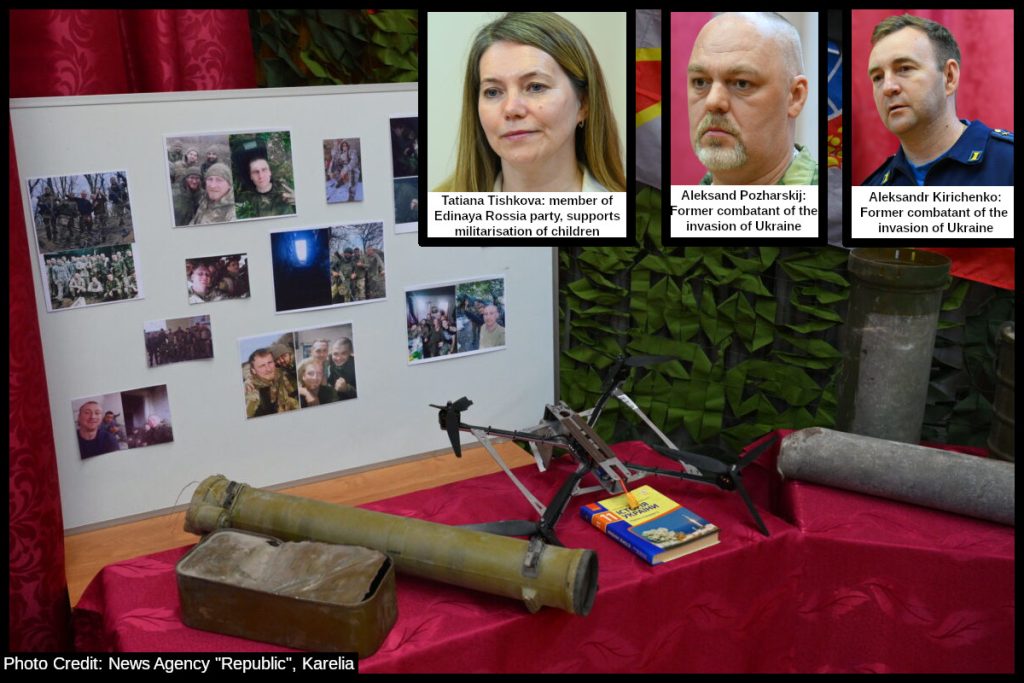
The exhibition illustrates a broader pattern of military-patriotic socialisation within the education system of the Republic of Karelia. Responsibility for this pattern does not rest solely with individual school administrations that permit military-themed exhibitions and clubs such as “Patriot” to operate within schools. It also extends to the regional authorities and officials, who following the instructions of the central authorities of the Russian Federation, publicly support, legitimise, and participate in such initiatives.
The presence of former servicemen at the exhibition served a legitimising function. Presented as role models and invited to address children in an educational setting, they helped frame participation in a war of aggression as an expression of patriotism, courage, sacrifice, and public service. In this context, personal testimony from combatants does not function as neutral education. Rather, it becomes a means of reinforcing a state-approved narrative of the war and presenting military involvement as honourable and worthy of emulation.
The use of schools for this purpose is particularly harmful. Children are exposed to these messages in an environment associated with authority, trust, and compulsory education. When war-related narratives are accompanied by military artefacts, public officials, and state-supported programmes, the result is a blurring of the line between education and propaganda. Such practices risk normalising the ongoing war of aggression against Ukraine and legitimising violence as a socially accepted and morally approved form of civic action.
This is especially alarming because the war is presented not as an act requiring accountability, but as a heroic and patriotic undertaking. By encouraging children to associate military participation with honour and civic virtue, these initiatives may shape their understanding of the conflict in ways that obscure its illegality, human cost, and destructive consequences. Over time, this contributes to the formation of a generation less equipped to critically assess state violence, recognise aggression, or demand accountability.
Such state-sponsored and state-supported military initiatives in educational environments contradict the core principles of the UN Charter, and do not align with the with the principles of the Convention on the Rights of the Child (CRC), whose preamble states: “Considering that the child should be … brought up in the spirit of the ideals proclaimed in the Charter of the United Nations, and in particular in the spirit of peace, tolerance, freedom, equality and solidarity.”
Moreover, the described practices appear incompatible with the aims of education set out in Articles 29(1)(b) and 29(1)(d) of the CRC. By allowing and contributing to the presentation of the war of aggression against Ukraine through a heroic and patriotic framework, the State fails to direct the education toward respect for human rights and the principles of the UN Charter, as well as to promote peace, tolerance, and friendship among peoples. Instead, the event normalises military participation and state violence, positioning the war as a source of civic pride and as a moral example.
Finally, the state sponsorship and official endorsement of these military-patriotic initiatives may be understood as contributing to war propaganda. Former combatants are presented to children as moral authorities and role models, while participation in the war is framed as honourable, patriotic, and socially desirable. In the context of an ongoing war of aggression, such messaging risks legitimising the use of force and fostering public support for the invasion. These practices may therefore engage Article 20(1) of the ICCPR, which prohibits propaganda for war.
Sources:
- https://rk.karelia.ru/social/vystavka-o-spetsoperatsii-otkrylas-v-poselkovoj-shkole-karelii
- https://sampotv360.ru/2026/05/21/v-posyolke-lahkolampi-otkrylas-vystavka-posvyashhennaya-speczialnoj-voennoj-operaczii/
Failure to provide social security
In May 2026, two separate incidents of factories closing, affecting the livelihoods of a significant portion of the local population, were reported. The first incident concerns the temporary closure of operations at the “Financebureau” LLC granite factory in Lahkolampi, Suojarvi District, and the second the baking factory JSC “Olonetskiy Khlebzavod” in Anuksenlinnu, Anukselinnu District (Olonets, Olonetskiy District in Russian).
In the case of “Financebureau” LLC, the factory announced that it would be temporarily shutting down production from 9 April until 31 May 2026, later prolonging the temporary shutdown until the end of June 2026. This left 122 workers employed at the factory without income. Additionally, according to media reports, the employees had experienced wage arrears since March 2026, leaving them to rely on volunteer humanitarian assistance to provide for their children and families.
On 15 May 2026, the district prosecutor’s office issued an official statement confirming that the situation had been placed under prosecutorial oversight and that the outstanding wage arrears had been paid in full. The authorities took several additional measures after the shutdown, such as placing the workers on official downtime, which entitled them to receive two-thirds of their average earnings, and trying to find alternative vacancies through the Suojarvi employment centre.
However, the measures were mainly reactive and administrative. They helped address part of the wage arrears and possible re-employment, but public reporting does not show a broader emergency social-protection response, such as direct financial aid to the workers’ families, guaranteed temporary income support beyond statutory downtime pay, food assistance from the state, or a structured plan to prevent household hardship. Recent media reports indicate that the payments were not made in full and many families, including families with children, are still struggling to cover their basic needs and still have to rely on humanitarian assistance.
In the case of the “Olonetskiy Khlebzavod” JSC, employees were abruptly informed that the factory was closing and were pressured into signing voluntary resignation letters. Signing voluntary resignation letters would allow the employer to avoid redundancy payments and severance obligations, and would deprive the employees from guarantees attached to employer-initiated dismissal.
The issue appears to have been acknowledged by the authorities, as indicated by the public comments of Elena Frolova, head of the Labour and Employment Office of the Republic of Karelia. However, the available public information does not indicate that this awareness was followed by immediate official intervention to support the employees.
Taken together, the “Financebureau” and the “Olonetskiy Khlebzavod” cases suggest a broader weakness in the protection of workers facing sudden loss of income in Karelia. In both situations, the authorities were aware of the risks affecting workers’ livelihoods, yet failed to take effective protective measures to prevent or mitigate the resulting income insecurity. These cases therefore raise concerns under Article 9 of the ICESCR, as they suggest that access to social security and social protection was not ensured in a timely, proactive, and effective manner.
Sources:
- https://karelia.rbc.ru/karelia/04/05/2026/69f898359a7947a4a5ba258a?
- https://gazeta-karelia.ru/news/2026/05/dolg-po-zarplate-v-organizatsii-v-poselke-lahkolampi-pogashen/
- https://brokenstone.ru/Material.aspx?id=5044
- https://karel.mk.ru/social/2026/05/12/v-suoyarvi-sobirayut-gumanitarnuyu-pomoshh-dlya-rabotnikov-ne-rabotayushhego-predpriyatiya.html
- https://epp.genproc.gov.ru/ru/proc_10/mass-media/news/regional/e8495520/
- https://ptzgovorit.ru/news/v-poselke-karelii-mnogodetnyy-otec-mesyacami-ne-vidit-zarplatu
- https://karelinform.ru/news/2026-05-18/hlebozavod-zakryli-v-karelii-sotrudniki-soobschili-ob-uvolneniyah-5599122
- https://ptzgovorit.ru/news/socseti-hlebozavod-zakrylsya-v-karelii-sotrudnikov-poprosili-na-vyhod
Ladoga Skerries
In May 2026, it became known that the employees of the Ladoga Skerries National Park have been experiencing wage-payment irregularities since at least 2024. According to media reports, the employees of the national park either received delayed salaries, or did not receive the full amount; vacation pay and businesses trip expenses are regularly delayed, and quarterly and annual bonuses are not being paid at all.
In addition, the National Park has not been receiving funding for the necessary equipment to properly manage and patrol the area. This has not only impaired the employees’ ability to discharge their duties effectively, but has also damaged relationships with contractors, some of whom no longer wish to continue cooperation due to concerns over non-payment.
The improper funding of the National Park has led to a series of issues, such as a lack of preparedness for the fire-risk season due to a lack on necessary fire equipment, and security guards having to perform boiler-room duties without the provision of necessary equipment.
The wage-payment and funding irregularities primarily engage Article 7 of the ICESCR, which protects the right to just and favourable conditions of work, including fair remuneration. Where delayed or incomplete payments undermine the workers’ ability to meet basic needs, the situation may also raise concerns under Article 11 of the ICESCR, concerning the right to an adequate standard of living. In addition, the situation may be incompatible with the Russian Federation’s obligations under ILO Convention No. 95 on the Protection of Wages.
The situation in Ladoga Skerries National Park raises concerns not only under economic and labour rights, but also in relation to environmental protection and cultural heritage preservation.
The National Park was officially created in 2017 after decades of discussion about the need to protect the northern Ladoga skerry landscape. Its establishment was justified by the exceptional ecological value of the area: a unique system of rocky islands, narrow straits, bays, cliffs, and shoreline ecosystems, combined with high biodiversity. The territory is also important for the protection of rare and vulnerable species, including the Ladoga ringed seal, an endemic freshwater seal whose habitat is closely connected to Lake Ladoga and its northern skerry region.
The park also has historical and cultural significance. The northern Ladoga region has been inhabited for thousands of years and contains sites associated with ancient Karelian history, including archaeological traces of settlements, burial grounds, and fortified sites from the Iron Age and medieval period. Thus, the creation of the National Park was intended not only to protect biodiversity, but also to protect a historically significant cultural landscape.
Considering the environmental and cultural significance of Ladoga Skerries National Park, financial instability, lack of equipment, and weakened patrol capacity may undermine the very purposes for which the protected area was established. As such, the situation may raise concerns under Article 15 of the ICESCR. The situation may also be relevant under Article 27 of the ICCPR, as the territory forms part of the historical, cultural, and linguistic heritage of the Karelian people.
Finally, a fire was already reported on the protected territory of the skerries during the 2026 fire-risk season. According to media reports, a forest fire broke out on one of the islands of Lake Ladoga within the park’s territory and was localised only after the arrival of aerial firefighting personnel. This incident illustrates that fire risks in the park are not merely theoretical, particularly given the area’s forested landscape and tourist pressure.
In this context, the employees’ allegations that the institution lacks sufficient firefighting equipment and personnel due to unresolved financial and operational problems are especially concerning. If underfunding impairs the park’s ability to prevent, monitor, or respond to fires, the situation may undermine both biodiversity and public safety. It may therefore raise concerns under Article 6 of the ICCPR, as failure to ensure adequate prevention and response capacity may engage the State’s obligations to protect life. It may also be relevant under Article 8 of the Convention on Biological Diversity, which requires States, as far as possible and appropriate, to establish and manage protected areas for the in-situ conservation of biodiversity.
Sources:
- https://mustoi.ru/sotrudniki-ladozhskix-shxer-pozhalovalis-ministru-na-nishhetu-i-nevidimok-v-shtate/
- https://kedr.media/news/sotrudniki-naczparka-ladozhskie-shhery-zayavili-o-sistematicheskoj-zaderzhke-zarplat/
- https://www.dp.ru/a/2026/05/12/na-odnom-iz-ostrovov-v-nacparke
Conclusion
The cases presented in this report suggest not merely a series of isolated failures, but a broader governance pattern in which public criticism, independent political participation, cultural advocacy, and humanitarian activity are increasingly treated as risks to be controlled, while long-standing socio-economic, labour, environmental, and infrastructural problems remain insufficiently addressed.
This combination of civil and political restrictions and the authorities’ continued failure to address structural problems seriously undermines the equal enjoyment of human rights in Karelia. When independent public actors are penalised or excluded, affected communities lose important channels to raise concerns, seek remedies, and challenge official inaction. Under such conditions, restrictive governance and structural neglect reinforce one another, leaving residents with fewer avenues to obtain accountability, protection, and meaningful remedies.
Researched and prepared by:
Jana Tiihonen (Bystrova)