
Monthly Report on Human Rights Violations in the Republic of Karelia
Jana Tiihonen (Bystrova)
July 2026
The July 2026 report documents a range of interconnected human rights concerns in the Republic of Karelia, including restrictions on civil and political rights, the erosion of Karelian cultural rights, environmental degradation, inadequate housing and continuing failures in the provision of essential healthcare services.
The cases examined in this report demonstrate how these issues extend beyond isolated incidents and reflect broader patterns affecting the rights, safety and quality of life of Karelia’s inhabitants.
The report examines the continued use of criminal prosecution and restrictive legislation against independent journalists, the lack of transparency in alleged treason proceedings, and the targeting of migrants and recently naturalised citizens through military-registration raids. It also addresses the exclusion of Yabloko party candidates from the forthcoming elections, raising concerns regarding political participation and the ability of Karelia’s residents to freely choose their representatives.
The protection of Karelian cultural and natural heritage remains another significant concern. The designation of Karjalan Sivistysseura as an “undesirable” organisation, the vandalism of a culturally significant site on Radkolye, and the damage caused by uncontrolled tourism in Vottovaara raise questions regarding the preservation of Karelian cultural knowledge and that of other indigenous of the area, and the authorities’ obligations to protect historically significant sites that are not related to Russian history.
Furthermore, the recurring fires at waste-disposal facilities, the prolonged failure to provide safe housing, delays in the construction of the new oncology centre, and continuing problems with water quality and sanitation demonstrate the insufficient protection of the conditions necessary for an adequate standard of living and the enjoyment of the right to health. The reported disruption of household firewood supplies and potentially damaging works on Pulonga River further illustrate the difficulties faced by residents in securing their essential needs and protecting their local environment.
Taken together, these developments raise concerns regarding the Russian Federation’s compliance with its obligations under the International Covenant on Civil and Political Rights (ICCPR), the International Covenant on Economic, Social and Cultural Rights (ICESCR), and, where children are involved, on the Convention on the Rights of the Child (CRC). They also demonstrate the need for effective measures to address longstanding structural problems, ensure accountability and protect the civil, political, economic, social and cultural rights of the people of Karelia.
Civil Rights violations
The case of journalist from Petroskoi, Alla Konstantinova
On 21 July 2026, it became known that a Petroskoi court had convicted journalist Alla Konstantinova in absentia and fined her 50,000 roubles under Part 2 of Article 330.1 of the Criminal Code of the Russian Federation. The charge concerned her failure to submit mandatory “foreign-agent” reports to the Ministry of Justice for the second half and fourth quarter of 2024. Although some reports described the ruling simply as another fine, it constituted a criminal conviction following earlier administrative penalties.
The conviction represents the latest stage in the Russian Federation authorities’ efforts to criminalise Konstantinova’s refusal to comply with the “foreign-agent” regime. The Ministry of Justice designated her a “foreign agent” in April 2022. She subsequently received several administrative fines for failing to submit reports and refusing to place the mandatory disclaimer on her publications. On 24 April 2025, the authorities escalated the persecution by opening a criminal case without notifying her. Konstantinova learned about the proceedings only after contacting the investigator herself. In July 2025, she was placed on the federal wanted list, and the case eventually proceeded in her absence.
Konstantinova is a journalist from Petroskoi whose work has focused on human rights, police violence, criminal proceedings and abuses within the penitentiary system. Her investigation into systematic torture at Petroskoi Correctional Colony No. 9 received international recognition and contributed to public scrutiny of abuses for which the colony’s former director and his deputy were later imprisoned. She has also reported on the murder of Boris Nemtsov, the torture of residents of Kherson and sexual violence committed by Russian soldiers in Ukraine. Her work has received the European Press Prize and two Redkollegia awards.
In March 2025, the European Court of Human Rights ruled in Zakharov and Others v. Russia, a case involving Konstantinova and more than 30 other people and organisations subjected to the “foreign-agent” regime. The Court found that the restrictions imposed on them violated the rights to respect for private life and freedom of expression under Articles 8 and 10 of the European Convention on Human Rights. Nevertheless, the authorities of the Russian Federation continued prosecuting Konstantinova and ultimately imposed criminal liability for refusing to comply with obligations arising from a designation that the Court had already found to violate her rights.
The conviction constitutes an interference with Konstantinova’s freedom of expression under Article 19 of the ICCPR. The reporting and labelling obligations arose directly from a status imposed in connection with her independent journalism and public positions, while the authorities have not demonstrated that the case restrictions or their enforcement through criminal prosecution were necessary and proportionate to a legitimate aim recognised by Article 19(3). The intrusive reporting requirements and the stigmatising “foreign-agent” label also engage the protection against arbitrary interference with privacy and unlawful attacks on reputation under Article 17. Moreover, the authorities’ failure to notify Konstantinova promptly of the criminal case and her subsequent conviction in absentia raise serious concerns under the fair-trial guarantees of Article 14, particularly the rights to be informed promptly of a criminal charge, to prepare a defence and to be tried in one’s presence. The escalation from administrative penalties to criminal prosecution of an independent journalist also creates a broader chilling effect on freedom of the press in Karelia.
Sources:
- https://karelinform.ru/news/2026-07-22/zhurnalistku-iz-karelii-osudili-za-narushenie-deyatelnosti-inoagentov-5642705
- https://www.forbes.ru/society/539253-na-zurnalistku-mediazony-zaveli-ugolovnoe-delo-za-narusenie-zakona-ob-inoagentah
- https://zona.media/news/2025/07/04/alla
- https://www.europeanpressprize.com/shortlists/year-2020
- https://hudoc.echr.coe.int/eng#{%22itemid%22:[%22001-242094%22]}
Fifteen-year sentence in a secretive treason case
On 22 July 2026, it became known that the Supreme Court of the Republic of Karelia had sentenced an unnamed 33-year-old unemployed resident of Petroskoi to 15 years’ imprisonment in a strict-regime penal colony. The court also imposed one year of restricted freedom following his release and prohibited him from engaging in activities connected in administering websites and computing devices on the internet for three years. Property allegedly used to commit the offences was confiscated. The judgment could be appealed within 15 days, but no subsequent information concerning an appeal has been found.
The man was convicted of state treason under Article 275 of the Criminal Code of the Russian Federation and of public calls, made through the internet, for activities directed against state security under point C of Part 2 of Article 280.4. According to the court, he acted “for a prolonged period” on instructions from Ukrainian intelligence services, collecting and transmitting information through the internet, including information about military facilities. The authorities further alleged that he encouraged other people to commit acts of sabotage, provide financial or material and technical assistance to Ukrainian armed formations, and collect information that could be used against the Russian Armed Forces.
No information has been disclosed about the man’s identity, the date of his arrest, the duration or conditions of his pre-trial detention, or his position regarding the charges. The authorities have not identified the military facilities concerned, the information allegedly collected, the Ukrainian service for which he supposedly worked, the means by which his relationship was established, or the evidence demonstrating that any information was transferred. It is similarly unknown what statements constitute the alleged public calls, where they were published, whom they reached, or whether anyone acted upon them. The court did not disclose what property was confiscated or how it was connected to the alleged offences.
Available media reports are based almost entirely on the court’s press release and do not include testimony from the defendant, his relatives or his lawyer. The published information therefore presents the prosecution’s conclusions without the underlying evidence or the defence’s response. While some reports state that the man personally provided material assistance to the Ukrainian Armed Forces, the court’s wording appears to allege that he encouraged other people to provide assistance. These are materially different allegations and should not be presented as interchangeable.
This case follows the pattern of similar arrests and prosecution’s in Karelia in the past. Cases involving treason almost always include alleged assistance to Ukraine, alleged communication with supervisors from Ukraine, and preparation for acts of sabotage and terrorism. In all such cases, the hearings are held behind closed doors, evidence of the alleged crimes is not disclosed and the lawyers may be prevented from discussing the evidence. The repeated withholding of the factual basis of the charges and the reasoning behind judgments makes independent scrutiny almost impossible. It also prevents the public from distinguishing prosecutions based on demonstrable acts of violence from cases in which anti-war statements and online communication are reclassified as threats to state security.
The July 2026 case raises serious concerns under Article 14 of the ICCPR, which guarantees a competent, independent and impartial tribunal, a fair and public hearing, the presumption of innocence, adequate facilities to prepare a defence, and the ability to examine the evidence and witnesses presented by the prosecution. Article 14 permits the public to be excluded from parts of a trial for legitimate national-security reasons, but it does not permit secrecy to consume the substance of the fair-trial guarantee. Even where hearings are lawfully closed, the Covenant generally requires judgments in criminal cases to be made public. The absence of a published judgment or meaningful information about the defence makes it impossible to assess whether these safeguards were respected.
The July 2026 case, as well as other similar cases, raises serious concerns under Article 14 of the ICCPR, which guarantees a competent, independent and impartial tribunal, a fair and public hearing, the presumption of innocence, adequate facilities to prepare a defence, and the ability to examine the evidence and witnesses presented by the prosecution. Although Article 14 permits the public to be excluded from parts of a trial for legitimate national-security reasons, such restrictions must not undermine the substance of the fair-trial guarantee. Even where hearings are lawfully closed, judgments in criminal cases are still generally required to be made public. The absence of a published judgment or meaningful information about the defence makes it impossible to assess whether these safeguards were respected.
The conviction under Article 280.4 also engages Article 19 of the ICCPR. States may restrict expression to protect national security; however, such restrictions must be clearly prescribed by law and shown to be necessary and proportionate to a specific threat. The authorities have not disclosed the statements on which this part of the conviction was based. It is therefore impossible to determine whether they amounted to genuine incitement to sabotage or merely political anti-war expression. The broad concept of “activity directed against state security”, combined with a 15-year cumulative sentence, also raises concerns under Article 15 regarding the accessibility, precision and foreseeable application of criminal law. The secrecy surrounding the case prevents meaningful verification that the conviction and punishment complied with the Russian Federation’s obligations under the ICCPR.
Sources
Raids on construction sites and detentions
In early July 2026, media reported that officers of the military investigative department for the Petroskoi garrison, acting together with the Ministry of Internal Affairs, had conducted raids at construction sites across the city. The stated purpose was to identify foreign workers who lacked the required registration and recently naturalised citizens who had failed to enter the military register. More than 15 people were identified as “violators” and taken either to police stations to clarify their legal status or to military commissariats for registration. The authorities did not disclose their names or nationalities, the legal grounds for transporting them, whether they accompanied the officers voluntarily, or what subsequently happened to them.
The July raid formed part of a continuing pattern in Karelia. In February 2026, 55 people were inspected and 15 were taken to a military commissariat. In March, more than 60 people, including foreign nationals, were checked during an operation involving military investigators, military police, ordinary police and representatives of Petroskoi’s military contract-recruitment centre. Eight people were taken to a commissariat, while recruitment officials explained the conditions for joining the Russian Armed Forces under contract to those present, including foreign nationals. Another 15 construction workers were taken to a military commissariat in April, followed by further raids in June and July.
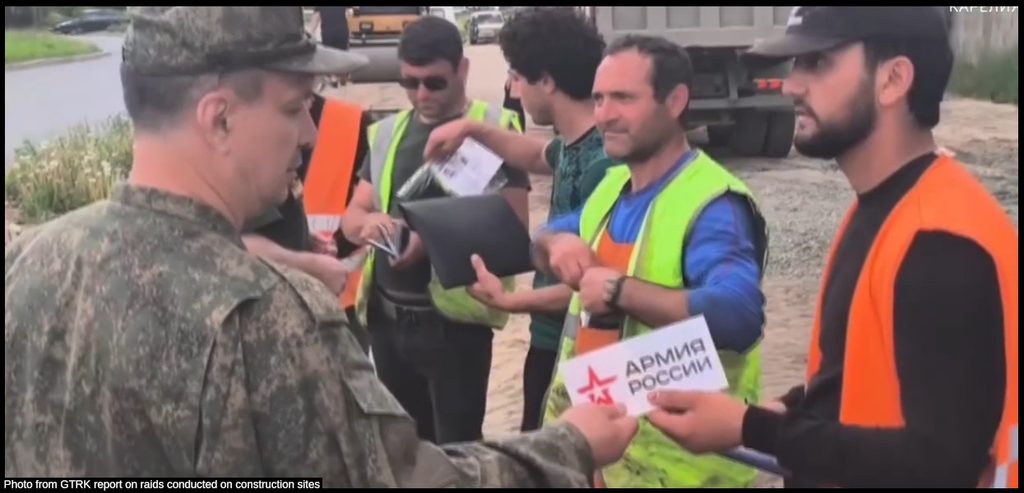
Similar operations had already been conducted in Karelia in 2025, specifically targeting people who had acquired citizenship of the Russian Federation but had not entered the military register. These operations reflect a broader federal policy. In June 2024, Investigative Committee head Alexander Bastrykin stated that the authorities had identified more than 30,000 recently naturalised citizens who had failed to register for military service and that approximately 10,000 of them had been sent to the war zone.
The incident in Karelia follows closely resembles similar incidents across the Russian Federation. People who have recently obtained citizenship of the Russian Federation are being targeted at markets, warehouses, mosques, hostels and other workplaces, and when brought before the authorities, are threatened with the loss of their citizenship unless they enter the military register. Foreign nationals may be offered military contracts to avoid administrative consequences. The participation of police, military investigators and recruitment officials in the same operations blurs the line between the enforcement of registration requirements and military recruitment.
The fate of those taken from Petroskoi’s construction sites remains unknown. Even though there is no public evidence that any of them were compelled to sign military contracts or sent to the front, these incidents should not be dismissed. Experience from other regions has demonstrated that such raids often become entry points into a coercive military-recruitment system. The consequences of such raids, therefore, may extend beyond a registration procedure, as they may lead to people losing their freedom, being sent to the front lines and becoming involuntary victims of Moscow’s war of aggression, potentially at the cost of their lives.
Sources:
- https://tv-karelia.ru/petrozavodskie-strojki-vnov-v-pole-zreniya-voennogo-sledstvennogo-otdela-po-petrozavodskomu-garnizonu
- https://petrozavodsk.bezformata.com/listnews/petrozavodske/160274021
- https://ptzgovorit.ru/news/v-petrozavodske-lyudey-so-stroek-zabrali-v-voenkomat
- https://tv-karelia.ru/vosem-chelovek-dostavili-v-voenkomat-posle-rejda-v-petrozavodske/
- https://www.svoboda.org/a/ili-na-voynu-ili-lishim-grazhdanstva-kak-migrantov-zastavlyayut-podpisyvat-kontrakty/33329136.html
- https://apnews.com/article/russia-putin-decree-citizenship-army-ukraine-93770fad165cc9388ec53bc71e4eb739
- https://www.rbc.ru/society/29/07/2024/66a7eaab9a79475838ef4a95
Removal of party Yabloko from participation in the next elections
On 25 July 2026, it became known that the Petroskoi territorial election commission revoked Yabloko’s registration for the city council elections. This happened after the Rodina, a party closely affiliated with the federal government, challenged Yabloko’s registration, arguing that the financial representative lacked the authority to sign the first report. On the same day, Rodina brought a case seeking to cancel the registration of Yabloko’s separate list for the Legislative Assembly of Karelia. Despite the party’s appeals, Karelia’s Supreme Court upheld Rodina’s claim on 29 July and removed the regional list from the election.
The regional list’s removal raises a specific question about how the election commission handled Yabloko’s documents. The regional election commission accepted the documents on 28 June and certified the list on 30 June without any objections. On 10 July the party submitted the required documents, and on 17 July, the commission unanimously voted in favour of the party’s list. Throughout this period, the commission had held the relevant power of attorney and considered it sufficient. Only after Rodina challenged the registration did the commission deem the power of attorney to have been signed by a person without proper authority.
Even though a registration decision can be challenged and overturned under electoral law, that possibility does not explain why the commission raised no objection while examining the documents, or why Yabloko did not receive a notice of the defect and an opportunity to correct it.
The refusal to register the city council list raises a similar concern about the absence of timely notice. These questions call for an independent examination of the commissions’ handling of the documents, the reasons for the regional commission’s reversal and whether either process was subject to political pressure.
These decisions should be considered alongside earlier actions affecting Yabloko representatives in Karelia. Earlier this year, both Emilia Slabunova, a member of the regional Legislative Assembly, and Dmitry Rybakov, a city councillor, were detained on what can reasonably be characterised as fabricated allegations of displaying extremist symbolism on their social media several years earlier. The posts were not present on their social media, and both allegations came from a member of the Ruskaya Obshchina. The result of those allegations was their conviction under Article 20.3 of the Code of Administrative Offences of the Russian Federation, which barred them from standing for election for one year. Those prosecutions clearly show that July’s decisions were not the first efforts to remove Yabloko’s representatives from political participation.
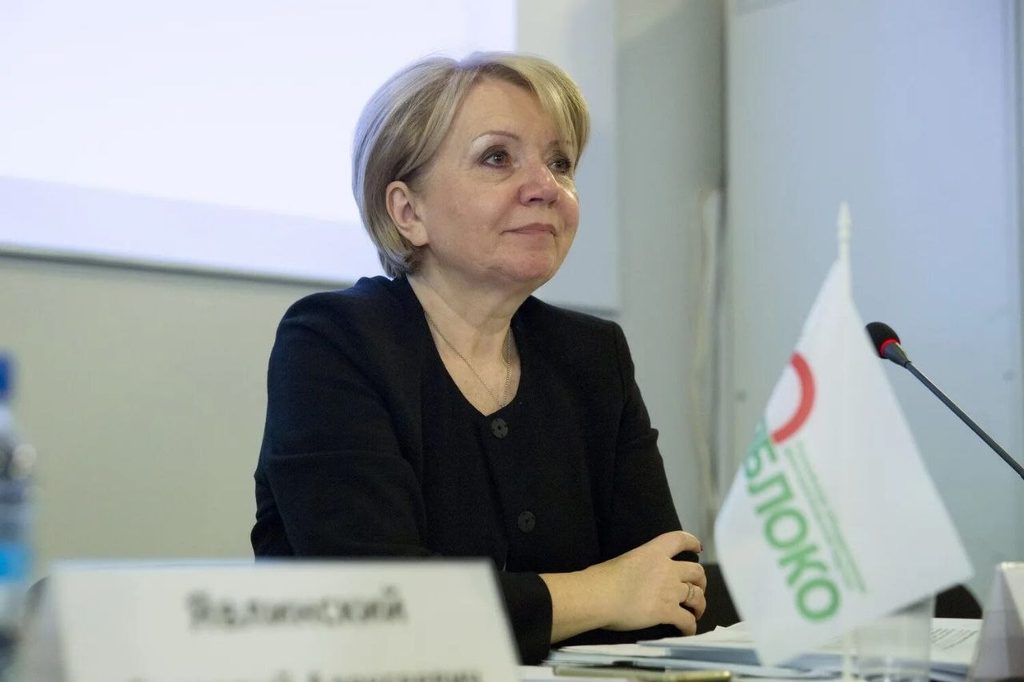
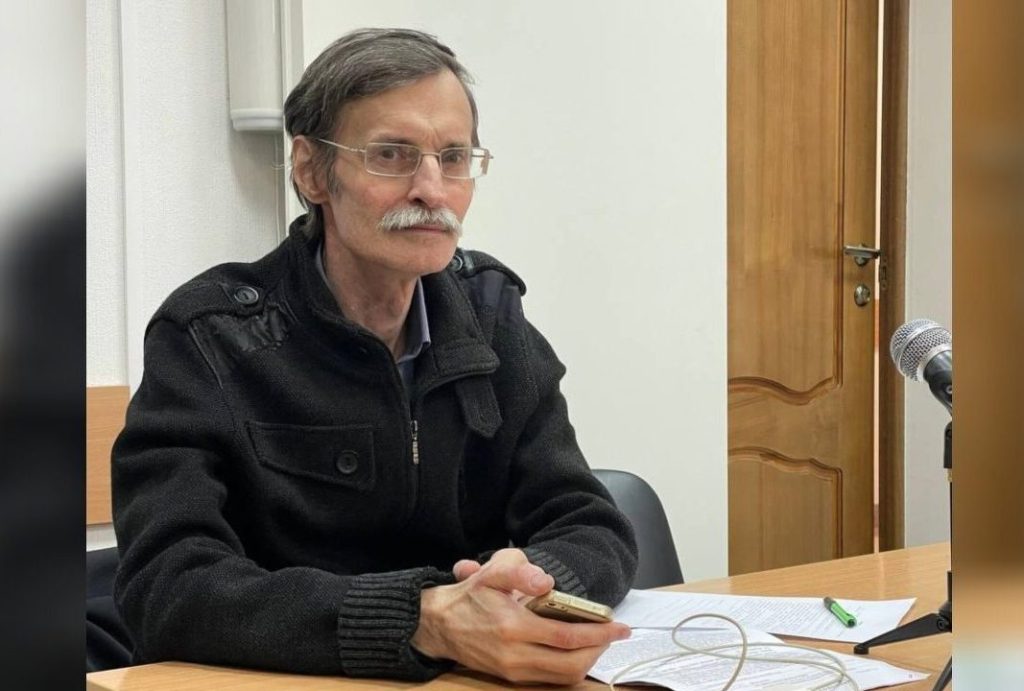
The consequences extend beyond individual candidates. Many of Yabloko’s candidates, including Emilia Slabunova, openly challenge the regional authorities and remain involved in residents’ everyday problems. They often address issues such as water pollution and water shortages, infrastructural negligence, and problems in the healthcare and education sectors that negatively affect the quality of life of the people of Karelia, and get personally involved in finding solutions to these problems. As such, removing Yabloko’s lists deprived voters of the opportunity to choose those candidates as their representatives, thus taking away the last protectors of their rights.
Article 25 of the ICCPR protects citizens’ rights and opportunities to take part in public affairs, to vote and to be elected without unreasonable restrictions. The UN Human Rights Committee’s General Comment No. 25 states that grounds for excluding citizens from these rights must be objective and reasonable. If the documentation requirements were applied inconsistently, or if Yabloko was denied a required opportunity to remedy a defect before its candidates were excluded, the decisions may amount to an unreasonable restriction on the political rights of both candidates and voters. Determining whether those rights were violated requires a transparent examination of the procedural record and the reasons given for each decision.
Sources:
- https://vs.kar.sudrf.ru/modules.php?name=press_dep&op=1&did=189
- https://www.yabloko.ru/regnews/Karelia/2026/07/29?
- https://t.me/yabloko_press/3329
- https://t.me/Slabunova/5946
- https://t.me/yabloko_press/3330
- https://t.me/yabloko_press/3344
- https://t.me/Slabunova/5979
- https://ombudsman.media/report-april-2026-karelia/
- https://ombudsman.media/report-june-2026-karelia
Vandalism of Karelian cultural elements
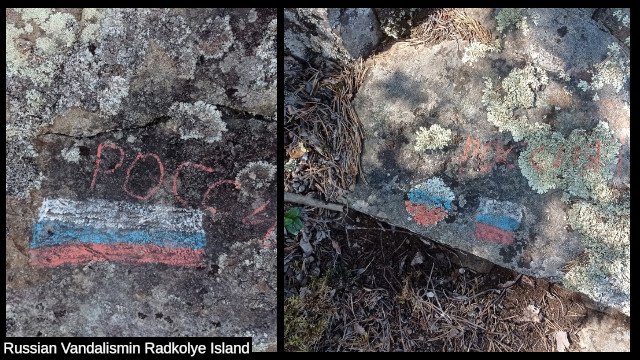
On 23 July 2026, media reports described an incident of vandalism discovered at the Kizhi Federal Nature Reserve. Near the rock known as the “Master of the Island”, inspectors found a recently used fire site surrounded by rubbish. Russian tricolours and the word “Russia” had also been painted on nearby rocks and boulders. Public environmental inspector Dmitry Bobrov emphasised that inscriptions on natural objects are explicitly prohibited and that paint can destroy extremely slow-growing lichens whose recovery may take decades. However, besides the possible ecological damage caused, this incident also carries a cultural aspect.
Radkolye is a small rocky island in Lake Iänisjarvi (Lake Onega), within the protected landscape surrounding the Kizhi archipelago. The Kizhi Museum’s archaeological catalogue records several archaeological sites and separately identifies the “Radkolye Sanctuary”. The naturally formed rock known as the “Master of the Island” has long been connected with local traditions and interpreted as a pre-Christian sacred place, and holds great historical, cultural and folkloric importance for Karelia.
The Russian tricolour and the word “Russia” were imposed directly upon a landscape that carries significant cultural and spiritual meaning. The placement of those symbols, which may be interpreted as asserting Russian dominance and ownership, is particularly disturbing at a time when Karelia is already undergoing extreme Russification, with the Russian state identity increasingly dominating education, public culture, political life and the interpretation of regional history and identity.
When one identity is presented as universal and entitled to occupy every public and cultural space, those who identify with the dominant society can learn to treat the heritage of native communities as insignificant or freely available for alteration.
It was speculated that it might have been children who left the symbols on the rocks. Even if that was the case, this still does not remove the wider concern. On the contrary, it raises questions about the social environment in which children are raised to believe that it is acceptable to draw Russian state symbols on sacred and protected Karelian sites.
The response can be contrasted with the treatment of vandalism affecting recognised Russian cultural heritage symbols. In 2016, after inscriptions were painted on a monument to Alexander Pushkin in Tver, police opened a criminal case under Article 214 of the Criminal Code, while the district prosecutor’s office placed the investigation under its supervision. By contrast, although the vandalism at Radkolye damaged a protected natural and culturally significant Karelian site, the available reporting referred only to efforts to identify those responsible and did not indicate that a comparable criminal investigation had been opened. The difference in institutional response raises concerns that Karelian cultural heritage is not afforded the same level of protection and official attention as monuments associated with Russian culture.
The fact that the damage was committed by private individuals does not remove the responsibility of the authorities. In General Comment No. 23, the UN Human Rights Committee explains that Article 27 of the ICCPR may require positive measures to protect non-dominant cultures from interference by other persons. The Committee on Economic, Social and Cultural Rights has similarly recognised in General Comment No. 21 that cultural life encompasses cultural heritage, historically significant places and elements of nature carrying cultural meaning. Protecting cultural rights therefore requires effective prevention, investigation, restoration and accountability, rather than merely refraining from direct state interference.
The response also raises concerns about discrimination. If heritage associated with Russian culture receives prompt criminal law protection, as in the 2016 incident in Tver, while Karelian cultural heritage receives a materially weaker response, this may constitute unequal protection of the law under Article 26 of the ICCPR. Read together with Article 27 of the ICCPR and Article 15 of the ICESCR, this disparity also represents a failure to provide Karelian culture with the effective protection necessary for its preservation and continued enjoyment.
Sources:
- https://gubdaily.ru/news/vopiyushhij-sluchaj-vandaly-zhgli-koster-i-ostavili-risunki-na-unikalnoj-territorii-zapovednika-v-karelii/
- https://site.kizhi.karelia.ru/nature/pamyatniki-prirodyi/325
- https://tverigrad.ru/publication/v-tveri-ishhut-vandalov-nanesshego-oskorbitelnye-nadpisi-na-pamyatnik-pushkinu/
Designation of the Karelian Cultural Society as an undesirable organisation
On 17 July 2026, it became known that the Ministry of Justice of the Russian Federation had added Karjalan Sivistysseura (the Karelian Cultural Society) to its list of “undesirable” organisations. The designation restricts the society’s activities in the Russian Federation and may expose people there to penalties for participating in its work or distributing its materials. This is a matter of particular concern because the society has helped preserve and share knowledge of Karelian language, culture and history for more than a century.
The society traces its origins to Vienan Karjalaisten Liito, founded in 1906 to improve living conditions and education in Viena Karelia. Its schools there were closed by order of the Arkhangelsk governor in 1907. In more recent decades, particularly the 1990s and 2000s, the society worked with Karelian-speaking residents and local organisations in the Republic of Karelia on language, culture and history. In 2019, it joined Petrozavodsk State University and the Karelian Research Centre in launching a project intended to make the region’s varied histories better known through lectures, seminars, research and translations. It also maintains Karelian-language learning resources, cultural publications and materials on family and regional history.
The society has no branch or current operations in the Russian Federation, as it ended its cooperation with Karelia after Moscow launched its full-scale invasion of Ukraine. The designation may further discourage people in the Republic from engaging with the society’s publications, sharing its resources or rebuilding cultural ties across the border. Stigmatising an organisation devoted to Karelian heritage can also foster distrust of the knowledge it preserves, making it harder for people to explore and pass on their language and history.
This case raises concerns under Article 15 of the ICESCR and Article 27 of the ICCPR, as it directly targets participation in cultural life and the ability of the Karelian people to enjoy their culture and language, without the fear of persecution. The designation of a historical Karelian cultural society as an unwanted organisation, further narrows the opportunities to maintain cultural connections and access to knowledge needed to sustain a living Karelian ethnocultural identity in the Republic of Karelia.
Sources:
- https://minjust.gov.ru/ru/pages/perechen-inostrannyh-i-mezhdunarodnyh-organizacij-deyatelnost-kotoryh-priznana-nezhelatelnoj-na-territorii-rossijskoj-federacii/
- https://uutiscuppu.karjalansivistysseura.fi/karjalan-sivistysseura-kielletyksi-jarjestoksi-venajalla/
Mysterious patches in Voytskoe river
In July 2026, residents of Segezha District reported unusual bluish-green patches on the surface of Lake Voitskoye, near Nadvoitsy. Photographs showed cloudy, streaked or marble-like areas close to the shore. Police and environmental specialists inspected the site and collected water samples, which were sent to a laboratory in Petroskoi for analysis. Officials stated that conclusions about the origin of the phenomenon would have to await the laboratory results. By 12 July, however, the patches were reportedly fading; subsequent reports indicated that they had disappeared entirely. The disappearance of visible contamination does not, in itself, explain what entered the water, whether it presented a danger, or whether it could recur.
Officials reportedly maintained that there was no immediate reason for alarm and continued to monitor the area. At the time of the available reporting, however, no publicly cited laboratory finding had identified the substance. The uncertainty surrounding the cause of the patches is particularly important, considering that residents use the lake for recreational swimming and use its water for their daily needs.
The incident also brought older local concerns back into view. Residents commenting on the situation alleged that the patches had appeared overnight, that the water smelled of chemicals and that untreated domestic wastewater from Spiridonova and Mira Streets had been flowing towards Lake Voitskoye for more than a year. Separate reporting described murky-green, unpleasant-smelling water near Voitsky Padun. These accounts warrant investigation, particularly because Lake Voitskoye forms part of the White Sea-Baltic water system and is reportedly used by some residents for bathing and as a source of drinking water.
The authorities’ response to the incident raises concerns about possible negligence. Despite residents reporting a chemical smell and alleging that untreated wastewater had been entering the lake for more than a year, officials appeared quick to dismiss immediate concerns, while the cause of the unusual patches remained unexplained. Given that residents reportedly use the lake for swimming and daily domestic needs, the failure to adequately investigate and address potential contamination could expose them to harmful substances and associated health risks. Such inaction may constitute a failure to fulfil the obligations established under Article 12 of the ICESCR, specifically with regard to a healthy environment.
Sources:
- https://gubdaily.ru/news/podozritelnye-golubo-zelenye-pyatna-poyavilis-na-ozere-v-karelii/
- https://gubdaily.ru/news/v-karelii-podozritelnye-pyatna-ischezli-s-ozera-poka-proby-vody-exali-v-laboratoriyu/
- https://ptzgovorit.ru/news/voda-mutirovala-v-karelskom-vodoeme
Waste management: Fire at landfills near Petroskoi, illegal dumps, and ecology
Early on 1 July 2026, a fire broke out on the Orzega landfill near Petroskoi. It was reported at approximately 07:00, when the affected area was initially estimated at 50 square metres. By 18:35, it had expanded to approximately 1,000 square metres. Although the open fire was extinguished in early July, parts of the landfill continued to smoulder internally. Forty specialists and ten units of specialised equipment were subsequently employed to isolate the remaining hot spots by covering the waste with soil.
The landfill is operated by the Petroskoi municipal enterprise PMUP Avtospetstrans and registered in the State Register of Waste Disposal Facilities under number 10-00048-Z-00592-250914. It serves Petroskoi and parts of Prionezhsky District and has operated since approximately 1978. The site occupies an estimated 35-40 hectares and reportedly receives between 200 and 300 tonnes of waste daily. Despite its official registration, a representative of its operator acknowledged in 2018 that it was not originally constructed as a modern engineered landfill. “We do not have a landfill; it is simply a dump,” stated Vladimir Kuskiched, then deputy director of PMUP Avtospetstrans.
This was at least the fifth reported fire or recurrence of combustion at Orzega since 2011, with earlier incidents recorded in 2011, 2012, 2015 and 2024. The risk had been recognised for years. In the same 2018 investigation, Kuskichev explained that bulky waste had previously created cavities inside the landfill in which gas accumulated, resulting in fires occurring almost annually before the operator began shredding and compacting the waste more densely. Nevertheless, the company’s director, Sergei Mamonov, dismissed the possibility of another fire. “Fires occur when the summer is dry. We have not had that recently,” he said. When asked whether the landfill would catch fire if another dry summer occurred, he answered: “No. We cover the waste with soil…” The fires of 2024 and 2026 demonstrate that this measure did not eliminate the underlying danger.
There have also been long-standing concerns about the landfill’s sanitary condition and uncertain contents. In 2014, Oleg Sheinovsky, then acting head of the regional office of Rosprirodnadzor, reportedly warned that the site did not meet sanitary requirements, was overdue for reclamation and contained waste whose composition was not reliably known. A municipal newspaper reported that Petroskoi’s waste was transported there without preliminary sorting and that fluorescent lamps, plastics, fuels and lubricants, paint products, batteries and electronic components were deposited together. The report attributed this assessment to unnamed specialists rather than a published inspection. However, its description was partly consistent with Sheinovsky’s warning and with reports that oil-containing waste had been deposited in storage areas at Orzega between 1976 and 2005.
The Orzega landfill is not the only waste-disposal facility in Karelia where fires have become prolonged or recurrent. The municipal landfill serving Medvezhiegorsk, located within the Pindushi Urban Settlement, caught fire on 29 May 2024. The affected area reached approximately 6,000 square metres, while fires situated deep inside the waste repeatedly reignited after the surface flames had been suppressed. Although the landfill resumed accepting waste on 5 June, later reporting indicated that it continued to smoulder until September and that smoke appeared at the site again in November.
Another major fire began on 19 July 2025 and spread across more than two hectares, approximately half of the landfill’s reported four-hectare area. Open flames were extinguished, but internal smouldering continued for weeks. Photographs taken at the site in September 2025 by local activists show smoke still emerging from the landfill. Although the photographs cannot establish whether the July fire continued without interruption or later reignited, they demonstrate that the problem had not been permanently resolved.
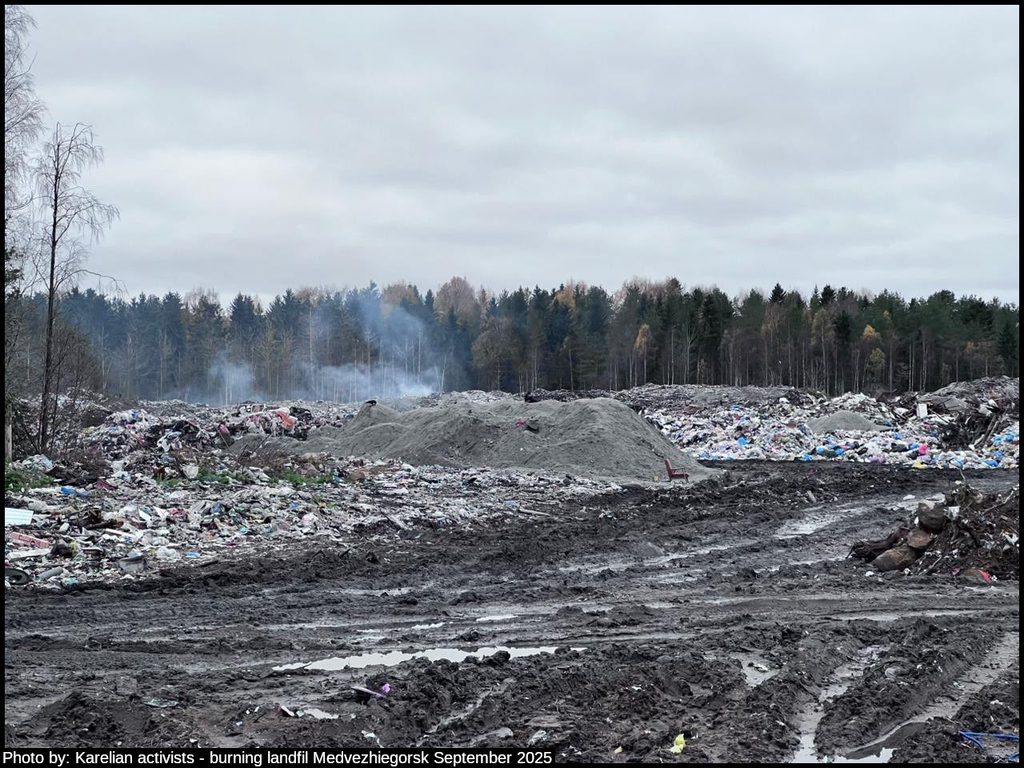
A similarly prolonged fire began on 10 August 2025 at the landfill near Berezovka in Kondopoga District. Smoke spread across Kondopoga and the Kola highway, while residents reported a suffocating smell entering their homes even through closed windows. The fire repeatedly re-emerged and was not declared fully extinguished until 11 November, three months after it began. During the same period, landfill fires were also reported in Kostomuksha, while further fires occurred at the Pudozh landfill in April 2026 and near Ledmozero in Muezersky District in May 2026; the latter reportedly threatened both nearby homes and the surrounding forest. These individual incidents do not establish that every landfill in Karelia burns repeatedly. Taken together with the prolonged and recurrent fires at Orzega, Medvezhiegorsk and Berezovka, however, their geographic spread indicates that landfill fires are not merely an isolated municipal failure. They form part of a wider problem in Karelia’s waste management system, in which fires are repeatedly suppressed after they begin, while the conditions that allow waste to ignite and smoulder reamain insufficiently addressed.
Inadequate waste management also contributes to the appearance of unauthorised dumps, creating further environmental and public-safety risks. On 14 July 2026, an illegal dump caught fire near the settlement of Borovoy in the Kalevala District, burning an area of 25 square metres. The following day, another dump containing household waste caught fire in a forested area of the Muezersky District. Firefighters extinguished it before the flames could spread into the surrounding forest. These incidents show how waste deposited outside controlled facilities can become another source of fires, air pollution and possible contamination of the surrounding soil and water.
Individuals remain responsible for disposing of their waste lawfully and should not create hazards for their communities. However, that responsibility does not relieve the authorities of their own obligations. When illegal dumps repeatedly appear, particularly in remote settlements, the authorities must examine whether residents have practical access to regular collection, appropriate containers, waste sorting and lawful disposal facilities. Ordinary residents cannot be expected to possess specialist knowledge of waste compatibility, toxic materials, fire prevention or environmental contamination, nor can they construct safe disposal infrastructure themselves. If the existing system does not meet people’s practical needs, simply blaming residents will not remove the dumps or prevent further fires. The authorities must ensure that lawful waste disposal is genuinely accessible, identify and clear illegal sites, inform residents of the risks and provide services that prevent waste from accumulating again.
Improper waste management represents yet another source of ecological pressure on Karelia. Poorly controlled landfills can release leachate containing organic pollutants, heavy metals and other harmful substances into the soil, groundwater and nearby surface waters. The decomposition of organic waste also produces combustible methane and contributes to climate change. When a landfill catches fire, smoke, contaminated ash and water used to extinguish the fire may spread pollutants further. This damage does not occur in isolation: Karelia’s waters are already affected by municipal and industrial discharges, its forests by extensive commercial logging, and its air by emissions from industrial facilities. Recurrent landfill fires therefore add to the cumulative degradation of the environment upon which the livelihoods and quality of life of Karelia’s inhabitants depend.
Research concerning communities living near waste-disposal sites has reported associations with respiratory symptoms, adverse pregnancy outcomes and other health problems. The risks are considerably more concerning where waste is poorly controlled or is burning. Depending on what is burning, landfill fires may release fine particulate matter, carbon monoxide, volatile organic compounds, heavy metals and persistent organic pollutants, including toxic products created by the combustion of plastics, treated materials and other mixed waste.
According to the World Health Organisation, exposure to emissions from open waste burning may cause coughing, skin irritation and respiratory illness, with children, older people and those with existing heart or lung conditions facing heightened risks. Residents may also be exposed through contaminated water and soil, persistent odours and smoke, as well as the psychological strain of living near a site that repeatedly catches fire. During the 2024 Orzega fire, residents reported that a caustic smell entered their homes.
Taken together, these conditions raise concerns under Articles 11 and 12 of the ICESCR. The UN Committee on Economic, Social and Cultural Rights has explained that Article 12 requires States to improve environmental hygiene and prevent or reduce people’s exposure to harmful chemicals and other environmental conditions affecting health. Landfills that repeatedly burn, illegal dumps that arise where lawful disposal is not sufficiently accessible, and the prolonged exposure of nearby communities to smoke and pollution are hardly compatible with healthy living conditions. Given the recurring fires and the warnings issued more than a decade ago, the continued reliance on extinguishing visible flames and covering smouldering waste with soil suggests a failure to address a foreseeable environmental and health risk. The authorities must therefore do more than respond to individual fires: they must prevent their recurrence, monitor environmental and health risks, remediate contaminated sites and provide a waste-management system capable of protecting both residents and Karelia’s environment.
Sources:
- https://karel.mk.ru/social/2026/07/02/svalka-musora-pod-petrozavodskom-prodolzhaet-goret.html
- https://ptzgovorit.ru/shortread/musornyy-veter-do-petrozavodska-ne-dohodit
- https://ptzgovorit.ru/news/lish-ne-u-nas-v-prionezhe-ne-ocenili-ideyu-postroit-musornyy-zavod
- https://interactive-plus.ru/e-articles/524/Action524-469586.pdf
- https://karelia.news/news/10209735/zhilye-doma-spasli-ot-ognya-na-vostoke-karelii/
- https://karelia.news/news/10227555/musornaya-svalka-polykhala-v-lesu-na-severe-karelii
- https://www.who.int/publications/i/item/B09367?
- https://pmc.ncbi.nlm.nih.gov/articles/PMC2805622
Tourism threatens the natural and cultural heritage of Vottovaara
A media report published in early July 2026 drew attention to the damage being caused to Vottovaara by the growing number of tourists visiting the area. According to the report, more than 2,000 people visit the mountain annually. Their presence has already resulted in the trampling of its lichen cover and the destruction of rare plant species. Representatives of Vottovaara National Park warned that some affected areas may require decades to recover, while the lichen cover on certain rocks may not be restored for centuries.
The reported damage is particularly concerning because Vottovaara is not only a unique natural landscape. It is also a place of considerable cultural and historical significance whose stone formations may preserve evidence of religious practices dating back approximately 3,000 years.
Vottovaara contains hundreds of unusual stone formations, including large boulders resting on smaller stones. These formations are commonly identified as seids, sacred objects traditionally associated with the religious and cultural practices of the Sámi and other Indigenous peoples of northern Europe.
Archaeological research conducted on the mountain in the early 1990s identified an extensive complex of stone formations. Researchers concluded that at least some may have been deliberately arranged and formed part of a cult complex connected to the broader tradition of ancient megalithic structures found across northern Europe.
This integrity of the site is reportedly being damaged by tourists who move existing stones and construct new formations resembling seids. Even the administration of Vottovaara National Park has asked visitors not to create their own stone structures.
Moving stones may destroy the spatial relationships through which potentially ancient formations can be identified and studied. Constructing new “seids” also introduces modern objects into the landscape, making it increasingly difficult to distinguish historical formations from recent imitations. Uncontrolled tourism may therefore destroy evidence necessary for understanding the history of Vottovaara.
The mountain is also promoted as a “mystical” place associated with shamans, ancient rituals and supernatural forces. These representations encourage some visitors to conduct improvised spiritual practices and alter the landscape according to their expectations of what a sacred northern site should look like. As a result, the cultural traditions associated with the Indigenous peoples of the region are replaced with a simplified and commercially attractive image of “mystical Karelia”.
The alteration of the stone formations is occurring alongside documented environmental damage. Vottovaara contains mountain tundra and forest-tundra landscapes that are unusual for this part of Karelia. The national park is home to protected plants, fungi and lichens, including species listed in the Red Books of Karelia and the Russian Federation.
The mountain’s vegetation develops extremely slowly because of the northern climate, exposed terrain and limited soil cover. A plant or section of lichen that can be destroyed in seconds may have taken decades to grow. Repeated trampling also damages the thin soil, exposes roots and increases the risk of erosion.
Vottovaara has held the status of a federal national park since 2023. Its stated responsibilities include protecting the territory, conducting environmental monitoring, restoring damaged natural complexes and creating conditions for regulated ecological tourism.
Despite these responsibilities, the administration continues to develop tourism in the area. In April 2026, park representatives met with guides and tour operators to discuss new routes, visitor infrastructure and preparations for the tourist season. Only a few months later, the administration acknowledged that existing visitor numbers were already causing visible and potentially long-lasting damage.
The proposed Vottovaara Mountain Race, advertised for September 2027, raises further concerns. The event advertises an overall capacity of up to 2,500 athletes. Several routes include Vottovaara, while the 55-kilometre route requires participants to ascend the mountain. It remains unclear whether the national park has approved these routes or assessed their potential effects upon the protected territory.
Marked routes may help reduce damage by concentrating visitors within designated areas. However, if the existing tourist flow is already destroying rare plants and centuries-old lichens, continued promotion and large commercial events will increase the cumulative pressure upon the mountain.
The situation appears to form part of a broader pattern in which Karelia’s landscapes, historical sites and cultural symbols are promoted as tourist products without sufficient measures to protect their integrity.
Responsibility cannot be placed upon tourists alone. When the State promotes tourism within a protected and potentially culturally significant area, it must ensure that this activity does not destroy the qualities that justified the area’s protection.
The situation raises concerns under Article 15 of the ICESCR. Paragraph 43 of General Comment No. 21 emphasises that cultural activities, goods and services possess both economic and cultural dimensions because they convey identity, values and meanings. For precisely that reason, they must not be treated as having solely commercial value. States should also prevent the signs, symbols and expressions of a culture from being removed from their context solely for marketing or exploitation.
The treatment of Vottovaara raises exactly this concern. The mountain is promoted through references to ancient sacred practices, seids, shamans, supernatural forces and an undefined “mystical Karelia”. These cultural associations are used to attract visitors and generate commercial activity. Yet little comparable effort is devoted to preserving the integrity of the landscape, preventing the rearrangement of its stone formations or ensuring that the cultures from which these symbols are taken can explain their meaning in their own terms.
Sources:
- https://t.me/dailykarelia/23140
- https://terravia.ru/news/dve-tysyachi-turistov-v-god-vytaptyvayut-2026-07-01
- https://journal.fi/fennoscandiaarchaeologica/article/view/126338
- https://gov10.ru/news/20-08-2026-turisty-smogut-ostanavlivatsya-u-podnozhiya-vottovaary-s-palatkami/
- https://rulaws.ru/goverment/Postanovlenie-Pravitelstva-RF-ot-20.10.2023-N-1748
- https://marathonec.ru/vottovaara-mountain-race/
- https://www.svoboda.org/a/priroda-uzhe-ne-spravlyaetsya-kak-kareliyu-prevraschayut-v-turisticheskiy-attraktsion/33785165.html
Unsafe housing
The situation of people living in houses deemed unsafe for habitation has not yet been resolved in Karelia. In July 2026, two separate cases were reported involving people living in houses that are unfit for habitation, with no short-term solutions provided for them.
On 11 July 2026, it was reported that residents of a two-storey wooden house on Probnaya Street in Petroskoi had been waiting for resettlement since the building was declared unsafe in 2017 because of the significant deterioration of its structure. The house, constructed in 1948, reportedly has deteriorating floors and a damaged, leaking roof. Water reaches the electrical wiring, leaving residents afraid that a fire may break out.
Despite these dangers, the official deadline for resettlement has reportedly been set for 2030. The residents have contacted multiple authorities, but their appeals have not resulted in any improvement to their situation. They therefore remain compelled to live in a deteriorating building that poses risks to their health and safety.
In late July 2026, another report emerged describing the living conditions of an elderly woman whose floor in a second-floor flat had reportedly subsided by 15-20 centimetres. The woman lives in an apartment in a deteriorating building at 16B Sovetskaya Street in Petroskoi, which was declared unsafe in 2019. She fears that the floor may collapse and that her bathroom could fall into the flat below. According to the report, the building is supported by a large railway sleeper, while its residents continue to live with crumbling structures, damaged walls, mould, rats and recurring problems with pipes and radiators.
This is not a newly discovered situation. The same building was covered by the media in October 2025, when residents described damp walls, defective electrical wiring, failing radiators, poor water pressure and pipes that sometimes froze during winter. One resident had already moved into rented accommodation with her children, including a child with a disability, because she considered the house uninhabitable, while her elderly mother remained there. A criminal case concerning alleged negligence by unidentified municipal officials was opened in October 2025 after it emerged that delays in recognising the building as unsafe had prevented its inclusion in an earlier resettlement programme. Despite the investigation and continued publicity, residents were still living in the deteriorating building in July 2026.
These cases form a part of a much broader housing crisis repeatedly documented in our previous monthly reports. Karelia has one of the highest proportions of unsafe housing in the Russian Federation. According to figures acknowledged by the regional authorities, approximately 12% of Karelia’s population lives in housing classified as unsafe. The scale of the problem is likely even greater, as these figures do not necessarily include deteriorating buildings that have not yet been formally declared unsafe.
The authorities do not deny the severity of the situation. In his annual report to the Legislative Assembly on 16 April 2026, Head of Karelia Artir Parfenchikov acknowledged both the exceptionally large proportion of unsafe housing and the need to protect the housing rights of 62,000 residents. Nevertheless, recognition has not been matched by sufficiently prompt and effective action. The cases documented above demonstrate that people may remain in dangerous buildings for years after they have been officially declared unfit for habitation, while resettlement deadlines are extended as far as 2030 or 2032. Repeated appeals, court proceedings and even criminal investigations have often failed to secure timely access to safe housing. The continued exposure of residents to structural collapse, fire, mould, defective utilities and other foreseeable dangers indicates that the existing resettlement measures remain inadequate to the scale and urgency of the crisis.
The prolonged failure to provide residents of officially unsafe buildings with secure and habitable accommodation raises serious concerns under Article 11 of the ICESCR, which recognises the right to an adequate standard of living, including adequate housing. Housing cannot be considered adequate when residents are exposed to collapsing floors and ceilings, leaking roofs, unsafe electrical wiring, mould, rats and defective heating or water systems. The authorities’ awareness of these conditions, combined with resettlement periods extending for more than a decade after the buildings were declared unsafe, raises questions as to whether the State is taking sufficiently prompt and effective steps to realise this right.
The conditions may also interfere with the right to the highest attainable standard of physical and mental health under Article 12 of the ICESCR. Dampness, mould, inadequate heating, unsafe electrical systems and the persistent fear of fire or structural collapse create conditions detrimental to both physical and psychological health. Where children are affected, the situation additionally engages Articles 24 and 27 of the CRC, which protect their rights to health and to a standard of living adequate for their development, including access to appropriate housing assistance.
The case of the elderly woman whose second-floor flat has reportedly subsided may also raise concerns under Article 6 of the ICCPR. A possible violation of the right to life could be argued based on the established fact that the authorities are aware of the condition of the house, yet do not take reasonable measures to protect the woman’s well-being.
Sources:
- https://ptzgovorit.ru/news/za-10-let-ne-rasselili-avariynyy-dom-v-petrozavodske-skoro-rukhnet
- https://gubdaily.ru/news/pomogite-poka-nikogo-ne-ubilo-v-petrozavodske-babushka-larisa-zhivet-v-razvalivayushhemsya-dome-gde-vot-vot-provalitsya-pol
- https://ptzgovorit.ru/news/vozbuzhdeno-ugolovnoe-delo-svyazannoe-s-rasseleniem-avariynogo-zhilya?
- https://ombudsman.media/report-april-2026-karelia
- https://gov10.ru/power/executive/leader/reports/
Right to health. Oncology centre
On 1 July 2026, it became known that the Karelian Office of the Federal Antimonopoly Service had placed the construction company “Avrora SK” in the Register of Unreliable Suppliers. The Directorate for Construction of the Republic of Karelia had awarded the company a contract worth 31.6 million roubles to revise the design and cost-estimate documentation for the new oncology centre in Petroskoi, obtain a positive conclusion from the state expert review and prepare the working documentation required for construction. According to the antimonopoly authority, the contractor failed to complete the work within the established period, did not correct deficiencies identified by the customer and presented no objective reasons or evidence demonstrating that it had been unable to fulfil its obligations. The Directorate terminated the contract and referred the company to the antimonopoly authority. The subsequent blacklisting prevents it from participating in state and municipal procurement for two years.
These developments should not be viewed separately from the oncology centre’s entire history. Nor should they be treated merely as another failed public contract. They must be examined in the context of Karelia’s acute need for adequate oncology services.
The republic has one of the highest recorded rates of malignant neoplasms among the regions of the Russian Federation, while its existing oncology dispensary has repeatedly faced shortages of personnel, treatment places and suitable infrastructure. Patients have reported lengthy delays in receiving chemotherapy, even though such treatment must follow an established schedule. The prolonged failure to build the new centre therefore has direct implications for the accessibility and timeliness of essential medical care.
Plans for a new oncology centre in Petroskoi were announced in 2018. In 2019, a contract worth approximately 39 million roubles was awarded for the acquisition and adaptation of design documentation, and in February 2020, the project received a positive conclusion from the Main Directorate of State Expertise. Nevertheless, construction did not begin. Funding was subsequently included in the federal budget for 2024 and the planning period of 2025-2026, with additional co-financing expected from the Republic of Karelia. The total planned financing reportedly exceeded 5.1 billion roubles. After new oncology-care standards entered into force in September 2025, the authorities stated that the existing documentation had to be revised. The planned beginning of construction was consequently postponed from 2026 to 2027, while commissioning was moved to 2032. The failure of the latest contractor has now placed even that timetable in doubt.
The need for the centre is particularly serious. According to data for 2024, Karelia recorded 864 newly diagnosed malignant neoplasms per 100,000 residents, the highest reported rate among the regions of the Russian Federation. More than 20,000 people in Karelia were reportedly registered as living with an oncological diagnosis. At the beginning of 2025, the existing dispensary acknowledged that only two doctors were working in its day hospital, although six were required. Patients reported that chemotherapy was being delayed by between one and one and a half months, while later accounts described delays approaching two months for treatment that was supposed to be administered every two weeks. Earlier reports had also documented insufficient capacity to accommodate patients. In these circumstances, the new centre cannot be an optional infrastructure project, but rather a necessary part of ensuring timely diagnosis and treatment.
The authorities have taken certain formal steps, including commissioning designs, securing budget allocations and eventually terminating the failed contract. Nevertheless, formal decisions and repeated public promises cannot substitute for the actual delivery of healthcare infrastructure. For approximately eight years, the project has remained trapped between planning, redesign and postponement. Although its original design received approval in 2020, the authorities failed to advance it to construction before the documentation became outdated. When revision became necessary, the regional authorities entrusted it to a contractor that failed to perform the work and apparently had no effective contingency plan capable of preventing another delay. Taken together, this prolonged institutional failure may reasonably be viewed as administrative negligence by both the regional authorities responsible for managing the project and the federal authorities responsible for ensuring adequate funding and supporting the development of essential healthcare infrastructure. Their actions have not reflected the urgency of Karelia’s documented oncology needs.
This situation may raise concerns under Article 12 of the ICESCR. Article 12(2) requires States to take steps towards the prevention, treatment and control of disease and to create conditions assuring medical services and medical attention in the event of sickness. In General Comment No. 14, the Committee on Economic, Social and Cultural Rights clarified that healthcare facilities, goods and services must be available in sufficient quantity, accessible in practice and of appropriate quality. The right to health does not guarantee that every proposed medical facility must be completed without delay. It does, however, require the State to adopt deliberate, concrete and effective measures, use the maximum of its available resources and avoid administrative failures that obstruct access to necessary treatment. Where cancer patients face shortages of specialists and treatment capacity while an essential oncology centre remains years behind schedule, the failure to plan, supervise and implement the project effectively may be inconsistent with the obligations arising from Article 12.
Sources:
- https://ptzgovorit.ru/news/onkodispanser-v-karelii-postradal-ot-khalatnogo-podryadchika
- https://onko-karelia.ru/about/sobytiya/proekt-stroitelstva-novogo-onkologicheskogo-centra-v-petrozavodske-poluchil
- https://rk.karelia.ru/social/proekt-stroitelstva-novogo-onkodispansera-v-petrozavodske-podgotovyat-za-39-mln-rublej/
- https://rk.karelia.ru/social/gosduma-odobrila-vydelenie-sredstv-na-stroitelstvo-onkodispansera-v-petrozavodske/
- https://gazeta-karelia.ru/wp-content/uploads/pdf/3272.pdf
- https://ptzgovorit.ru/news/himioterapevty-dnevnogo-otdeleniya-onkodispansera-ne-uvolilis?
- https://karelia.news/news/10199197/v-onkodispansere-karelii-kollaps-khimioterapii-zhdut-po-dva-mesyaca/
Cases of ascariasis and lack of access to clean water among children
In early July 2026, media reports revealed that 135 cases of ascariasis had been registered in the Republic of Karelia during 2025. Of those affected, 96 were children under the age of 17. The largest numbers of cases were recorded in Petroskoi, Segezha District and Pudozh District. Ascariasis is caused by parasitic roundworms and is generally transmitted when their eggs enter the body through contaminated hands, food, soil or water. The infection may cause allergic reactions, abdominal pain and digestive problems, while migrating larvae can affect the respiratory system. In severe cases, it may result in intestinal obstruction.
These figures form part of a broader increase in parasitic diseases across Karelia. As documented in the June 2026 report, 2,314 cases of parasitic infection were registered in the republic in 2025, an increase of 17.6% compared with the previous year. Children and adolescents accounted for 92.6% of all reported cases. Although the 135 cases reported in July concerned ascariasis specifically, they further illustrate the disproportionate exposure of children to infections whose prevention depends heavily on adequate hygiene, sanitation and access to safe water.
The increase in infections must be examined in the context of Karelia’s continuing water crisis. Previous monthly reports documented water with a strong odour that reportedly caused skin irritation in Petroskoi, repeated sanitary violations and chemically substandard drinking water in Pudozh, and households in Hiidenselga that had no running water and depended on a well that could dry up during the summer. Since June, residents of Kurkijoki have been living without water or with an inadequate water supply, while interruptions and insufficient water-system capacity have been reported in numerous Karelian villages and settlements. Official data further indicated that the proportion of Karelia’s population supplied with substandard drinking water increased from 26.2% in 2024 to 31.2% in 2025. In institutions serving children, 36% of tested water samples failed to meet sanitary and chemical standards, while 15.1% failed microbiological requirements.
Although there is not enough evidence to conclude that the reported cases of ascariasis were caused by improper water supplies, this possibility should not be dismissed without proper and independent investigation. Public instructions to wash hands, vegetables and fruit before eating presuppose access to sufficient and safe water. Where water is unsafe, unavailable or unreliable, residents face greater difficulty maintaining the hygiene conditions required to prevent faecal-oral transmission. The infections should therefore be considered within the broader failure to ensure the underlying determinants of health, particularly safe water, sanitation and conditions enabling effective disease prevention.
The connection is particularly important in Pudozh, which appears in both sets of evidence: it is an area with documented water-quality violations and one of the districts where the largest numbers of ascariasis cases were recorded. This does not establish a direct causal relationship, but it creates sufficient grounds for the authorities to investigate whether local water and sanitation conditions contributed to the spread of infection. Article 12 of the ICESCR requires States to take measures for the prevention, treatment and control of epidemic, endemic and other diseases. General Comment No. 14 further recognises safe and potable water and adequate sanitation as underlying determinants of the right to health. General Comment No. 15 provides that everyone must have access to water that is sufficient, safe, acceptable, physically accessible and affordable for personal and domestic use. Against these standards, the increase in parasitic infections, particularly among children, combined with prolonged water interruptions and widespread failures in drinking-water quality, may indicate that the authorities have not taken sufficient measures to fulfil their obligations under Article 12 of the ICESCR.
Soucres:
- https://gubdaily.ru/news/u-zhitelej-karelii-nashli-opasnyx-parazitov
- https://ombudsman.media/report-february-2026-karelia
- https://ombudsman.media/report-april-2026-karelia
- https://ombudsman.media/report-june-2026-karelia
- https://www.who.int/news-room/fact-sheets/detail/soil-transmitted-helminth-infections
Cases of general concern
The Pulonga river case
On 6 July 2026, it was reported that a sand and gravel mixture was being deposited on the bank of the Pulonga River near house No. 18 in Nizhnyaya Pulonga, Loukhsky District. According to Otrazhenie Karelia, trucks allegedly unloaded material directly into the water, while an excavator operated at the site for several days. Larisa Osipova, a deputy of the Malinovarakka local council, reported that the water turned dark after the work began and submitted an appeal to the prosecutor’s office following complaints from residents.
The work was reportedly intended to reinforce or raise the riverbank, but its underlying purpose remains unclear. No publicly accessible documentation has been identified explaining why it was necessary, who commissioned it, which contractor performed it or whether the required environmental and fisheries approvals were obtained. The Pulonga is officially recognised as an Atlantic-salmon spawning river, making any unregulated alteration of its channel or water quality particularly concerning.
The principal risks are ecological. Fine sediment can settle between riverbed stones, restrict the circulation of oxygenated water around salmon eggs and obstruct the emergence of newly hatched fry. It can also damage habitat used for juvenile salmon, affect aquatic invertebrates forming part of their food supply and alter the river’s depth, flow and patterns of erosion. The actual damage cannot be determined without inspecting the site and analysing the water and deposited material, but the reported darkening of the river provides sufficient reason for an immediate investigation.
The situation therefore raises serious ecological concerns. Depositing gravel directly into the river may increase turbidity, cover spawning grounds and disturb the habitats on which salmon and other aquatic species depend. At the same time, the prolonged operation of heavy machinery has exposed nearby residents to continuous noise, while the reported blackening of the water has caused further concern about the condition of a river closely connected to their local environment. The purpose and environmental authorisation of the works should therefore be clarified, the potential damage independently assessed, and any activity threatening the river suspended until its safety has been established.
Sources:
- https://vk.ru/wall-174196957_90886
- https://gubdaily.ru/news/tvoritsya-bespredel-v-karelii-zasypayut-graviem-unikalnuyu-reku/
- https://archive.epa.gov/water/archive/web/html/vms55.html?
- https://www.usgs.gov/centers/washington-water-science-center/science/fine-sediment-infiltration-chinook-spawning-gravels
Timber used for heating in winter not delivered to residents in Kondopoga
On 25 July 2026, it became known that residents of Proletarka and Käppäselkä in Kondopoga District were unable to order or receive firewood. According to a report by Emilia Slabunova, a regional deputy, changes in the ownership and organisation of local forestry companies had interrupted household supplies. Some residents reportedly had not received wood they had already paid for.
This requires an immediate response because, for the affected households, firewood is their only source of heating. Residents need time before winter to cut, split and dry the logs. If deliveries are delayed until temperatures fall, they may be left without usable fuel to keep their homes warm. The risk is especially serious for people who cannot afford another supplier or prepare large quantities of wood at short notice.
The disruption appears to lie with the companies responsible for arranging and delivering household firewood, particularly Kondopozhskoye Lesopromyshlennoye Khozyaystvo (KLPH), which residents say owes them prepaid deliveries. Yet KLPH describes its continuing role as a supplier of timber to industrial customers, and Slabunova reported seeing a trainload of wood prepared for shipment at Käppäselkä station. The destination and intended use of those particular logs are unknown. What the available evidence does show is a troubling contrast: commercial timber operations continued while residents could not obtain fuel needed for a basic household necessity.
Residents say their appeals to the head of Karelia and the Kondopoga district administration did not resolve the problem. According to Slabunova, municipal officials replied that they had no means of influencing the companies. While a municipality may not control a private supplier, it can still identify households at risk, coordinate with regional forestry authorities and alternative suppliers, and press for the delivery of orders already paid for. The apparent willingness to leave residents facing winter without a solution, while industrial supply continues, raises concerns about whose needs are being prioritised. It does not, on the evidence currently available, establish unlawful discrimination.
The case should be assessed under Article 11(1) of the ICESCR, with regard to the right to an adequate standard of living. The UN Committee on Economic, Social and Cultural Rights makes clear that adequate housing requires access to energy for heating. The company’s reported failure to deliver firewood is not automatically a violation by the State. However, if local and regional authorities know that households depend on that fuel and fail to take reasonable steps to prevent them from being left without heat, their inaction may be inconsistent with their responsibility to protect the right to adequate housing.
Sources:
Conclusion
The cases documented in the July 2026 report should not be viewed as isolated incidents, nor should they be examined separately from the developments documented in previous monthly reports. Taken together, they provide further evidence that the problems facing the Republic of Karelia are systemic in nature and reflect many years of insufficient attention by the regional and federal authorities to the needs, rights and well-being of Karelia’s inhabitants.
The continued deterioration of essential infrastructure, inadequate access to healthcare and safe housing, environmental degradation, and the erosion of Karelian cultural rights demonstrate the cumulative consequences of these longstanding failures. Despite repeated public reporting, complaints from residents and official acknowledgement of certain problems, effective measures to address their underlying causes remain insufficient. As a result, the people of Karelia continue to face conditions that threaten their health, safety, cultural identity and ability to enjoy an adequate standard of living.
Understanding the exten of these economic, social and cultural concerns is essential when examining the political rights violations addressed in this report. The removal of Yabloko’s candidates from the electoral lists should not be considered solely in terms of the political rights of the affected candidates. Its consequences extend to the residents of Karelia, who have been deprived of the opportunity to vote for these candidates and choose political representatives who have been actively trying to improve living conditions in the Republic for years. This is particularly concerning in a region where longstanding problems affecting essential living conditions remain unresolved and where political participation provides residents with an important means of raising their concerns, demanding accountability and seeking solutions.
The exclusion of political candidates through potentially unreasonable or inconsistently applied restrictions therefore raises concerns extending beyond the immediate electoral process. It risks further weakening the ability of Karelia’s residents to influence decisions affecting their lives and to secure effective political representation in matters concerning their economic, social and cultural rights. In this context, the developments documented in July establish a concerning precedent that may further expose the people of Karelia to unequal treatment and undermine the effective protection and enjoyment of their internationally recognised fundamental human rights.
Researched and prepared by:
Jana Tiihonen (Bystrova)