
THE CASE OF IRAKLI CHIKHLADZE: A BLOW TO FREEDOM AND REPUTATION
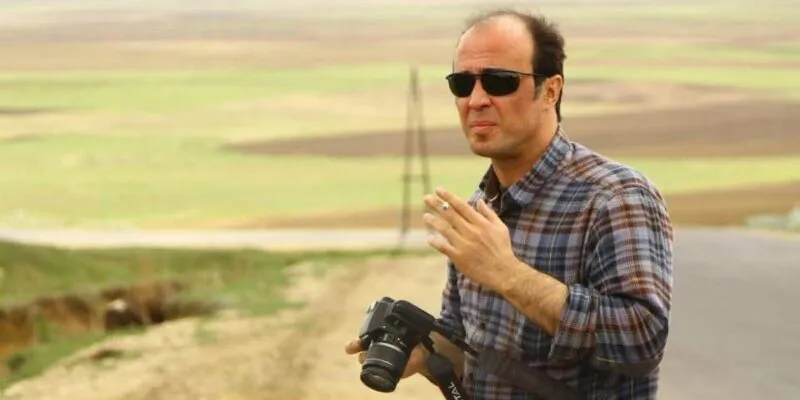
We, the undersigned representatives of the scientific and expert community, human rights activists, and public figures, ask you to pay attention to the criminal prosecution of journalist Irakli Chikhladze. He is currently held in custody in Penitentiary Establishment No. 8 (the so-called Gldani Prison), despite the fact that investigators refuse to make public the case materials that could in any way indicate Chikhladze’s alleged guilt. The case is classified in its entirety, and the defendant is forbidden from seeing his family, making phone calls, or even exchanging letters.
On 30 May 2026, officers of the State Security Service of Georgia (SSSG) entered Chikhladze’s flat, conducted a search, and seized his phone and personal computers. On the same day, an official spokesperson for the SSSG announced at a special press briefing that citizen Irakli Chikhladze had been arrested on charges of espionage. Specifically, the statement indicated that Chikhladze had allegedly passed information of various categories to third parties, which included data “of interest to special services, concerning ongoing political and economic processes in Georgia and the region, including neighbouring countries, as well as the situation in law enforcement agencies and security structures.” At the same time, the defendant’s defence barrister, Giorgi Gelkhauri, states that there is no mention in the case materials of state secrets, to which Chikhladze had no access. This provides grounds to believe that certain “data” reported by the SSSG may in fact be publicly available information, the collection and publication of which constitutes routine journalistic work.
https://ssg.gov.ge/en/news/1118/sus-ma-jashushobis-braldebit-saqartvelos-erti-moqalaqe-daakava
In an interview with the Georgian TV company Formula, Chikhladze’s defence barrister stated that he does not have the right to disclose details of the investigation. However, he noted that the case materials presented to him contain no evidence of espionage itself. According to the barrister, the prosecution claims there is a video recording showing an unidentified individual supposedly handing money to Chikhladze. At the same time, the prosecution does not specify who this person is, what money is involved, or for what purpose it was allegedly given to the accused.
On 9 September, the first court hearing to consider the merits of the case will take place. We ask the human rights organisations to pay attention to this case, as we believe it requires international monitoring. The accused, Chikhladze, demands that the case be declassified and made public, given that a closed trial creates grounds for innuendo and speculation, and complicates matters for the defence.
The Activities of Irakli ChikhladzeIrakli. Chikhladze is the founder and editor-in-chief of the analytical portal New Caucasus, a position he has held since 2007. The publication specialises in in-depth expert analysis of political, social, and economic developments in Georgia, Armenia, and Azerbaijan. Over its years of operation, the portal has partnered with major Western foundations and organisations, including USAID and the National Endowment for Democracy (NED).A significant part of Chikhladze’s work has been dedicated to conflict resolution and overcoming regional stereotypes. To this end, he regularly organised round tables, debates, and public panel discussions aimed at reducing ethnopolitical tensions in the South Caucasus. These events brought together experts, human rights advocates, and journalists from opposing sides to foster dialogue and seek pathways to peace. Notably, under his auspices, landmark meetings were held in Yerevan in 2015 and subsequently on neutral territory in Armenia. For the first time in years, Georgian, Abkhazian, and Ossetian reporters gathered at the same table to discuss professional standards, information warfare, and joint cross-border media initiatives.Furthermore, Chikhladze served as the head of the Caucasus Centre for Civil Hearings, a Tbilisi-registered non-governmental organisation widely known for hosting public discussions on the region’s most pressing issues. The centre frequently conducted field visits and regional civil hearings directly in Georgia’s provinces to draw international attention to the humanitarian crises faced by local populations. For instance, a 2015 round table in Gori focused on the plight of Georgian villages situated directly along the administrative boundary line (the occupation line) with South Ossetia. The discussion addressed vital issues such as local resident safety, the infringement of freedom of movement, and the challenges of “borderisation” – the installation of barbed wire fences by the Russian military.Chikhladze also founded the Caucasus Institute for Human Rights, another non-governmental organisation dedicated to monitoring civil liberties across the Caucasus, protecting ethnic minorities in border regions, and ensuring access to independent media.Against the backdrop of Irakli Chikhladze’s arrest in May 2026, the investigation is attempting to portray these cross-border round tables and peacebuilding meetings as a “cover for coordinating an intelligence network.” In stark contrast, his colleagues and event participants emphasise the strictly professional, human rights-oriented nature of his work.Moreover, while initial Russian media reports following his detention erroneously linked Chikhladze to the pro-Russian media union “Eurasia,” independent Georgian sources and fellow journalists have firmly refuted these claims. They stress that Chikhladze has always worked exclusively within the framework of independent journalism and the pro-Western non-governmental sector.
https://jam-news.net/ru/аресты-за-шпионаж-в-грузии-чихладзе-рц
Improved & Polished VersionThe Issue of Funding in Light of Pressure on Foreign Donors.
Irakli Chikhladze’s projects and organisations received financial and grant support from major Western governmental foundations, European institutions, and international human rights networks. This funding was strictly allocated for developing independent media, monitoring civil liberties, and facilitating intercultural dialogue in the South Caucasus. Specifically: USAID (the US Agency for International Development), the primary donor for independent media in the region, provided grants for the technical upgrade of the New Caucasus portal, journalist training, and the maintenance of its correspondent network.The NED (National Endowment for Democracy) funded analytical materials dedicated to human rights, freedom of speech, and the monitoring of electoral processes.The US Diplomatic Mission in Georgia, through special small-grant programmes, supported individual civil hearings and discussion panels organised by the Caucasus Centre for Civil Hearings.The European Endowment for Democracy (EED) assisted cross-border projects enabling collaboration among journalists from Georgia, Armenia, and Azerbaijan.The British Embassy in Georgia, via the Good Governance Fund, financed round tables supporting populations living along the administrative boundary line (the occupation line) with South Ossetia.The Heinrich Böll Foundation (Germany) actively supported the Caucasus Centre for Civil Hearings in conducting public debates on ecology, gender equality, and overcoming the consequences of ethnopolitical conflicts.The Government of the Netherlands, under the MATRA programme, partnered with the Caucasus Institute for Human Rights to protect civil liberties and foster societal transformation.International Alert and Saferworld (London-based conflict prevention NGOs) co-funded and co-organised the neutral-venue meetings between Georgian, Abkhazian, and Ossetian journalists moderated by Chikhladze.By 2026, the status of these international Western foundations in Georgia reached a critical turning point due to a systematic state campaign aimed at criminalising and paralyzing their operations. In our view, the arrest of Irakli Chikhladze is a direct consequence of this hostile environment.In 2025–2026, the ruling Georgian Dream party consistently tightened restrictions on foreign funding. Building upon the initial 2024 Law on Transparency, the authorities adopted an even harsher version of the law on the registration of foreign agents. It introduced direct criminal liability for refusing to register as an organisation “carrying out the interests of a foreign power.” Furthermore, in March 2026, the Parliament of Georgia passed radical amendments to the Law on Grants, requiring prior government approval for any foreign grant. Receiving unapproved funds now triggers enormous fines, frozen bank accounts, and prison sentences. The authorities also introduced a vague “political activism” criminal offence, prescribing up to 12 years’ imprisonment for foreign-funded activities related to “political matters” – a definition broad enough to encompass virtually all independent journalism and human rights work.This legislative crackdown unfolds against a backdrop of aggressive political rhetoric. The Prime Minister of Georgia, Irakli Kobakhidze, and ruling party leaders openly accuse American and European foundations of subversive activity. Official statements claim that USAID, the NED, and the EED are funding “wealthy NGOs” to orchestrate a coup d’état and a revolution, allegedly threatening the country’s sovereignty.Consequently, key donors face extreme pressure. The situation is further exacerbated by the fact that the US administration’s global “Trade over Aid” policy has reduced traditional grant programmes, inadvertently weakening the protective cover for local NGOs. In Georgia, agency offices have been stripped of the ability to legally fund the civil sector. The SSSG now views grant allocations to Georgian media – including Irakli Chikhladze’s projects – not as international cooperation, but as acts of espionage and “hostile foreign influence.” As a result, European foundations, including the Heinrich Böll Foundation, have almost entirely wound down their regional programmes. Local organisations are liquidating or relocating outside Georgia to avoid asset freezes and criminal prosecution. The targeting of Chikhladze in the spring and summer of 2026 serves as a definitive example of this policy, effectively equating the official receipt of international grants with working for foreign intelligence services.
Legal Paradox. The lack of official access to state secrets appears to be the primary legal paradox in the case of Irakli Chikhladze; however, the specifics of Georgian legislation and the operational methods of the security services allow for such a charge to be brought. Formally, Irakli Chikhladze did not require a security clearance for state secrets to be charged under the espionage statute, because the prosecution is based on Article 314 of the Criminal Code of Georgia (“Espionage”). The text of this article is worded extremely broadly and consists of two parts, one of which penalizes the “collection or transfer of other information on the instructions of a foreign intelligence service to the detriment of Georgia’s interests.”
https://matsne.gov.ge/ru/document/view/16426?publication=296
Absolutely any open-source, public, or analytical data can be legally classified under the definition of “other information.” From the prosecution’s perspective, the crime is not the possession of secrets itself, but rather the execution of a task assigned by a foreign intelligence service. Even if a journalist collects open data (for example, sentiments within power structures, economic indicators, or analyses of political elites) but does so, as the SSSG claims, in coordination with foreign intelligence, the law interprets this as espionage.
Defence lawyer Giorgi Gelkhauri formally stated that the investigation failed to explain what specific secret information the journalist had passed on and what precise damage was caused to the country. Prominent Georgian experts, in particular constitutional scholar Vakhtang Khmaladze and analyst Lasha Tugushi, attempted to challenge Article 314 in the Constitutional Court years ago. They argued that due to the vague wording regarding “other information,” the authorities could use this article as a repressive tool against any independent journalist or researcher, forcing society to believe in the existence of “internal enemies.”
https://www.kavkaz-uzel.eu/articles/190262
Thus, to arrest the journalist, the state needed only to claim that his analytical projects and roundtables were funded by Western foundations not to foster civil dialogue, but as part of an “intelligence assignment.”The application of Article 314 of the Criminal Code of Georgia (“Espionage”) against media representatives has a long and troubling history in the country. The defining features of these cases are their complete confidentiality (classified as “top secret”), vague wording, and the use of arrests as chips in a major geopolitical game.The case of Irakli Chikhladze is a prime example of how professional journalism can be criminalized by the authorities. However, his case is not an isolated incident, but rather part of the most extensive counterintelligence operation launched by the SSSG of Georgia in recent years. In the spring and summer of 2026, several individuals from entirely different backgrounds were arrested under Article 314 simultaneously: Irakli Chikhladze, the pro-Western editor-in-chief of an analytical portal; Gulbaat Rtskhiladze, a prominent pro-Russian activist, political analyst, and head of the Eurasia Institute, who was accused of spying for Russia; and Giorgi Udzilauri, a former high-ranking PR professional and ex-official, who is also implicated in the “European vector” of the case.A number of analysts suggest that in 2026, the ruling Georgian Dream party has been using Article 314 to demonstrate a “multi-vector struggle.” By simultaneously arresting a pro-Western journalist and a pro-Russian figure, the authorities are attempting to signal their “sovereignty” and equal distance from all external forces to the electorate.It is evident that espionage prosecutions in Georgia traditionally intensify during acute political crises, invariably leading to identical outcomes: cases are immediately classified, depriving the public of any opportunity to examine the evidence. The proceedings take place behind closed doors, and defense lawyers are bound by non-disclosure agreements. The primary targets remain individuals with cross-border connections – specifically, heads of NGOs and projects funded from abroad.According to official statements from the SSSG, Chikhladze is not accused of personally stealing classified documents from ministries. Instead, the investigation alleges that he “coordinated a network of several individuals and managed their activities.” Under the logic of the Georgian security services, the handler of an espionage network does not require direct access to classified databases. His task is to leverage his broad professional contacts across the expert, journalistic, and non-governmental sectors to aggregate information from individuals who theoretically could have such access.
https://www.apsny.ge/2026/mil/1780151618.php
The Wording of Article 314 of the Criminal Code of Georgia in Light of International Law.
The wording of Article 314 of the Criminal Code of Georgia – specifically the clause penalizing the collection of “other information” to the detriment of state interests – directly contradicts key international treaties to which Georgia is a signatory, as well as binding human rights standards.International institutions and legal frameworks classify such vague statutes as tools of state pressure on the following grounds:
- Violation of Freedom of Expression and Freedom of the Press. This represents the primary contradiction. The article criminalizes the gathering of open-source data, which is a core professional duty of any independent journalist or analyst.Concurrently, Article 10 of the European Convention on Human Rights (ECHR) guarantees the right to freedom of expression, including the freedom to receive and impart information and ideas without interference by public authority. The European Court of Human Rights (ECtHR) has repeatedly emphasized that journalists have a protected right to gather information on matters of public interest. Imposing criminal liability for collecting unclassified data is recognized internationally as a gross violation of this right.Furthermore, Article 19 of the International Covenant on Civil and Political Rights (ICCPR) establishes that everyone shall have the right to seek, receive, and impart information and ideas of all kinds, regardless of frontiers. The vague term “other information” enables the state to arbitrarily penalize individuals for engaging in legitimate professional activities.
- Violation of the Principle of Legal Certainty. This is a fundamental standard of international justice, codified in Article 7 of the ECHR (“No punishment without law”). According to ECtHR jurisprudence, any law—especially criminal legislation – must meet strict criteria:
- Precision and predictability: A citizen must be able to understand clearly from the wording of the statute what specific act constitutes a criminal offense.
- Accessibility and clarity: The term “other information” lacks defined legal boundaries. A journalist conducting an interview or analyzing an open security agency budget cannot foresee whether investigators will deem their work a “detriment to state interests.” This ambiguity creates systemic conditions for selective justice.
- Non-Compliance with Council of Europe and Venice Commission Standards. The Venice Commission, of which Georgia is a member, explicitly notes in its opinions on national security laws that espionage legislation must apply strictly to state secrets classified by law. Utilizing criminal espionage charges against the civil sector and NGOs receiving foreign grants is recognized as a disproportionate state intervention. It creates a profound “chilling effect,” forcing journalists and activists into self-censorship out of fear of imprisonment.
- Violation of the Johannesburg Principles on National Security. This authoritative international framework, developed under the auspices of the UN, balances state security with freedom of expression. Principle 11 (Access to Information) dictates that no one may be punished on national security grounds for gathering or disseminating information unless doing so causes real, immediate, and irreparable harm to the protection of the state.The collection of data on corruption, human rights violations, or political processes – the exact activities Irakli Chikhladze was engaged in – is protected under these principles and cannot legally qualify as espionage.
The Protection of Journalists’ Rights and International Accountability Mechanisms.
In international practice, the European Court of Human Rights (ECtHR) and the UN Human Rights Committee have established rigorous standards for the protection of journalists. They have repeatedly overturned convictions based on vague “espionage” articles where states attempted to suppress freedom of expression under the guise of protecting national security.Since Georgia is a member of the Council of Europe (CoE), systematic violations of the European Convention on Human Rights (ECHR) and a disregard for the standards of legal certainty carry serious international legal and political consequences.
- The Parliamentary Assembly of the Council of Europe (PACE) has the authority to launch or intensify a special monitoring procedure regarding Georgia. Within this mechanism, rapporteurs are appointed, and strict demands are issued to the country to amend its criminal legislation –specifically, to repeal or revise the wording of Article 314 of the Criminal Code.
- The Council of Europe, in coordination with European Union (EU) institutions, links the allocation of macro-financial assistance and the implementation of joint programs directly to compliance with the rule of law. The deployment of espionage statutes against the civil sector could lead to a complete freeze of European funding designated for Georgia’s infrastructure and public sector support.
- The Committee of Ministers of the Council of Europe holds the authority to issue formal warnings to the Georgian government. In extreme scenarios – as seen previously with other member states facing a systemic refusal to enforce ECtHR judgments—an infringement or suspension procedure can be triggered, signifying a total loss of European political legitimacy for the ruling authorities.
We intend to submit full documentation regarding the prosecution of Irakli Chikhladze to all the aforementioned international bodies.
Blow to Reputation.
A unique and deeply contradictory situation has emerged in the media coverage of Irakli Chikhladze’s case. Because Georgian authorities classified the details of the investigation, three distinct versions have surfaced in the press regarding which country he is accused of spying for.
The official stance is characterized by the deliberate omission of the specific nation’s name. State-controlled and pro-government media have not disclosed this information. In its official press releases, the State Security Service of Georgia (SSSG) avoids naming a particular state. Instead, the SSSG’s statements rely strictly on vague phrasing, referencing a “representative of a foreign intelligence service” and the transfer of data to “one of the European states.”
https://www.specialeurasia.com/2026/06/23/georgia-four-espionage-arrests/
The primary voice on this matter within the country’s political leadership was Mamuka Mdinaradze, the Deputy Prime Minister and Leader of the Parliamentary Majority.
Shortly before Chikhladze’s arrest in May 2026, Mdinaradze issued a stern public warning to foreign intelligence services, including allied Western nations, demanding that they immediately cease and wind down their espionage activities on Georgian territory, warning that the government would otherwise expose the identities of their agents.Later, commenting on the arrest of Irakli Chikhladze, Mamuka Mdinaradze directly linked his case to that of the previously detained former official, Giorgi Udzilauri, whom pro-government media had openly associated with a European nation. Mdinaradze publicly confirmed that the same country was involved in Chikhladze’s case—a statement that observers and experts unambiguously interpreted as an allusion to France.
https://www.bbc.com/russian/articles/c5y7nz2xq82o
The primary sources connecting the new detentions to the case of Giorgi Udzilauri are reports from OC Media and Novaya Gazeta, both of which covered Mamuka Mdinaradze’s statements. Additional context and details were provided in reporting by the Newsgeorgia portal and the Public Broadcaster of Georgia (1TV). Comprehensive, in-depth coverage of these developments can be found on OC Media.
https://oc-media.org/ivanishvilis-detained-ex-associate-udzilauri-condemns-georgian-dream-leadership
https://novayagazeta.ru/articles/2026/06/10/shpionazh-v-assortimente
The defense, represented by attorney Giorgi Gelkhauri in interviews with Sova News and Georgia Today, stated that he had signed a non-disclosure agreement. He emphasized that he was legally barred from publicly naming the country involved in the charges, but called the case itself “absurd.” Furthermore, Gelkhauri stressed that there was no connection between Chikhladze’s case and that of Gulbaat Rtskhiladze, who was detained on the same day under similar charges tied to a pro-Russian dimension.
https://sovanews.tv/en/2026/05/31/irakli-chikhladzes-lawyer-i-have-never-seen-such-absurdity
A number of prominent international and independent Georgian media outlets link Chikhladze’s arrest specifically to French intelligence (the DGSE):
https://www.bbc.com/russian/articles/c5y7nz2xq82o
The French publication Intelligence Online, in particular, published an investigation revealing that France’s General Directorate for External Security (the DGSE) found itself at the center of an espionage scandal in Tbilisi. The outlet reported that against the backdrop of the arrests, including that of Chikhladze, France was forced to urgently recall its intelligence officers from Tbilisi at the request of the Georgian authorities.
https://www.specialeurasia.com/2026/06/23/georgia-four-espionage-arrests/
However, several Russian media outlets – followed, surprisingly, by the Jamestown Foundation think tank (USA) – indicated that the SSSG had detained both Rtskhiladze, the head of the Eurasian Institute, and Chikhladze, the founder of the Caucasian Listening Center, on charges of spying for Russia. This claim likely erroneously conflated Chikhladze’s case with that of his pro-Russian fellow detainee, Rtskhiladze, without cross-checking the information beforehand.
https://jamestown.org/georgian-dream-uses-espionage-cases-to-project-neutrality
At the same time, according to independent analysts at the Jamestown Foundation, Georgian agencies deliberately employ a tactic of “anonymous accusations” in official documents while simultaneously orchestrating controlled leaks through pro-government television channels, particularly Imedi. On one hand, this strategy allows Tbilisi to avoid a direct, head-on diplomatic confrontation with Paris. On the other hand, it enables the ruling party to leverage the “surrounded by enemies and spies” narrative for the domestic electorate amidst the ongoing criminalization of Western foundations.
https://jamestown.org/tbilisis-counterintelligence-drive-strains-western-ties
We urge the media and analysts to exercise extreme caution regarding the reputations of those they cover. While false associations of Irakli Chikhladze with Rtskhiladze – an anti-“Russophobia” campaigner and organizer of the Georgian counterpart to the “Immortal Regiment” – by Russian media may stem from either poor journalism or a deliberate attempt to discredit him (which is predictable and warrants little attention), we call upon the Jamestown Foundation, as an authoritative and competent institution, to correct this sudden and unfortunate error in its coverage of Irakli Chikhladze.
Given that Chikhladze’s case remains classified, combined with the inherent inability of journalists and analysts to access the case files, this narrative remains merely an abstract theory. Nevertheless, it threatens to deal an irreparable blow to the reputation of an innocent person and trigger a severe backlash.
Conversely, many of Chikhladze’s colleagues are convinced that a Russian connection lies at the very heart of his arrest.Crucially, Irakli Chikhladze’s project – the website of the Georgian Russian-language publication newcaucasus.com – was blocked in Russia in January 2024. The site was added to Roskomnadzor’s registry of restricted websites following a demand from the Prosecutor General’s Office of the Russian Federation. Russian authorities asserted that the publication contained materials aimed at “destabilizing the socio-political situation in the Russian Federation.” The restriction was implemented in a manner that completely blocked access to the entire website.
https://www.ekhokavkaza.com/a/32781990.html
Furthermore, crucial historical context must be taken into account. Irakli’s brother, Giga Chikhladze, was also a prominent journalist and correspondent. He was killed in August 2008 near Tskhinvali during the Russo-Georgian War while carrying out his professional duties. Documentation indicates that the vehicle carrying Giga Chikhladze alongside his colleague, Alexander Klimchuk, came under fire from Russian forces. He was 30 years old at the time of his death. This tragic loss has resurfaced prominently in Georgian public discourse following Irakli Chikhladze’s recent arrest.
Family friends, human rights defenders, and colleagues emphasize that the Chikhladze family is deeply patriotic, noting that Irakli’s brother gave his life for his country. This history makes the current espionage allegations against Irakli a source of profound public outrage and disbelief.
https://jam-news.net/suspects-arrested-in-georgia-deny-espionage-charges/
https://www.facebook.com/afqan.muxtarli.9/photos/1423861745953177
In this context, any error in reporting hypotheses regarding Irakli Chikhladze’s alleged involvement in espionage on behalf of the aggressor state not only tarnishes his reputation, but also profoundly wounds the honor and memory of his family.
Conclusion.
In light of the above, we – as human rights defenders, activists, and organizations dedicated to media freedom and human rights compliance – call upon the Georgian authorities, specifically the Ministry of Justice, the State Security Service (SSSG), and the Prosecutor General’s Office, regarding the arbitrary detention of journalist and analyst Irakli Chikhladze under Article 314 of the Criminal Code of Georgia (“Espionage”).
As representatives of the human rights community, we demand that the Georgian authorities immediately meet the following demands:
- Immediate Release and Termination of Prosecution. Drop all unfounded espionage charges against Irakli Chikhladze, as his prosecution clearly constitutes the criminalization of legitimate cross-border journalistic and peacebuilding activities. Release the journalist from custody immediately. Holding a prominent media figure in pre-trial detention in the absence of compelling evidence that he poses a flight risk violates the principle of proportionality under Article 5 of the ECHR.4
- Declassification of Case Materials and Ensuring Transparency. Declassify the criminal case materials entirely. Total secrecy surrounding the judicial process deprives the public of its ability to monitor law enforcement actions and prevents the defense from effectively refuting the charges. Furthermore, independent international observers, human rights defenders, and representatives of the Office of the Public Defender (Ombudsman) of Georgia must be permitted to attend all court hearings.
- Ensuring the Right to a Defense and a Fair Trial. Cease all pressure on defense counsel. Investigative authorities must end the practice of binding lawyers with blanket non-disclosure agreements, which leaves the public exposed exclusively to a one-sided state narrative.
- Disclosing the Nature of the Alleged Damage. The state is obligated to clearly specify exactly what classified information was compromised, rather than relying on the vague notion of “other information.”
- Reform of Article 314 of the Criminal Code. Initiate an immediate review of the phrasing of Article 314. The current provision regarding the collection of “other information” directly violates the international standard of legal certainty under Article 7 of the ECHR. The law must be brought into alignment with Council of Europe obligations by explicitly establishing that espionage charges apply exclusively to officially classified state secrets, thereby preventing the statute from being weaponized against analysts and journalists.
- Cessation of the Campaign Against Civil Society. Halt the state-sponsored stigmatization of independent media, non-governmental organizations, and the international foundations supporting them (including USAID, NED, EED, and others).
- Repeal of Repressive Legislation. Repeal the repressive amendments to the Law on Grants and the legislation on “foreign influence” adopted between 2024 and 2026, which effectively equate legitimate international cooperation with subversive activity against national security.
We urge the international community to pay immediate attention to the case of Irakli Chikhladze, as the pre-trial proceedings have already demonstrated potential violations of several articles of the European Convention on Human Rights (ECHR).
In particular, Article 5(1)(c) of the Convention mandates that any detention be based on a “reasonable suspicion.” This requires authorities to possess concrete facts or information capable of convincing an objective observer that the individual may have committed a criminal offense. If the authorities fail to present specific evidence indicating the collection of legally classified state secrets, relying instead solely on the analysis of publicly available data, it indicates a fundamental lack of “reasonable suspicion” under Article 5(1)(c).
Furthermore, if the criminal prosecution of a journalist lacks a convincing factual basis and is applied disproportionately, it constitutes a violation of Article 10 of the Convention. In its established jurisprudence, the ECtHR recognizes that the unfounded criminal prosecution of journalists creates a profound “chilling effect,” deterring not only the individual targeted but the broader media community from covering matters of public interest.
Finally, Article 18 of the ECHR, taken in conjunction with Article 5, strictly prohibits applying restrictions on liberty for purposes other than those prescribed by the Convention. If detention is weaponized not to serve the legitimate objectives of criminal justice, but rather to pursue an ulterior motive – such as exerting pressure on an individual, obstructing professional activities, or exercising improper political influence – it constitutes a violation of Article 18. While a lack of convincing factual grounds for arrest serves as critical circumstantial evidence of such motives, it remains a distinct legal threshold that the international community must closely monitor.
Therefore, we call upon the international human rights community to scrutinize the case of Irakli Chikhladze and to demand maximum transparency from Georgian investigative authorities, including the public disclosure of concrete evidence. Concurrently, we demand the immediate release of Irakli Chikhladze pending investigation, as he poses no risk of flight, obstructing the proceedings, or tampering with evidence while at liberty.
Deni Teps, President of the World Chechen Congress, Doctor of Law and History, Professor, Academician of the Russian Academy of Legal Sciences (EU)
Ibrahim Yaganov, President of the Caucasus Union (EU)
Avraham Shmulevich, President of the Eastern Partnership Institute, Political Analyst (Israel)
Kase Kik, Chairman of the International Circassian Political Committee, Head of the Circassian Congress of the Karachay-Cherkess Republic (USA)
Aidamir Kazonokov, Human Rights Defender, Author of the “Circassian Media” Project (EU)
Hava Beshtoeva, Ombudsman for the Kabardino-Balkarian Republic within the “Ombudsman Media” Project
IMPORTANT UPDATE: In response to an appeal from public figures and human rights defenders, the leading US think tank, The Jamestown Foundation, has formally acknowledged a factual error in its coverage of Irakli Chikhladze’s case. The foundation recognized that erroneously conflating Chikhladze’s case with that of pro-Russian activist Gulbaat Rtskhiladze – who was arrested on the same day on separate espionage charges – was an unfortunate inaccuracy, and promptly amended the publication.
Representatives of The Jamestown Foundation assured that “in publishing this article, they did not intend to imply that Irakli Chikhladze is collaborating with Russia.” They clarified that the primary objective of their analysis was to demonstrate how the ruling Georgian Dream party targets individuals across the political spectrum – both those with alleged ties to the West and those aligned with Russia –to simulate a narrative of geopolitical balance, as reflected in the article’s title: “Georgian Dream Uses Espionage Cases to Project Neutrality.”
An official Editor’s Note dated August 19, 2026, has been published at the bottom of the article, confirming the amendment and the complete removal of the incorrect claim regarding Irakli Chikhladze’s alleged “espionage” on behalf of the Russian Federation.
Official link to the updated article: https://jamestown.org/georgian-dream-uses-espionage-cases-to-project-neutrality/