
Report on Human Rights Violations in the Republic of Adygea
September 2026
Khava Beshtoeva
An analysis of open sources for September 2026, including data from human rights organisations, independent media and materials from court proceedings, reveals the permanence of the trend towards violations of human rights and freedoms by the authorities, security structures and judicial bodies of the Republic of Adygea. Documented incidents record a systemic crisis of the penitentiary system, expressed in total censorship, failure to provide emergency medical care and judicial underestimation of compensation for proven prison arbitrariness. Particularly relevant are the facts of gross encroachment on freedom of conscience (Article 28 of the Constitution of the Russian Federation) and the practice of using “geographical repression” against believers, as well as the rapid criminalisation of citizens’ anti-war views through the use of digital provocations by the special services. The coordinated actions of the security apparatus and regional courts aimed at fabricating serious terrorist charges and concealing information about political processes necessitate the urgent activation of human rights efforts in the republic.
Former political prisoner Askhabali Alibekov achieved recognition of rights violations by the administration of Correctional Colony No. 1, but the amount of compensation was reduced by the court by a factor of 50
The Teuchezhsky District Court of the Republic of Adygea partially satisfied the claim of former political prisoner and author of the YouTube channel “Wild Paratrooper” Askhabali Alibekov against Correctional Colony No. 1 (IK-1), where he was serving his sentence.
Askhabali Alibekov has been subjected to criminal prosecution several times. His arrests and sentences are linked to the following criminal cases:
- Case of the use of violence against a police officer (current imprisonment):
In February 2024, Alibekov was detained in Kazan, where he was travelling as an independent election observer. He was charged under Part 1 of Article 318 of the Criminal Code of the Russian Federation for allegedly touching a police officer with his foot during a harsh detention by security forces. The blogger himself stated that he had been beaten by the officers who detained him. As a result, the court sentenced him to a real term, which the appellate instance later reduced to 2 years in a strict-regime colony.
https://ovd.info/express-news/2025/01/20/dikomu-desantniku-na-4-mesyaca-snizili-srok-po-delu-o-primenenii-nasiliya-k
https://www.svoboda.org/a/v-tatarstane-utverdili-reshenie-ob-areste-blogera-dikogo-desantnika-iz-kubani-do-maya/32879271.html
https://repression.info/ru/persons/askhabali-alibekov - Case of “discrediting” the Russian army (2022–2023):
In the autumn of 2022, a criminal case was opened against Alibekov under the article on repeated discrediting of the Armed Forces of the Russian Federation (Part 1 of Article 280.3 of the Criminal Code of the Russian Federation) after several administrative fines. The reason was video clips published on his channel with harsh criticism of Vladimir Putin’s policies and anti-war statements. In March 2023, the Novorossiysk court sentenced him to 1 year and 2 months in a strict-regime colony. He fully served this term and was released in November 2023 (later, in the spring of 2024, the cassation court overturned this sentence and sent the case for review, which was ultimately closed due to the expiry of the statute of limitations).
https://www.svoboda.org/a/dikiy-desantnik-iz-dagestana-vyshel-na-svobodu/33694810.html
https://meduza.io/news/2023/03/23/avtora-yutyub-kanala-dikiy-desantnik-ashabali-alibekova-prigovorili-k-godu-i-dvum-mesyatsam-kolonii-po-delu-o-diskreditatsii-armii
The human rights community, including the independent project “Memorial”, officially recognised Askhabali Alibekov as a political prisoner, emphasising that the real reason for the systemic pressure and fabrication of criminal cases is his long-term public opposition activity and blogging.
https://www.svoboda.org/a/arestovannyy-bloger-dikiy-desantnik-iz-dagestana-priznan-politzaklyuchennym/33125081.html
https://memopzk.org/news-eng/askhabali-alibekov-is-a-political-prisoner/
In September 2026, the court legally recognised the fact of unlawful actions on the part of the management and staff of the penitentiary institution. However, with claimed damages of 1 million roubles, the court awarded the applicant compensation for moral harm in the amount of only 20 thousand roubles.
This process is of great importance for the human rights community: it not only exposed gross systemic violations of citizens’ rights in places of deprivation of liberty, but also once again demonstrated the established practice of minimising judicial compensation in disputes with state bodies.
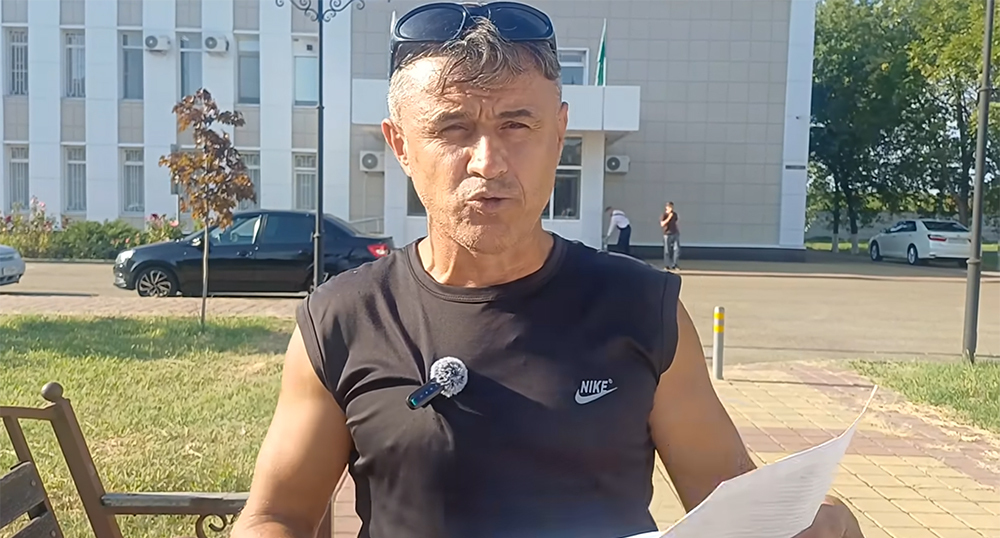
During the court proceedings it was confirmed that the administration of IK-1 systematically applied measures of unlawful pressure and artificial isolation to Alibekov:
• Violation of the secrecy of correspondence: Colony staff unauthorisedly opened and inspected incoming correspondence from the prosecutor’s office. These actions directly violate the law, since supervisory mail is confidential and not subject to censorship. The administration’s aim was illegal control over the convict’s complaints.
• Blocking of personal correspondence: During Alibekov’s time in the institution, more than 300 letters were sent by his relatives and supporters, but only 78 of them were delivered to the addressee. The rest of the correspondence was withheld by censors without legal grounds.
• Artificial delays of documents: The sending of official statements and certificates necessary for the prisoner’s family was deliberately delayed by IK-1 staff for up to one month, which deprived these documents of legal relevance.
The fact that these offences were committed was not disputed by the defendant: the colony management provided the court with materials of an internal inspection according to which violations by the staff were officially confirmed and the guilty persons were brought to disciplinary responsibility.
In addition to the infringement of civil rights, the applicant drew the court’s attention to the catastrophic state of medical care in the penitentiary institution. According to Alibekov, there was no staff doctor at all in IK-1.
As an example of critical failure to provide assistance, a case was cited in which an ambulance brigade called to a seriously ill prisoner took 2 hours and 47 minutes to reach the territory of the colony. As a result of the delay, the young man died. In total, according to the human rights monitoring data of the applicant, during the period of his serving of the sentence in IK-1, the deaths of 9 convicts under the age of 50 were recorded.
The decision of the Teuchezhsky District Court to reduce the amount of the payment from 100% to 2% of the claim amount illustrates a deep crisis in the mechanism for protecting human rights in courts of general jurisdiction:
- Formal criterion of physical harm: The court motivated the reduction of compensation to 20 thousand roubles by the fact that the plaintiff did not provide medical documents indicating a deterioration in his health as a result of the administration’s actions. At the same time, psychological pressure, deprivation of contact with the outside world and gross violation of human dignity were effectively ignored by the court.
- Discretion of first-instance judges: Lawyers note that determining the amount of compensation for moral harm “by eye” remains the standard approach. Courts of first instance use their discretionary (exclusive) right to set amounts based on a subjective understanding of the principles of “reasonableness and fairness”. It is extremely difficult to change such an amount in the appellate instance — this requires proving an obvious logical or procedural error by the lower-instance judge.
Despite the symbolic size of the awarded sum, human rights defenders regard this outcome as an intermediate victory: the very fact of the court’s recognition of the guilt of the Federal Penitentiary Service creates an important legal precedent. Askhabali Alibekov and his defence intend to appeal the decision regarding the amount of compensation in higher judicial instances, demanding full compensation for the moral harm caused.
https://www.kavkaz-uzel.eu/articles/426330
When analysing the mortality situation in the penitentiary institutions of the Federal Penitentiary Service of Russia for the Republic of Adygea, human rights monitoring faces strict restrictions on access to information. Starting from 2023, the Federal Penitentiary Service has almost completely classified departmental medical statistics in open reports. Official data on the number of fatal outcomes and their causes broken down by specific subjects of the Russian Federation are no longer published.
https://tochno.st/datasets/fsin_health_death
Since detailed regional reports of the Federal Penitentiary Service are closed to the public, the key source of information about the situation inside Federal State Institution IK-1 of the Federal Penitentiary Service for the Republic of Adygea became the witness testimony voiced by the plaintiff Askhabali Alibekov.
During the period of the applicant’s serving of his sentence in IK-1 (about two years, taking into account interruptions), the deaths of 9 convicts were recorded inside the institution. All the deceased were persons of relatively young and middle age — none of the 9 deceased prisoners lived to the age of 50. The court documented the systemic problem with medical provision (absence of a staff doctor). As a direct trigger of lethality, a case of delay of emergency services was cited: because the ambulance took 2 hours and 47 minutes to reach the patient on the territory of the IK, the convict died on the spot from an acute pathology.
To compare regional incidents with all-Russian ones, human rights defenders use calculated indicators from scientific research publications (in particular, those of the Research Institute of the Federal Penitentiary Service of Russia) and reports of the Commissioner for Human Rights in the Republic of Adygea.
https://gshra.ru/upolnomochennyy-po-pravam-cheloveka-v-respublike-adygeya-vystupil-s-ezhegodnym-dokladom_20-04-2023.html
https://tochno.st/datasets/fsin_health_death
According to expert assessments based on research by the Research Institute of the Federal Penitentiary Service, the main cause of death in colonies remains diseases of the circulatory system (cardiovascular pathologies). In the penitentiary sector, record values have been recorded relative to mortality rates from heart disease (up to 183.6 cases per 100 thousand prisoners), which human rights defenders directly link to hidden injuries, stress and a chronic shortage of medicines in the medical units of colonies.
https://verstka.media/fsin-record-smertnosti-news
https://theins.ru/news/277167
The official leadership of the service states that overall in the country over the past year mortality in pre-trial detention centres and correctional colonies from general diseases decreased by 9–10%, referring to general humanisation and a reduction in the total number of prisoners. However, human rights organisations emphasise that these statements cannot be verified due to the absence of regional detail in open access.
https://www.interfax-russia.ru/moscow/news/smertnost-zaklyuchennyh-rossiyskih-sizo-i-koloniy-snizilas-v-proshlom-godu-na-12-glava-fsin
https://www.kommersant.ru/doc/8499705
https://tochno.st/datasets/fsin_health_death
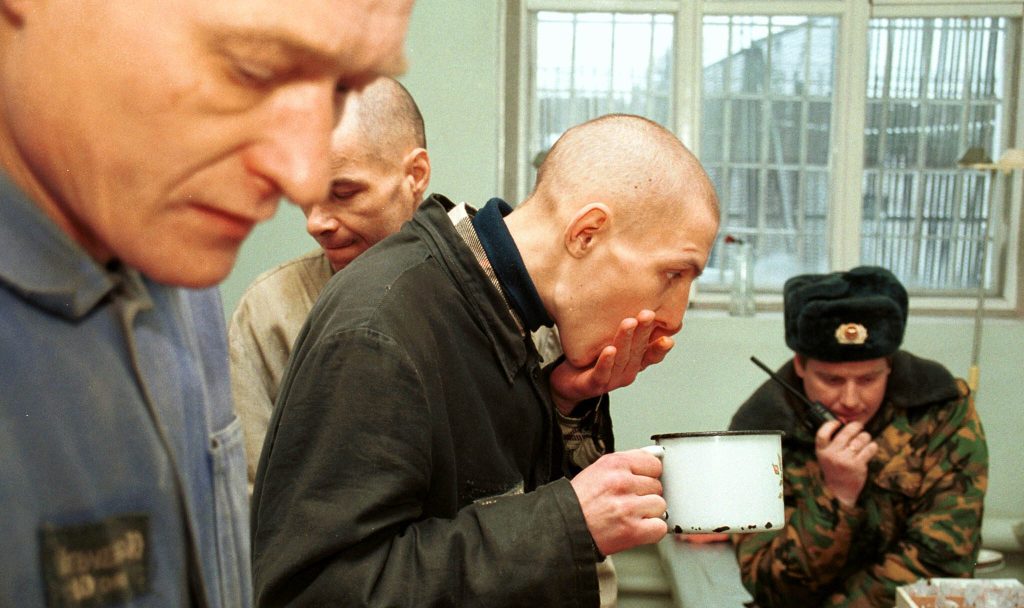
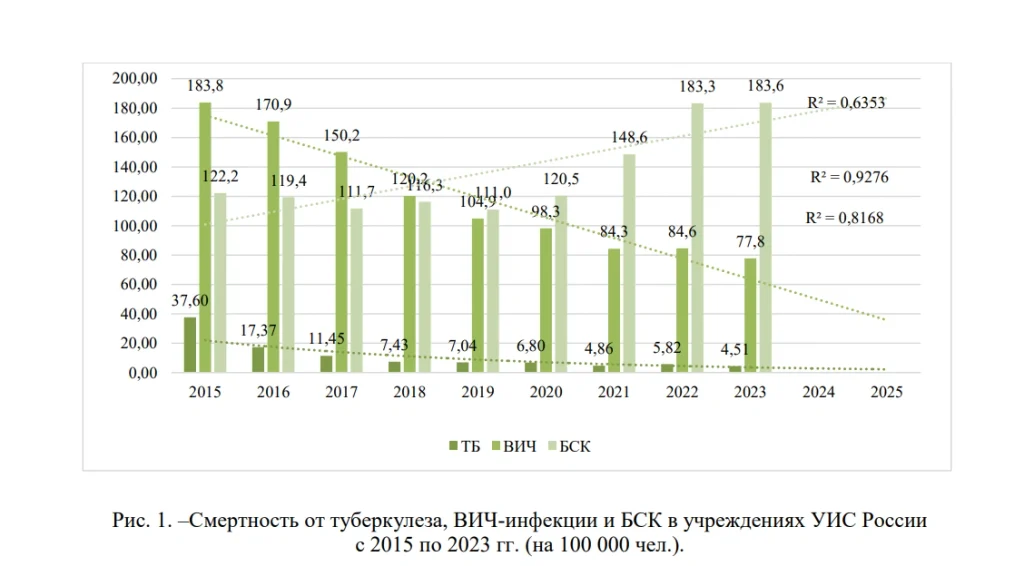
In the annual reports of the Commissioner for Human Rights in the Republic of Adygea, regular appeals from convicts from local IK-1 and IK-2 are recorded. The complaints concern the unsatisfactory quality of medical care, long waiting times for transfer to specialised medical-correctional institutions (LIU) in neighbouring regions and delays in conducting medical and social expert examinations (MSE).
https://gshra.ru/upolnomochennyy-po-pravam-cheloveka-v-respublike-adygeya-vystupil-s-ezhegodnym-dokladom_20-04-2023.html
Human rights defenders point out that the closed nature of the data of the Federal Penitentiary Service for the Republic of Adygea hinders the timely response of supervisory bodies to outbreaks of morbidity and cases of negligence by medical staff in the colonies of the region.
https://tochno.st/datasets/fsin_health_death
Recommendations for the Office of the Commissioner for Human Rights:
• Send a request to the Prosecutor General’s Office of the Russian Federation and the Federal Penitentiary Service of Russia for a comprehensive inspection of IK-1 of the Federal Penitentiary Service for the Republic of Adygea regarding the organisation of medical care, compliance with the law in the processing of convicts’ correspondence and the investigation of the causes of high mortality.
• Support human rights monitoring of court decisions on claims against the Federal Penitentiary Service with the aim of developing systemic recommendations for courts on the fair assessment of moral harm caused in places of deprivation of liberty.
The case of Nikolai Saparov: 4.5 years of imprisonment for faith, torture during detention and the geography of forced removal of convicts
On 22 September 2026, 44-year-old resident of Maykop Nikolai Saparov was released from Correctional Colony No. 5 in the settlement of Metallostroy (St. Petersburg). The believer fully served his sentence under a fabricated criminal case of “organising the activities of an extremist organisation” (Part 1 of Article 282.2 of the Criminal Code of the Russian Federation) for professing the religion of Jehovah’s Witnesses. In total, Saparov spent 4.5 years in isolation (from the moment of his arrest on 22 March 2022).
https://www.kavkaz-uzel.eu/articles/426953
Nikolai Saparov, a Jehovah’s Witness from Maykop, was detained on 22 March 2022 and finally sentenced to imprisonment on 17 January 2024.
On the night of 22–23 March 2022, Nikolai was detained together with his wife and minor daughter at Mineralnye Vody airport. The believer stated that during the detention the security forces applied physical violence and an electric stun gun to him. Immediately after this he was sent to a pre-trial detention centre.
https://jw-russia.org/prisoners/saparov.html
https://ovd.info/persons/saparov-nikolay-vladimirovich
On 17 January 2024, the Maykop City Court found him guilty and sentenced him to 6 years in a general-regime colony. Taking into account the time spent in the pre-trial detention centre (where one day in a pre-trial detention centre is counted as one and a half days in a general-regime colony), the real term of imprisonment was reduced.
https://memopzk.org/news/svidetelya-iegovy-iz-majkopa-prigovorili-k-6-godam-kolonii/
Nikolai Saparov was persecuted exclusively because of his religious beliefs. In 2017, the Supreme Court of the Russian Federation recognised the “Administrative Centre of Jehovah’s Witnesses in Russia” as an extremist organisation and banned its activities. Because of this decision, any peaceful gatherings of believers, joint prayers, reading of the Bible and discussion of religious topics began to be classified by the Russian law enforcement agencies as a criminal offence.
https://jw-russia.org/news/2026/09/241331.html
https://www.bbc.com/russian/news-59047984
Saparov was charged under Part 1 of Article 282.2 of the Criminal Code of the Russian Federation (organisation of the activities of an extremist organisation). The investigation claimed that he “committed actions of an organisational nature”, which consisted in coordinating worship services and holding meetings of believers via the Internet. Nikolai himself did not admit guilt in extremism.
https://memopzk.org/news/svidetelya-iegovy-iz-majkopa-prigovorili-k-6-godam-kolonii/
https://www.kavkaz-uzel.eu/articles/426953
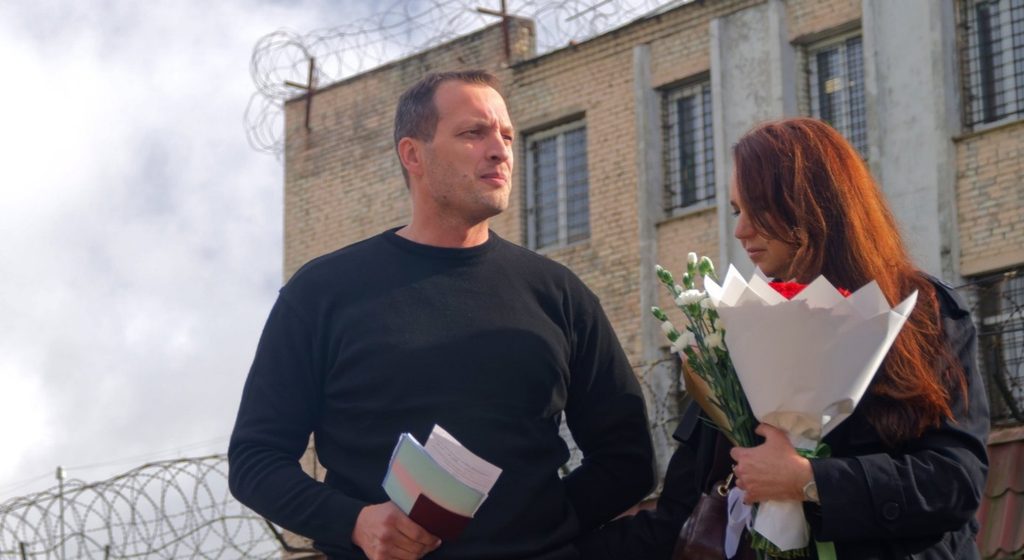
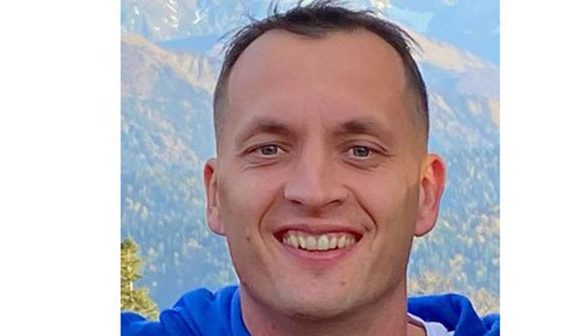
Human rights organisations, including the project “Support for Political Prisoners. Memorial”, recognised Nikolai Saparov as a political prisoner and a prisoner of conscience, since he was convicted solely for exercising his right to freedom of religion.
This criminal prosecution and the conditions of serving the sentence accumulate the key patterns of systemic human rights violations in the modern law enforcement and penitentiary practice of the Russian Federation.
- Fabrication of the case, use of torture and procedural violations.
The case of Nikolai Saparov was initially built on gross violations of international human rights standards and criminal procedure legislation:
• Torture and physical pressure: After his detention in March 2022, Saparov was subjected to cruel treatment. As the believer himself stated in court, officers of the security agencies beat him and tortured him with an electric stun gun, and also applied psychological threats, trying to forcibly obtain confessions.
https://ovd.info/express-news/2024/01/16/svidetel-iegovy-iz-maykopa-rasskazal-chto-k-nemu-primenyali-nasilie-posle
• Falsification of evidence: Investigative actions were carried out with deliberate procedural violations — in particular, the search of the believer’s home took place without the participation of independent witnesses. As a result of these actions, the investigation “discovered” items in the residential premises which, according to Saparov and the defence, did not belong to him and were planted by the security forces.
https://memopzk.org/news/svidetelya-iegovy-iz-majkopa-prigovorili-k-6-godam-kolonii/
• Blocking of personal rights in the pre-trial detention centre: At the stage of the preliminary investigation, the administration of the detention centre violated the prisoner’s right to contact with the outside world, deliberately not delivering letters from relatives and friends to Saparov.
https://www.kavkaz-uzel.eu/articles/377423
- Penitentiary geography as an instrument of pressure on the family.
An important aspect of the case is the artificial complication of the conditions of serving the sentence by means of the geographical removal of the convict from his permanent place of residence: despite the fact that the criminal case was investigated in the Republic of Adygea (Maykop), Saparov was transferred for the final part of his term to IK-5 in the Leningrad Region. The distance from Maykop to the settlement of Metallostroy by road is from 2,100 to 2,230 km.
Such a practice of the Federal Penitentiary Service imposes an excessive financial and physical burden on the members of the prisoner’s family. During the time of visits and trips to deliver food and clothing parcels, the convict’s wife, Natalia Saparova, was forced to cover a total of 25,640 kilometres. Human rights institutions qualify this approach as a form of hidden collective punishment of the relatives of political prisoners.
- Systemic ignoring of the positions of the Supreme Court of the Russian Federation.
Saparov’s prosecution was conducted under the standard charge for this category of cases: coordination of religious meetings, reading of prayers and joint worship services. Sentences for such activity directly contradict the official legal position of the highest judicial instance of Russia. As early as October 2021, the Plenum of the Supreme Court of the Russian Federation issued a clear ruling: joint or individual profession of faith, the performance of religious rites and ceremonies in themselves cannot be classified as participation in or organisation of the activities of an extremist organisation if they do not contain real, proven signs of extremism.
This formulation is contained in the official document — Resolution of the Plenum of the Supreme Court of the Russian Federation No. 32 of 28 October 2021 (amendments introduced into Resolution of the Plenum of the Supreme Court of the Russian Federation of 28 June 2011 No. 11 “On judicial practice in criminal cases concerning crimes of an extremist orientation”).
https://www.garant.ru/hotlaw/federal/1492885/
In practice, law enforcement agencies and courts of general jurisdiction completely ignore this clarification of the Plenum of the Supreme Court of the Russian Federation. Any peaceful religious activity of citizens associating themselves with a whole range of trends within different religions is automatically criminalised by the investigation with reference to the 2017 Supreme Court decision on the liquidation of the legal entities of the confession.
Acquittals under this article remain isolated exceptions (as, for example, the precedent of Yuri Zalipaev in Kabardino-Balkaria in 2020–2021). In the overwhelming majority of cases the repressive machine ignores the norms on freedom of conscience guaranteed by the Constitution of the Russian Federation.
The criminal prosecution of Nikolai Saparov and similar cases against believers of various confessions in the south of Russia represent a direct encroachment on the fundamental constitutional rights of citizens. Article 28 of the Constitution of the Russian Federation guarantees everyone freedom of conscience and religion, including the right to profess a religion both individually and jointly with others, as well as to freely disseminate one’s beliefs. The criminalisation of joint prayers and worship services directly contradicts this norm, since law enforcement agencies unlawfully equate personal faith with the activities of a legal entity liquidated in 2017. Moreover, local courts continue to ignore the Resolution of the Plenum of the Supreme Court of the Russian Federation of October 2021, which explicitly clarifies that the performance of religious rites in themselves should not be considered the activity of an extremist organisation if they do not contain real signs of extremism. The systemic persecution for peaceful religious practice de facto annuls the operation of constitutional freedoms, turning the right to freedom of conscience into a criminally punishable act.
Against the background of the release of Nikolai Saparov, human rights monitoring records consistently high indicators of repressive pressure on religious minorities in the southern regions of the country. According to aggregated data of human rights organisations and specialised monitoring centres, the Russian Federation ranks second in the world in the number of citizens deprived of liberty for their religious beliefs. In total, across the country, about 160–170 Jehovah’s Witnesses are simultaneously held in pre-trial detention centres and correctional colonies in cases related to the exercise of the right to freedom of conscience, and the total number of believers of this confession who have been subjected to criminal prosecution has approached 1,000 people.
https://www.svoboda.org/a/v-obnovlennyh-dannyh-o-presledovanii-svideteley-iegovy-v-rossii-lidiruyut-yuzhnye-regiony/31736030.html
https://novayagazeta.eu/en/articles/2025/03/28/russia-second-only-to-china-in-number-of-people-imprisoned-for-religious-beliefs-en-news
The Southern and North Caucasian Federal Districts (SFD and NCFD) traditionally rank among the leaders in the intensity of repression against the religious population.
Since the ban on the legal entities of the organisation in 2017, dozens of believers in the southern macro-region have become defendants in criminal cases of “extremist activity”. Human rights defenders have verified criminal cases against at least 21 residents of the NCFD and 16 residents of the SFD.
https://mahachkala.bezformata.com/listnews/svidetelej-iegovi-na-yuge-rossii/82079549/
https://www.svoboda.org/a/v-obnovlennyh-dannyh-o-presledovanii-svideteley-iegovy-v-rossii-lidiruyut-yuzhnye-regiony/31736030.html
In addition to Jehovah’s Witnesses, a significant share of religious prisoners in the south of Russia and in Crimea consists of persons persecuted on charges of involvement in Muslim organisations (in particular, Hizb ut-Tahrir, recognised as terrorist in the Russian Federation but legally operating in most countries of the world). In these regions, terms of imprisonment for religious identity and joint study of literature reach from 10 to 20 or more years of deprivation of liberty, which is comparable to sentences for serious violent crimes.
https://www.state.gov/reports/2022-report-on-international-religious-freedom/russia
https://www.uscirf.gov/sites/default/files/2025-06/2025%20Russia%20Country%20Update%20FINAL.pdf
Particular concern in the human rights community is caused by the systemic criminal prosecution of women for their religious views in the Southern and North Caucasian Federal Districts. Contrary to basic principles of humanity, investigative bodies and courts in the south of Russia regularly send under arrest, to pre-trial detention centres and colonies elderly women, mothers of many children and persons with disabilities, whose “guilt” consists exclusively in the peaceful profession of their faith.
Human rights monitoring highlights the following characteristic features of the persecution of women in the south of Russia:
• Persecution of elderly believers and persons with disabilities: Harsh criminal compositions under Article 282.2 of the Criminal Code of the Russian Federation are applied to women of pension and pre-pension age who have severe chronic diseases. Prolonged presence in the conditions of pre-trial detention centres and correctional institutions causes irreparable harm to their health, turning sentences into a form of slow reprisal.
• Mass coordinated searches as psychological pressure: The procedure of detaining women in the south of Russia is often accompanied by unjustifiably harsh measures on the part of the security agencies. Armed officers in masks who burst in at dawn subject women and their minor children to the harshest psychological stress, seizing personal diaries, Bibles and family photographs.
• Destruction of family ties: For many women political prisoners, criminal cases result in prolonged and forced separation from children and spouses, who are often also subjected to parallel criminal prosecution.
In the south of Russia, courts hand down to women both real terms of imprisonment and long suspended sentences with strict restrictions on freedom that deprive them of the opportunity to fully run a household, work or visit medical institutions without special permission from the controlling bodies of the Federal Penitentiary Service. The defence of such women in courts is complicated by the general repressive orientation of the penitentiary system of the region, which completely ignores the constitutional guarantees of equality of human rights and freedoms.
Arrest of blogger Amir Khapachev in Maykop in the case of a questionnaire for the “Anti-War Committee” and the hidden practice of deleting court press releases
The Maykop City Court of the Republic of Adygea sent to a pre-trial detention centre a local resident characterised in official sources as a “popular blogger of the republic” — in the case materials he appears under the initial “citizen Kh.”. He is charged under Part 2 of Article 205.5 of the Criminal Code of the Russian Federation (participation in the activities of an organisation recognised as terrorist in the Russian Federation), the sanction for which provides for punishment of up to 20 years of deprivation of liberty. The court appointed a measure of restraint in the form of detention for a period of 1 month and 30 days — until 23 November. According to available information from independent sources and Telegram channels, blogger Amir Khapachev was placed in custody.
https://www.instagram.com/p/Dd6EeLGjq4Z/
https://sotaproject.com/news/119265
This legal precedent not only demonstrates the extreme degree of tightening of repression for any manifestations of an anti-war position in the North Caucasian and Southern Federal Districts, but also exposes the practice of the special services using fake Internet resources to criminalise the actions of citizens.
https://protokol.band/2026/09/29/sud-v-adygee-arestoval-populyarnogo-blogera-po-delu-antivoennogo-komiteta-i-udalil-soobshhenie-ob-etom/
https://www.instagram.com/p/DeKZGz-Rd8C/
- The plot of the case: a digital questionnaire as a form of “terrorist activity”
According to the investigative bodies of the FSB, in September the accused, while in the city of Krasnodar, filled out a digital “questionnaire of an associated member” of the international non-governmental organisation “Anti-War Committee of Russia” (AKR), recognised as terrorist on the territory of the Russian Federation. The filled-out document was forwarded by the blogger via the Telegram messenger to an “unidentified member of the organisation”.
https://zona.media/news/2026/09/29/maikop
https://www.instagram.com/p/Dd6EeLGjq4Z/
The very fact of sending a digital questionnaire in a messenger formed the basis of the charge under one of the most serious articles of the Criminal Code. Khapachev’s defence asked the court to limit itself to a milder measure of restraint in the form of house arrest, but the judge rejected the arguments of the lawyers, fully satisfying the investigation’s petition for isolation in a pre-trial detention centre.
https://sotaproject.com/news/119265
- Provocations using “fake bots” and the position of the “Anti-War Committee”.
The most important aspect of this criminal case is the high probability that the detained activist became a victim of an operational provocation by the security agencies:
After the wide publicity of the incident, the consuls of the “Anti-War Committee of Russia” issued an official emergency statement. The organisation emphasised that Amir Khapachev had never contacted them, and the questionnaire he filled out did not enter the official database of the committee.
https://x.com/sotaproject/status/2105248307958198518
https://www.instagram.com/p/DeKZGz-Rd8C/
Representatives of the anti-war movement directly warned citizens about the existence of an entire network of fake Telegram bots and double channels that are created by the Russian special services and fully copy the visual style, logos and structure of independent human rights and opposition projects.
https://x.com/sotaproject/status/2105248307958198518
https://www.instagram.com/p/DeKZGz-Rd8C/
Citizens trying to express protest or contact human rights defenders enter their personal data into such bots controlled by the FSB. The information obtained (names, telephones, digital questionnaires) is immediately transformed by the special services into an “evidentiary base” of a criminal case for immediate arrest.
https://www.instagram.com/p/DeKZGz-Rd8C/
In addition, alarming information is coming from local Telegram channels and media reports that during the detention the blogger was beaten by officers of the security agencies, and in conditions of isolation he is being forced under torture to give confessions and incriminate himself. The human rights community insists on the need for the immediate admission of independent lawyers and a medical examination of the detainee to record traces of violence.
https://www.instagram.com/p/DeKZGz-Rd8C/
In this case, an anomaly characteristic of closed political processes was recorded in the actions of the judicial department:
On the afternoon of 29 September, the press service of the Maykop City Court of Adygea openly published on its official Internet portal a detailed press release about the arrest of a “popular blogger of the republic”.
https://sotaproject.com/news/119265
A short time after the publication attracted the attention of independent publications, the message completely and without a trace disappeared from the official website of the court. At present the text is available exclusively thanks to copies in independent web archives and monitoring databases.
https://protokol.band/2026/09/29/sud-v-adygee-arestoval-populyarnogo-blogera-po-delu-antivoennogo-komiteta-i-udalil-soobshhenie-ob-etom/
Such a practice of deleting official information indicates attempts to conceal the course of the case from public and human rights control immediately after inconsistencies in the accusation were revealed (including the use by the security forces of fake Internet resources). The closure of data on the movement of criminal cases under “terrorist” articles significantly limits the possibilities of defence and leaves the arrested persons in a state of complete informational isolation inside the pre-trial detention centre.
Conclusion
In September 2026, the situation in the sphere of observance of human and civil rights in the Republic of Adygea was characterised by a further intensification of repressive pressure on the institutions of civil society, restriction of freedom of conscience, as well as the persistence of systemic crisis phenomena in the regional penitentiary institutions. Human rights monitoring recorded three key negative trends: the inadequacy of judicial protection in cases of violation of prisoners’ rights, geographical discrimination against believers, and the criminalisation of anti-war views through the use of digital provocations.
- Systemic crisis in the penitentiary system (using the example of Federal State Institution IK-1).
The judicial precedent in the Teuchezhsky District Court, which partially satisfied the claim of former prisoner Askhabali Alibekov against Correctional Colony No. 1 (IK-1), exposed deep internal offences in the department. Facts of total censorship, deliberate opening of confidential prosecutorial correspondence and blocking of personal correspondence of convicts (less than 25% of letters were delivered to the addressee) were officially proven.
Particular concern is caused by the collapse of the medical support system in IK-1, expressed in the absence of staff doctors and critical delays in emergency care (a case of an ambulance taking 2 hours and 47 minutes, resulting in the death of the patient, was recorded). The high level of lethality among prisoners of young and middle age (9 deaths of persons under 50 during the period of the applicant’s term) is aggravated by the closed nature of the departmental statistics of the Federal Penitentiary Service. At the same time, judicial practice demonstrates a formal approach to the protection of human rights: courts of general jurisdiction reduce the amounts of compensation for moral harm by a factor of 50 (to 20 thousand roubles instead of the claimed million), ignoring the clarifications of the Plenum of the Supreme Court of the Russian Federation on the inadmissibility of penny payments for unlawful actions of state bodies.
- Discrimination on religious grounds and the geography of forced removal.
September 2026 was marked by the release of Maykop resident Nikolai Saparov, who fully served 4.5 years of imprisonment under a fabricated extremism case (Part 1 of Article 282.2 of the Criminal Code of the Russian Federation) for belonging to Jehovah’s Witnesses. This case underlines the systemic ignoring by the courts of Adygea of Article 28 of the Constitution of the Russian Federation and the Resolution of the Plenum of the Supreme Court of the Russian Federation of 2021, which prohibits the criminalisation of peaceful worship services.
An additional instrument of pressure of the penitentiary system remains “geographical repression”: the transfer of the convicted resident of Maykop to IK-5 in the Leningrad Region (to a distance of more than 2,200 km) imposed a disproportionate financial and physical burden on his family (the wife covered more than 25 thousand kilometres for visits), which is qualified as a hidden form of collective punishment of the relatives of political prisoners. Similar repressive pressure, including harsh searches and isolation, continues to be applied in the macro-region of the SFD and NCFD to dozens of believers, including elderly women and persons with disabilities.
- Persecution for an anti-war position and the use of digital traps by the special services.
At the end of the month, the Maykop City Court sent local blogger Amir Khapachev under arrest to a pre-trial detention centre on charges of participation in a terrorist organisation (Part 2 of Article 205.5 of the Criminal Code of the Russian Federation) with a sanction of up to 20 years of deprivation of liberty. The reason was the sending via Telegram of a digital questionnaire to the “Anti-War Committee of Russia”.
This incident revealed a dangerous precedent of the security structures using fake Internet resources (double bots) for operational provocation and the collection of data of citizens expressing disagreement with the actions of the authorities. The process was accompanied by gross violations of the rights of the detainee (reports of beatings by security forces were received). The information policy of the judicial bodies of Adygea in this case showed signs of manipulation: the official press release about the arrest of the blogger was hidden and deleted without a trace from the court’s website immediately after the case attracted the attention of independent human rights monitoring.
The human rights situation in the Republic of Adygea in September 2026 demonstrates the coordinated actions of the law enforcement, penitentiary and judicial systems to minimise the legal guarantees of citizens. The courts of the region de facto act not as a body of justice, but as a legitimiser of the punitive initiatives of the security agencies, consistently reducing the responsibility of state bodies for proven human rights violations and sending activists to pre-trial detention centres on the basis of digital provocations.
Khava Beshtoeva