
THE IRAKLI CHIKHLADZE CASE: LEGAL ABSURDITY, GEOPOLITICAL GAMES, AND THE CRIMINALIZATION OF INDEPENDENT JOURNALISM IN GEORGIA
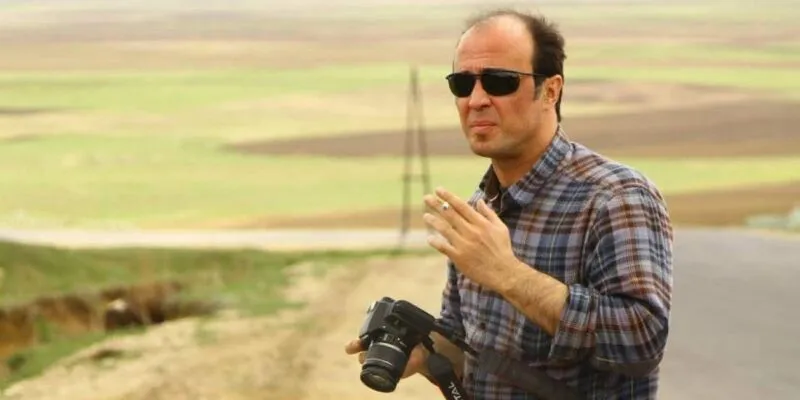
On May 30, 2026, events unfolded in Tbilisi that definitively signaled a harsher, more dangerous reality for Georgia’s independent media community. Officers from the State Security Service (SSSG) raided the apartment of prominent journalist and political analyst Irakli Chikhladze, conducting a sweeping search and seizing all his professional equipment. Later that day, at a special briefing, officials announced that Chikhladze had been arrested on espionage charges. He is currently being held incommunicado at Gldani Prison (Penitentiary Institution No. 8) – denied visits, phone calls, and even correspondence. Because the entire case has been classified, the public remains entirely barred from viewing any evidence.
The Open-Source Trap: Unpacking the Paradox
The central legal paradox of the Chikhladze case lies in a simple fact: he never possessed, nor could he have possessed, official access to state secrets. As his defense attorney, Giorgi Gelkhauri, points out, the case files contain no references to classified databases or restricted ministry documents. Instead, the prosecution relies entirely on Article 314 of the Criminal Code of Georgia (“Espionage”). This statute is so sweeping and vaguely worded that it effectively criminalizes the collection of any information on behalf of a foreign entity, provided the investigation deems it “detrimental to national interests.”In an interview with Formula TV, Gelkhauri revealed a startling detail: the prosecution’s primary piece of “evidence” is a video recording showing an unidentified individual allegedly handing Chikhladze cash. Yet, the prosecutor’s office has made no attempt to establish the individual’s identity, the sum involved, the source of the funds, or the specific tasks the payment supposedly financed. In a state governed by the rule of law, gathering open-source data, conducting interviews, and analyzing public law enforcement budgets are recognized as routine journalism. In today’s Georgia, the intelligence services officially classify these exact activities as the orchestration and coordination of an espionage network.
The Criminalization of Cross-Border Dialogue
Irakli Chikhladze has dedicated nearly twenty years to independent journalism. Since 2007, he has led the analytical portal New Caucasus, establishing it as a highly reputable platform for expert analysis on Georgia, Armenia, and Azerbaijan. However, his most significant impact stems from his long-standing, transparent peacekeeping initiatives. As head of both the Caucasus Center for Civil Hearings and the Caucasus Institute for Human Rights, Chikhladze regularly organized roundtables and public forums aimed at dismantling ethnopolitical stereotypes across the South Caucasus. Under his leadership, pioneering meetings were held in Yerevan and various neutral venues, providing a rare space where Georgian, Abkhazian, and Ossetian reporters could openly discuss professional standards and strategies to counter information warfare.In 2015, his center organized mobile civil hearings directly in the border town of Gori, drawing international attention to the humanitarian crisis facing villagers along the South Ossetian occupation line. The hearings addressed critical security issues, restrictions on freedom of movement, and the ongoing challenge of “borderization” – the systematic installation of barbed wire fences by the Russian military. Today, investigators are cynically attempting to reframe these transparent international conferences as “a convenient cover for subversive intelligence operations.”
The War on Western Donors and False Leaks
The Chikhladze case cannot be viewed in isolation from Georgia’s broader geopolitical shift. Between 2024 and 2026, the ruling Georgian Dream party systematically restricted civil society space. Following the passage of the controversial “foreign influence transparency” law, the government adopted draconian criminal amendments to the Law on Grants. This new legislation effectively bans any foreign funding without prior state authorization and introduces severe penalties – up to 12 years in prison –for “unauthorized political activity.”For years, Chikhladze’s projects had received official grant funding from major international institutions, including USAID, the National Endowment for Democracy (NED), the European Endowment for Democracy (EED), the British Embassy, the Heinrich Böll Foundation, and the Dutch government. By 2026, however, the State Security Service (SSS) began reclassifying these international cooperation funds as the financing of a coup d’état. As part of a sweeping counterintelligence crackdown in the summer of 2026, the authorities deployed a “multi-vector” strategy aimed at the domestic electorate: to project impartiality, they arrested pro-Russian activist Gulbaat Rtskhiladze and former PR specialist Giorgi Udzilauri on espionage charges alongside the pro-Western analyst Chikhladze.According to analysts at the Jamestown Foundation, Georgian security agencies are deliberately embedding vague, “anonymous accusations” into official case documents while simultaneously orchestrating controlled leaks through state-aligned media outlets, particularly the Imedi television network. The public is being fed a narrative of a “French connection,” alleging that Chikhladze is linked to France’s external intelligence agency, the DGSE. This strategy serves a dual purpose: it allows Tbilisi to avoid a direct, head-on diplomatic confrontation with Paris while effectively exploiting the “encircled by enemies and spies” rhetoric to consolidate power domestically.
An Insult to Memory: The Flawed “Russian Connection” Narrative
Amid the ensuing media chaos, several Russian outlets – followed, in a glaring oversight, by the Jamestown Foundation – hastily claimed that Chikhladze was accused of spying for Russia. This narrative is not only legally and logically untenable; it is a profound insult to the journalist’s family history.Irakli’s brother, Giga Chikhladze, was a prominent war correspondent who was killed near Tskhinvali during the August 2008 Russo-Georgian War. While performing his professional duties, the vehicle he shared with colleague Alexander Klimchuk came under fire from Russian forces. The Chikhladze family is widely respected in Georgia as staunch patriots; consequently, the attempt to taint Irakli with alleged ties to the aggressor state responsible for his brother’s death sparked widespread public outrage. Furthermore, the objective facts refute this narrative: in January 2024, Russia’s media regulator, Roskomnadzor, completely blocked Chikhladze’s portal, New Caucasus, at the request of the Russian Prosecutor General’s Office for allegedly “destabilizing the socio-political situation.” The theory of a Moscow connection completely crumbles under the weight of reality.
Crucially, following appeals from public figures and human rights advocates, the prominent American think tank, the Jamestown Foundation, formally retracted the factual error in its coverage. The Foundation acknowledged that conflating Chikhladze’s case with that of Gulbaat Rtskhiladze – the pro-Russian activist arrested on separate espionage charges the same day – was an unfortunate error, and promptly corrected its article. Jamestown Foundation representatives clarified that the article was never intended to imply that Chikhladze was collaborating with Russia. Instead, they explained that their analysis aimed to demonstrate how the ruling Georgian Dream party instrumentalizes figures from across the political spectrum – both pro-Western and pro-Russian – to manufacture a facade of geopolitical balance. This focus is reflected in the piece’s actual title: “Georgian Dream Uses Espionage Cases to Project Neutrality.”A formal editor’s note appended to the article on August 19, 2026, confirms the correction, verifying the complete removal of the erroneous claim regarding Chikhladze’s alleged espionage for the Russian Federation.
A Call for International Solidarity
Historically, espionage prosecutions in Georgia have intensified during periods of acute political crisis. The closed nature of these trials, combined with mandatory non-disclosure agreements for defense attorneys, effectively prevents the defense from publicly demonstrating the inadequacy of the state’s evidence before sentencing. The first court hearing on the merits of Irakli Chikhladze’s case is scheduled for September 9, 2026. In response, human rights advocates and fellow journalists are urgently demanding a comprehensive, transparent review of the case files and an open trial monitored by international observers.Ahead of this critical hearing, a coalition of public, political, and academic figures worldwide – in coordination with the Ukrainian human rights initiative “Ombudsman Media”—announced a global petition campaign. The initiative demands the immediate release of Irakli Chikhladze, the dismissal of all unfounded charges against him, and the comprehensive reform of the vaguely worded Article 314 of the Georgian Criminal Code. The organizers call upon journalists, regional experts, think tanks, and international institutions to stand in solidarity to prevent a dangerous precedent that threatens to criminalize independent journalism across the Caucasus.Human rights organizations, media professionals, and members of the public can submit signatures, coordinate joint advocacy actions, or request additional briefing materials through the dedicated communication channel:
hava_ombudsman@protonmail.com