
Report on Human Rights Violations in the Republic of Bashkortostan
July 2026
Human rights defender from the Republic of Bashkortostan,
name anonymised for security reasons
July once again showed that events in Bashkortostan can no longer be viewed as separate episodes. News items that at first glance appear different form a single picture in which political control, the militarisation of public life and pressure on national identity are intensifying.
Political persecution continues to expand
In July the Rosfinmonitoring list was supplemented by five more natives and residents of Bashkortostan who were included in the list of terrorists and extremists (Information from the published list in the RosFinMonitoring Telegram channel). These are:
Nakaryakov Vladislav Andreevich, born 10.03.1997, village of Levali, Belokatai District of the Republic of Bashkortostan;
Fazilov Salavat Valiakhmetovich, born 01.03.1978, Kazangulovskoye OPKh of Davlekanovo District of the Republic of Bashkortostan;
Khabibrakhmanov Dmitry Razinovich, born 02.04.1974, city of Neftekamsk of the Republic of Bashkortostan;
Radelnikov Nikolai Vladimirovich, born 10.12.1970, city of Ufa of the Republic of Bashkortostan;
Fazylov Ilyas Aidarovich, born 03.12.2009, village of Starotavlarovo of Buzdyak District of the Republic of Bashkortostan.
For the majority of them there are as yet no published court decisions, which requires further study of their criminal cases and judicial practice. However, the very fact of the appearance of new names in the state list already testifies to the continuation of the repressive policy.
Another distinctive feature of Bashkortostan is becoming its role in the penitentiary system of Russia
The institutions of the Federal Penitentiary Service of the republic hold not only local residents but also political prisoners transferred from other regions of the country. Thus, Ilya Vasilyev, sentenced to six years in a colony in a case of disseminating fakes about the army, was transferred from Pre-trial Detention Centre No. 1 to Pre-trial Detention Centre No. 5 in Ufa. Vasilyev is being held in a pre-trial detention centre in Dyurtyuli District of Bashkortostan. (Source: Politzek-Info Telegram channel).
Ilya Vasilyev was born on 9 December 1973. Programmer, founder of the “Civil School of Hackers.” Abbot of the “Moscow Zen Centre.”
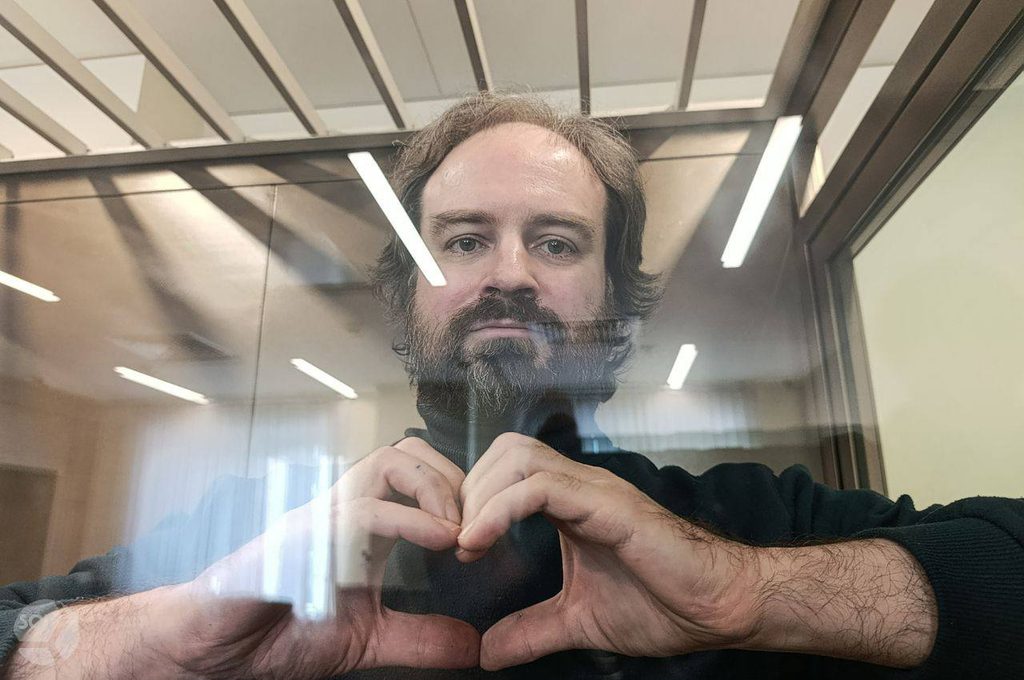
According to OVD-Info and the project “Support for Political Prisoners. Memorial”:
in May 2023 he was fined under the administrative article on “discrediting the army”;
on 20 June 2024 he was detained;
a criminal case was opened under point “d” of Part 2 of Article 207.3 of the Criminal Code of the Russian Federation (public dissemination, according to the investigation, of knowingly false information about the use of the Armed Forces of the Russian Federation motivated by political hatred);
the charge is connected with publications on Facebook in English.
25 June 2025 — first sentence: 8 years in a general-regime colony.
22 October 2025 — the appeal overturned this sentence and sent the case for new consideration.
28 April 2026 — new sentence: 6 years in a general-regime colony. (Source: OVD-Info +1)
The project “Support for Political Prisoners. Memorial” recognised Ilya Vasilyev as a political prisoner, considering his criminal prosecution unlawful. (Source: Support for Political Prisoners. Memorial).
According to information from the support group and OVD-Info, after the new sentence was handed down he was transferred to Federal State Institution Pre-trial Detention Centre No. 1 of the Federal Penitentiary Service of Russia for the Republic of Bashkortostan (city of Ufa). This is a transit or temporary stage of detention that may change. (Source: Vestochka +2)
https://memopzk.org/figurant/vasilev-ilya-vladimirovich/
A child had barely turned fourteen — and Russian “justice” had already placed him on the lists of terrorists
Children barely have time to grow up before their lives are already crossed out by the Russian system. This is not simply alarming statistics — it is a catastrophe not only for society as a whole, which is losing its own children, but also a catastrophe for the Bashkir people, whose destruction is being carried out from childhood.
According to the July summaries published in the Politzek–Info Telegram channel:
“In Russia the youngest terrorist in the Rosfinmonitoring register has been updated.
1 The youngest terrorist became Ibatullin Ilyan, born 2012, from the Republic of Bashkortostan, who turned 14 on 10 January!
2 Next in the register by age is Nikita Smirnov from Arkhangelsk Region, who turned 14 on 15 February.
3 Closing the trio of the youngest terrorists in the Rosfinmonitoring register is Makeev Artem from the Republic of Bashkortostan, who turned 14 on 2 March.”
Persecution of Daniil Fakhreev
Also according to data of the Telegram channel “Support for Political Prisoners Memorial,” Danila Fakhreev (21 years old) from Bashkortostan was sent to a pre-trial detention centre no later than September 2025. Because of video clips in the Ukrainian language with a call to join the Armed Forces of Ukraine published in the chat of a Telegram channel, he was charged with public calls on the Internet to carry out activity directed against the security of the state. Fakhreev was sentenced to 4 years in a colony.
https://memopzk.org/figurant/fahreev-danil-denisovich
Republic of Bashkortostan continues to bear one of the heaviest human losses in the war
According to open sources, Bashkortostan became the first region where the number of confirmed dead servicemen even officially exceeded ten thousand people. This figure reflects not only the scale of the losses but also the special role of the Republic in providing the war with human resources.
“For the first time in a region more than 10 thousand dead — this is Bashkortostan.” (Mediazona summary):
The republic has led in losses since 2024, and the confirmation of 10 thousand dead from here was only a matter of time.
In the autumn of 2024 we knew of 2,800 dead in the region. Today we know that from the beginning of the war until the autumn of 2024 no fewer than 4,900 people died. This difference — more than double — shows with what delay losses are confirmed in this war. These are more complete data, but they still cannot be considered final. We continue to find fresh and old obituaries of the dead from both 2022 and 2023.
The second region by number of losses is neighbouring Tatarstan, about nine thousand dead. Dmitry Treshchanin tells what we know about the geography of losses: https://youtu.be/D903EkfsKc8
BUT! Despite the sad “leadership,” in Bashkortostan the payment of one million roubles for signing a contract was extended.
https://www.svoboda.org/a/v-bashkortostane-prodlili-vyplatu-v-odin-million-rubley-za-podpisanie-kontrakta-respublika-lider-po-kolichestvu-pogibshih-na-voyne/33793287.html
No less grim data are provided by the organisation “Idite Lesom.” According to data published in its Telegram channel, Bashkortostan again found itself among the leaders:
“200 thousand applications about missing Russian servicemen. Since the launch of the project ‘I Want to Find’ in January 2024, relatives of Russian servicemen have submitted 200,084 applications for the search for missing persons.
The real number of those who disappeared in the war may be significantly higher: not all families know about the project or applied for help.
During this time 3,939 people were found among prisoners of war. As of 1 June 2026, 2,519 of them returned to Russia within the framework of exchanges. During the latest exchanges more than half of those who returned were being sought by relatives through ‘I Want to Find.’
The largest number of applications is connected with Pokrovsk District of Donetsk Region — 28,514. In second place is Bakhmut District — 12,553 applications.
The project also records a growth in the share of servicemen under 25 years of age among the missing. In 2024 this age group accounted for 8.5% of all applications. In August 2024, when the Russian command sent conscripts to Kursk Region, their share rose to 16%. In 2025 servicemen under 25 years of age constituted 13% of all those sought for the year. In 2026 their share exceeded 15%.
In absolute figures the largest number of missing are being sought by residents of Bashkortostan — 6,163 applications. From Moscow 6,101 applications were received. However, recalculated per population the difference is significantly greater. In Bashkortostan there are 153 applications per 100 thousand residents, in Moscow — 46.
The largest number of applications per 100 thousand residents came from:
• Transbaikal Territory — 291;
• Jewish Autonomous Region — 226;
• Republic of Tyva — 198;
• Amur Region — 180;
• Irkutsk Region — 179.
The smallest:
• in Leningrad Region — 58;
• Moscow Region — 52;
• St. Petersburg — 47;
• Moscow — 46;
• Chechnya — 22.
The statistics show that remote and less well-off regions bear disproportionately large losses in the war. And among the missing the share of men under 25 years of age is growing.”
Against this background the course towards involving young people in the military system is becoming ever more noticeable. Recruitment into BARS units continues, and there are reports of the placement of agitational materials on the websites of educational institutions and local media. For example, agitational material of the local newspaper “Vybor” of the city of Salavat
https://vk.ru/wall-48333792_76889
And here is the splash screen with which the page of one of the leading schools of the city of Salavat, MBOU “Gymnasium 2,” begins
https://vk.ru/wall-176469909_6166
Cases are recorded when after expulsion from universities young people find themselves faced with the necessity of concluding military contracts.
Thus, according to information on the Telegram channel “Idite Lesom”: “In Ufa a student of the Military Training Centre at UUNiT was expelled after refusing to sign a contract for UAVs.
A former student of the Military Training Centre at UUNiT in Ufa wrote to us. He studied in the direction ‘design of aviation and rocket engines’ of the FADET faculty. On 1 April he was expelled.
The student relates that in the fourth year he had debts in a specialised subject. He does not hide that he himself treated both the subject and the teacher poorly, because of which relations with her deteriorated. Later the teacher began to ignore his attempts to clear the debt and to look for pretexts not to accept the subject. In the end this became the reason for expulsion.
Upon expulsion they insistently offered him to take an academic leave for restoration allegedly in a year (although under the three-party contract concluded upon admission no such thing is provided for). Of course not for ‘thank you,’ but for the notorious contract for UAVs.
The student refused. After this he was expelled with a state debt. Together with him there was another classmate who agreed to such an option.
The contract was offered by the head of the Military Training Centre Evgeny Sitnikov together with the dean of the FADET faculty. The teacher because of whom he was unable to clear the subject is called Olga Ivanova. He also writes that at the faculty students were told about ‘survival races’: those with the largest number of old debts would be expelled. They were explained that an inspection was expected in the summer, therefore debts needed to be urgently liquidated, but it is unclear why they could not be given time at least until May.
After expulsion other consequences immediately arose for him: the deferment ended, the threat of conscription appeared, and the debt for education turned out to be unaffordable for him. The student is most afraid of the military commissariat, bailiffs and that after expulsion and loss of the deferment they will begin to force him to sign a contract. Already now agitators for contracts are calling him.
The student says: ‘I consider that this situation is not fair even taking into account my non-attendance; I was ready to clear all the debts in this subject, but I was left without a chance. The faculty and the university naturally remained on the side of the teacher — and no one tried to help me, although upon admission they assured that they would try hard.’
According to the student, this is not an isolated case. He told us that at UUNiT other stories are known when students were offered service in UAVs, including at other faculties.” (Source: “Idite Lesom” Telegram channel).
A case of a young man fleeing from the republic in order to avoid conscription into the army has also been recorded. This is 22-year-old Daniil Mukhametov:
https://www.svoboda.org/a/pryzhok-v-nikuda-bashkortostanets-sprygnul-s-poezda-v-litve-i-uehal-vo-frantsiyu-gde-emu-otkazali-v-ubezhische/33791890.html
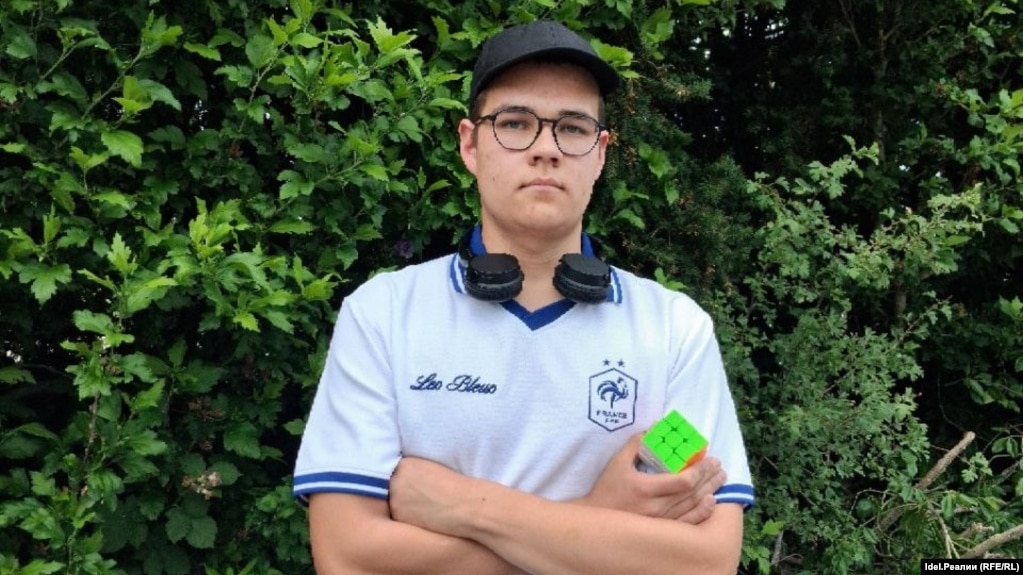
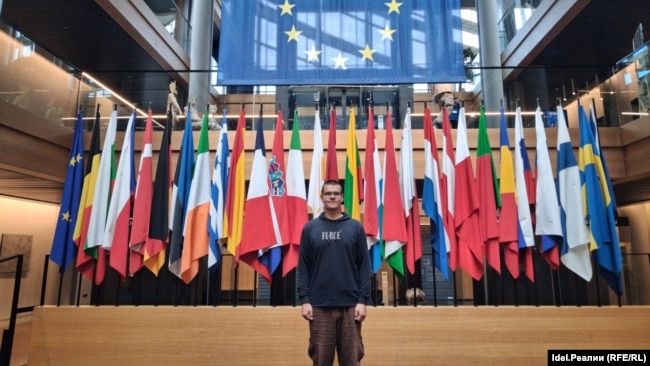
Even if such cases require additional verification and documentation, the general tendency towards the intensification of military propaganda among young people is becoming ever clearer. At the same time the leadership of the republic demonstrates consistent loyalty to federal policy.
Bashkortostan remains one of the leaders in the appointment of participants in the war to leading positions in bodies of power and state structures. According to publications of “Meduza”: “more than 1,300 participants in the war against Ukraine received positions in power. Military personnel are usually appointed to positions that are not connected ‘with serious budget flows and serious work.’ These are positions connected with youth and patriotic education”:
https://www.svoboda.org/a/meduza-bolee-1300-uchastnikov-voyny-protiv-ukrainy-poluchili-dolzhnosti-vo-vlasti/33791118.html
Another example from the city of Salavat. Information from the official page of the head of the Administration of the urban district of the city of Salavat:
https://vk.ru/wall1045550063_34693
The leadership of the Republic of Bashkortostan appointed by Moscow ignores questions of the safety of the population
The Republic of Bashkortostan is increasingly and more frequently subjected to UAV attacks on oil refineries. And this is entirely understandable — oil extraction and refining are actively conducted in the republic. At the same time the authorities abandoned the practice of public notification of the population about drone attacks, explaining this by concern for the psychological state of residents.
https://www.svoboda.org/a/ne-budorazhitj-narod-pochemu-v-bashkortostane-pri-vozdushnyh-atakah-ne-vklyuchayut-sireny-o-trevoge/33809734.html
Such a position raises questions about the balance between the safety of citizens and informational openness. And does the state need the peaceful residents of Bashkortostan? Or is this negligence of the local authorities or their desire to curry favour with the “elder” brother Moscow?
The question of preserving Bashkir national identity
The persecution of people who defend the right to study the native language in schools continues. Thus, on 3 July in Ufa a solitary picket was held in support of the Bashkir language in schools, as a result of which 67-year-old activist of the “Aktamyr” centre Irek Agishev was detained. He was assigned three days of arrest. Here is how the publication 7×7 reports this (Information from the Telegram channel):
“Five people took part in the action that took place on 3 July. They came out with placards ‘Minister of Education of the Republic of Bashkortostan Mavletberdin I.M. — resign!,’ ‘Restore national education in Bashkir schools of the Republic of Bashkortostan’ and ‘In a federal state education cannot be uniform!’
The security forces considered the picket an uncoordinated mass event and drew up a protocol against Agishev. The activist did not admit guilt. According to him, he was conducting a solitary picket. Probably the activist was released in the courtroom, since the court counted the term of arrest from the moment of detention.
https://semnasem.org/news/2026/07/09/sud-v-bashkortostane-arestoval-na-troe-sutok-67-letnego-aktivista-posle-piketa-za-obuchenie-na-rodnom-yazyke
The ‘Aktamyr’ centre has been working since 1994 and advocates the opening of national kindergartens and schools, and also for the compulsory study of the Bashkir language.”
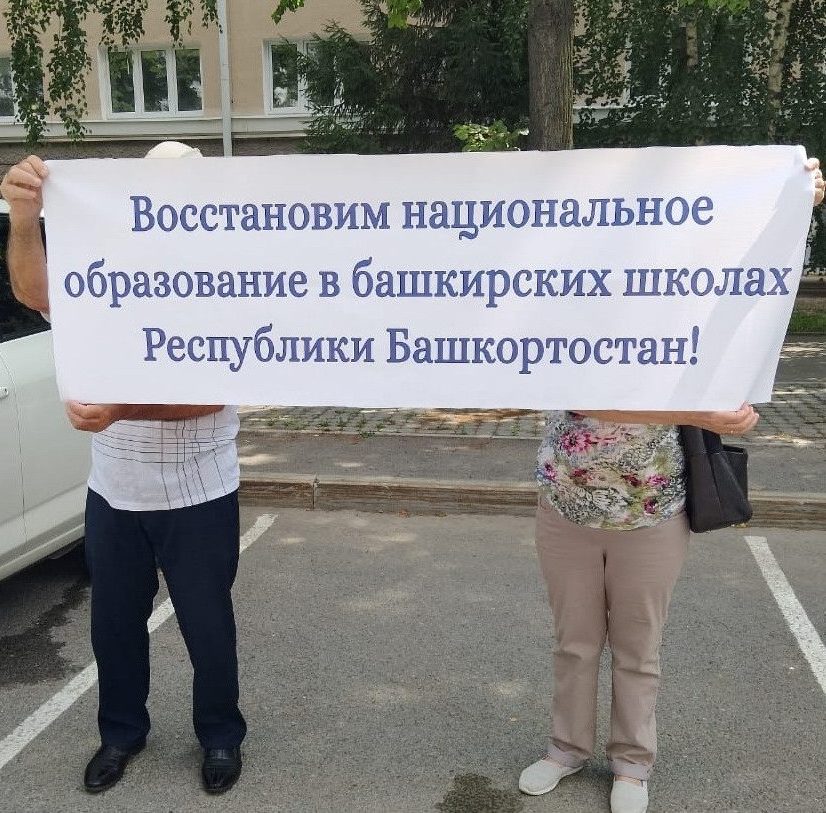
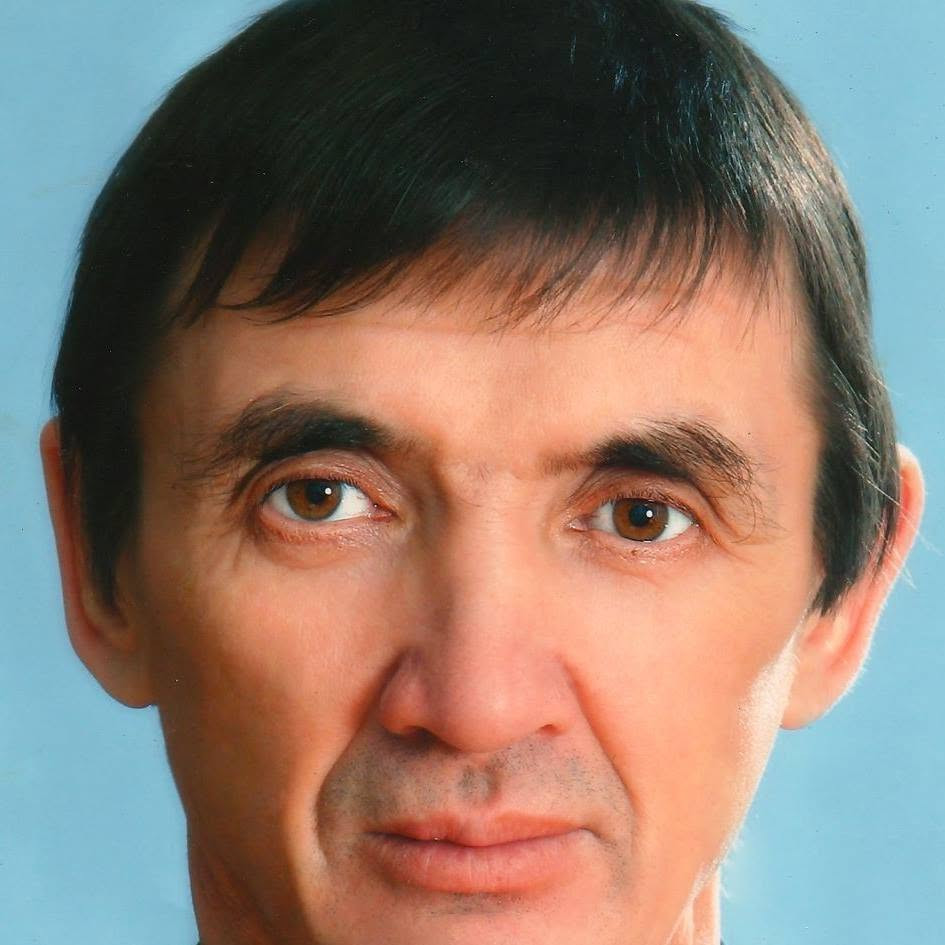
The Kirovsky District Court of Ufa also brought to administrative responsibility a local resident Faima Gazizova for participation in this same picket. On 15 July she was charged with violation of the rules for conducting a public event (Part 5 of Article 20.2 of the Code of Administrative Offences of the Russian Federation) and was fined 10 thousand roubles.
https://www.svoboda.org/a/v-bashkortostane-oshtrafovali-pensionerku-za-piket-v-zaschitu-bashkirskogo-yazyka/33806859.html
The discussion continues around the mysterious fate of the monument to Salavat Yulaev, which remains a symbol of the state’s attitude to national cultural heritage
For many residents of the republic these events go far beyond the cultural agenda and are perceived not only as part of a broader problem of preserving historical memory and distinctiveness. Salavat Yulaev is more than that — he is the image of the Bashkir national hero who fought against the Russian Empire hand in hand with other peoples, a symbol of Freedom and Independence for which Ukraine is now fighting. And this image is undesirable to Putin’s empire. It needs obedience and submission. The reconstruction of the monument is for the imperialists an ideal moment to get rid of the image of Salavat Yulaev. Moreover, the authorities of Bashkortostan shamelessly distort this image and interpret it to suit their own power and the power of Putin. In Bashkortostan a battalion named after Salavat Yulaev was created and sent to the war, where its soldiers are dying and the sons of the Bashkir people are being destroyed.
Conclusion
Thus, the republic is becoming part of the infrastructure that ensures the functioning of the system of criminal prosecution in politically sensitive cases.
All these events in themselves might seem unconnected. However, considered together, they make it possible to see a common tendency. The intensification of political persecution, the growth of the military presence in public life, the involvement of young people in military structures, the reduction of space for the national agenda and the expansion of the region’s role in the penitentiary system — these are not separate episodes, but signs of a deep transformation of the public and political life of Bashkortostan.