
Report on Human Rights Violations in the Kabardino-Balkarian Republic
September 2026
Khava Beshtoeva
An analysis of open sources for September 2026, including data from human rights organisations, independent media and materials from court proceedings, reveals the permanence of the trend towards violations of human rights and freedoms by the authorities, security structures and judicial bodies of the Kabardino-Balkarian Republic. Documented incidents record a deep crisis of regional justice, expressed in the unfolding of intra-system purges of the loyalist wing with the application of methods of punitive psychiatry and long-term isolation of yesterday’s supporters of the regime. Particularly relevant are the facts of harsh administrative terror against believers through the application of the non-functional Federal List of Extremist Materials of the Ministry of Justice, as well as the escalation of the punitive conveyor of “terrorist cases” against minors, built on operational cyber-provocations and the stick system of the special services in conditions of total intimidation and an information vacuum. The coordinated actions of the security apparatus, the prosecutor’s office and military courts aimed at fabricating charges of assistance to terrorism for economic pressure on regional business in circumvention of international extradition guarantees, as well as the practice of handing down maximum prison sentences in absentia and the organisation of transnational persecution of leaders of the Circassian anti-war movement through Interpol channels, necessitate the urgent activation of human rights efforts in the republic.
The repressive conveyor has caught up with the pro-Kremlin blogger Ilya Remeslo
In the law-enforcement practice of contemporary Russia another symbolic threshold has been crossed: the repressive mechanisms created for the suppression of independent civil society have begun to absorb loyal propagandists and systemic guardians by the conveyor method. A vivid testimony to this destructive tendency has become the criminal prosecution of a native of Nalchik, the well-known lawyer and once leading pro-Putin blogger Ilya Remeslo.
The Primorsky District Court of St. Petersburg under the chairmanship of Judge Dmitry Khamadiev extended the term of Remeslo’s detention by a full six months — until 8 March 2027. The blogger, who for years helped the security forces fabricate cases against the opposition, himself ended up in a detention centre on charges of disseminating “fakes” about the Russian army (Part 2 of Article 207.3 of the Criminal Code of the Russian Federation). He faces from 5 to 10 years of imprisonment.
Remeslo’s problems began in March 2026 after he published a post with veiled criticism of the president. The publication provoked a sharp reaction from the head of the Chechen special forces “Akhmat,” Apti Alaudinov, who doubted the “voluntariness” of its writing. Immediately after this the blogger was forcibly placed in a St. Petersburg psychiatric hospital.
On 17 July 2026 Remeslo was officially detained and arrested by the Basmanny Court of Moscow. The basis for the case was his statements contradicting the official summaries of the General Staff of the Russian Federation, voiced in a video interview with journalist Ksenia Sobchak. It is noteworthy that the investigation charged the loyalist with committing the crime motivated by “political hatred.”
From the pre-trial detention centre the blogger was again transferred to a specialised clinic, where he was held for almost a month (from 28 July to 24 August), after which he was returned to the detention centre. Attempts by the defence to challenge the very fact of the arrest and to appeal to the freedom of speech guaranteed by the Constitution were completely ignored by the courts.
The court demonstratively rejects any arguments of the defence. During the court hearing in St. Petersburg, where Ilya Remeslo participated by video link from the Moscow detention centre, the prosecution tried to close the process from the press, but the court left the hearings open.
Lawyers Sergey Badamshin and Anri Tsiskarishvili insisted on mitigation of the measure of restraint, reminding the court that the investigation had already been completed and the defendant could not influence it. The defence pointed out that Remeslo has permanent registration in St. Petersburg, has minor children and a disabled father as dependants, and had never previously been convicted.
Nevertheless the court demonstrated absolute deafness to the arguments of the former ally of the system. Judge Khamadiev obediently satisfied the demand of the prosecutor, leaving Remeslo in prison conditions for another six months.
It is obvious that systemic dictatorship knows no exceptions. The case of Ilya Remeslo is important for understanding the nature of the modern Russian repressive machine. It clearly proves three legal postulates:
- Absence of “letters of protection”: Long-term public service to the regime, writing denunciations against independent journalists and demonstrative loyalty to the Kremlin no longer guarantee safety. The institutions of state security have transformed into an autonomous punitive conveyor requiring the constant identification of “enemies” for reporting, even if these enemies are generated from yesterday’s ultra-patriots.
- Total unanimity of thought: The legislation on “military censorship” (Article 207.3 of the Criminal Code of the Russian Federation) is constructed in such a way that any deviation from the official directive of the Ministry of Defence of the Russian Federation is treated as a state crime. Only one-hundred-percent duplication of propagandistic clichés is permitted — the slightest attempt by a loyal blogger to show subjectivity or express criticism leads to immediate isolation.
- Reactivation of punitive medicine: The use of psychiatric hospitals for the isolation of bloggers and political opponents in the North Caucasus and in the capital has finally returned to the practice of the special services as an extrajudicial method of psychological and legal breaking of the personality.
At the same time it is noteworthy that the system acts to the maximum.
The term of extension in this case can be called unprecedented: the court left the accused in custody for a full 6 months at once. The practice of such lengthy one-time extension of arrest at the stage of judicial investigation is applied by courts of general jurisdiction as an instrument of maximum psychological pressure on the defendant, actually depriving the defence of the opportunity regularly to file petitions for a change of the measure of restraint to a milder one in connection with a change of circumstances.
Leaving Remeslo in the detention centre until spring 2027, the court completely ignored the fact that the preliminary investigation in the case had been officially completed, all materials collected, and the indictment approved by the prosecutor’s office. In conditions where the defendant physically cannot influence the collection of evidence or destroy proof, his further detention in prison walls loses procedural meaning and turns into a form of pre-trial punishment.
The history of Ilya Remeslo is a classic illustration of the historical rule: a dictatorship, having destroyed external opponents, inevitably begins a purge of its own ranks. For the human rights community this case is proof that justice in the country has been finally destroyed, and legal arbitrariness has become a universal threat for any citizen of the Russian Federation, regardless of his political views.
https://www.kommersant.ru/doc/8908986
https://forpost-sz.ru/a/2026-09-17/sud-v-peterburge-reshil-ostavit-blogera-remeslo-v-sizo
It is important that the Remeslo case is only a link in the clean-up of the ultra-patriotic flank and repressions against pro-Kremlin bloggers and “military correspondents” in the Russian Federation.
If in the period 2022–2023 the Russian repressive machine was focused exclusively on the destruction of the liberal opposition and independent media, then by 2026 the vector of punitive policy had shifted inside the loyalist camp.
The federal centre and the special services (in particular, the Department of Military Counterintelligence of the FSB and the Main Directorate for Countering Extremism of the Ministry of Internal Affairs) began the systemic liquidation of any autonomous media activity on the right flank. The goal of this campaign is the establishment of total control of the Ministry of Defence of the Russian Federation over the military agenda and the eradication of the phenomenon of “uncontrolled patriotism.”
Human rights monitoring identifies three key waves and groups of repressed pro-Kremlin media figures:
- The rout of the radical wing of the “angry patriots.”
The first and harshest signal for the clean-up of the loyalist flank was the arrest of former FSB officer and leader of the “Club of Angry Patriots” movement Igor Strelkov (Girkin). Despite his ultra-nationalist position and personal participation in combat operations in Donbas in 2014, courts of general jurisdiction sentenced him to 4 years of imprisonment under the article on calls to extremism (Article 280 of the Criminal Code of the Russian Federation). The reason was publications in Telegram with criticism of the leadership of the Ministry of Defence and doubts about the effectiveness of the conduct of combat operations. This precedent proved that for the system personal merits in the promotion of the pro-Kremlin agenda are completely annulled if the speaker goes beyond the framework of official censorship.
- The conveyor of criminal cases against administrators of Z-channels and military correspondents.
Following the opinion leaders, technical executors and authors of popular ultra-patriotic resources came under attack:
• The case of the “Rybar” project and the network of channels of the Goodwin media holding: In relation to the authors of large military channels preventive measures were deployed — from FSB searches to forced inclusion in the registers of foreign agents and blocking of accounts for “unauthorised collection of funds for the army.”
• Arrests for “discrediting” and extortion: A whole series of administrators of patriotic publics (including projects of the “Kremlin Laundry” network, the channels “Nezygar,” “Brief” and structures connected with them) were sent to pre-trial detention centres. The security forces began massively to use the combination of articles on “military censorship” (Articles 207.3, 280.3 of the Criminal Code of the Russian Federation) and economic compositions (Article 163 of the Criminal Code of the Russian Federation — extortion) for the criminalisation of any unofficial information. If a blogger published information about losses, corruption in the supply of units or miscalculations of the command, he was arrested either on charges of lying or within the framework of cases of blackmail of large state officials (“blocks in Telegram”).
- Criminalisation of “subjective loyalty.”
The peculiarity of the persecution of Ilya Remeslo lies in the fact that he did not belong to the radical military opposition. His criminal case demonstrates the stage of absolute monopolisation of the information space. For sending to a pre-trial detention centre for six months (until March 2027) an open revolt against the authorities is no longer required — it is sufficient to express a subjective opinion that slightly deviates from the daily briefings of the General Staff of the Russian Federation.
The integration of regional security barons, such as Apti Alaudinov, into the federal punitive agenda makes it possible to initiate criminal cases and apply instruments of punitive psychiatry against bloggers on the basis of their personal conflicts with Chechen units or criticism of the leadership of the Ministry of Defence in interviews with major media (the interview with Ksenia Sobchak).
Thus, the clean-up of the loyalist information field has led to the fact that in the Russian Federation the institution of “sanctioned criticism” has been finally destroyed. The state system has gone over to a regime of totalitarian censorship, where the right to broadcast is held exclusively by official speakers of the military department. The fate of yesterday’s pro-Kremlin bloggers and “military correspondents” proves: in contemporary Russia loyalty has ceased to be a guarantee of safety, and the repressive machine works autonomously, processing its own cadres for the sake of demonstrating one-hundred-percent effectiveness and creating the illusion of absolute unanimity of thought.
Diana Zhaboeva as a Victim of Consistent Persecution for Online Statements
Law-enforcement agencies and the judicial system of the Kabardino-Balkarian Republic demonstrate methodical and purposeful destruction of the remnants of freedom of speech in the digital space. A vivid example of this repressive practice has become the criminal conviction of Nalchik resident Diana Zhaboeva, who was subjected to consistent administrative and criminal prosecution by the regional apparatus of the FSB and the Ministry of Internal Affairs.
The Southern District Military Court in Rostov-on-Don found the Nalchik resident guilty of committing a crime provided for by Part 2 of Article 205.2 of the Criminal Code of the Russian Federation (Public justification of terrorism or propaganda of terrorism on the Internet). The court sentenced Zhaboeva to a monetary fine and also imposed a harsh deprivation of civil rights — a ban for two years on engaging in activity connected with the administration of websites and channels on the global network.
The case of Diana Zhaboeva reflects the standard algorithm for the republics of the North Caucasus of “tightening the screws” of accusations against citizens who have an independent or critical position:
Initially Zhaboeva came into the field of vision of the Centre for Countering Extremism (CCE) for her statements regarding the actions of the Russian armed forces. At the end of July the Nalchik City Court found her guilty under the administrative article on “discrediting” the army of the Russian Federation (Article 20.3.3 of the Code of Administrative Offences of the Russian Federation) and subjected her to a fine. At this stage the security forces recorded the “unreliability” of the resident of Kabardino-Balkaria as an object for further development.
A local administrative punishment seemed insufficient to the special services. The FSB Directorate for Kabardino-Balkaria together with the republican Ministry of Internal Affairs initiated a deeper audit of the Nalchik resident’s publications. As a result an Internet comment or repost was found which the experts of the security agencies interpreted without alternative as “justification of terrorism.” This made it possible to reclassify the woman’s actions into the category of grave crimes.
Analysing the conveyor practice of the consideration of cases under Article 205.2 of the Criminal Code of the Russian Federation in the South of Russia, it is necessary to highlight in the Zhaboeva case the key systemic anomalies of justice:
• Closedness and non-transparency of the accusation: Neither the FSB Directorate for Kabardino-Balkaria nor the official judicial bodies disclosed to the public for which concrete text, phrase or image Zhaboeva received the brand of “justifier of terrorism.” The complete classification of the plot of the case is a deliberate tactic of the security forces in the Caucasus. It makes it possible to mask ordinary pacifist, anti-war rhetoric or everyday comments under a “terrorist threat,” depriving society of the opportunity to assess the absurdity of the accusation.
• The instrument of “linguistic expert examinations”: Accusations under Article 205.2 of the Criminal Code of the Russian Federation are based entirely on the conclusions of departmental linguistic experts who are on state support at the Ministry of Internal Affairs or the FSB. In conditions of the absence of independent adversarial nature of the parties in the North Caucasus, the courts accept these “expert examinations” as irrefutable evidence, ignoring the context and the genuine intent of the author of the publication.
• Deprivation of rights as an element of censorship: The two-year ban on the administration of Internet resources is a form of forced exclusion of a civil activist from the information field. The state does not simply fine a person; it deprives him of the technical instruments for the transmission of an alternative opinion, building a sterile digital environment.
The case of Diana Zhaboeva demonstrates that in Kabardino-Balkaria a system of double persecution for one and the same online behaviour has been created (first through the Code of Administrative Offences, then through the Criminal Code of the Russian Federation). Peaceful citizens who express disagreement on the Internet are equated by the special services with “terrorists,” participants in a radical armed underground, which allows the FSB artificially to inflate the statistical indicators of the detection of terrorist crimes in the North Caucasian Federal District.
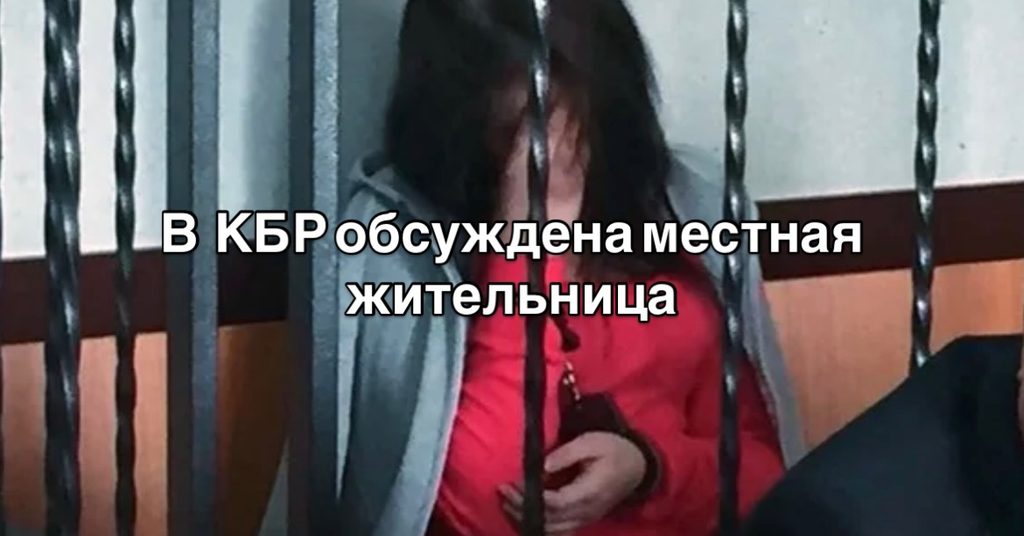
https://kbrria.ru/proisshestviya/VKabardinoBalka155riiosuzhdenamestnayazhitelnitsaprichastnayakopravdaniyuterrorizma
A Sentence Handed Down in Nalchik for a Five-Year-Old Transfer
Law-enforcement agencies and courts of the Kabardino-Balkarian Republic continue the practice of retrospective persecution of citizens for their past legal activity. A vivid testimony to this trend has become the handing down by the Nalchik City Court of a convicting judgment in respect of a 51-year-old local resident in a case of financing extremism.
The man was found guilty under Part 1 of Article 282.3 of the Criminal Code of the Russian Federation (Financing of extremist activity). The court sentenced him to 3 years of imprisonment suspended with a probationary period of 1 year. And although the verdict handed down turned out to be milder than the maximum provided sanction of the article (from 3 to 8 years of real imprisonment), the precedent itself records dangerous mechanisms of total financial control.
The basis for the initiation of the criminal case was an ordinary monetary transfer made by the Nalchik resident in August 2021 to a certain non-profit organisation.
According to the version of the investigation of the FSB and the Centre for Countering Extremism (CCE) of the Ministry of Internal Affairs, the defendant “knowingly knew” that the activity of this structure on the territory of the Russian Federation was banned and recognised as extremist. The operational development and suppression of his activity were carried out by the security forces by the forces of a joint regional group.
A human rights audit of the case reveals systemic markers of the fabrication of such processes:
• Retrospective character of the persecution: The security forces deliberately raise archives of bank transfers five years old. A citizen who made a one-time donation or transfer in years when the organisation could possess a legal status (or be in the process of the imposition of a ban) is automatically criminalised in 2026.
• Specificity of suspended conviction as an instrument of control: The imposition of a suspended sentence in the Caucasus is often used by courts to create the illusion of “soft justice.” However, in reality a suspended sentence under an extremist article entails the immediate inclusion of the citizen in the black list of Rosfinmonitoring (the List of terrorists and extremists). All personal bank cards of the person are blocked, monthly expenses are limited to the subsistence minimum, and the opportunity to conduct labour or economic activity legally is taken away.
• Conveyor character of “financial” cases: This case in Nalchik is not unique. The Prosecutor’s Office of Kabardino-Balkaria previously reported on the detention under an analogous scheme of a 31-year-old local resident who was also charged with transfers to extremist structures.
The most important anomaly of the penitentiary and law-enforcement practice in Kabardino-Balkaria remains the information vacuum around political processes. The Human Rights Centre of Kabardino-Balkaria officially declares a critical deficit of detailed information about fabricated “terrorist” and “extremist” cases in the republic.
The main reason for this is direct blackmail and intimidation of the accused by the security forces. Upon detention the operatives of the CCE and the FSB “recommend” to relatives and the accused themselves not to complain anywhere and not to turn to independent human rights defenders, threatening otherwise to replace suspended sentences or mild measures of restraint with real prison terms in strict-regime colonies. Frightened people agree to a special procedure of judicial proceedings and admission of guilt, which allows the special services of Kabardino-Balkaria unhinderedly to stamp indicators of detection, concealing the absence of real terrorist intent among the defendants.
https://www.kavkaz-uzel.eu/articles/426510
A Sentence Handed Down to Irina Pokhorenko in a Case of Financing “Extremist Activity”
The Prokhladnensky District Court of Kabardino-Balkaria handed down a convicting judgment to local resident Irina Pokhorenko, finding her guilty of financing extremist activity under Part 1 of Article 282.3 of the Criminal Code of the Russian Federation. The court sentenced her to 3 years of imprisonment suspended.
In the official releases of the agencies the exact sum of the transfer and the name of the extremist structure were not disclosed. The identity of the convict was established thanks to an analysis of the court card index: the criminal case arrived at the court on 2 June, and the sentence took place on 20 July.
In the situation of Pokhorenko there are markers of closedness on the part of the security structures characteristic of such cases:
• Diffuseness of the accusation: According to the version of the investigation, in August 2021 Pokhorenko transferred money to a certain organisation, “knowingly knowing” that its activity was banned on the territory of the Russian Federation. At the same time neither the Ministry of Internal Affairs nor the FSB traditionally disclose either the exact sum of the transfer or the name of the organisation itself. As we understand from the latest known cases, this could have been both the Anti-Corruption Foundation and the Church of Adventists or Jehovah’s Witnesses, or, for example, the Circassian Culture Foundation. If they do not disclose it, then what is happening most probably contradicts international law.
• Participation of the special services: In the persecution of the woman a powerful security resource was involved — operational support was carried out by officers of Centre “E” of the regional Ministry of Internal Affairs together with operatives of the republican FSB Directorate.
• Non-public nature of the process: The agencies preferred completely to conceal the name of the convict in their press releases. Her identity was verified only by independent journalists through monitoring of the court card index of the Prokhladnensky District Court. The process took place in compressed timeframes: the case arrived at the court on 2 June, and the convicting verdict was announced already on 20 July.
Human rights monitoring groups record that the application of Article 282.3 of the Criminal Code of the Russian Federation in the North Caucasian Federal District often has a non-public character, because of which independent lawyers and human rights defenders encounter a serious deficit of data on cases of extremist and terrorist orientation in the region.
https://www.instagram.com/p/Dc9Rxoggzi5/
The Case of Diana Indreeva and the Systemic Absurdity of Persecution for the Sale of Religious Books
The Nalchik City Court of the Kabardino-Balkarian Republic brought to administrative responsibility 40-year-old local resident Diana Indreeva. She was found guilty under Article 20.29 of the Code of Administrative Offences of the Russian Federation (Production and dissemination of extremist materials) for an ordinary attempt to sell an old printed book on one of the popular Internet classifieds platforms.
The investigative bodies of the Centre for Countering Extremism (CCE) of the Ministry of Internal Affairs considered the commercial advertisement an act of “dissemination of extremism” on the grounds that this specific religious publication had been included in the Federal List of Extremist Materials (FLEM) back in 2015. The court imposed a monetary fine on the woman. This incident not only supplemented the repressive statistics of the regional Ministry of Internal Affairs, but once again exposed the deep systemic vices and technical absurdity of the practice of banning literature existing in the Russian Federation.
The plot of the Indreeva case strikes by its everyday triviality and the disproportionality of the security apparatus engaged by the state. In the course of targeted operational-search measures officers of the CCE discovered an advertisement on the network for the sale of an old printed book. An ordinary attempt to get rid of unnecessary home literature or to earn a small amount of money was qualified as an offence against state security. At the same time neither the police nor the court traditionally disclosed which exact religious publication the Nalchik resident was trying to sell.
The special services deliberately conceal the titles of books in order to mask the absurdity of the accusations from public control. Confiscation and a fine were imposed without conducting any new substantive analysis of the text — it was sufficient for the court to have a formal coincidence of the title of the book with a registry line 11 years old.
https://kbrria.ru/proisshestviya/VKabardinoBalkariipreseklipopytkuprodazhiekstremistskoyliteratury14
A human rights analysis of the case of Diana Indreeva reveals a fundamental problem: an ordinary citizen is physically incapable of protecting himself from persecution under Article 20.29 of the Code of Administrative Offences of the Russian Federation because of the structural collapse of the Federal List of Extremist Materials itself.
Experts of the human rights sector and researchers identify several factors that turn the Federal List of Extremist Materials into a blind trap for the population:
• Catastrophic volume of the register: To date the list of the Ministry of Justice of the Russian Federation has grown to several thousand positions. It represents an enormous, chaotic array of textual data containing the titles of books, brochures, leaflets, songs and video clips banned by hundreds of different district courts across the country. Checking this list before selling an old item on services such as Avito is practically impossible for an ordinary person.
• Absence of adequate identification features: Court decisions on the ban of literature are entered into the Ministry of Justice list in strict accordance with the operative parts of judicial decisions. Often only a fragmentary title is entered into the Federal List of Extremist Materials (for example, “Religious book,” “Book in a green cover”) without indication of the author, year of publication, publisher, print run and International Standard Book Number (ISBN). Peaceful citizens may possess and try to sell a perfectly legal academic or classical edition, not suspecting that a specific translation or print run was banned by some regional court.
• Absence of search optimisation and a sensible interface: The official website of the Ministry of Justice with the register of banned materials works unstably, does not possess flexible filters and mechanisms of precise search. An attempt to type the title of a book into it often yields no results because of orthographic errors or the specificity of the formulations allowed by the judicial secretaries themselves when entering the data. A citizen honestly tries to check the book, does not find it in the database, publishes an advertisement and immediately falls under the operational development of the CCE.
Human rights defenders (including independent experts on freedom of conscience) note a pronounced confessional imbalance in the application of Article 20.29 of the Code of Administrative Offences of the Russian Federation. Among those who are fined or arrested for the storage and sale of books, Muslims are disproportionately numerous.
This is connected with the fact that in the mid-2010s regional courts in the South of Russia and in the Volga region conducted mass, in fact uncontrolled bans of classical and fundamental Islamic literature. Authoritative collections of hadiths, translations of the Quran, works of classical theologians and popular books on Islamic ethics fell under the ban. As a result millions of Russian Muslims in one day turned into involuntary keepers of “extremist materials.” Today the FSB and the CCE use this gigantic array of banned Islamic literature as a convenient testing ground for the artificial inflation of detection indicators, issuing fines to housewives and ordinary believers.
https://www.kavkaz-uzel.eu/articles/426023
The case of Diana Indreeva in Nalchik clearly demonstrates that Article 20.29 of the Code of Administrative Offences of the Russian Federation has finally lost its original meaning — the prevention of the dissemination of dangerous radical materials. Instead it has transformed into an instrument of administrative terror against ordinary citizens. A person is brought to responsibility not for the intent to incite hatred, but for the technical impossibility of orienting oneself in the chaotic, non-transparent and crooked lists of the Ministry of Justice of the Russian Federation.
Human rights organisations insist on a radical reform of the Federal List of Extremist Materials: the introduction of a moratorium on persecution for printed books published before their inclusion in the registers, the complete cleansing of the list of classical religious literature and the introduction of strict requirements for the international identification (ISBN) of every object being banned. Until these measures are adopted, any attempt to sell an old family library in Kabardino-Balkaria remains a zone of elevated legal risk.
Fabrication of Sabotage or a Real Threat? Analysis of the Detention of a Native of Ukraine in Kabardino-Balkaria in a Case of Preparation of the Blowing Up of a Gas Pipeline
The FSB Directorate of Russia for the Kabardino-Balkarian Republic reported on the detention in Maysky District of Kabardino-Balkaria of a 40-year-old citizen of the Russian Federation, a native of Ukraine. He is charged with preparation for the commission of sabotage on an object of critical infrastructure. The security forces assert that the detainee acted on the assignment of the Ukrainian special services and planned to carry out the blowing up of the gas distribution system of the region.
A criminal case has been initiated against the man under Part 1 of Article 30 and Part 1 of Article 281 of the Criminal Code of the Russian Federation (Preparation for sabotage). The sanction of this article provides for a punishment in the form of imprisonment for a term of from 10 to 20 years. The court promptly sanctioned a measure of restraint in the form of detention.
This case has supplemented a series of analogous processes under articles on “sabotage” and “high treason” that have swept the regions of the North Caucasus, and has actualised systemic human rights risks connected with the closedness of the penitentiary system and the methods of conducting investigation by the bodies of state security.
According to the official press release of the agency, the suspect allegedly initiatively established contact with curators from the Security Service of Ukraine (SBU) and “on their assignment acquired components for the manufacture of an improvised explosive device.” The target of the presumed attack was named as a gas pipeline in Maysky District of Kabardino-Balkaria that supplies fuel to residential and industrial objects.
The investigation states that in the course of a search at the place of residence of the detainee “ready elements of an IED, correspondence in messengers with instructions for assembly and topographic maps of the locality” were discovered and seized. On the basis of these materials, as well as the operational filming of the detention which was immediately replicated by state media, the court adopted a decision on the isolation of the defendant in a pre-trial detention centre.
Lawyers of human rights organisations and experts on cases of state security who analyse the dynamics of such processes in the North Caucasus call for an extremely cautious attitude towards the official reports of the FSB. In cases of this category cross-cutting patterns of human rights violations are regularly recorded:
• Complete informational isolation and “secret” lawyers: From the first minutes of detention suspects under articles on sabotage and high treason find themselves cut off from the outside world. Independent lawyers hired by relatives or human rights defenders are not admitted to them. The investigation forcibly imposes appointed defence counsel (so-called “pocket” lawyers) whose role is reduced to the technical signing of interrogation protocols and persuading the client to agree to an admission of guilt.
• The practice of the application of impermissible methods of influence (torture): In the North Caucasus detainees in cases supervised by the FSB are subjected to the harshest physical and psychological pressure. In conditions of the absence of publicity, confessions on camera (which the special services present as the main piece of evidence) are often extracted under torture by electric current, beatings or threats against family members. Recording traces of violence at an early stage is impossible because of the non-admission of independent doctors and lawyers to the pre-trial detention centre.
• Diffuseness of concepts and provocation as a method: Article 281 of the Criminal Code of the Russian Federation in its current edition makes it possible to treat as “preparation for sabotage” even the discussion of the theoretical possibility of protest on the Internet or the purchase of household items (for example, saltpetre, acetone or laser pointers). Human rights defenders do not exclude that in a number of cases citizens become objects of operational provocations when officers of the special services in closed chats conduct correspondence on behalf of “Ukrainian curators,” pushing emotionally unstable people to the commission of ill-considered steps for the sake of obtaining regular departmental awards and ranks for the “prevention of a terrorist act.”
https://www.interfax.ru/russia/1116804
https://expert.ru/news/fsb-presekla-diversiyu-na-gazoprovode-v-kabardino-balkarii
Maysky District of Kabardino-Balkaria is a specific territory where migration flows intersect and a significant number of natives of Ukraine reside who arrived in the region in different periods (including refugees from zones of combat operations).
In conditions of a permanent anti-Ukrainian campaign in state media, persons with Ukrainian roots, connections or citizenship are in a zone of elevated risk. Any of their contacts with relatives outside the Russian Federation or transfers of monetary funds to close ones are automatically verified by the CCE of the Ministry of Internal Affairs and the FSB as “suspicious activity,” which simplifies the fabrication of criminal cases.
The case of the unsuccessful blowing up of the gas distribution system in Kabardino-Balkaria reflects the general tendency of the militarisation of law-enforcement practice in Russia. The imposition of a pre-trial detention centre on a person on the basis of operational materials that cannot be subjected to independent verification demonstrates the actual liquidation of the principle of the presumption of innocence under state articles and of fair justice as a whole.
The human rights community insists on the necessity of ensuring maximum transparency of the process: the immediate admission to the detainee of independent lawyers, the conduct of a medical examination by civilian doctors and an open judicial examination. Without these basic guarantees of justice the case of the native of Ukraine in Nalchik will remain another episode of closed extrajudicial persecution.
The Southern District Military Court Sentenced a Minor from Kabardino-Balkaria to 7 Years in a Colony in a Case of ISIS and an Attack on the Traffic Police
The Southern District Military Court in Rostov-on-Don handed down a harsh convicting judgment in respect of a minor resident of the Kabardino-Balkarian Republic. The adolescent was found guilty of preparation of a terrorist act and an attack on officers of law-enforcement agencies. The judicial panel sentenced the minor to 7 years of imprisonment.
This judicial verdict reflects the general repressive tendency that has unfolded in the North Caucasian Federal District (NCFD), where the punitive system massively sends adolescents to court under especially grave “terrorist” articles. At the same time investigative and judicial bodies completely refuse to assess the depth of the involvement of children in radical structures, ignore the factors of psychological manipulations on the part of adult recruiters and use formal legal mechanisms to obtain maximum terms of imprisonment.
According to the version of the investigation, in 2024 on the territory of Kabardino-Balkaria an underground subdivision of the international terrorist organisation “Islamic State” (ISIS) was created, into which the minor defendant was involved. In this case, of course, the name of the organisation has been boldly disclosed.
On 3 July 2024 the participants of the group allegedly adopted a decision to commit an attack on officers of the Ministry of Internal Affairs in Nalchik with the aim of seizing their service weapons. The press service of the court stated that initially they planned to attack one of the objects, but the door to the building turned out to be locked. The next day, 4 July 2024, at the corner of Nogmov Street and Lenin Prospect in Nalchik a traffic police detail stopped a taxi that had driven through a prohibitory traffic light signal. A young man with a knife jumped out of the automobile and committed an attack on the policemen. In the course of the ensuing shoot-out one of the attackers was liquidated by return fire, and the second managed to escape.
In September the security forces detained an adolescent whom the investigation declared to be that very second participant in the attack on the traffic police detail who had escaped. The case was forcibly transferred to the court, which qualified the actions of the child as complicity in a terrorist community and an attempt on the life of security officers. The adolescent himself asserts that what happened was a complete surprise for him and that he ran away because he was confused and frightened.
Within the framework of this same plot in November 2025 a charge of “failure to report” (Article 205.6 of the Criminal Code of the Russian Federation) was brought against a young resident of Urvan District of Kabardino-Balkaria who, according to the version of the FSB, knew about the plans of the attackers but did not report to the authorities.
https://m.kavkaz-uzel.eu/articles/426737
https://tlmtr.io/en/channels/1113237779-cknot/posts?cursor=IDw=
https://www.eng.kavkaz-uzel.eu/articles/78674
The human rights sector categorically disagrees with the fact that instead of rehabilitation and deradicalisation of children the law-enforcement system uses exclusively punitive measures.
Adolescents by virtue of age and psychological immaturity easily become victims of manipulations in closed Telegram chats. Professional recruiters (or operational officers under cover) use psychological pressure, promise a “heroic status” or financial reward, turning children into blind instruments of crimes.
The bodies of state security demonstrate absolute deafness to the motives of minors. Instead of unravelling chains and searching for real organisers, it is more advantageous for the security forces to isolate the adolescent himself in a pre-trial detention centre. The conveyor stamping of accusations under especially grave articles allows the FSB of Kabardino-Balkaria to close departmental plans for the “exposure of terrorist cells” and to confirm its value before Moscow.
The harsh sentence of the Southern District Military Court has been handed down against the background of a dangerous public discussion: the head of the Investigative Committee of the Russian Federation Alexander Bastrykin officially demanded that the age of criminal responsibility for especially grave crimes be lowered by law from 14 to 12 years. This testifies to the fact that the state plans to continue increasing the scales of imprisonment in respect of children.
The situation is aggravated by the fact that relatives of those accused in “terrorist” cases in Kabardino-Balkaria are panically afraid to turn to human rights defenders. Representatives of the regional Human Rights Centre declare a harsh deficit of data: upon detention officers of the FSB present families with an ultimatum — at any attempt to make the case public or to hire an independent lawyer the conditions of detention of the accused will be maximally worsened. Frightened people agree to closed processes and “pocket” defence counsel by appointment, which allows the security forces unhinderedly to stamp sentences (as in the case of 18-year-old Alikhan Shaoev from Nizhny Kurkuzhin, who received 10 years in a colony under an analogous scheme).
https://www.eng.kavkaz-uzel.eu/articles/79232
https://www.eng.kavkaz-uzel.eu/articles/79254
The human rights community insists: the handing down of a 7-year term to a minor Nalchik resident in a closed military court is an obvious marker of the crisis of juvenile justice. Children in the North Caucasus have found themselves defenceless before the cynical manipulations of recruiters on the Internet on the one hand, and the harsh punitive conveyor of the special services on the other.
https://www.eng.kavkaz-uzel.eu/articles/78674
https://oc-media.org/juvenile-crime-on-the-rise-in-three-north-caucasus-republics/
Statistics of sentences and arrests recorded by human rights defenders in the South of Russia indicate catastrophic scales of the involvement of children in harsh judicial processes:
• The Astrakhan Regional Court sentenced a schoolboy and a first-year student born in 2008 to 9.5 and 6.5 years of imprisonment respectively. The adolescents were accused of high treason and sabotage after an anonymous person in a messenger offered them a small monetary reward for the arson of a communications object.
• In Stavropol Territory the court sent 15-year-old and 17-year-old adolescents into custody in a case of an attempt at a terrorist act. The scenario turned out to be identical — an offer of easy earnings for the arson of a cellular base station arrived through Telegram.
• In Volgograd Region a criminal case has been transferred to court against a 17-year-old girl who is charged with two episodes of sabotage activity at once for analogous arsons of base stations at the direction of network curators.
• In Rostov-on-Don a 15-year-old adolescent with a confirmed mental illness is being held in a pre-trial detention centre. According to data of lawyer Kaloy Akhilgov, the child threw a burning rag in the direction of a relay station. The rag immediately went out without causing damage, yet the FSB charged the legally incapable adolescent with sabotage and high treason. At the same time in the course of manipulations in the chat the recruiters instilled in the child that he was acting in the interests of the Russian special services.
https://www.kavkaz-uzel.eu/articles/426958
Anzor Apazhikhov and Albert Tabukhov Sentenced to 20 Years in a Case Thirteen Years Old
The Southern District Military Court in Rostov-on-Don handed down a severe convicting judgment in respect of two natives of Kabardino-Balkaria — Anzor Apazhikhov and Albert Tabukhov. The judicial panel found them guilty of the organisation of and assistance to the activity of an illegal armed formation, as well as of participation in the terrorist organisations “Imarat Kavkaz” and ISIS banned in the Russian Federation.
Each of the defendants was sentenced to 20 years of imprisonment in a strict-regime correctional colony. However, the main procedural aspect of this case is that the sentence was handed down in absentia, since the defendants have already for many years been outside the Russian Federation.
This judicial act exposes a systemic law-enforcement pattern in the North Caucasus: the use of the institution of justice in absentia for the handing down of maximum prison terms for events more than a decade old, which deprives the accused of the basic right to defence and the adversarial nature of the parties.
The plot of the criminal case returns law-enforcement practice to the period of active armed confrontation in Kabardino-Balkaria in the first half of the 2010s.
In September 2013 a counter-terrorist operation (CTO) regime was introduced in Urvan District of Kabardino-Balkaria. In the course of a combat clash of FSB special forces between the settlements of Kakhum and Nizhny Cherek a local armed group was blocked and liquidated. Among those killed was the leader of the “Urvan jamaat” Ruslan Makoyev, to whom the security forces charged a series of high-profile attacks, including the murder of the rector of the Kabardino-Balkarian Agrarian University Boris Zherukov.
According to the version of the court Apazhikhov and Tabukhov as early as 2013 voluntarily agreed to render assistance to the participants of this group which formed part of the structure of “Imarat Kavkaz.” According to the materials of the case, they transferred money to the militants, secretly transported them by motor transport, purchased food products and sought out safe houses.
According to data of the FSB, in 2015 Apazhikhov and Tabukhov left the territory of Russia, travelled to the Syrian Arab Republic, where they joined the ranks of the banned ISIS as militants. From that moment contact with them was finally lost.
https://www.kommersant.ru/doc/8973486
https://epp.genproc.gov.ru/ru/proc_glskfoyufo/mass-media/news/main/e8661106/
It is necessary to focus attention on the serious systemic vices and risks for human rights that this sentence accumulates in itself:
- Actual liquidation of the right to defence and the adversarial nature of the parties: A process in absentia means that the defendants are physically not present in the courtroom, cannot give personal testimony, claim an alibi or point to the falsification of evidence. In such processes appointed lawyers perform a purely decorative role, agreeing with all the arguments of the prosecution, which turns the court into a sterile procedure for the legitimation of FSB materials.
- Circumvention of statutes of limitations through the “conservation” of the search: As in related cases of the macro-region the investigative bodies use the unlimited character of terrorist articles for the resuscitation of cases thirteen years old. Declaring persons wanted allows the suspension of the standard running of statutes of limitations, conserving accusations for decades.
- Formation of a “base” for transnational persecution: The main goal of the handing down of a 20-year sentence in absentia is the immediate updating of data in Interpol databases by means of the dispatch of “red notices” (Red Notices). As human rights centres SafeGuard Defenders and Red Notice Monitor declare, the Russian Federation systematically uses international police channels for the persecution of Caucasian refugees in third countries (Turkey, EU countries, the Middle East). The presence of a sentence of a military court that has entered into force substantially simplifies for Moscow the launching of mechanisms of administrative expulsion and extradition of refugees from temporary holding camps abroad.
The sentence in absentia of Anzor Apazhikhov and Albert Tabukhov is another example of the mobilisational work of the repressive machine which continues to process the archives of the beginning of the 2010s for the demonstration of one-hundred-percent detection. The handing down of such severe terms in conditions of the complete absence of the defendants and independent control violates international standards of a fair trial.
The Supreme Court of the Republic Recognised as Illegal the Arrest of Developer Andzor Khalilov, Exposing the Procedural Absurdity of Accusations of “Terrorism”
The Supreme Court of the Kabardino-Balkarian Republic satisfied the appeal of the defence and cancelled the decision on the selection of a measure of restraint in the form of detention in respect of the well-known Nalchik developer Andzor Khalilov in a case of violations in the attraction of funds of equity holders. This judicial act has key significance for human rights monitoring: the highest judicial instance of the region de facto recognised a gross violation of international obligations on the part of the bodies of the prosecutor’s office and the investigation.
Andzor Khalilov headed a construction firm in Nalchik. In connection with the economic crisis and claims on the part of supervisory bodies, in 2024 he left the limits of the Russian Federation. In January 2025 the Ministry of Internal Affairs declared him wanted internationally, and in March he was detained on the territory of the United Arab Emirates (UAE). At the end of December 2025 the official deportation and extradition of the entrepreneur to Russia took place.
The Russian security forces charged the developer with two compositions: a purely economic one — the illegal attraction of monetary funds of citizens (Part 2 of Article 200.3 of the Criminal Code of the Russian Federation), and an especially grave state one — assistance to terrorist activity (financing of terrorism). In May the criminal case under the “construction” article was deliberately separated by the investigators into a separate proceeding.
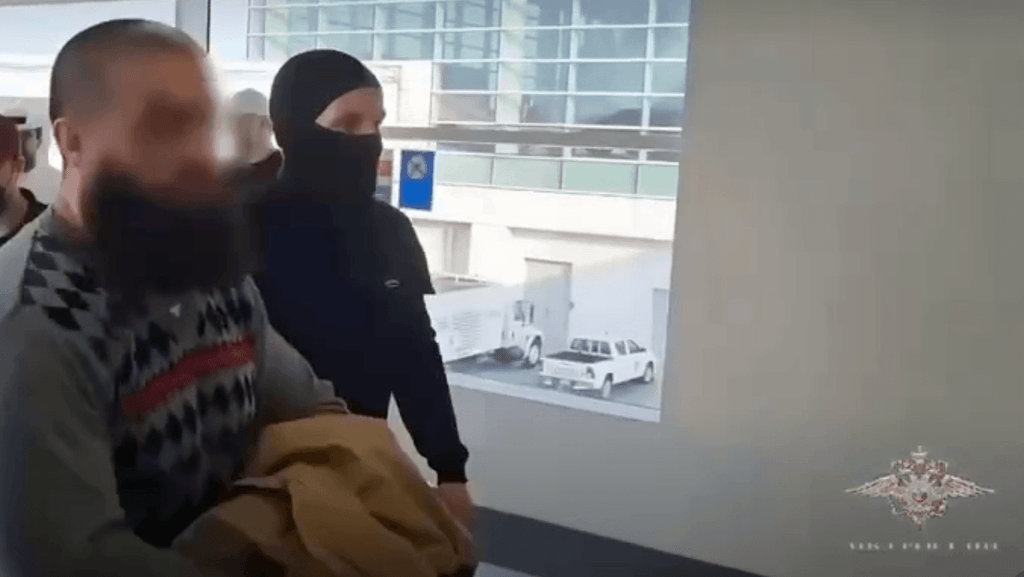
The essence of the procedural arbitrariness that was challenged by lawyer Vyacheslav Blazhko in the Supreme Court of Kabardino-Balkaria consisted in the attempts of the state prosecution artificially to prolong the detention of Khalilov in custody contrary to the direct norms of the Code of Criminal Procedure of the Russian Federation:
- Under Article 200.3 of the Criminal Code of the Russian Federation Khalilov was assigned arrest for a term of 3 months (until 3 August). Upon the expiry of this time the prosecutor did not file petitions for prolongation. Ten days later the prosecution suddenly demanded that arrest be selected anew. The lawyer pointed to the absurdity of this step: “Khalilov is already in a pre-trial detention centre (under the second case), he physically cannot destroy evidence or exert pressure on witnesses.” In addition, the defence proved that the cumulative term of detention under this article cannot exceed 6 months. Khalilov had already served 3 months under arrest in a deportation prison of the UAE and another 3 months in the Nalchik pre-trial detention centre after the case arrived at the court. The court of first instance did not have the right to hand down a decision on repeated arrest. The Supreme Court of Kabardino-Balkaria agreed with the arguments of the lawyer and cancelled the illegal arrest.
The main human rights significance of the verdict of the Supreme Court of Kabardino-Balkaria lies in the fact that it juridically recorded the fact of the official extradition of Khalilov from the UAE. This opens for the defence a direct legal opportunity to achieve the complete termination of criminal prosecution under the article on the “financing of terrorism.”
According to international law and the official written guarantee issued by the General Prosecutor’s Office of the Russian Federation to the authorities of the UAE on 23 April 2025 upon the request for extradition, the Russian Federation undertook to bring Khalilov to responsibility EXCLUSIVELY for that crime for which extradition was requested — that is, under Article 200.3 of the Criminal Code of the Russian Federation. In accordance with the international principle of speciality, the prosecution of an extradited person for other offences committed before extradition without the special consent of the extraditing state (the UAE) is a gross violation of international law. Lawyer Vyacheslav Blazhko emphasised that the defence will continue to prove the illegality of the detention of the developer under the terrorist composition.
The accusation itself of assistance to terrorism in respect of the businessman bears in itself all the markers of the standard fabrication of cases in the North Caucasian Federal District:
• The security forces charged Khalilov with a bank transfer in favour of a certain citizen Sabanchiev whom the FSB considers a participant in a terrorist structure. The developer himself explains that Sabanchiev was his acquaintance and turned to him in 2018 with a personal request for financial assistance — exclusively for the treatment of a seriously ill relative. Of his hypothetical involvement in the underground the entrepreneur could not know.
• The accusation of the FSB is based entirely on the testimony of a key witness by the surname of Kardanov. At the court hearing Andzor Khalilov openly declared that the witness Kardanov is a completely invented character whose personal data and testimony were falsified by operational officers for the creation of an artificial evidentiary base. Other defendants in this case also categorically deny any involvement in the collection of money for militants.
The case of Andzor Khalilov demonstrates a dangerous practice in which the law-enforcement bodies of Kabardino-Balkaria use accusations of “terrorism” for economic pressure on regional business and the legitimation of illegal methods of criminal prosecution. The transfer of everyday donations for treatment into the category of “financing of extremist cells” and the fabrication of witnesses by the CCE and the FSB take place in conditions of a deep information vacuum — because of intimidation by the security forces the accused often fear to make cases public.
The decision of the Supreme Court of Kabardino-Balkaria, which sided with the defence, is a rare precedent of procedural resistance of the judicial corps to pressure on the part of the special services. Human rights organisations demand from the General Prosecutor’s Office of the Russian Federation the immediate observance of the international guarantees issued to the UAE and the termination of the illegal prosecution of Khalilov under Article 205.1 of the Criminal Code of the Russian Federation.
https://memorialcenter.org/ru/news/vs-kbr-otmenil-arest-zastrojshhika-andzora-halilova-po-delu-o-moshennichestve
https://www.kavkaz-uzel.eu/articles/427022
https://www.instagram.com/reels/DeJDlpkt-IT/
The Phenomenon of Public Repentances from Pre-Trial Detention Centres: Why the Apologies of a Person Accused of Terrorism in Nalchik Aroused Scepticism
In Kabardino-Balkaria an atypical case for investigative practice has been recorded: an official government newspaper published a “statement of public apology and repentance” on behalf of a person who is under arrest under grave terrorist articles. The publication provoked serious discussions in society, and independent observers discerned in it signs of psychological or administrative pressure.
25-year-old native of Nalchik Eldar Aloyev is in a pre-trial detention centre on charges of preparation of a terrorist act, participation in a terrorist organisation, training in terrorist activity and an attempt to manufacture an explosive device. His data were entered into the register of extremists and terrorists of Rosfinmonitoring in June 2026.
The text of Aloyev’s repentance appeared on page 11 of the official newspaper “Kabardino-Balkarskaya Pravda,” whose founders are the parliament and the government of the republic. According to the message of the publication, Aloyev personally turned to the commissioner for human rights in Kabardino-Balkaria with a request to help convey his repentance to citizens.
In the statement itself Aloyev acknowledges that from March to May 2026 he shared destructive ideas, and declares active cooperation with the FSB investigation. The publication is accompanied by a column of the editor-in-chief Raneta Bzhakhova, who reasons about the vulnerability of young people before recruiters, while acknowledging that the editorial office is absolutely unfamiliar with the details of Aloyev’s life and the real motives of his act.
An analysis of the text of the apologies and the reaction of the regional community indicate a whole series of inconsistencies that force one to doubt the sincerity and voluntariness of the repentance:
- Artificial language of the text. The address is written in a dry, bureaucratic language with an abundance of officialese (“I fully realise the unlawful, destructive and socially dangerous character…,” “I undertake henceforth never to commit…”). This is completely uncharacteristic of the spontaneous speech of a 25-year-old guy.
- Absence of verification. Users of social networks and commentators drew attention to the fact that under the text there is neither the signature of Aloyev himself nor the seal of agencies. In the conditions of a pre-trial detention centre, where access to the media is rigidly limited, the very fact of the organisation of such a publication looks like a coordinated action of the security forces.
- Absence of concreteness. Aloyev “repents” of abstract things, without naming either the terrorist organisation or the concrete addressees or places where the terrorist act was planned.
The scepticism of the public is heated by the context: the practice of forced public apologies, which originally arose and was scaled in Chechnya, in recent years has been actively adopted by other regions of Russia. However, if earlier bloggers, activists or violators of traffic rules were forced to apologise on camera or in the press, now this instrument, judging by everything, has begun to be introduced directly inside the investigative process in FSB cases. Human rights defenders in the North Caucasus have repeatedly declared a deficit of objective data on cases of terrorism, since the accused and their relatives are intimidated and fear to turn to independent lawyers. In such conditions the appearance of “voluntary” repentances in the press is perceived by local residents not as a sign of correction, but as the result of the work of a closed system of investigation, where admission of guilt and public humiliation may be a condition for the mitigation of a sentence or a consequence of physical influence.
https://www.kavkaz-uzel.eu/articles/427021
https://www.kavkaz-uzel.eu/articles/427071
The 2026 Elections in Kabardino-Balkaria: From Informational Silence to Statements about Mass Falsifications
The electoral campaign for the elections of deputies of the State Duma of the IX convocation that took place in September 2026 in Kabardino-Balkaria demonstrated a deep crisis of citizens’ trust in the institution of elections. The process was remembered by experts and local residents as record-passively, and ended with traditional for the North Caucasus accusations of large-scale electoral manipulations.
Even on the eve of the three-day voting (18–20 September) regional journalists and activists stated: the current campaign had become the weakest in informational terms in the entire history of modern Russian elections.
Local observers noted “absolute silence” on the streets of the cities of the republic — in the region there were practically no portraits of candidates, no public debates were conducted, and the parties completely refused to acquaint citizens with their pre-election programmes.
The removal by the Supreme Court of the Russian Federation of the federal list of the “Yabloko” party (under the formal pretext of violation of copyright on Soviet slogans) deprived part of the opposition electorate of representation, although single-mandate candidates, including the head of the regional branch Khakim Kuchmezov, retained registration.
As a result the residents of Kabardino-Balkaria formed a persistent sensation of the absence of a real political alternative.
Surveys conducted in Nalchik on the first day of voting clearly reflected the moods of voters:
- Even those citizens who reached the polling stations admitted that it was extremely difficult to make a choice. The positions of the parliamentary parties practically did not differ from one another, and the polling stations were empty — on them were predominantly members of commissions and the police, while independent observers people simply did not notice.
- A significant part of those who came (for example, pensioners and socially unprotected citizens) honestly admitted that they were going to vote exclusively from a defensive logic: “So that my ballot is not used.”
- Part of former activists and electoral observers principally ignored the elections, openly declaring disbelief in the ability of voting to influence the figures handed down “from above.” Voters emphasised that none of the admitted parties had included in the agenda the key public request — the demand for the cessation of the military operation in Ukraine.
After the closing of the stations on 21 September independent electoral analysts drew a line under the Caucasian campaigns. Experts openly declared that the official results of turnout and the distribution of votes in a number of regions of the North Caucasus, including Kabardino-Balkaria, look completely fabricated.
According to the assessments of specialists, the anomalies and discrepancies of the real flow of voters with the final protocols recorded by independent monitoring groups testify to the fact that the campaign in Kabardino-Balkaria passed according to the habitual administrative scenario, aggravated by the complete clean-up of the informational field.
https://www.kavkaz-uzel.eu/articles/426646
https://www.kavkaz-uzel.eu/articles/426740
https://www.kavkaz-uzel.eu/articles/426799
In September 2026, 10 People Were Sentenced by the Nalchik Garrison Military Court to Real Terms for Unauthorised Abandonment of Unit During the Period of Mobilisation*
In particular:
- Serviceman Ibragimov, whom the court in Nalchik sentenced to six years of imprisonment, finding him guilty of absence from service for more than one month.
According to the materials of the case, serviceman Ibragimov on 24 April unauthorisedly abandoned service, and on 25 June appeared at the military investigative department in Nalchik. The investigation considers that all this time he was at his place of residence and spent time at his own discretion.
Ibragimov had previously already been sentenced to five years and six months of imprisonment suspended with a probationary period of three years for unauthorised abandonment of unit. Taking these circumstances into account, the Nalchik Garrison Military Court sentenced him to six years of imprisonment in a general-regime colony, finding him guilty of absence from service for more than one month, the press service of the court reported today on its page in the social network “VKontakte.”
- Albert Duduev, whom the Nalchik Garrison Military Court sentenced to five years in a colony for unauthorised abandonment of unit and failure to appear for service lasting more than one month, committed during the period of mobilisation (Part 5 of Article 337 of the Criminal Code of Russia). This article provides for from five to ten years of imprisonment. This was reported by the press service of the court on its page in “VKontakte.”
According to the version of the accusation, Duduev on 14 August 2025 unauthorisedly abandoned a military unit stationed in Chechnya. On 27 July 2026 he was discovered by a police officer in Baksan (Kabardino-Balkaria). All this time — more than 11 months — he, as the court indicated, “spent time at his own discretion at his place of residence.”
- Albert Guzoev, whom the Nalchik Garrison Military Court sentenced to five years in a colony for unauthorised abandonment of unit and failure to appear for service lasting more than one month, committed during the period of mobilisation (Part 5 of Article 337 of the Criminal Code of Russia). This article provides for from five to ten years of imprisonment. This was reported by the press service of the court on its page in “VKontakte.”
Guzoev on 21 July 2025 did not appear at the established time for service in a military unit in the stanitsa of Troitskaya of Sunzha District of Ingushetia. On 2 March 2026 policemen in Nalchik during a check of documents established that he was wanted and delivered him to the department. Thus, the serviceman was absent from service for about seven and a half months.
- Serviceman Zhamanov, whom the court in Nalchik sentenced to five years of imprisonment, finding him guilty of absence from service for almost six months.
According to the materials of the case, serviceman Zhamanov on 17 October 2025 unauthorisedly abandoned the place of service and on 15 April of the current year appeared at the military commandant’s office. The investigation considers that all this time he was at his place of residence and spent time at his own discretion.
The Nalchik Garrison Military Court sentenced Zhamanov to five years of imprisonment in a general-regime colony, finding him guilty of unauthorised abandonment of unit, the press service of the court reported on its page in the social network “VKontakte.”
- Serviceman Pshukov, whom the court in Nalchik sentenced to five years of imprisonment, finding him guilty of absence from service for more than a year and a half.
On 10 September the Nalchik Garrison Military Court handed down a sentence to serviceman Pshukov, who was accused under Part 5 of Article 337 of the Criminal Code of the Russian Federation. The article provides for from five to ten years of imprisonment.
The court established that Pshukov on 27 October 2024 during the period of mobilisation unauthorisedly abandoned the place of service — a temporary deployment point of a military unit, the Nalchik court reports on its page in “VKontakte.”
On 20 July 2026 Pshukov voluntarily arrived at the military investigative department in Mozdok in North Ossetia, and from 28 October 2024 to 20 July 2026 he spent time at his own discretion at his place of residence.
- Ruslan Demchenko, whom the court in Nalchik sentenced to a term in a colony, finding him guilty of three episodes of evasion of service during the period of mobilisation.
A serviceman by the surname of Demchenko was found guilty under Part 5 of Article 337 of the Criminal Code of the Russian Federation, the Nalchik Garrison Military Court reports on its page in “VKontakte.”
According to data of the court, Demchenko “on 17 July and 25 November 2025, as well as on 9 January 2026, that is, in all three cases during the period of mobilisation” unauthorisedly abandoned the unit, and in the third case did not appear for service without valid reasons.
“In the first case on 6 October 2025 Demchenko was detained in the city of Budennovsk of Stavropol Territory, in the second case the evasion of Demchenko from undergoing military service was completed on 8 January 2026, and in the third case on 24 July 2026 he voluntarily arrived at the military investigative department in the city of Mozdok of the Republic of North Ossetia-Alania. At the same time from 17 July to 6 October 2025, from 23 November 2025 to 8 January 2026, from 9 January to 24 July 2026 he spent time at his own discretion. At the court hearing Demchenko fully admitted his guilt in the commission of the crimes imputed to him,” the publication states.
- Khizir Gergov, whom the court in Nalchik sentenced to seven years in a colony, finding him guilty of evasion of service during the period of mobilisation.
Serviceman Gergov was found guilty of unauthorised abandonment of the place of service (Part 5 of Article 337 of the Criminal Code of the Russian Federation), the Nalchik Garrison Military Court reported on its page in “VKontakte.”
According to data of the court, Gergov on 1 June 2026 did not appear at the established time for service in a military unit located in Rostov Region. Only on 28 July Gergov voluntarily appeared at the military commandant’s office in Mozdok (North Ossetia), and from 1 June to 28 July he spent time at his own discretion at his place of residence.
In 2025 Gergov already had a suspended conviction under the same article; at that time he was given five years in a colony suspended. Now the suspended punishment has been cancelled, and finally under the aggregate of sentences seven years in a general-regime correctional colony have been assigned.
It is noteworthy that the mother of Gergov at a picket in Vladikavkaz in March of this year demanded the cancellation of the sentence for abandonment of unit to her son, who was recognised as fit for service despite a spinal injury received at a training ground. Human rights defenders called systemic the practice of returning untreated fighters to service.
https://www.instagram.com/p/DWPCCFRjIUZ/
- Timur Keligov, whom the Nalchik Garrison Military Court sentenced to 5.5 years in a colony for failure to appear for service that lasted almost a year and a half during the period of mobilisation.
Keligov was charged with failure to appear on time for service lasting more than one month, committed during the period of mobilisation (Part 5 of Article 337 of the Criminal Code of Russia). This article provides for from 5 to 10 years of imprisonment.
According to the version of the accusation, on 21 October 2024 Keligov did not appear at the established time for service in a military unit stationed in Kaliningrad Region. From that day until 15 February 2026 he, as the court indicated, “spent time at his own discretion.” On 15 February 2026 Keligov, who was driving a car, was detained by a policeman and handed over to the officers of the military commandant’s office who were searching for him, the press service of the Nalchik Garrison Military Court reported.
- Nikolai Soloninka, whom the Nalchik Garrison Military Court sentenced to six years in a colony for two cases of failure to appear for service.
According to the version of the court, Soloninka on 12 June and 23 October 2026, that is, in both cases during the period of mobilisation, did not appear at the established time for service in a military unit in Rostov Region and resided at his place of residence in the first case until 11 October 2025, and in the second case until 16 July, the press service of the Nalchik Garrison Military Court reported.
In the first case Soloninka was hospitalised in the Central District Hospital, and in the second case he voluntarily arrived at the military commandant’s office in Mozdok in North Ossetia.
By the court he was found guilty under Part 5 of Article 337 of the Criminal Code of the Russian Federation (the article provides for from five to ten years of imprisonment) and sentenced to six years of imprisonment. The serviceman will serve the punishment in a general-regime correctional colony.
- Fanil Shafikov, whom the court in Nalchik sentenced to three years and five months of imprisonment for failure to appear in the unit a week after a suspended sentence was handed down to him for absence from service.
According to the materials of the case, serviceman Fanil Shafikov on 3 August did not appear for service and until 17 August spent time at his own discretion in Kabardino-Balkaria. Then he himself arrived at the military investigative department.
The Nalchik Garrison Military Court found Shafikov guilty of unauthorised abandonment of the place of service for more than ten days but not more than one month, and sentenced him to three years and five months of imprisonment in a general-regime colony, the press service of the court reported on its page in the social network “VKontakte.”
https://vk.com/public215822488
In total, only in September 2026 10 people in Kabardino-Balkaria were sentenced to real terms for unauthorised abandonment of unit during the period of mobilisation*.
At the same time on 21 September 2022 Vladimir Putin announced partial mobilisation, and on 28 October of the same year the minister of defence reported to the president on its completion, yet a corresponding decree did not follow. Lawyers came to the conclusion that for the completion of partial mobilisation a presidential decree is not needed, the press secretary of Putin explained.
It is important that all the above-described incidents occurred much later than 28 October 2022, that is, after the completion of partial mobilisation.
On 24 September 2022 Parts 2.1, 3.1 and 5 of Article 337 on unauthorised abandonment of unit or place of service during the period of mobilisation were introduced into the Criminal Code of the Russian Federation. The amendments provided for imprisonment for a term of up to 10 years. The toughening of laws after the announcement of mobilisation led to more severe sentences for absence from a military unit.
At the same time as of the end of September 2026 since the beginning of the military operation in Ukraine at least 474 servicemen from Kabardino-Balkaria have been officially recognised as killed.
In June 2026 it became known that the following would not return from Ukraine:
- Alan Kushkhov (Nartkala)
- Rustam Tatrokov (Zolsky District)
- Aslanbek Akkulov (Zolsky District)
- Murad Zhukov (Zolsky District)
By the end of September representatives of the authorities and security agencies officially recognised as killed in the military operation at least 9,752 fighters from the south of Russia: 4,846 from the North Caucasian Federal District and 4,906 from the Southern Federal District.
The largest number of those killed continues to fall on Dagestan — 2,123. Also confirmed is the death of 976 fighters from Stavropol Territory, 591 from North Ossetia, 474 from Kabardino-Balkaria, 265 from Chechnya, 212 from Ingushetia and 205 from Karachay-Cherkessia.
Among the regions of the Southern Federal District the largest number of those killed (1,836) falls on Volgograd Region. Also recognised as killed are 1,016 fighters from Rostov Region, 886 from Krasnodar Territory, 763 from Astrakhan Region, 264 from Kalmykia and 141 from Adygea.
It should be noted that the real losses among combatants from the North Caucasus may be significantly higher than those officially recognised.
Activists against the Special Military Operation
The first of the leading Circassian (Adyghe) national activists who openly and publicly expressed an uncompromising anti-war position was Ibrahim Yaganov. Immediately after the beginning of Russia’s full-scale invasion of Ukraine Yaganov came out with sharp criticism of the actions of the federal centre, formulating the programmatic thesis that “this is not our war” (September 2022). In his addresses he consistently called on the Circassian people and the residents of the North Caucasus not to participate in the armed conflict, emphasising the disastrousness of mobilisation for the gene pool of the small indigenous peoples of the Caucasus.
https://www.instagram.com/reels/CjIkaWVhDfi/
https://www.svoboda.org/a/protokol-ob-otsutstvii-markirovki-inoagenta-sostavili-na-cherkesskogo-aktivista-yaganova/33066015.html
For his tough civic position and defence of the interests of the Adyghe ethnos Ibrahim Yaganov faced threats of criminal prosecution on the part of the special services under articles on the “discrediting” of the army of the Russian Federation and “high treason” (Article 275 of the Criminal Code of the Russian Federation). He was officially entered by the Ministry of Justice of the Russian Federation into the register of “foreign agents.”
Somewhat later an expressed anti-war position was publicly manifested by another prominent Circassian activist — Aidamir Kazanokov.
In May 2023 in Tbilisi during a large interview for the journalists of “Echo of the Caucasus” (the regional service of Radio Liberty). It was precisely on this international media platform that Kazanokov openly voiced his position against the use of Caucasian youth in combat operations, linking the anti-war protest with the fundamental defence of the indigenous Circassian (Adyghe) ethnos and its historical memory.
https://www.ekhokavkaza.com/a/32419442.html
In March 2026 the anti-war rhetoric of Kazanokov became even more pronounced:
“Circassians are not allowed to be a people — but they are allowed to be expendable material.
In Nalchik, in Kabardino-Balkaria, Circassians are forbidden rallies, processions and any forms of self-organisation. We are not allowed to be a people in our own home: we are not allowed to hold Adyghe Dzhegu — traditional games, we are not allowed fully to celebrate 14 March — the Day of the Circassian Language, we are not allowed to celebrate 25 April — the Day of the Circassian Flag, we are not allowed to honour the memory of those who fell for the freedom of Circassia on 20 May, we are not allowed on 21 May to go out on a procession on the anniversary of the end of the Russo-Circassian war of 1763–1864.
But under the same national-ideological and religious sauce — it is possible to go to someone else’s war. It is possible to die for the interests of the state that destroyed our country, scattered the people and to this day forbids us to restore historical memory and develop our own culture. The only question is: why are we not allowed to live as a people — but allowed to die as a resource?”
https://t.me/The_Circassian_Times/14514
He also noted: “Recently calls to join volunteer battalions have been sounding ever more frequently. Newspapers, advertising of contract service and interviews with front-line soldiers create the sensation that young people must strive ever more to go to war.
The head of the volunteer unit ‘Elbrus’ calls to follow him and talks about ‘comfortable conditions’ at the front. When a zone of combat operations is described as a ‘sanatorium with a religious inclination,’ a sensation of absurdity arises. Halal food and rooms for prayer are worthy conditions for life, but can they be an argument for participation in the heaviest military conflict?
The national environment, language and faith must unite and preserve the people, and not serve as a beautiful wrapper for attracting people into a zone of combat operations.”
https://t.me/The_Circassian_Times/14515
Because of Kazanokov’s activist activity within the framework of the independent project Circassian Media and his tough anti-war statements the investigative bodies initiated a criminal case. Since the activist is outside Russia, the court handed down a decision on his arrest in absentia. On this basis he was officially declared wanted federally, and the Ministry of Internal Affairs launched the procedure of his submission to international wanted status. The Russian authorities qualified his media activity under “terrorist” or “extremist” articles of the Criminal Code. As a result Kazanokov was officially included in the List of organisations and natural persons in respect of whom there is information about their involvement in extremist activity or terrorism. This entails the complete blocking of his assets and accounts inside Russia.
Conclusion
A comprehensive analysis of the documented incidents, materials of court proceedings and law-enforcement practice in the Kabardino-Balkarian Republic for the reporting period records the systemic degradation of the institutions of justice and the purposeful construction of totalitarian mechanisms of control over civil society. The law-enforcement and judicial systems of the region have completely gone over to a regime of mobilisational executiveness, where the basic constitutional guarantees of citizens — from freedom of speech and conscience to the right of property and the inviolability of minors — are consistently sacrificed to departmental reporting and the fiscal policy of the centre.
On the basis of the analysed cases human rights monitoring identifies four key repressive trends that determined the legal landscape of Kabardino-Balkaria in September 2026:
- The phenomenon of “intra-system clean-up” and the absolute monopolisation of military censorship.
- The scaling of the conveyor of “terrorist cases” against the undesirable and adolescents.
- Administrative terror through non-transparent lists and “double” persecution for dissent.
- Economic pressure under the cover of anti-terrorist legislation.
- Transnational repressions and the criminalisation of the national movement.
The human rights situation in Kabardino-Balkaria in September 2026 testifies to the final transformation of the regional judicial system into a punitive-fiscal appendage of the security structures. The courts have completely withdrawn from the observance of the presumption of innocence and the principle of legal certainty.
Khava Beshtoeva