
ON THE EVE OF THE CHIKHLADZE TRIAL: EU LAUNCHES RIGID CONDEMNATION OF JOURNALIST ARRESTS IN GEORGIA FROM THE UN PODIUM
The closed-door trial of prominent Georgian journalist, political analyst, and Editor-in-Chief of New Caucasus Irakli Chikhladze – arrested by the SSSG on sweeping “espionage” charges (Article 314) – has officially cross-cut into the highest global monitoring echelons.
In a highly synchronized sequence of events, a severe diplomatic counter-strategy launched by the European Union at the United Nations in Geneva on 8 September 2026 – on the immediate eve of the proceedings – directly aligned with the structural collapse of the prosecution’s evidence inside the Tbilisi City Court just hours later, on 9 September.
The Geneva Prologue: EU Intervention at the UN on the Eve of the Trial
On 8 September 2026, just hours before the Tbilisi court was set to initiate its closed-door review, the European Union utilized the global platform of the 63rd Session of the UN Human Rights Council (UN HRC) in Geneva to set a rigid accountability framework for Georgia.
Delivered by the Deputy Permanent Representative of the EU to the UN, Ambassador Michele Cervone d’Urso, and officially documented by the European External Action Service under code EEAS HRC63 – Item 2, Brussels launched a decisive policy line. The statement, supported by a coalition of regional states including Albania, Moldova, Montenegro, and North Macedonia, strictly targeted the systemic legislative and judicial regressions taking place in Tbilisi:
“The European Union reminds Georgia of its obligation to respect fundamental freedoms and urges the repeal of recent legislation. We are deeply concerned by the politically motivated use of the justice system against civil society organisations. The EU strongly condemns arbitrary arrests and intensifying repression, including the imprisonment of independent journalists, media workers, and human rights defenders.”
While diplomatic protocol dictates that broad multilateral declarations focus on systemic violations rather than individual names, international monitors note that the timing was an explicit geopolitical warning [HRC63 – EU Statement – Item 2]. This high-level condemnation was delivered on the immediate eve of Chikhladze’s trial, drawing a clear line against the weaponisation of anti-espionage laws to criminalise legitimate public monitoring.
“Not a Single Word Against Georgia”: Defense Restores the Truth Inside the Courtroom
Immediately following this international prologue, the Tbilisi City Court convened on 9 September 2026 under a total “top secret” classification to evaluate the SSSG’s hidden video materials. However, the first hearing of the trial swiftly exposed the total absence of substantive criminal grounds.
Exiting the closed courtroom, Chikhladze’s official defense counsel, Giorgi Gelkhauri, delivered an emergency briefing to independent media outlets, completely dismantling the state’s evidentiary basis:
“There is not a single piece of evidence of espionage in Irakli Chikhladze’s case. The prosecution presented its video recordings, but in not a single episode, and in not a single word, were Georgia or Tbilisi ever mentioned. Not a single word was directed against the national interests of our country,” Gelkhauri emphasized.
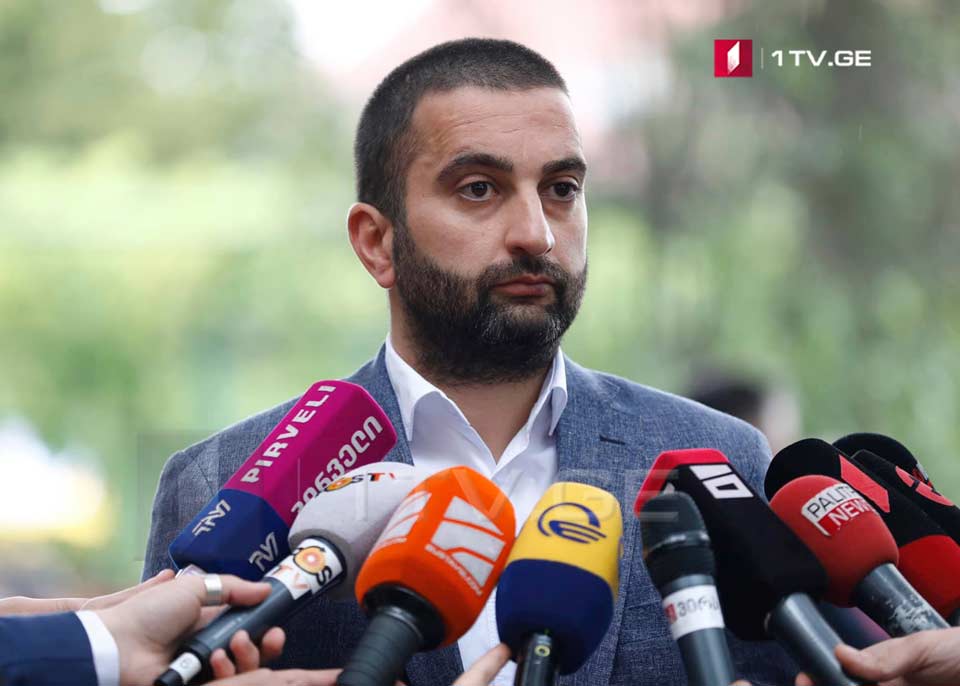
The attorney went further, explicitly citing the potential of a politically motivated personal agenda initiated under the previous counterintelligence leadership. The defense has formally demanded the immediate lifting of the “top secret” classification, asserting that a transparent review of the vacuous file would leave an objective court with no legal option other than a complete acquittal.
The Ombudsman Media Strategy: Breaking the Information Vacuum
Irakli Chikhladze remains held incommunicado at Gldani Prison No. 8, stripped of family contact, calls, and correspondence. The authorities are evidently accelerating the closed proceedings, with the next merit hearing fast-tracked for 16 September 2026.
The Ombudsman Media platform views the EU’s timely UN intervention on the eve of the trial and the structural collapse of the state’s evidence as a unified turning point. The state’s narrative has failed to pass initial legal verification.
We have successfully transmitted these combined updates to the political desks of the Embassies of France, the United Kingdom, and the United States in Tbilisi. We demand that Western diplomatic missions translate the EU’s public stance in Geneva into physical oversight on the ground by deploying a coordinated turnout of diplomatic observers to the Tbilisi City Court on 16 September. Secrecy remains the state’s only weapon; total international exposure will guarantee a fair trial.