
Cancellation of a People: The Destruction of Local Self-Government as an Instrument of Imperial Assimilation in Komi and Other National Regions
On 26 May 2026, the State Council of the Komi Republic passed the Law “On Certain Issues Regarding the Implementation of the Federal Law ‘On General Principles of the Organisation of Local Self-Government in the Unified System of Public Authority in the Territory of the Komi Republic'”.
The liquidation of local self-government in the Komi Republic is not an isolated regional episode; it is part of a large-scale, all-Russian process aimed at dismantling federalism and transitioning to a strictly centralised, de facto unitary model of governance.
Following the dissolution of the USSR, the principles of local self-government in the Russian Federation were formulated and enshrined in Articles 12 and 130–133 of the 1993 Constitution, fully aligning with international principles concerning the rights of peoples to preserve their culture and national identity.
However, beginning in 2014, which became a turning point not only in the foreign policy of the Russian Federation but also in its domestic policy, the federal authorities began dismantling local self-government. Between 2014 and 2019, the centre began gradually stripping local settlements of their autonomy. In 2014–2015, direct elections to local government bodies were abolished. During this period, amendments were introduced into legislation that allowed to abolish direct elections of mayors and heads of districts, replacing them with appointments via “selection committees” (in which half of the members are appointed by the governor, who was intended by the president). In 2017–2019, experiments with “municipal districts” began: regions were permitted to merge rural settlements into “urban and municipal districts”, destroying rural councils (selsovets). In Komi and a number of other regions, this process commenced under the guise of “budget optimization” even prior to the adoption of the main constitutional amendments.
The key moment was the “referendum” on amending the 1993 Constitution of the Russian Federation, conducted in 2020 with a vast number of violations, the results of which were not recognized by the international community. However, domestically, these amendments came into force, and in accordance with them, the concept of a “unified system of public authority” was introduced into Article 132. This legally destroyed the independence of local self-government, subordinating it directly to the gubernatorial and presidential “vertical of power”.
In December 2021, the Law “On General Principles of the Organisation of Public Authority in the Subjects of the Russian Federation” was adopted, granting broad powers to governors to directly issue reprimands to and remove heads of municipalities from office. That same December 2021, Senator Andrey Klishas and Deputy Pavel Krasheninnikov introduced a draft law “On General Principles of the Organisation of Local Self-Government in the Unified System of Public Authority”, which was definitively adopted in March 2025. The principal essence of the law lies in the legislative transition to a fully single-tier system. Rural and urban settlements and their deputies are permanently liquidated, and the entire country is transferred to the format of large-scale “districts” headed by appointed leaders or those fully controlled by the centre.
https://doxa.team/articles/msu-reform
As part of the federal reform of local self-government, the State Council of the Komi Republic has passed a law liquidating the grassroots (settlement) level of local self-government. In accordance with this law, rural and urban settlements in the Komi Republic are being abolished. All existing municipal districts in the region are being converted into unified municipal and urban districts. Local councils and elections are being eliminated; that is, the institutions of direct elections of heads of rural and urban settlements, as well as settlement councils of deputies, are being entirely abolished. In Komi, this will lead to the liquidation of over 1,200 grassroots deputy mandates through which residents of villages and hamlets were able to elect their direct representatives. All powers, budgets, and administrative apparatuses are completely withdrawn from the grassroots level and concentrated in district centres. Instead of independent elected administrations in settlements, “territorial bodies” (departments/branches) of the district administration are being established, with their heads appointed from above.
https://www.bnkomi.ru/data/news/199189
The example of the Komi Republic clearly demonstrates the colonial nature of the reform. The abolition of grassroots municipal districts and settlements with the transition to a single-tier system of “districts” distances the authorities from the population by hundreds of kilometres. In Northern conditions, this signifies not only administrative inaccessibility to basic services, but also a direct blow to the preservation of the indigenous Komi people.
Firstly, this is administrative linguicide. Settlement and rural councils remained the last sphere where the Komi language retained at least a limited official status and was used in active administrative record-keeping and communication with deputies. The transfer of administration to urban districts completely displaces the national language from the public-legal domain.
Secondly, such “optimisation” is in essence ethnocide. Depriving settlements of their own budgets leads to the mass closure of small-class national schools, libraries, and cultural centres in rural areas. Children are pushed into Russian-language boarding schools, which breaks intergenerational language transmission and leads to its rapid degradation – a phenomenon qualified under international law as linguicide.
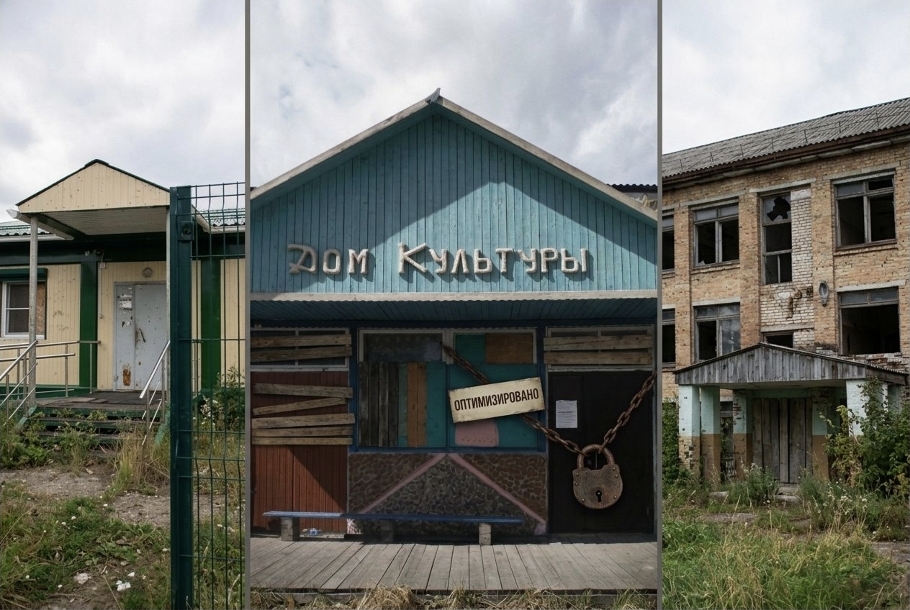
https://www.tribuna.nad.ru/rezhut-po-zhivomu-optimizaciya-v-komi-idet-po-xudshemu-scenariyu/
Thirdly, this reform accelerates the process of resource alienation. The liquidation of local self-government is of a critical nature here, as rural settlements in Komi (especially in traditional Komi districts such as Izhemsky, Ust-Kulomsky, Kortkerosky, etc.) remained virtually the sole institution where the indigenous population could directly influence issues of local importance—from land use to the allocation of community improvements.
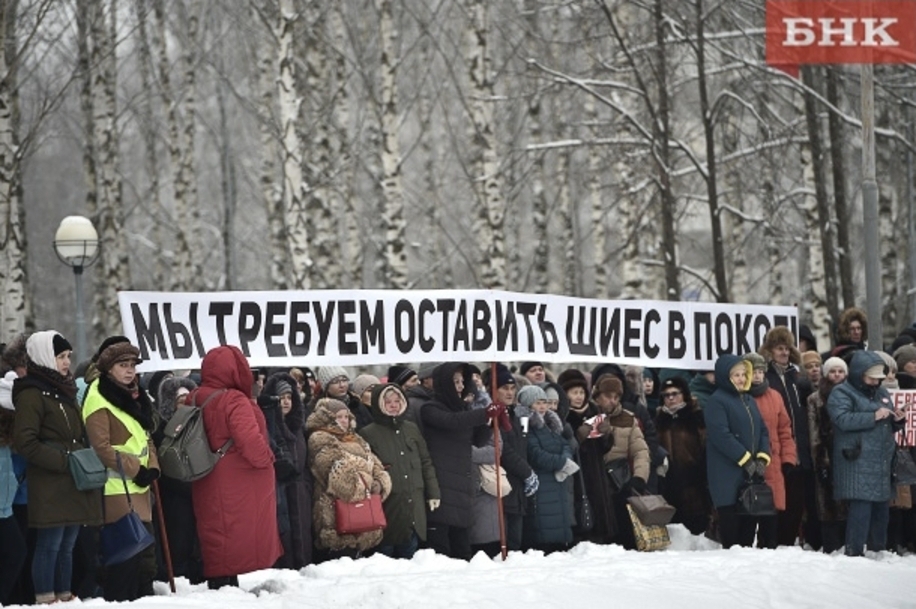
Foto Sergei Parshukov
It was precisely at the level of grassroots settlement councils and through direct gatherings of citizens that the local population defended its interests, attempting to block or challenge decisions on deforestation, the placement of landfills, or the construction of pipelines on the territory of their traditional residence. Transferring all decision-making to a single district centre definitively deprives rural communities of their right of “veto” on their own land and destroys the last levers of resistance against the unchecked extraction of resources for the benefit of the imperial centre and its affiliated corporations.
The abolition of autonomous local self-government deprives municipalities of financial and administrative independence, placing district heads under the direct subordination of governors and law enforcement agencies. This represents a direct violation of Article 12 of the Constitution of the Russian Federation, which explicitly guarantees the autonomy of local self-government and its organisational separation from state power bodies.
Thus, the ongoing strengthening of the “vertical of power” replaces the constitutional foundations (Articles 1 and 5 of the Constitution of the Russian Federation) that establish the federal structure of the country and the right of peoples to self-government. Such centralisation effectively transforms the Russian Federation from a federal state into a strictly unitary empire, while regulatory amendments regarding the “unified system of public authority” enter into an irreconcilable legal contradiction with the unalterable Article 16 of the Constitution of the Russian Federation.
A paradoxical situation is created: by carrying out the local self-government reform, the Kremlin regime enters into direct confrontation even with the text of its own Constitution, rewritten to suit itself. While Article 12 of the Basic Law explicitly states that local self-government bodies are not part of the system of state power bodies, the federal law on “public authority” forcibly integrates them into a strict vertical line of subordination to governors. By destroying the autonomy of municipalities, the centre de facto annuls the federal structure of the country, acknowledging that even formal constitutional guarantees have been sacrificed to imperial centralism.
The main consequences for the population of Komi are extremely negative. Residents of remote villages and national hamlets are deprived of the opportunity to promptly influence representative authority. Local deputies, who lived in the same village, are replaced by district-centre or district officials. The liquidation of settlements’ own budgets leads to funds being allocated on a residual basis from the district centre, which exacerbates the decline of small and remote rural territories. In rural settlements, the proportion of the Komi population is traditionally higher, and the Komi language was used more actively not only in everyday life but also in grassroots administrative record-keeping. The displacement of elected local bodies by an administrative vertical appointed from above leads to the further erosion of the national component from local administration.
Similar changes have swept through all without exception national regions (republics, autonomous okrugs, and the autonomous oblast) of the Russian Federation, although the speed and forms of resistance to this reform varied from region to region.
Since Federal Law No. 33-FZ “On General Principles of the Organisation of Local Self-Government in the Unified System of Public Authority” is a federal law, it is binding on all subjects of the Russian Federation. The destruction of the grassroots level of local self-government has affected absolutely all national autonomies.
In the Republic of Tatarstan, efforts were made for a long time to preserve the grassroots level of local self-government, as rural settlements there served as centres for preserving the Tatar language and traditional way of life. Nevertheless, within the framework of the general trend towards “unification”, the Kremlin forced the republican authorities to liquidate the autonomy of settlements and transfer key powers to the district/okrug level.
In Bashkortostan, the transition to a single-tier system triggered severe social tension in the Bashkir Trans-Ural districts (Baymaksky, Abzelilovsky, etc.), where grassroots citizen gatherings (skhody) served as the primary tool for protecting land against predatory mineral extraction by gold mining companies. The liquidation of these councils deprived Bashkir communities of lawful means to protect their environment.
Tatarstan and Bashkortostan historically possessed the most extensive network of grassroots rural councils (selsovets). The colonial policy of the Russian Empire and the pursuit of total control in the USSR resulted in attempts to destroy the historically established self-organisation of these peoples, but each time it managed to endure. The current reform of local self-government is designed to eliminate this historically established framework and deprive Tatars and Bashkirs of their remaining means of defending their national interests.
For the regions of the North and Siberia (Yakutia, Nenets Autonomous Okrug, Yamalo-Nenets Autonomous Okrug, Chukotka), the consequences are analogous to those in Komi. In Yakutia (Sakha)—the largest region in the world by land area—the liquidation of settlement administrations has led to the complete isolation of remote reindeer-herding and national naslegs (rural settlements). In the NAO, YNAO, and KhMAO, the liquidation of grassroots Councils of Deputies deprived the Nenets, Khanty, and Mansi of the right to grant (or withhold) consent to oil and gas corporations regarding the expropriation of their ancestral lands and tundra pastures.
In the Caucasus (Dagestan, Kabardino-Balkaria, Karachay-Cherkessia), the liquidation of grassroots local self-government has created risks of direct inter-ethnic conflicts. In multi-ethnic rural settlements, elected rural councils ensured parity and representation of various ethnic groups (for example, Kabardians and Balkars, Nogais, Kumyks, Avars, and Dargins). The forced merger of settlements into large “districts” results in numerical ethnic majorities completely displacing minorities from governing bodies.
Legal analysis of the process of liquidating local self-government
As has been noted repeatedly above, the reform of local self-government in the Russian Federation not only inflicts harm on the peoples residing within the territory of the Russian Federation, but is also conducted in gross violation of both domestic Russian legislation, beginning with the Constitution, and norms of international law.
- Violation of the Constitution of the Russian Federation and Federal Legislation
The abolition of rural settlements and their elected bodies grossly violates fundamental norms of Russian and regional law:
- Violation of Articles 130 and 131 of the Constitution of the Russian Federation:
- The Constitution of the Russian Federation defines local self-government as the independent resolution by the population of issues of local significance.
- According to Part 2 of Article 131 of the Constitution of the Russian Federation, altering the boundaries of territories in which local self-government is exercised is permissible with due regard for the opinion of the population of the relevant territories. In practice, “public hearings” regarding the liquidation of settlements are of a purely formal nature, while protests by local residents and deputies of grassroots councils are ignored.
- Violation of Article 132 of the Constitution of the Russian Federation: Local self-government bodies independently form and execute the local budget. The liquidation of settlement budgets and their transfer to the district level deprives rural communities of economic independence.
- Violation of Federal Law No. 131-FZ “On General Principles of the Organisation of Local Self-Government in the Russian Federation”: The law guarantees a two-tier system of local self-government to ensure the accessibility of authority. The forced consolidation of settlements into unified districts across the vast territories of the North (where the distance between a village and the district centre can range from 100 to 200 km) directly contradicts the principle of pedestrian and transport accessibility of local self-government bodies for citizens.
- Violation of the Constitution of the Komi Republic: Article 100 of the Constitution of the Komi Republic guarantees the right of citizens to exercise local self-government. Forced “verticalisation” deprives the residents of Komi villages of the right to elect their local authorities.
An analogous dismantling of constitutional guarantees and sovereign provisions occurred in all national republics—from Tatarstan and Bashkortostan to Yakutia. By forcing regional parliaments one by one to rewrite their basic laws, removing any mention of autonomy, contractual relations, and sovereignty, the federal centre cleared the legal ground for the definitive liquidation of local self-government and the transformation of the federation into a strictly centralised system.
- Qualification under International Law and the Right to Self-Determination
From the perspective of international law and the protection of the rights of indigenous peoples, the liquidation of grassroots local self-government bodies in areas compactly populated by the Komi and other peoples of the Russian Federation also constitutes a systemic infringement upon their collective rights. Such actions by the federal authorities have already resulted in violations of the following international instruments:
- UN Declaration on the Rights of Indigenous Peoples (2007):
- Article 3: Indigenous peoples have the right to self-determination.
- Article 4: Indigenous peoples, in exercising their right to self-determination, have the right to autonomy or self-government in matters relating to their internal and local affairs.
- Articles 18 and 19: The State is obliged to consult with indigenous peoples and obtain their free, prior, and informed consent (FPIC) before adopting legislative or administrative measures that may affect them. The liquidation of settlement councils directly violates these norms.
- International Covenant on Civil and Political Rights (Article 1): All peoples have the right of self-determination. By virtue of that right they freely determine their political status and freely pursue their economic, social, and cultural development.
The legal policy of the Russian Federation regarding the rights of peoples is of a pronounced selectively colonial nature. While bound by the obligations of the foundational 1966 UN Covenants (guaranteeing the right of peoples to self-determination and to dispose of their resources), the Russian Federation has simultaneously deliberately refused to ratify key sector-specific international instruments—ILO Convention No. 169, the UN Declaration on the Rights of Indigenous Peoples (2007), and the European Charter for Regional or Minority Languages.
The refusal to ratify these documents and the subsequent liquidation of local self-government in 2020–2025 clearly demonstrate: the Kremlin is systematically dismantling the internal and external legal mechanisms that could protect the lands and languages of the peoples of Komi, Tatarstan, Bashkortostan, Yakutia, and other national regions from imperial expropriation and assimilation.
In international legal doctrine, such a policy opens up a fundamentally new perspective. According to the UN Charter, the International Covenant on Civil and Political Rights, and the UNDRIP Declaration, every people possesses an inalienable right to self-determination. When a state systematically destroys institutions of internal self-government, pursues a policy of linguicide, and deprives a people of vital resources, the doctrine of remedial secession comes into effect. It asserts that upon the complete denial to a people of internal self-determination and the blocking of any legal means to defend its rights within the state, that people acquires a legitimate international legal basis for external self-determination—that is, for seceding from the metropolis and creating its own independent state.
By liquidating local self-government, the imperial centre has definitively destroyed the legitimacy of its presence in the national borderlands. Under these conditions, conceptualising the disintegration of the Russian Federation and exercising the right of peoples to secession becomes the sole legally and morally justified means of saving nations from complete physical and cultural extinction.