
Yuri Dmitriev
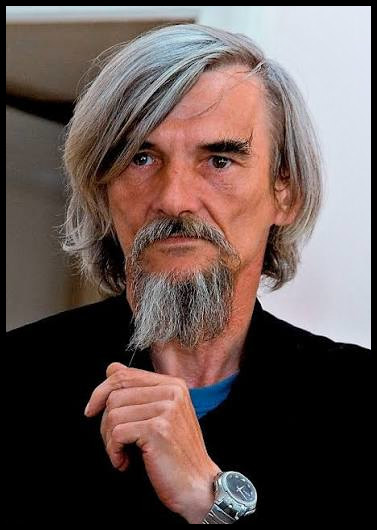
Every year on 5 August, the silence of the Sandarmokh forest is broken by the reading of names. Relatives of victims, diplomats, activists and representatives of different national communities gather at the memorial site in Karelia to remember those executed during Stalin’s Great Terror.
The date marks the beginning of the mass repressive operations launched across the Soviet Union in August 1937. Beneath the forest near Medvezhyegorsk lie more than 200 execution pits containing the remains of between 7,000 and 9,000 people of approximately 58 nationalities. They are people murdered by the NKVD in 1937 and 1938. Among the victims were Karelians, Finns, Ukrainians, Poles and members of numerous other peoples, including individuals who had come from territories beyond Soviet control. Since 1998, Sandarmokh has hosted an annual International Day of Remembrance, during which the victims’ names are read aloud and commemorative ceremonies are held beside the pits in which they were buried.
Sandarmokh did not become a place of remembrance on its own. Its emergence from secrecy is inseparable from the work of Karelian historian Yuri Dmitriev. Drawing on archival material uncovered by Veniamin Ioffe, Dmitriev led the expedition that located the burial site on 1 July 1997. What followed was not simply historical research, but a decades-long effort to restore identities to those whom the Soviet system had attempted to erase. Dmitriev identified victims, reconstructed their lives and helped families finally learn what had happened to relatives who had disappeared.
As head of the Karelian branch of Memorial, he also investigated other execution sites, including Krasny Bor, and compiled thousands of names for books commemorating victims of political repression in Karelia. For more than two decades, he helped organise the annual ceremony at Sandarmokh. Through this work, anonymous pits concealed in a Karelian forest became individual places of memory, marked by names, photographs and memorials erected by the victims’ descendants and national communities.
The significance of Dmitriev’s work extended far beyond the families searching for relatives lost to Soviet repression. Together with other researchers and members of Memorial, he brought a history that had long been concealed, distorted or confined to the archives into public life. The burial sites, names and documents they uncovered became the basis for books, exhibitions, museums, educational projects and public commemorations. New generations were given an opportunity to learn about the Gulag and Stalin’s Terror through evidence that directly challenged the sanitised version of Soviet history promoted by official narratives.
The Soviet past could no longer be presented solely as a story of industrialisation, military victory and state power. It also had to be confronted through execution pits, destroyed communities and the individual lives of those persecuted by the state. Dmitriev’s work formed part of a broader movement that changed how a growing part of society understood the Soviet period and helped create a public culture of remembrance. The authorities’ later efforts to suppress this work demonstrate just how politically consequential that change had become.
The growth of this public awareness was eventually met with a political backlash. As the authorities sought to restore a heroic and sanitised image of the Soviet past, independent research into Stalinist crimes increasingly came to be treated as a threat to the state’s preferred historical narrative. Official participation in the Sandarmokh commemorations declined, while Memorial faced escalating repression. At the same time, efforts were made to reinterpret the execution site by claiming that it also contained Soviet prisoners of war allegedly killed by Finnish forces. The meaning of Sandarmokh itself became the subject of a political struggle: whether it would remain evidence of crimes committed by the Soviet state or be reshaped to serve a new patriotic narrative. Dmitriev’s persecution began within this broader campaign against independent historical memory.
Dmitriev’s criminal prosecution began in December 2016, when he was arrested on allegations of producing child pornography after investigators found photographs of his young adopted daughter on his computer. Dmitriev had taken the photographs to monitor the health and physical development of a child who had suffered from malnutrition before entering his care. Most followed a consistent pattern intended to document changes in her body, while several others were taken after she complained of pain or discomfort. An independent forensic examination found that the images served this documentary purpose and contained no pornographic content. Psychiatric assessments likewise found no evidence of paedophilia or sexual deviation.
By contrast, the conclusion on which the prosecution relied, classifying nine photographs as pornographic, had been produced by a private centre whose methodology and relevant expertise were strongly questioned by specialists. Yet the findings that supported Dmitriev’s account did not bring the case to an end. Even after his initial acquittal, the authorities continued to seek new examinations until they obtained conclusions that could be used to sustain the prosecution.
On 5 April 2018, the Petroskoi City Court acquitted Dmitriev of producing child pornography and committing indecent acts, finding him guilty only of possessing parts of an old firearm. The authorities, however, were not prepared to allow the case to end in acquittal. The prosecution appealed and secured the cancellation of the judgment. By then, Dmitriev’s adopted daughter had been removed from his family and placed with her biological grandmother, who had previously declined to care for her. The child was subsequently subjected to psychological questioning behind closed doors, after which her earlier account changed and new allegations emerged. Independent specialists who examined the available records later raised concerns about leading questions and psychological pressure, while the full circumstances of the questioning remain shielded from public scrutiny. Thirteen days after the acquittal was overturned, Dmitriev was arrested again, this time on the considerably more serious charge of committing sexual violence.
The sequence is deeply troubling. When the original case failed to secure his conviction, the child’s isolation and repeated questioning provided the basis for a new accusation, ensuring that Dmitriev, whose historical work had become increasingly inconvenient to the state, would not remain free.
Today, at the age of 70, Dmitriev remains imprisoned in Penal Colony No. 18 in the Republic of Mordovia. He has spent more than nine years in detention and is not expected to be released until 2032. Meanwhile, his health continues to deteriorate. Supporters report that his chronic illnesses have worsened and that a suspected tumour discovered in a prison hospital has not received proper examination by an oncologist. He has also reportedly been placed in solitary confinement for sitting on his bed during the day while suffering from weakness and dizziness.
The historian who devoted decades to restoring the names and lives of peoples who disappeared into the Soviet prison system is now growing old and ill inside its modern successor.
In March 2026, the European Court of Human Rights found that the authorities of the Russian Federation had violated Dmitriev’s rights under Articles 5 and 6 of the European Convention. His prolonged pre-trial detention, the Court concluded, had not been justified by sufficient reasons specific to his individual circumstances. It also found that the replacement of his chosen lawyer during the decisive appeal had undermined the overall fairness of the proceedings. The Kremlin’s response was immediate and unequivocal. Presidential spokesperson Dmitry Peskov declared that the Russian Federation did not recognise the judgment and would not implement it.
By then, such a response had become predictable. Following the expulsion of the Russian Federation from the Council of Europe and its departure from the European human-rights system, few practical means remain to compel the state to comply, even though the Court retained jurisdiction over violations committed while the Russian Federation was still bound by the Convention. The judgment therefore established the violations, but offered Dmitriev little prospect of remedy.
Rejecting the authority of the European Court does not dispose of the substance of its findings. The rights protected by Articles 5 and 6 of the European Convention closely correspond to those guaranteed by Articles 9 and 14 of the International Covenant on Civil and Political Rights (ICCPR). Article 9 requires pre-trial detention to remain exceptional, necessary and justified on the basis of the individual circumstances of the case. Article 14 guarantees a fair hearing, adequate time and facilities to prepare a defence, and effective representation by a lawyer of one’s choosing.
Unlike its obligations under the European Convention, the Russian Federation’s obligations under the ICCPR did not end with its departure from the Council of Europe. It remains a party to the Covenant and continues to be legally bound by its provisions. Although the ECtHR judgment does not formally establish a violation of the ICCPR, the same facts provide strong grounds for concluding that Dmitriev’s treatment was also inconsistent with Articles 9 and 14 of the Covenant. The authorities of the Russian Federation may reject the Court’s jurisdiction, but they cannot erase the underlying obligations by which the state remains bound.
The allegations against Dmitriev are extremely serious. They should not be dismissed because of his reputation or the importance of his work, but their gravity should not be used to shield the prosecution from scrutiny. Serious allegations require serious evidence. If multiple independent examinations found no pornographic content in the photographs, repeated assessments found no evidence of sexual deviation, and Dmitriev was initially acquitted, why were such extraordinary efforts made to keep him behind bars?
The repeated examinations, the cancellation of the acquittal, introduction of a new charge, prolonged proceedings and eventual escalation of his sentence reveal a persistent determination to secure his imprisonment even as central elements of the original case repeatedly collapsed. Viewed as a whole, the chronology establishes a pattern that is increasingly difficult to explain as the ordinary administration of justice.
A second question must therefore be asked: why did efforts to rewrite the history of Sandarmokh intensify after Dmitriev had been removed from public life?
The authorities increasingly promoted an unsubstantiated alternative narrative in which the site was reframed not primarily as an NKVD execution ground, but also as a burial place for Soviet prisoners of war allegedly killed by Finnish forces during the Continuation War. Since 2022, every commemoration held at Sandarmokh on 5 August has reportedly been accompanied by attempts either to impose this narrative or to disrupt the remembrance of Stalin’s victims. Signs blaming NATO, provocations by state-controlled media, searches of activists, the appearance of masked pro-Kremlin groups and attempts to interrupt the reading of victims’ names have all intruded upon the ceremonies.
These are not merely isolated disturbances at a memorial gathering. They form part of a sustained effort to change what Sandarmokh represents and whose crimes the site is permitted to expose.
Viewed separately, Dmitriev’s prosecution, the rewriting of Sandarmokh’s history and the repeated disruption of its commemorations might be presented as unrelated events. Viewed together, they reveal a coherent campaign to control historical memory. From this perspective, Dmitriev’s imprisonment no longer appears to be an incidental criminal case. It appears as the deliberate removal of one of the people most capable of defending Sandarmokh’s documented history against the Kremlin’s attempt to replace it with a politically convenient lie.
When Dmitriev’s prosecution is considered within the wider campaign to rewrite the history of Sandarmokh, the potential ICCPR violations extend beyond the procedural guarantees of Articles 9 and 14. His research, publications and efforts to preserve the memory of Stalinist repression constituted forms of expression protected by Article 19. His work as head of the Karelian branch of Memorial also engaged the freedom of association guaranteed by Article 22. The Human Rights Committee has explicitly stated that detention imposed as punishment for the legitimate exercise of either freedom is inherently arbitrary. If the proceedings were intended to silence Dmitriev and remove him from the defence of Sandarmokh’s documented history, his imprisonment may therefore amount to more than a sentence imposed through unfair proceedings. It may also constitute arbitrary detention under Article 9(1), arising directly from the suppression of rights protected by Articles 19 and 22.
The case may also carry implications under Article 27 of the ICCPR, which protects the right of ethnic, religious and linguistic communities to enjoy their culture in community with others. Culture does not consist only of language, traditions and comforting accounts of the past. It also encompasses collective memory: the ability of a people to understand what happened to previous generations, to preserve that knowledge and transmit it without state-imposed distortion.
The removal of Dmitriev and the rewriting of Sandarmokh’s history may therefore have consequences extending far beyond the fate of one historian or one memorial site. By identifying people killed during Stalin’s national operations and reconstructing the communities to which they belonged, Dmitriev’s work gave later generations the evidence needed to understand why their families had abandoned their languages, concealed their identities or become separated from their roots.
Without that history, the consequences of repression can be presented as natural assimilation rather than the product of fear, persecution and deliberate state policy. Replacing the documented history of Sandarmokh with a Russian military narrative may prevent others from recognising these connections and understanding what happened to their own communities. In this way, the suppression of historical evidence may interfere with the ability of non-Russian peoples to preserve and transmit their collective memory, raising concerns under Article 27 of the ICCPR.
Ultimately, erasing this history removes an obstacle to continued Russification. People who are denied the knowledge of how their identity was taken from them are less able to recover it.
Serious allegations must always be examined carefully, impartially and with full respect for the rights of those who may have been harmed. A responsible assessment, however, cannot stop at the wording of an accusation. It must also consider who produced the evidence, how that evidence was obtained, whether the proceedings were fair and what political purpose they may have served.
Such scrutiny is particularly necessary when the state bringing the charges has repeatedly used criminal law and judicial institutions to remove people who challenge its preferred narratives. Dmitriev’s prosecution cannot be separated from his historical work, the dismantling of Memorial or the continuing campaign to rewrite the history of Sandarmokh. Reading between the lines does not mean disregarding the evidence. It means following the evidence until the wider pattern becomes impossible to ignore.
When dealing with skilful manipulators, applying only mechanical logic is not neutrality. It allows the manipulation to succeed.
The consequences extend far beyond the destruction of one person’s life. When those who recover suppressed histories are imprisoned and their findings replaced with politically convenient narratives, entire peoples may be deprived of the knowledge needed to understand their past, reclaim their identity and resist assimilation. Dmitriev returned thousands of names to history. He has now been removed from public life so that the state may once again decide what can be remembered, what must be forgotten and how entire peoples are permitted to understand themselves.
Written by:
Jana Tiihonen (Bystrova)
Human Rights advocate for the Republic of Karelia
Sources:
- https://en.mapofmemory.org/10-09?
- https://dmitrievaffair.com/remembrance/sandarmokh
- https://www.theguardian.com/world/2017/aug/03/gulag-grave-hunter-yury-dmitriyev-unearths-uncomfortable-truths-russia
- https://www.opendemocracy.net/en/yuri-dmitriev-sandarmoh/
- https://www.youtube.com/watch?v=AumkqfIbZR0&list=PLwztdGuT3YqvVFQks7tI8RhWxAfB-JO8o&index=3
- https://www.youtube.com/watch?v=mbKjjJp9D6w&list=PLwztdGuT3YqvVFQks7tI8RhWxAfB-JO8o&index=4
- https://dmitriev.tilda.ws/hronicletrial
- https://www.hrw.org/news/2020/07/21/russia-rights-researchers-trial-raises-serious-concerns
- https://www.fidh.org/en/issues/human-rights-defenders/russia-sentencing-and-ongoing-arbitrary-detention-of-mr-yuri-dmitriev
- https://dmitrievaffair.com/2018/02/27/serbsky-verdict-dmitriev-is-in-his-right-mind-and-photos-are-not-pornographic
- https://www.euronews.com/2020/07/22/yuri-dmitriev-gulag-historian-handed-three-and-a-half-year-jail-term
- https://www.interfax.ru/russia/1081138
- https://hudoc.echr.coe.int/eng