
Monthly Report on Human Rights Violations in the Republic of Karelia
August 2026
Jana Tiihonen (Bystrova)
The August 2026 report documents a range of interconnected human rights concerns in the Republic of Karelia, with particular emphasis on cultural and socioeconomic rights. The cases examined demonstrate how commercial interests, military priorities and continuing failures in public administration affect residents’ living conditions, access to essential services and ability to preserve their ethno-cultural identities.
Cultural rights concerns extend from interference with historical remembrance at Sandarmokh to the exploitation of the forests and resources that sustain Karelian and Veps communities. The disruption of the annual commemoration of victims of Soviet repression threatens the preservation and transmission of collective memory. Meanwhile, organised commercial berry harvesting, forest clearance and quarry expansion place pressure on traditional livelihoods and culturally significant landscapes. The reported difficulties faced by Veps residents in obtaining project information and influencing decisions further raise concerns about their ability to protect their ancestral environment and cultural continuity.
The report also examines barriers to the enjoyment of socioeconomic rights. Proposed reductions in postal services in Sheltozero threaten access to pensions, payments and other everyday necessities, while sewerage restrictions imposed to recover utility debts deprive households of functioning sanitation. The unexplained circumstances surrounding an eviction in Sortavala raise questions about housing safeguards and equal treatment. Commercial berry harvesting adds another dimension to these concerns by threatening seasonal income and food resources in communities where employment opportunities are already limited.
Environmental degradation and inadequate sanitation connect many of these cases. Recurring pollution affecting Äänisjärvi (lake Onega), industrial emissions in Pitkäranta, and waste accumulation and rodent infestation near facilities serving children and pregnant women demonstrate continuing threats to the conditions necessary for health and an adequate standard of living. Several problems have persisted despite earlier complaints and official intervention, raising serious questions about the effectiveness of supervision and the authorities’ willingness to secure lasting improvements.
The expansion of military recruitment among people with criminal convictions introduces further concerns about rehabilitation and civilian safety. Considered alongside the other cases, it illustrates a broader question running through the report: whether regional and federal authorities are fulfilling their obligations to protect Karelia’s inhabitants when those obligations conflict with military objectives, commercial interests or financial and administrative priorities.
Taken together, these developments raise concerns regarding the Russian Federation’s compliance with its obligations under the International Covenant on Civil and Political Rights (ICCPR), the International Covenant on Economic, Social and Cultural Rights (ICESCR), and, where children are involved, under the Convention on the Rights of the Child (CRC). They also demonstrate the need for effective measures to address longstanding structural problems, ensure accountability and protect the civil, political, economic, social and cultural rights of the people of Karelia.
Sandarmokh: interference with remembrance and the continuing distortion of Soviet repression
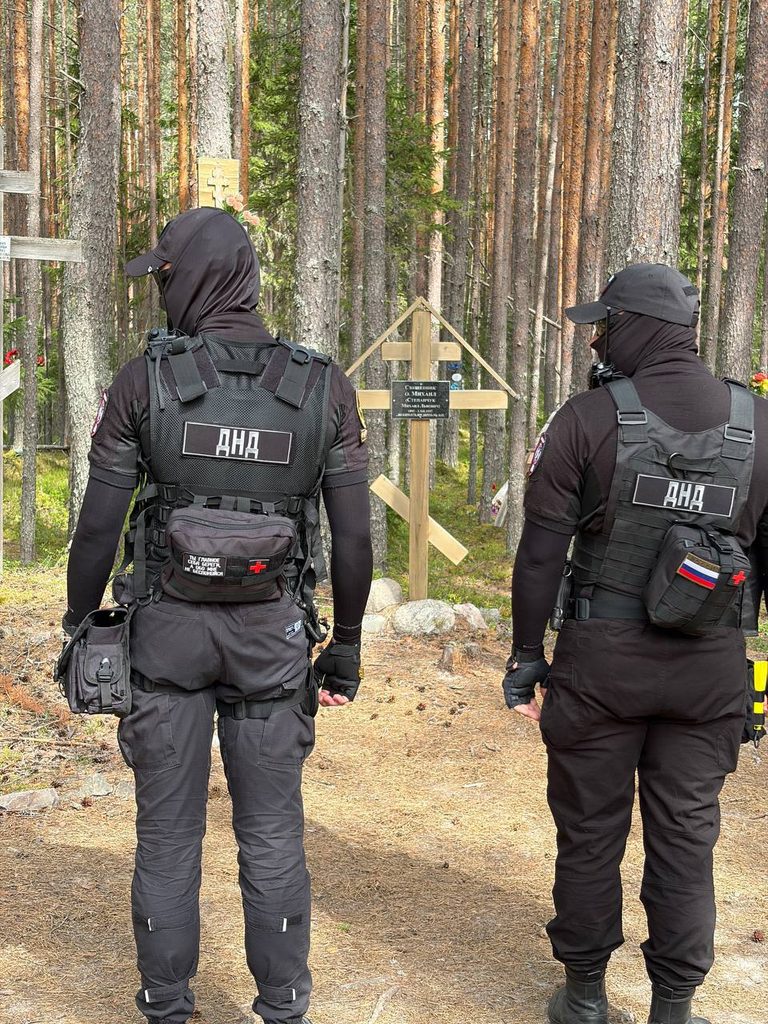
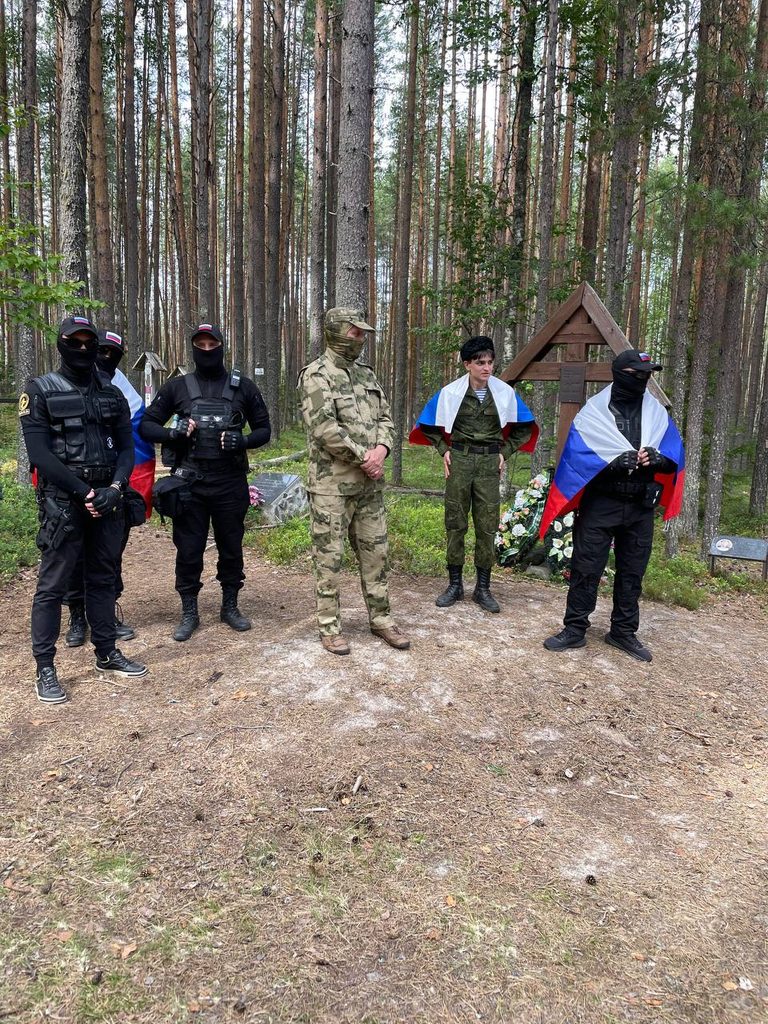
On 5 August 2026, the annual commemoration of victims of Stalinist repression at Sandarmokh was again accompanied by Russian nationalist provocations. Those gathered to read the victim’s names and honour their memory had to face intimidation and harassment by members of “Russkaya Obshchina”, as well as individuals with covered faces and the “DND” insignia on their clothes. The “DND” abbreviation refers to the Volunteer People’s Patrol (VPP), a civilian formation allegedly helping police and other authorities to maintain public order. However, during the commemoration service, they were seen crowding those reading the names and playing military music from a vehicle beside the cemetery, causing disruption to the service.
Media reports stated that members of the Russkaya Obshchina and the VPP were following the German Consul General, Milan Šimandl, and the representative of the Czech Embassy, Rostislav Táborský, carrying the flag of the Russian Federation and shouting “Glory to Russia”. An eyewitness account described a masked man interrupting the reading of Jewish victims’ names with questions about Palestinians killed by Israelis. State-aligned media crews attended, and mourners were reportedly challenged about why they were not commemorating Red Army soldiers. These interventions redirected attention away from the victims of Soviet political repression towards contemporary political disputes and Russian military narratives.
Sandarmokh is a documented site of mass executions carried out by the NKVD in 1937-1938. Those buried there include residents of Karelia, prisoners of the White Sea-Baltic Canal camp system and prisoners transported from Solovki. Its discovery in 1997 through the work of Yuri Dmitriev and other researchers enabled families and national communities to recover the burial places and identities of people whose fate had been concealed for decades. The memorial therefore preserves evidence of state crimes against its peoples alongside the personal and collective histories those crimes attempted to erase.
The harassment accompanying the memorial day at Sandarmokh has become recurring pattern of the commemorations, however, the presence of VPP personnel is a concerning escalation. It is unclear who authorised their presence and what duties they were performing. One masked participant claimed that they were there to protect visitors, without explaining from whom protection was necessary. At the same time, they not only failed to intervene when Russkaya Obshchina members were harassing those present, but also were also seen contributing to the intimidation and disruption of the ceremony.
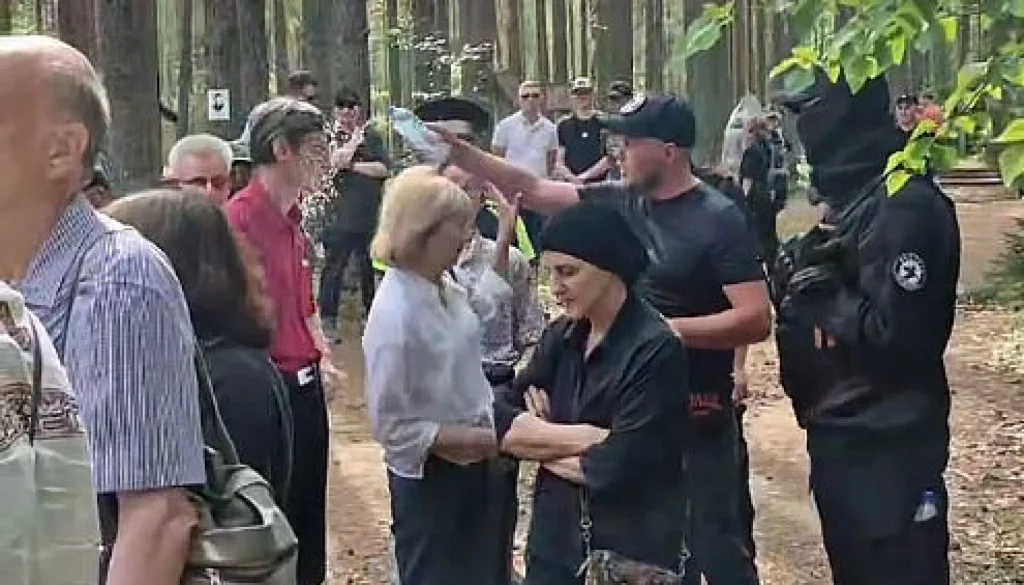
It should be recalled that during the 2025 commemoration service at Sandarmokh, the local “Russkaya Obshchina” leader splashed water into a municipal deputy’s face; according to the Barents Observer’s publication, police accepted his explanation that he had merely intended to cool the deputy down, and did not initiate administrative proceedings. The repetition of such conduct raises serious questions about the authorities’ willingness to protect those attending and prevent further disruption.
These provocations must also be considered within the continuing effort to change the public understanding of Sandarmokh. Since 2016, a competing theory has suggested that Soviet prisoners of war were executed there during the Continuation War. The subsequent promotion of this account and excavations at the site have not produced any verifiable evidence.
The distortion of historical memory does not require an explicit denial of the NKVD executions. It can proceed by placing an unsubstantiated account alongside documented repression and gradually shifting attention from crimes committed by the Soviet state towards suffering attributed to an external enemy. The questioning of mourners about Red Army soldiers, together with military music and Russian nationalist displays, brings this redirection into the commemoration itself. A ceremony dedicated to victims of political repression becomes an occasion to promote a state-centred military narrative and challenge those who insist on remembering the original crime.
For Karelians, Veps, Finns, and other affected peoples, this carries particular cultural consequences. Research identifying the victims and reconstructing their lives helps later generations understand how repression damaged their communities, interrupted cultural transmission and encouraged families to conceal their identities. Obscuring that history weakens their ability to recognise the relationship between state persecution and subsequent assimilation. Historical memory is therefore integral to the preservation and recovery of cultural identity, rather than an issue detached from the present circumstances of these peoples.
The reported conduct raises serious concerns under Articles 19 and 21 of the ICCPR, which protect freedom of expression and peaceful assembly. These guarantees encompass the ability to gather peacefully and publicly commemorate victims of state violence. The UN Human Rights Committee has clarified that states must facilitate peaceful assemblies and protect participants against interference by other members of the public. Allowing a ceremony to proceed while failing to prevent foreseeable intimidation and disruption to persist, does not fulfil that obligation.
The cultural consequences also raise concerns under Article 27 of the ICCPR, insofar as interference with remembrance and the distortion of historical evidence obstruct the ability of affected minorities to preserve and transmit their collective memory. The authorities must ensure that Sandarmokh remains accessible as a place of evidence, mourning and cultural remembrance. The repeated transformation of its annual commemoration into a Russian nationalist political spectacle demonstrates a continuing failure to protect those functions and the rights of the communities for whom they remain essential.
Sources:
- https://ru.thebarentsobserver.com/novosti/ultrapravye-ustroili-provokaciu-na-memoriale-sandarmoh/455286
- https://www.sova-center.ru/racism-xenophobia/news/racism-nationalism/2026/08/d54300/
- https://paperpaper.io/papernews/2026/8/5/na-ezhegodnoe-chtenie-imen-zhertv-bolsho/
- https://t.me/Slabunova/6009
- https://ru.thebarentsobserver.com/hotel-ohladit-policia-poverila-provokatoru-oblivsemu-deputata-v-den-pamati-zertv-bolsogo-terrora/439657
- https://ombudsman.media/report-august-2025-karelia/
Military recruitment at the expense of rehabilitation
On 4 August 2026, President of the Russian Federation Vladimir Putin signed Federal Law No. 208-FZ, “On Amendments to Article 34 of the Federal Law ‘On Military Duty and Military Service’”. The law, which entered into force on 15 August, expands the categories of citizens with unspent or outstanding convictions eligible to enter military service under contract during mobilisation, martial law or wartime. It removes restrictions relating to specified offences involving participation in criminal groups, smuggling, unlawful handling and theft of nuclear materials, and breaches of safety requirements at fuel and emergency facilities.
The amendment reflects the authorities’ deliberate expansion of criminal recruitment to sustain the invasion of Ukraine. According to the explanation reported from the Ministry of Defence, its purpose is to increase the number of potential military recruits. The authorities are therefore removing previously established restrictions because people convicted of these offences are now considered useful for military purposes. This approach raises a fundamental concern: the state is expanding its access to military personnel without demonstrating how this serves the rehabilitation of those recruited or their eventual reintegration into civilian society.
Recruiting people from prison into the war front risks compounding the very problems that rehabilitation should address. Instead of receiving support to recognise the harm caused by their offences and prepare for a lawful return to society, they may enter an environment where violence is normalised and participation in military operations is publicly celebrated. Exposure to combat may also introduce psychological trauma and aggravate existing difficulties. Research involving military personnel has identified associations between combat exposure and subsequent violent offending, while post-deployment violence has also been associated with post-traumatic stress disorder and alcohol misuse. These findings support concern that returning individuals may bring back both unresolved factors associated with their previous offending and additional difficulties arising from war. For civilians, the potential consequences include physical assaults, violence within families and further criminal victimisation. Neither a criminal conviction not psychological trauma makes future violence inevitable. Nevertheless, by prioritising recruitment over rehabilitation, the authorities risk compounding factors associated with further violence and exposing families, neighbours and wider communities to preventable harm.
These concerns are grounded in incidents that have already occurred in Karelia. In August 2023, a repeatedly convicted man recruited into military service from prison participated in the killing of six residents of Derevyannoye after returning wounded from Ukraine; he was subsequently sentenced to life imprisonment. That sentence, however, will not bring back those killed by his hand. In January 2026, a previously convicted murderer who had participated in the war and received a presidential pardon killed his partner in Petroskoi. Reports from May 2024 also described residents of a Petroskoi apartment building calling police after a returning, pardoned man with two previous homicide convictions climbed onto the entrance canopy carrying a cleaver and shouting. These cases demonstrate that recruitment and military participation do not guarantee rehabilitation or prevent further harm to civilians. The authorities are expanding this pathway despite existing examples of its potentially fatal consequences for the communities to which recruits return.
Article 10(3) of the ICCPR establishes reformation and social rehabilitation as the essential aim of the treatment of prisoners. The Human Rights Committee reinforces this requirement in General Comment No. 21, paragraph 10. These obligations are not displaced by the state’s demand for military personnel. Where recruitment from imprisonment interrupts or replaces effective rehabilitation, the authorities subordinate this obligation to the requirements of war. The expansion should therefore be examined as part of a policy that risks sacrificing prisoners’ prospects for successful reintegration to sustain military operations, with consequences for both the individuals recruited and the society to which they may eventually return.
Sources:
- https://base.garant.ru/414700643/
- https://www.rbc.ru/politics/04/08/2026/6a7243f59a79476159a9e0ef
- https://pubmed.ncbi.nlm.nih.gov/23499041/
- https://pubmed.ncbi.nlm.nih.gov/22115074/
- https://www.kommersant.ru/doc/7345712
- https://zona.media/news/2025/07/08/pzh
- https://gubdaily.ru/news/v-petrozavodske-uchastnik-svo-ubil-zhenshhinu-metnuv-v-nee-nozh-ranee-on-byl-pomilovan-za-ubijstvo/
- https://www.sovsekretno.ru/news/otsidevshiy-za-dva-ubiystva-narkoman-vernulsya-s-svo-i-derzhit-v-strakhe-ves-dom-/
Unexplained Eviction Raises Concerns over Equal Access to Housing in Sortavala
In early August 2026, media reports described the allocation of a one-room municipal apartment in Sortavala to the family of a participant in the invasion of Ukraine whose previous home had been destroyed by fire. According to the reporting, his wife received the keys and the family celebrated their housewarming by video call in July. The apartment had become available following the eviction of a woman described as an “irresponsible tenant”. The head of the Sortavala municipal district presented the allocation as positive news, but subsequently declined a journalist’s request for further information about the former occupant and her situation.
The circumstances of the eviction remain unexplained, despite further searches of publicly accessible news coverage, social media and court records undertaken for this report. It has not been possible to establish what conduct was cited as grounds for removing the woman, whether a court ordered her eviction, or whether alternative accommodation was provided. These gaps prevent an assessment of whether the measure was necessary and proportionate to the alleged breach of her tenancy obligations. Describing someone as an irresponsible tenant does not establish the seriousness of their conduct or justify the consequences imposed. Losing one’s home is a severe intervention whose effects may extend to health, personal safety and the ability to maintain employment.
The family’s need to accommodation following a fire is clear. Nevertheless, the public emphasis on military participation raises questions about the criteria governing access to municipal housing. This concern is particularly significant in Karelia, where, according to the report to the Legislative Assembly in April 2026 by Artur Parfenchikov’s, the head of the republic, approximately 12% of the population lived in unsafe housing. Against this background, assistance promoted through a family member’s military service raises concerns about whether comparable urgency is afforded to other residents facing serious housing needs.
The absence of an explanation also raises questions about the security of other municipal tenants. For example, could a resident who falls into financial hardship lose their home over a tenancy breach that could have been addressed through support or a less harmful measure, with the apartment then allocated to a military family? This is a hypothetical concern, rather than an established account of what happened in Sortavala. It illustrates, however, why transparency matters: residents need to know what grounds justify eviction, how their circumstances are considered and what safeguards protect them against disproportionate measures. Without a clear explanation, concerns arise that vulnerable tenants could lose their homes in favour of applicants whom the authorities prioritise.
The authorities’ public language deserves separate scrutiny. The former occupant was characterised negatively by the Head of the Sortavala Municipal District, Sergey Krupin, without a corresponding public explanation of her circumstances, while the allocation to the military family was celebrated. This framing risks presenting the loss of one person’s shelter as an uncomplicated success because another household benefits. If hardship contributed to the former tenant’s situation, an assessment of her support needs should have preceded any moral judgement about her conduct. The right to housing cannot depend on whether an official regards a resident as socially deserving, nor should participation in the invasion become a measure of whose housing insecurity warrants sympathy.
Article 11(1) of the ICESCR recognises the right to adequate housing. General Comment No. 7 requires safeguards surrounding eviction, including access to legal remedies, and states that eviction should not result in homelessness or vulnerability to further human rights violations. Where those affected cannot provide for themselves, authorities must take appropriate measures, to the maximum of available resources, to ensure adequate alternative accommodation. The unresolved circumstances in Sortavala therefore raise concerns about proportionality, security of tenure and equal treatment. The authorities should provide an anonymised explanation of the eviction grounds, the procedures followed, the measures taken to protect the former occupant and the criteria used to allocate the apartment. Protecting her privacy does not require leaving those decisions beyond public scrutiny.
Sources:
- https://factornews.ru/news/vlasti-sortavaly-ne-objasnili-detali-izjatija-kvartiry-radi-semi-bojtsa-svo/
- https://karelia.news/news/10232908/seme-boyca-svo-v-karelii-otdali-zhile-vyselennoy-kvartirosemshhicy/
- https://rk.karelia.ru/social/semya-bojtsa-svo-iz-karelii-poluchila-klyuchi-ot-novoj-kvartiry/
- https://vk.ru/wall838449689_1249
Stripping the berry grounds: commercial harvesting threatens livelihoods and Karelian cultural traditions
In August, residents of the Suojarvi district reported that organised commercial berry pickers were stripping nearby forests before local residents could gather enough for their own needs. Complaints concerned the settlements of Piičjoki (Piitsjoki), Loimola, Roikonkoski (Raikonkoksi) and Leppäsurja (Leppasurya), where residents described a shortage of employment and dependence on seasonal berry gathering to supplement household incomes. In a video circulated through social media, residents said that lingonberries were being collected before they had ripened, leaving familiar berry grounds depleted almost as soon as the season began. Their frustration extended to the company “Yagody Karelii”, which is associated with the arrival of large harvesting teams. Residents appealed for intervention and called on businesses to purchase berries from local people rather than organise harvesting that deprived them of the opportunity to earn an income.
The newly developed berry business in the area does not only affect income opportunities for local residents. For Karelians, berry gathering carries cultural significance as well. Forest berries have long formed part of the food that sustained households through the northern winter. Lingonberries and cloudberries preserved for later use, berries eaten with milk and oat flour, and fillings prepared for traditional baking belong to a food culture rooted in the surrounding landscape. The gathering season connects the forest to the household table through the work of finding, collecting, preparing and preserving its produce. Knowledge of where berries grow, when they ripen and how to use them is passed on through participation. These practices give cultural continuity a tangible form and provide a way for older generations to connect with younger ones, passing on and keeping alive centuries of traditional Karelian knowledge.
When accessible berry grounds are exhausted, the consequences therefore reach beyond the loss of a seasonal harvest. Families lose opportunities to practise and transmit knowledge in the places where that knowledge developed. A forest may remain physically accessible while no longer providing the resources needed to maintain the relationship with it. Commercial depletion can gradually hollow out a tradition even without a formal prohibition on practising it.
Residents’ accounts also show how closely this cultural relationship remains connected to material survival. Families described relying on berry sales to buy food and prepare for winter. Comments accompanying the appeals referred to pensioners trying to supplement their incomes and children gathering berries to help pay for school supplies. Their complaints describe mounting pressure on the resources available to communities already affected by unemployment and depopulation. The arrival of organised harvesting teams, capable of rapidly collecting large quantities, intensifies that unequal competition and risks driving even more people away from settlements where Karelian tradition is still kept alive and provides a means of survival.
Further concern arose over a company video presenting a rapid berry-picking technique described as “chopping”, demonstrating disregard for the local environment and its needs. Although the company characterised the video as humorous, residents questioned the rough handling of the plants and the possible consequences for future harvests. While the footage alone does not establish ecological damage, alongside allegations of premature picking and exhausted berry grounds, it warrants investigation into harvesting practices and their cumulative effects. Treating such concerns as a misunderstanding of a joke could leave the underlying questions unanswered.
The authorities responded by strengthening measures against premature berry gathering. In the Medvezhyegorsk district, forestry inspectors introduced daily patrols to prevent the collection of lingonberries before the permitted date, while the regional Ministry of Natural Resources reported intensified monitoring. Although these measures may help protect unripe berries, they fail to address the central concern raised by residents: the scale of commercial harvesting and its consequences for the forests and the communities that depend on them.
Compliance with harvesting dates does not, in itself, prevent overexploitation. Once the season opens, organised commercial teams can still exhaust accessible berry grounds, leaving local households without sufficient berries for food, winter preparations or seasonal income. Bringing harvesting brigades from elsewhere, rather than purchasing berries from local gatherers or offering them paid work, can further exclude residents from the economic benefits of resources on which they depend. In settlements where employment is already scarce, this threatens people’s ability to support themselves and their families, raising concerns under Articles 6 and 11 of the ICESCR, concerning the opportunity to earn a living through work and the right to an adequate standard of living. An adequate response must therefore address commercial harvesting volumes and methods, their long-term environmental effects, and local communities’ continued access to both the berries and the livelihoods they sustain. Without these safeguards, commercial extraction risks undermining household subsistence alongside the continuation of Karelian cultural traditions.
Finally, the methods used for gathering berries for commercial use and their effects on the continuity of traditional Karelian practices raise serious concerns under Article 15(1)(a) of the ICESCR and Article 27 of the ICCPR. General Comment No. 21 specifically recognises the importance of protecting native peoples’ relationships with their ancestral lands and resources against degradation that undermines subsistence and, ultimately, cultural identity. For Karelians, protecting berry-gathering traditions requires safeguarding the practical conditions in which those traditions can continue.
Sources:
- https://vk.ru/wall-174196957_93435
- https://t.me/dailykarelia/23586
- https://gubdaily.ru/news/lyudi-lishayutsya-shansa-prokormit-semyu-zhiteli-karelii-pozhalovalis-na-promyshlennyx-sborshhikov-yagod-kotorye-otnimayut-u-mestnyx-doxod/
- https://ptzgovorit.ru/news/v-karelskikh-lesakh-ishchut-tekh-kto-rvet-brusniku
- https://t.me/kalitki/21447
- https://site.kizhi.karelia.ru/library/vestnik-10/238.html
- https://site.kizhi.karelia.ru/info/about/pressrelease/2026/15598.html
Approved dept extortion through… toilet plugging
In early August 2026, media described the use of sewerage restrictions to recover household utility debts in Petroskoi. Between June 2025 and June 2026, 360 sewer plugs had been installed; 120 owners subsequently paid their debts in full, while repayment agreements were reached for another 47 accounts. In July, a further 280 households received notices of restrictions planned for August. Installed through communal pipework without requiring entry into the apartment, the plugs prevent wastewater from draining, depriving residents of functioning sanitation. Residents also face charges for installing and removing the devices, adding further costs to their existing debts.
Depriving a household of usable sanitation is a profoundly disproportionate means of collecting money. A toilet is a basic necessity, and blocking wastewater disposal compromises the conditions required for washing, cleaning and safely managing human waste. The consequences extend to everyone living in the apartment, regardless of who owes the debt. Where arrears arise from financial hardship, imposing additional installation and removal charges may compound the very problem preventing payment. Presenting the recovery of debts as evidence of the measure’s success disregards the conditions imposed on residents to obtain that result: financial pressure is being exerted through the deliberate deprivation of an essential service.
This practice raises serious concerns under Article 12 of the ICESCR. General Comment No. 14 identifies adequate sanitation as an underlying determinant of health, while the World Health Organisation links inadequate sanitation to diarrhoeal diseases and intestinal infections. Blocking household sewerage therefore creates foreseeable health risks, even where no resulting illness has yet been documented. The UN Special Rapporteur’s guidance further states that disconnection from water and sanitation services because of an inability to pay constitutes a human rights violation. Although the circumstances of the affected households have not been established, debt alone does not demonstrate an ability to pay. The authorities’ responsibility to protect health requires safeguards against deprivation of essential sanitation, including where services are delivered by utility companies. Debt recovery cannot justify exposing residents to insanitary living conditions.
Sources:
- https://ptzgovorit.ru/news/krc-ogranichit-vodootvedenie-dolzhnikam-po-zhku
- https://www.who.int/news-room/fact-sheets/detail/sanitation
Ryboretskoe case: new quarry licences and deforestation near historical sights
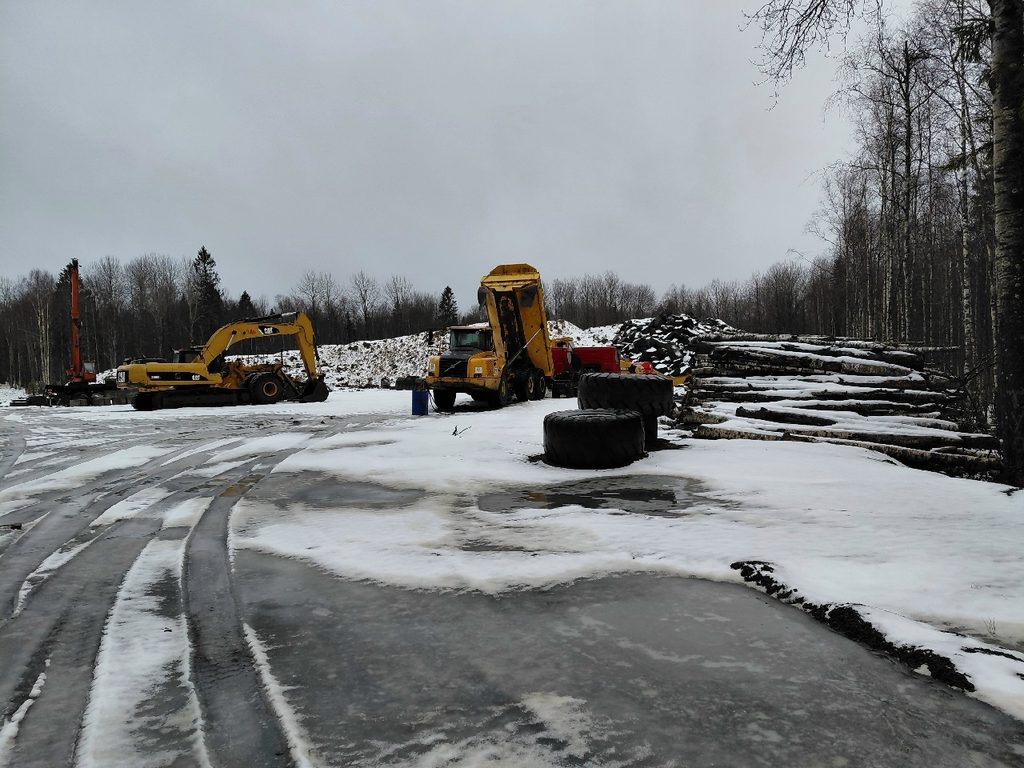
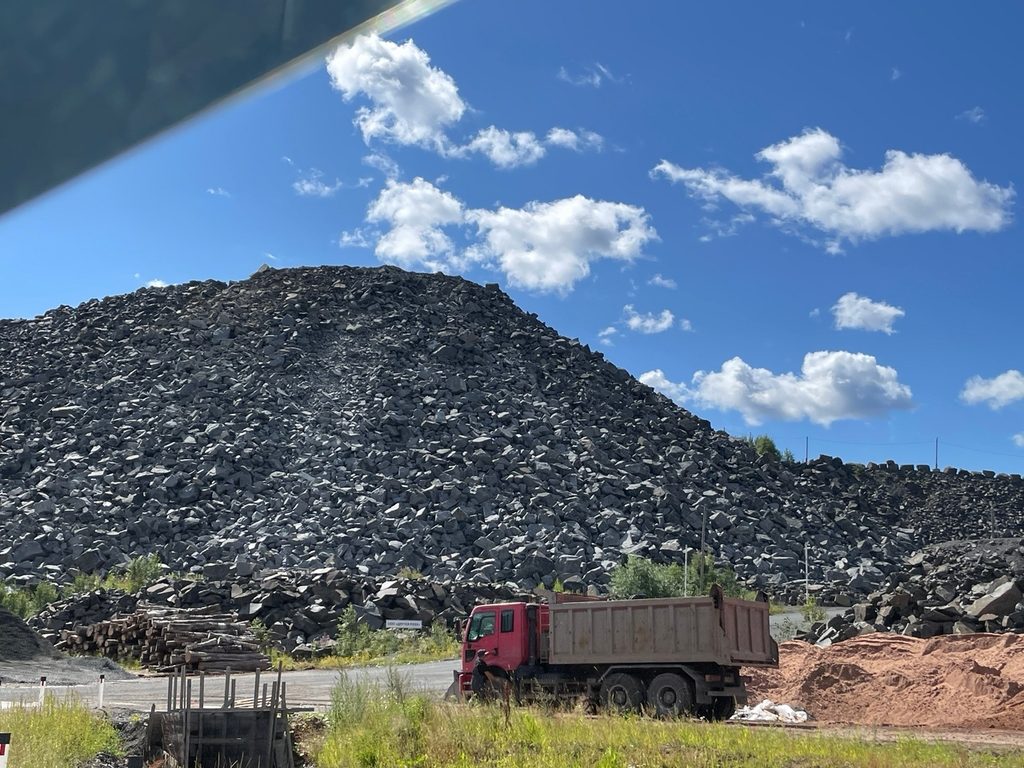
Two separate news reports concerning the Rybreka Veps settlement surfaced in August 2026. One described extensive forest clearance and the dumping of stone-processing waste near an archaeological site between Kaskesoja (Veps: Kaskes, Russian: Kaskesruchey) and Drugata Reka. The other concerned plans for another quarry near Kaskesoja, despite residents’ opposition and their complaints about incomplete access to project documents. Together, these developments demonstrate the continuing pressure on Veps territory and raise interconnected concerns about participation, living conditions and cultural survival.
Rybreka, officially the Ryboretskoye Veps rural settlement, forms part of the historical territory of the northern Veps and lies on the south-western shore of Lake Äänisjärvi. Its territory belonged to the former Veps National Volost, established in 1994, and contains traditional villages, historic wooden buildings and culturally significant landscapes. Kaskesoja, discussed in an earlier report, is one such living settlement. Its architectural heritage includes the Foshkina bathhouse, transferred to the Kizhi Museum-Reserve.
It’s important to know that the Veps are an Indigenous Finnic people with their own language, cultural traditions and longstanding relationships with the forests and waters of the region. They are officially recognised as a small-numbered Indigenous people under Government Resolution No. 255 of 24 March 2000.
The August developments occurred against an already documented conflict over quarry expansion. In December 2025, residents challenged proposals to allocate forest land near their homes, questioning both the consequences of extraction and the conduct of public hearings. More than eighty people signed an earlier collective objection. They warned about blasting vibrations, dust, noise and additional pressure on Lake Äänisjärvi from neighbouring quarries. Residents also reported that tree clearance had begun before the hearings. These concerns establish that the authorities were aware of local opposition well before the latest proposals emerged.
The earlier report described residents’ accounts of homes shaken by explosions, declining well-water availability, shoreline erosion and the disappearance of fish from nearby waters. These accounts require investigation rather than dismissal, as the reported consequences of quarry operations concern the basic conditions necessary for remaining in the village. According to the second report supplied for August, residents cited ministry information identifying 28 stone-extraction licences within the settlement. Although licences do not necessarily represent operating quarries, this figure reinforces the need to assess the combined burden of existing and proposed operations.
On 24 August, media reported that forest at Madakhkar, between Kaskesoja and Drugaya Reka, had been cleared and discarded stone was being transported into a ravine. Residents described the loss of woodland where they previously gathered mushrooms and berries. Additionally, approximately 200 metres away from the Yamekhruchey archaeological site, dated to the sixth-fifth millennia BCE, a waste-storage area was created. Even though damage to the archaeological site has not been established, it is still concerning that such industrial activity was allowed in such a close proximity to a site of significance to the area. The reported activity therefore raises concerns regarding both the ecological impact on the area and the affect it may have on a landscape used and valued by the local community.
The Ministry of Natural Resources responded on 26 August that the plots had been allocated to the “Cherny Kamen” LLC for timber clearance and stone-waste storage, and that the company possessed the necessary documentation. It also stated that extraction and blasting would not be part of the operations on these plots, and that the archaeological monument lay outside their boundaries. Even though this explanation addressed administrative authorisation and the monument’s location, if did not explain why further environmental alteration of a culturally significant landscape had been permitted or how the cumulative impact of such operations had been considered.
These concerns had already been raised publicly in March. Reporting identified two plots allocated for stone-waste storage as protective forests belonging to the category of valuable forests protecting fish spawning grounds. Residents had also asked whether public hearings or discussions had preceded their allocation. The ministry reportedly replied that it had no information about such proceedings. This may indicate that decisions to allocate land for industrial operations with significant environmental consequences are being pursued without meaningful participation by the local Veps population, despite the explicit guarantee under Article 8(1)(5) of Federal Law No. 82-FZ of Indigenous participation, through authorised representatives, in preparing and adopting decisions concerning the protection of their ancestral environment and traditional way of life.
Another concerning development emerged in August, with “GOST AKTIV” seeking to lease 14.3 hectares of forest for a quarry approximately 1.3 kilometres from homes. According to residents, the ministry had sent the settlement administration a nine-sheet site plan in May. Following an official request on 20 August, residents were directed to the administration’s website, where they found only three sheets. The incomplete documentation did not allow residents to adequately examine the proposed boundaries or assess the implications for their homes, wells and surrounding forest. This led to residents collecting 203 signatures demanding refusal of the lease and an ethnological assessment.
Despite the residents’ best efforts, further allocations and proposals continue. The pattern of the local protected Veps population repeatedly having to defend their living environment, while the authorities facilitate industrial use, contradicts both domestic and international law. Such practices does not correspond to the provisions set forth by the aforementioned Federal Law No. 82-FZ, “On Guarantees of the Rights of Indigenous Small-Numbered Peoples of the Russian Federation”, and by Federal Law No.59-FZ “On the Procedure for Considering Appeals from Citizens of the Russian Federation”. These provisions do not make every objection binding, but they cannot be fulfilled by a process that leaves the affected community unable to examine what is proposed or influence the decision.
On the international level, the developments on the historic Veps territory may be incompatible with the provisions of Article 15 of the ICESCR and Article 27 of the ICCPR. General Comment No.21, particularly paragraphs 36-37, connects Indigenous cultural life to traditional lands, territories and resources, and calls for protection of those relationships and respect for free, prior and informed consent. Veps beliefs and traditions attach significance to forests and waters. The forest is therefore a tangible setting in which intangible knowledge, beliefs and practices are maintained. Its destruction can remove both resources supporting traditional activities and the places through which cultural knowledge passes between generations.
In addition, Human Rights Committee General Comment No. 23, paragraph 7, recognises land-based ways of life and the need for effective participation in decisions affecting them. The procedural concerns also engage Article 19 on access to information and Article 25 on participation in public affairs. Withholding information necessary to challenge a project weakens residents’ ability to protect the cultural interests at stake.
The civil, social and cultural dimensions are consequently inseparable. Access to information and participation enable residents to defend their homes, water sources and livelihoods; those same forests and waters sustain Veps cultural continuity. The August developments raise serious concerns that the authorities are treating Indigenous territory primarily as land available for industrial exploitation, while failing to demonstrate how the people living there, and the legal protections attached to their identity, will be safeguarded.
Sources:
- https://karelia.news/news/10238319/zhiteli-karelii-rasskazali-o-vyrubke-lesa-ryadom-s-onezhskim-ozerom/
- https://vk.ru/wall-174196957_94079
- https://gov10.ru/news/26-08-2026-uchastki-lesnogo-fonda-predostavlennye-v-polzovanie-arendatoru-ooo-chyernyy-kamen-raspolagayutsya-za/
- https://ptzgovorit.ru/news/cennye-lesa-v-prionezhe-hotyat-otdat-pod-othody-kamneobrabotki
- https://ombudsman.media/kaskesoya-story-karelia/
- https://ombudsman.media/report-december-2025-karelia/
Cuts in Sheltozero’s post office
In August 2026, residents of the Sheltozero Veps rural settlement warned that planned staffing cuts could leave them without a functioning post office. According to the reported proposals, staffing would be reduced to a single employee with opening hours limited to three days a week, six hours per day. The remaining employee would be expected to handle correspondence, pensions, goods and parcels, alongside unloading deliveries, cleaning and heating the old building. The postwoman had already received a redundancy notice, while the manager warned that she would resign if the changes proceeded. Although closure has not been confirmed, the proposed arrangements threatened access to an essential service for Sheltozero and its surrounding villages.
This development follows a broader pattern of closures and reductions in rural postal services across Karelia. Russian Post has justified staffing changes by declining volumes of paper correspondence and newspapers, describing them as adjustments to actual workloads. Elsewhere, permanent offices have been replaced with mobile services, while unsafe premises and unprofitability have been cited as grounds for closure. In its reported response concerning Sheltozero, the postal administration referred to digital services, electronic document management, operational transformation and an unfavourable economic environment. These explanations may explain the closures, but fail to demonstrate how the remaining staff and reduced opening hours would meet residents’ needs.
The consequences of withdrawing permanent services are already documented. In Kroshnozero, residents reported three consecutive weekly visits by a mobile postal service without being able to pay utility bills. Reaching an alternative office required difficult journeys or a return taxi fare of approximately 1,000 roubles, adding substantial expense to routine payments. In Kinelahta, where the office closed in late December 2025, residents reported delayed bills and newspapers, difficulties paying utilities and telephone disconnections following non-payment. The mobile replacement lacked payment facilities, while the nearest functioning office was 30 kilometres away and no public transport served the settlement. By May 2026, residents were still awaiting the promised restoration of a permanent service.
These experiences show what residents of Sheltozero and the surrounding villages may face if the proposed cuts leave their post office unable to function. Routine tasks such as receiving a pension, paying utility bills or collecting a parcel could become dependent on infrequent mobile visits, costly journeys or assistance from relatives and neighbours. Older residents, people with disabilities and those without private transport or access to digital services would bear the greatest burden. Having already witnessed the consequences of closures elsewhere in Karelia, the authorities cannot treat these risks as unforeseen. Proceeding without ensuring an effective replacement would expose another rural community to difficulties that are already documented and remain unresolved in other settlements.
Russian Post is a wholly state-owned company. Article 3 of Federal Law No. 171-FZ establishes that all its shares belong to the Russian Federation. Article 1 of the law identifies equal access to quality postal services regardless of location, and the prioritisation of citizens’ social interests, including pension and benefit delivery, among the company’s founding purposes. Treating rural offices solely according to their profitability contradicts those purposes when closures leave residents without an accessible and effective alternative. The documented failures of replacement services make the consequences foreseeable. The federal owner and regional authorities cannot disregard them by referring to commercial independence and digitalisation.
In addition, these measures undermine the practical enjoyment of rights protected by the ICESCR, particularly the right to social security under Article 9 and an adequate standard of living under Article 11. Where postal services provide access to pensions and benefits, disruption can obstruct access to the income needed for food, heating and other necessities. Additional travel costs further diminish already limited household resources, while barriers to obtaining medicines can also affect the right to health under Article 12.
The reported cases demonstrate that withdrawing accessible services places essential daily needs beyond some residents’ reach. Where restructuring obstructs access to social security and basic necessities without an effective replacement, it is inconsistent with the state’s obligation to ensure these rights in practice.
Sources:
- https://ptzgovorit.ru/news/ya-ne-hochu-rabotat-za-besplatno-pochta-gotovitsya-k-optimizacii
- https://ptzgovorit.ru/news/kakoy-eshche-lichnyy-kabinet-u-menya-vse-udobstva-na-ulice-0
- https://ptzgovorit.ru/news/zakrytie-pochty-stalo-udarom-po-kachestvu-zhizni-lesnogo-poselka
- https://karelia.news/news/10199779/10199779/
- https://t.me/Slabunova/6040
- https://vk.ru/wall-174196957_92890
Äänisjärvi Pollution
Contaminated Snow Disposal Threatens Äänisjärvi and Residents’ Living Conditions
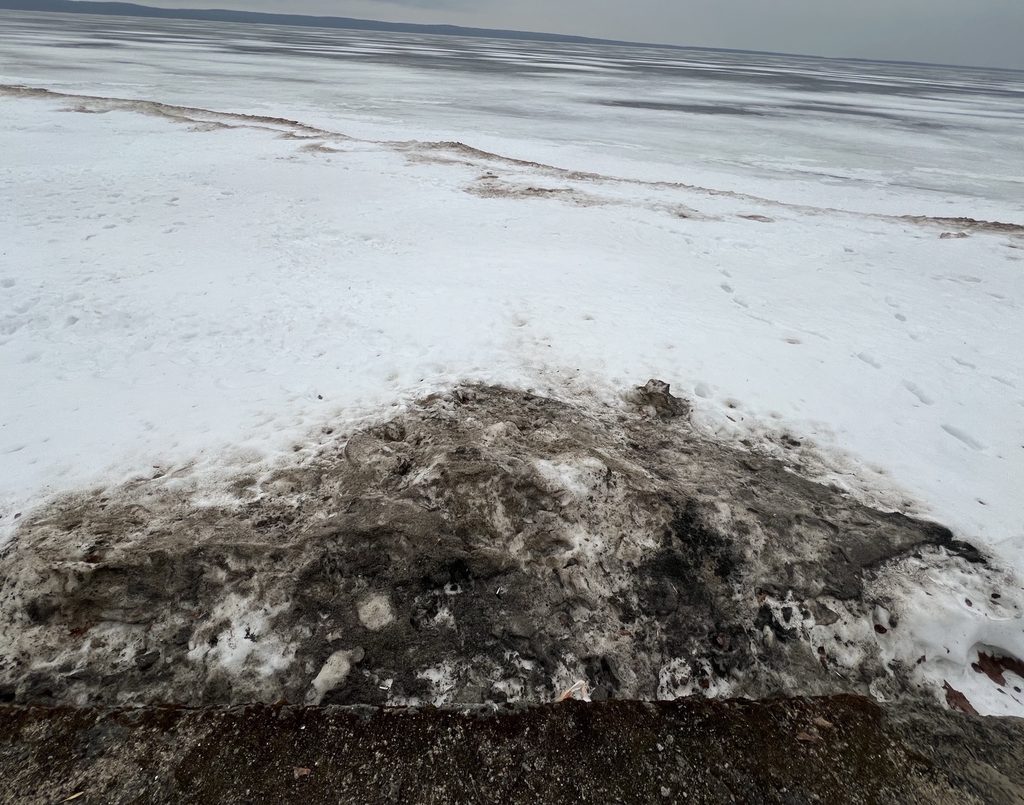
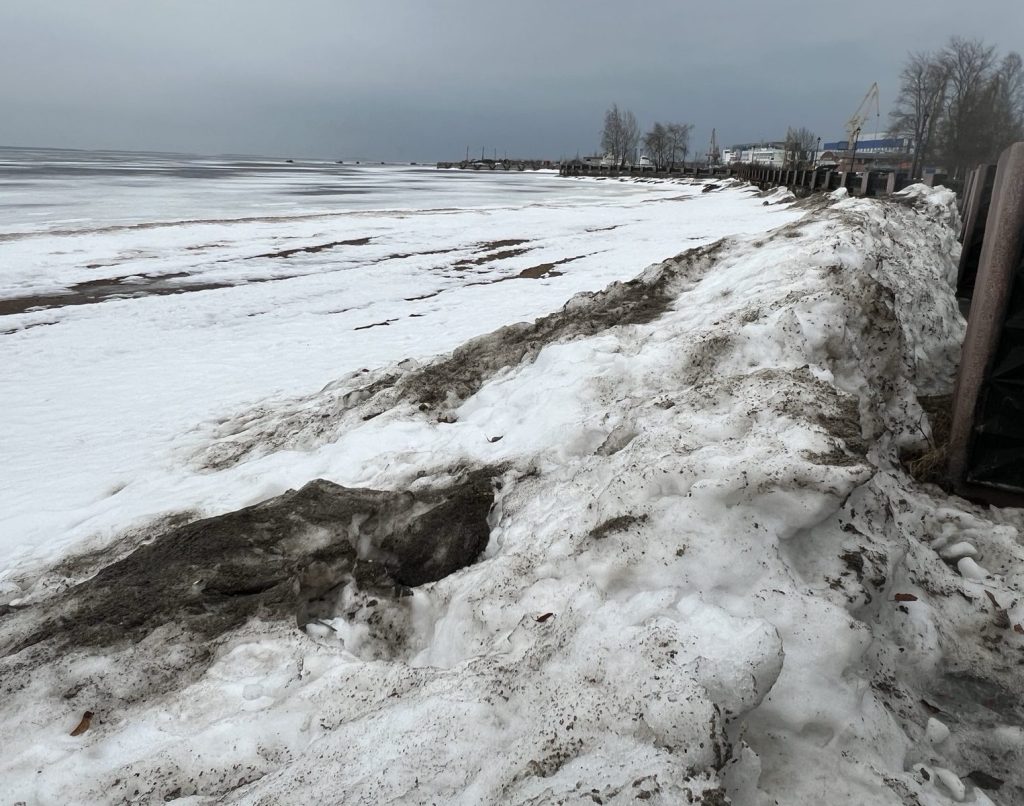
In August 2026, laboratory examinations of soil at the snow dump on Vytegorskoye Highway in Petroskoi revealed concentrations of arsenic, copper, manganese, vanadium, iron, aluminium, lead and petroleum products exceeding permissible limits. The findings raise particular concerns for Äänisjärvi, as contaminated meltwater from the site flows towards Bolshoy Stream, which empties into the lake. Snow collected from urban streets can accumulate traffic-related pollutants, road dust and de-icing substances, which are released during melting. Without infrastructure to contain and treat this runoff, the dump creates a pathway through which pollutants can reach the lake.
The threat to the watercourse had already been documented before the August findings. Residents reported dirty meltwater running from the accumulated snow into Bolshoy Stream. According to official correspondence reproduced in local reporting, an inspection in late June recorded waste on the stream’s bank and within the watercourse itself, as well as snow extending beyond the leased site. The dump is reportedly situated only 35 metres from the stream, within its 50-metre water-protection zone. These observations, together with the confirmed soil contamination, provide grounds for concern about pollutants being transported downstream into Äänisjärvi. Although the available laboratory findings do not establish their concentrations in the stream or lake, the documented flow of runoff requires investigation and measures to prevent further contamination.
The municipal authorities had long been aware that the site lacked adequate environmental safeguards. In 2025, following an environmental prosecutor’s application, the court required the administration to organise a compliant snow-storage facility, including an impermeable surface and a continuous earthen barrier, or arrange transport to snow-melting installations. The reported deadline expired in May 2026, but the problem remained unresolved through the summer. Rosprirodnadzor subsequently issued a warning and began calculating the damage to the soil. Neither measure prevents polluted meltwater from entering Bolshoy Stream and ultimately Äänisjärvi. By failing to provide safe disposal arrangements and contain the existing runoff, the authorities allowed a known pollution pathway to persist after judicial intervention.
The consequences also extend to residents of Staraya Kukkovka, whose homes stand as close as 45 metres from the dump. Residents described interrupted sleep caused by overnight lorry deliveries and machinery, dust, unpleasant fumes and the loss of a previously accessible recreational area. Their repeated complaints produced referrals between agencies and assurances that alternative arrangements were being considered, while the sources of both residential disruption and environmental contamination remained in place.
Local Karelian environmental activists have additionally reported that collected snow is dumped directly on the shores of Äänisjärvi in Petroskoi and left to melt, allowing meltwater to flow into the lake. The chemical composition of that snow has not been established through testing available for this report. Nevertheless, the contamination confirmed at the Vytegorskoye Highway dump demonstrates why snow removed from urban streets must not be treated as harmless material. Depositing it beside the lake without containment or treatment creates a foreseeable risk of releasing accumulated pollutants directly into its waters.
These practices engage Article 12(2)(b) of the ICESCR, concerning environmental and industrial hygiene. General Comment No. 14, paragraphs 11 and 15, recognises healthy environmental conditions as an underlying determinant of health and requires measures to prevent and reduce exposure to harmful chemicals and environmental conditions affecting health. The authorities’ responsibility therefore includes controlling pollution and its sources and preventing its transfer into water bodies. The continued disruption of nearby residents’ living conditions also raises concerns under Article 11(1), interpreted through General Comment No. 4’s requirements concerning habitability and protection from pollution sources. Warnings and damage assessments cannot fulfil these obligations while unsafe disposal practices and contaminated runoff continue.
Cemetery runoff into Äänisjärvi
On 4 August, local media reported concerns raised by environmental activists about untreated runoff from three longstanding cemeteries in Petroskoi. According to their appeal to supervisory bodies, surface water and groundwater from the burial grounds may enter streams and rivers connected to Äänisjärvi. These waterways lead towards the bay containing the intake for the city’s centralised drinking-water system. The concern therefore extends beyond damage to the lake’s ecosystem: potential contamination pathways connect burial grounds to the water sources used to supply residents’ homes. The extent of cemetery-derived pollution remains to be established through laboratory investigation.
Water passing through burial soil can carry dissolved organic matter, nitrogen compounds such as ammonium, and microorganisms released during decomposition. Depending on burial materials and practices, additional chemical contaminants may also be present. Whether these substances reach surrounding waters, and in what concentrations, depends on groundwater levels, soil properties and the movement of water through the site. Where contaminated drainage reaches a drinking-water source, it introduces microbial and chemical hazards that must be adequately controlled before the water is consumed. This is why cemetery pollution assessments examine both the burial grounds and their connections to water supplies.
The cemeteries’ long existence does not diminish the need for safeguards. Relocating graves would raise serious practical concerns and questions concerning the wishes of deceased persons’ families. Protecting drinking water, however, does not depend on removing the burial grounds. It requires investigating runoff and groundwater, intercepting contaminated flows where necessary, and providing treatment suited to the pollutants identified. Drinking-water treatment offers a further protective barrier, but it does not remove the responsibility to prevent avoidable contamination of the source itself.
These concerns arise against an existing burden of pollution in Äänisjärvi, including recurring petroleum contamination. Residents’ complaints about dirty and unpleasant-smelling tap water make the protection of the city’s supply particularly pressing. Although those complaints do not establish a connection with cemetery runoff, they warrant investigation across the entire supply chain, from the lake and its tributaries to treatment facilities and household distribution. Any additional source of contamination should therefore receive prompt attention, rather than be treated as insignificant within an already polluted water system.
The authorities must establish whether cemetery runoff is contaminating the waterways feeding the city’s drinking water source, publish the findings and implement effective preventive measures. The absence of confirmed contamination at household taps is no justification for leaving a credible threat to the source unresolved. Protecting residents’ health requires action before exposure occurs, rather than waiting until the consequences become visible.
Failure to investigate and control cemetery runoff that may contaminate Petroskoi’s drinking water source may constitute a breach of Article 12 of the ICESCR. General Comment No. 14, paragraph 15, interprets Article 12(2)(b) as requiring safe drinking water and measures to prevent and reduce exposure to harmful substances and environmental conditions affecting health. Paragraph 36 further requires policies aimed at reducing and eliminating water pollution. In this context, the authorities’ responsibility extends to investigating credible contamination risks and implementing effective controls before residents are exposed. If the authorities fail to take appropriate measures despite being informed of these risks, that omission may be inconsistent with their obligations under Article 12, even before a connection to illness or contamination at household taps has been established.
Repeated oil spills on Moskovskaya Street
Petroleum contamination near Moskovskaya Street in Petroskoi remained an unresolved concern in August, months after residents and a municipal deputy, Olga Tuzhikova, publicly drew attention to the discharge. Complaints about oil slicks in Äänisjärvi had been reported since December 2025. On 5 April, Tuzhikova personally inspected the area near Shayba beach and reported murky water flowing from a pipe into the lake, an oily rainbow film, dark-brown particles and a strong persistent smell of fuel oil. Drawing on her experience working in an oil-depot laboratory, she argued that the discharge appeared industrial rather than ordinary road runoff. Her observations required investigation by the competent authorities to establish the substances involved and their sources.
According to the August reporting, the environmental regulator identified untreated wastewater containing petroleum products entering the lake through stormwater outlet No. 5. The drainage network and its outlets had been transferred to the municipal institution “Sluzhba Zakazchika”. Proceedings seeking compensation for environmental damage were underway, with the hearing postponed to 31 August. This followed earlier enforcement concerning the same infrastructure: reporting on previous litigation records a court order requiring the municipality to ensure treatment of wastewater discharged through outlet No. 5. The August proceedings therefore concern a pollution problem whose prevention had already been the subject of judicial intervention.
The measures publicly described have not demonstrated an effective resolution. Floating barriers were installed, yet further oil patches were reported in April. Such barriers may restrict the movement of surface contamination, but they do not treat the wastewater or prevent petroleum products from entering the drainage system. Nor does a claim for compensation establish that the source has been eliminated. Although the regulator identified the discharge route and the municipal operator, the available reporting does not show that a comprehensive investigation established who introduced the pollutants, how they entered the network, or what enforceable measures would prevent recurrence. The authorities have acknowledged aspects of the problem without publicly demonstrating that they have brought it under control.
This failure has consequences for residents. The discharge occurs beside a shoreline used for recreation and swimming, creating opportunities for contact with polluted water. The precise health risks depend on the petroleum compounds present, their concentrations and the extent of exposure, making sampling and disclosure essential. The contamination also adds to the burden on Äänisjärvi, which supplies Petroskoi’s centralised drinking water system. There is no established evidence that this discharge has contaminated household tap water, but safeguarding a drinking water source requires preventing avoidable pollution before it reaches consumers. Residents should not have to rely on visible slicks, persistent odours and repeated public complaints to secure action.
The prolonged failure to demonstrate that the discharge has stopped raises concerns under Article 12 of the ICESCR. General Comment No. 14, paragraph 15, requires measures to prevent and reduce exposure to harmful substances and environmental conditions affecting health, alongside an adequate supply of safe drinking water. Paragraph 36 requires policies to reduce and eliminate water pollution. Where authorities have been repeatedly alerted to petroleum contamination, their obligations require effective investigation, control of the source and prevention of further exposure. Leaving the problem unresolved for months, despite public complaints and earlier judicial intervention, may constitute a failure to fulfil those obligations and reflects neglect of residents’ health and the water source on which the city depends.
Sources:
- https://ptzgovorit.ru/news/v-petrozavodske-vyyavili-opasnoe-zagryaznenie-pochvy-tyazhelymi-metallami
- https://kedr.media/news/snezhnaya-svalka-u-zhilyh-domov-v-petrozavodske-do-sih-por-ne-rastayala/
- https://kedr.media/stories/ochen-gryaznye-dela/
- https://gubdaily.ru/news/kazhdyj-den-v-rezhime-chernogo-neba-zhiteli-petrozavodska-zhivut-u-mnogometrovyx-gryaznyx-gor-iz-snega-i-musora/
- https://gubdaily.ru/news/meriyu-petrozavodska-cherez-sud-zastavili-sozdat-ploshhadku-dlya-skladirovaniya-snega/
- https://mustoi.ru/myortvaya-voda-chto-techyot-s-kladbishh-petrozavodska-v-storonu-gorodskogo-vodozabora/
- https://gkhnews.ru/1482131-proekt-zso-istochnika-vodosnabzheniya/
- https://www.gov.uk/guidance/cemeteries-and-burials-groundwater-risk-assessments
- https://gubdaily.ru/news/v-petrozavodske-vonyuchij-mazut-stekaet-v-ozero-gde-kupayutsya-lyudi/
- https://gubdaily.ru/news/bony-ne-pomogayut-v-petrozavodske-v-onezhskom-ozere-snova-obrazovalas-neftyanaya-plenka/
- https://rpn.gov.ru/press/news/rosprirodnadzor_dobivaetsya_vozmeshcheniya_vreda_prichinennogo_onezhskomu_ozeru/
- https://ombudsman.media/report-april-2026-karelia/
Waste management
In August 2026, proceedings to remove the Karelian Environmental Operator (KEO) brought the priorities governing waste management in Karelia into question. The ministry sought the company’s removal because its overdue debts to waste-transport contractors exceeded 362.5 million roubles and its bank guarantee had expired. The court granted the application on 28 August. The publicly reported grounds concerned financial compliance, despite earlier demands from deputies to remove the operator over inadequate waste collection.\
These proceedings unfolded while overflowing containers, rats and unsanitary waste sites continued to affect everyday life in Petroskoi. Reports recorded on 10 and 11 August described rats around waste containers near a kindergarten, raising concerns about sanitation in an area used daily by young children and their carers. On 3 August, a resident’s complaint published by Chernika described a growing accumulation of rubbish and rats in the courtyard of the former maternity hospital, now housing a women’s consultation clinic. The woman, who said she walked through the courtyard daily on her way to work, reported that unsanitary conditions had persisted since winter and worsened considerably during summer. A site dedicated to maternal healthcare, where women receive care during pregnancy in preparation for bringing children into the world, should not be surrounded by mounting rubbish and rodents.
The continued accumulation of waste near facilities serving children and pregnant women raises serious concerns under Article 12 of the ICESCR. The right to the highest attainable standard of health includes adequate sanitation and environmental hygiene, with General Comment No. 14 requiring measures to prevent and reduce exposure to harmful environmental conditions. The reported infestation near a kindergarten also raises concerns under Article 24 of the CRC, particularly Article 24(2)(c), which requires measures to combat disease while taking environmental health risks into account. The Committee on the Rights of the Child further explains that States must address local environmental threats to children’s health in all settings. Allowing waste accumulation and rodent infestation to persist near facilities used by children may therefore represent a failure to protect their right to health. Reliable collection, cleaning and sustained pest prevention remain necessary regardless of the operator’s financial dispute.
Against this background, the financial grounds for KEO’s removal expose a troubling imbalance in accountability. Overdue payments and the absence of a bank guarantee triggered decisive proceedings, while years of complaints about the service had failed to secure adequate sanitary conditions. Financial stability matters to the continuity of collection, but it cannot serve as a substitute for assessing whether the operator actually fulfils its duties to residents. If financial compliance is enforced more effectively than service obligations, a replacement operator may satisfy creditors and retain the authorities’ confidence while leaving the conditions experienced by residents substantially unchanged.
Removing an operator for debt does not itself constitute a violation of international human rights law. However, the contrast between financial enforcement and unresolved sanitation failures raises a serious question about the priorities of Karelia’s government. Waste management is an essential public responsibility, and the authorities must ensure that contractual and commercial arrangements serve that responsibility. The meaningful test of any replacement will be whether rubbish is collected reliably, infestations are prevented and residents can live in clean and safe surroundings. Until those outcomes receive equally effective enforcement, the question remains whether the system gives greater practical protection to financial obligations than to the health and well-being of Karelia’s residents.
Sources:
- https://karelia.news/news/10244786/stali-izvestny-podrobnosti-lisheniya-kyeo-statusa-regoperatora-karelii/
- https://mustoi.ru/u-krys-tam-prosto-elitnyj-poselok-dlya-prozhivaniya/
- https://t.me/podsluhano_ptz/11857
- https://t.me/dailykarelia/23530
- https://ombudsman.media/report-june-2026-karelia/
- https://rantakeskus.org/article.php?id=52
Industrial emissions in Pitkäranta: residents’ health left waiting for modernisation
In August 2026, residents of Pitkäranta reported sulphate flakes settling across the town from the RK-Grand pulp mill. According to the local administration, complaints about visible emissions had increased in the preceding weeks, prompting the district head to visit the enterprise. The authorities stated that new electrostatic precipitators were being installed and promised that the sulphate flakes would disappear once the equipment reached its intended operating capacity. However, the announcement provided neither a definite commissioning date nor air-quality measurements demonstrating the conditions residents were currently exposed to.
Residents questioned why production continued while emissions affected the town. In comments accompanying the reporting, one argued that modernisation should not come at the expense of residents’ health, while another reported that breathing sometimes became difficult and expressed doubt about the repeated promises of improvement. These concerns follow earlier complaints: in August 2023, residents reported black smoke, a strong fuel-oil smell and white deposits on cars. The recurrence of such accounts raises questions about the effectiveness of environmental supervision and the protection afforded to people living near the factory.
The filtration project itself was announced in July 2025. RK-Grand predicted an implementation period of approximately two years and a projected cleaning efficiency of 99.6%. While improved filtration is necessary, a project scheduled over several years does not answer the immediate concerns of residents who continue to report industrial fallout and breathing difficulties. The authorities must explain what protective measures apply during installation and whether temporary restrictions on production are necessary to prevent harmful exposure.
The World Health Organisation identifies sulphates among the components of airborne particulate matter. Fine particles can penetrate deep into the lungs, and prolonged exposure to particulate pollution increases the risks of cardiovascular and respiratory disease and lung cancer. While such findings do not establish the precise health effects of the emissions in Pitkäranta, they underline the seriousness of residents’ reports of breathing difficulties. Against this background, why does production continue without a publicly demonstrated assurance that residents are adequately protected?
Health concerns around the mill have a scientific history extending back decades. Earlier research examined associations between industrial contamination and illness in Pitkäranta, while subsequent studies documented immune-system abnormalities among children living near the mill. Although these findings do not establish that the enterprise caused the reported conditions, they provide longstanding grounds for concern about its impact on public health. They should not be dismissed as a mere coincidence without further investigation and sustained monitoring of residents’ exposure and health.
Against this background, the authorities must explain why they did not press the enterprise to introduce effective pollution controls sooner. Recurring complaints about emissions, alongside earlier health findings, warranted investigation and preventive action long before the latest promises of improved filtration. With residents still reporting sulphate fallout and breathing difficulties, the authorities must also explain why production continues and whether operations should be suspended until effective controls are fully operational. Residents’ health cannot be left dependent on the enterprise’s modernisation timetable.
The effect of the plant on the daily lives of the residents of Pitkäranta, as well as authorities’ disregard for the health risks the plant poses, raises serious concerns under Article 12 of the ICESCR. Article 12(2)(b) expressly requires improvements in environmental and industrial hygiene. General Comment No. 14 explains that states must reduce harmful environmental exposure and identifies failure to enforce laws preventing industrial air pollution as a breach of the obligation to protect health. Announcing future equipment does not discharge this responsibility: the regional and federal authorities must ensure effective protection for residents while modernisation proceeds.
Sources:
- https://mustoi.ru/sulfatnye-xlopya-vmesto-dozhdya/
- https://ptzgovorit.ru/news/kluby-chernogo-dyma-valyat-iz-truby-zavoda-v-pitkyarante
- https://szgmu.ru/files/terapy/Terap_No_01_2005.pdf
- https://medical-diss.com/medicina/metodologiya-ekologo-gigienicheskoy-otsenki-othodov-kompleksnoy-pererabotki-drevesiny
Conclusion
The developments documented in this report form part of a longstanding deterioration of living conditions in the Republic of Karelia. Recurring pollution, inadequate sanitation, reductions in essential services and pressure on traditional livelihoods demonstrate the cumulative consequences of leaving residents’ needs unresolved. Many of these concerns have already been raised through public complaints, earlier reporting and, in some cases, official or judicial intervention. Their persistence therefore raises questions extending beyond individual failures: it suggests that the protection of Karelia’s inhabitants continues to receive insufficient priority in regional and federal decision-making.
This disregard does not always take the form of a direct decision to deprive residents of their rights. It also operates through the authorities’ failure to prevent or effectively address harmful practices by companies, whether privately or state-owned. When industrial emissions continue, essential services become inaccessible or debt collection deprives households of sanitation, the consequences cannot be attributed solely to the organisations carrying out those activities. The state remains responsible for ensuring that their operations comply with its human rights obligations. Administrative authorisation, commercial independence and promises of future improvements cannot justify allowing foreseeable harm to persist.
The treatment of Karelia’s cultural heritage reveals a related pattern. Forests, berry grounds and traditional Veps landscapes risk being treated primarily as resources available for commercial use, with insufficient regard for the communities whose livelihoods and cultural continuity depend on them. At Sandarmokh, remembrance of state repression faces intimidation and interference that redirect attention towards Russian nationalist and military narratives. Across these different settings, cultural rights receive inadequate protection when their exercise conflicts with financial interests or challenges state-centred accounts of history.
Taken together, these cases demonstrate how socioeconomic deterioration and cultural erosion can reinforce one another. As essential services decline and the resources supporting local livelihoods are depleted, remaining in traditional settlements becomes more difficult, weakening the community life through which cultural knowledge is transmitted. The regional and federal authorities must be held accountable both for their own decisions and for their failure to protect residents from harmful practices by other actors. Effective protection requires measurable improvements in living conditions, meaningful participation in decisions affecting local communities, and respect for Karelia’s peoples, cultures and historical memory.
Researched and prepared by:
Jana Tiihonen (Bystrova)